
Photo: Wikipedia
Political ClimatePolitical Climate in East Hampton, NY
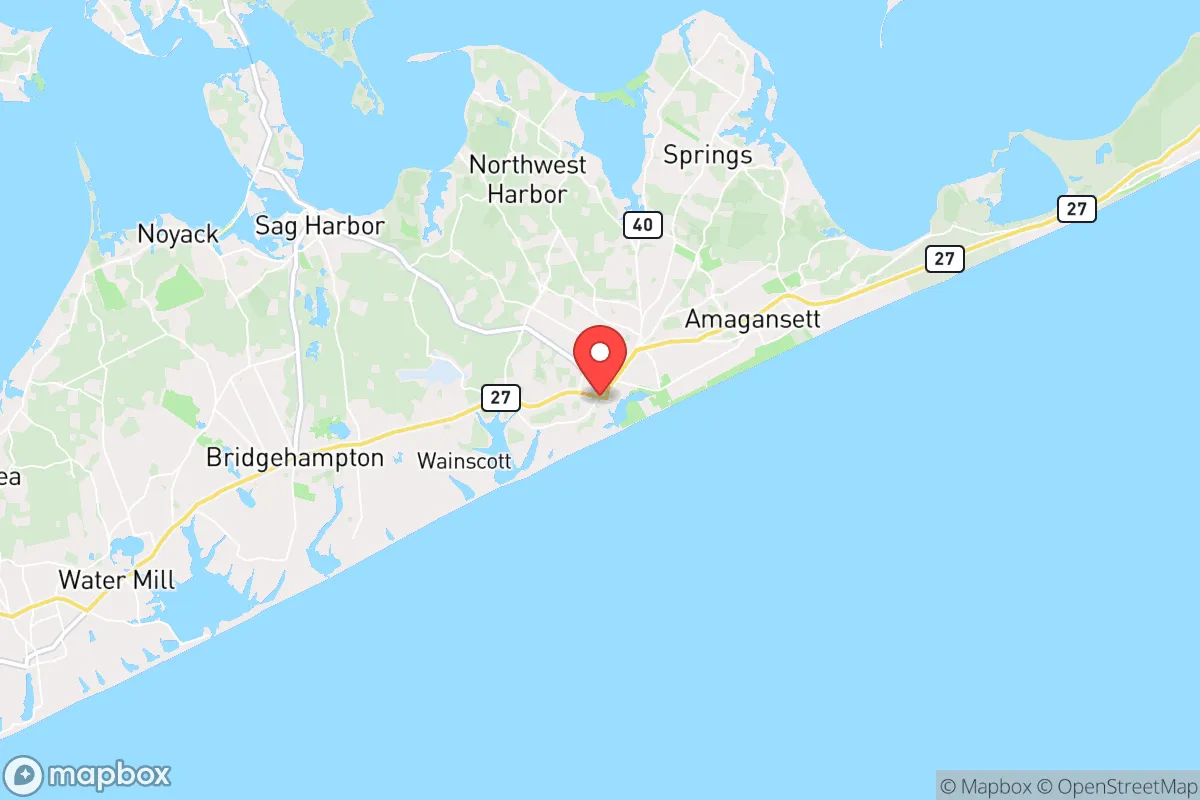
District shown is the primary district for this city’s centroid. Cities may span multiple districts.
Local Political AnalysisPolitical Analysis of East Hampton, NY
East Hampton, New York, has a political climate that is more nuanced than many realize, with a Cook PVI of R+4 indicating a slight but meaningful Republican lean in a region often painted as uniformly liberal. While the village itself has seen a noticeable shift toward progressive ideology in recent years, driven largely by wealthy second-home owners and newcomers from New York City, the surrounding town and Suffolk County as a whole still hold a strong conservative undercurrent. Longtime residents will tell you that the area was once reliably red, and while the cultural tide has turned in some pockets, the voting patterns suggest a community that still values fiscal restraint and local control over the kind of top-down mandates that have become common in places like Manhattan or even nearby Southampton.
How it compares
Compared to its neighbors, East Hampton stands out as a bit of a political outlier. Head west to Southampton or Bridgehampton, and you’ll find a more pronounced progressive tilt, with higher taxes and a greater willingness to embrace government-led initiatives on housing and environmental regulations. In contrast, East Hampton’s R+4 rating puts it closer to the more conservative towns further east, like Montauk, where residents are more skeptical of overreach. The difference is stark when you look at the county level: Suffolk County as a whole leans right, and East Hampton’s voting record reflects that, even if the village council has recently flirted with policies that feel imported from the city. It’s a place where you can still have a conversation about property rights without being labeled a pariah, which is becoming rare in the Hamptons.
What this means for residents
For those living here year-round, the political climate means a constant tug-of-war between preserving the area’s character and bowing to outside pressures. The R+4 lean gives residents a buffer against the kind of aggressive progressive policies that have driven up costs and restricted freedoms in other parts of the state. You won’t see the same level of rent control or overreaching environmental mandates that have choked small businesses in places like New York City. However, the recent push for more government involvement in local zoning and short-term rental regulations is a red flag. If you value the ability to use your property as you see fit without a dozen permits and a committee hearing, East Hampton still offers more breathing room than its neighbors, but that’s changing. The long-term trend is concerning, as the influx of remote workers and second-home buyers brings with it a preference for more government control over daily life.
Culturally, East Hampton has always been a place where individual liberty and community tradition coexist, but that balance is shifting. The area’s policy distinctions are most visible in its approach to land use and local business regulation, where the conservative lean has historically meant less red tape. That’s eroding, though, as progressive voices push for stricter rules on everything from beach access to building heights. For now, the R+4 rating is a lifeline, but if the trend continues, East Hampton could lose the very freedoms that made it a desirable place to live. Keep an eye on local elections—that’s where the real fight for the area’s soul is happening.

State Political ClimatePolitical Climate in New York
State Political AnalysisPolitical Environment in the State
New York State has long been a Democratic stronghold, but the reality on the ground is far more fractured than the statewide numbers suggest. Over the past 20 years, the state has shifted from a purple-ish blue to a deep, unapologetic progressive laboratory, driven overwhelmingly by New York City and its immediate suburbs. The 2022 gubernatorial race saw Kathy Hochul win by just under 6 points, a far cry from the double-digit margins of a decade prior, signaling a realignment that is making the state bluer in policy but more divided in sentiment. For a conservative-leaning individual or family, the key takeaway is that your experience will be radically different depending on whether you land in Manhattan, Buffalo, or the Finger Lakes.
Urban vs. rural divide
The political map of New York is a tale of two nations. New York City's five boroughs—Manhattan, Brooklyn, Queens, the Bronx, and Staten Island—cast roughly 40% of the state's vote, and they are overwhelmingly Democratic. Manhattan alone voted 84% for Biden in 2020. The immediate suburbs of Nassau and Suffolk counties on Long Island, plus Westchester and Rockland counties north of the city, are the true battlegrounds. These areas have been trending left, but they still hold pockets of conservative strength—think Suffolk County's eastern towns like Brookhaven, where Trump outperformed his 2016 numbers. Upstate, the picture flips. Erie County (Buffalo) and Monroe County (Rochester) are blue islands in a sea of red. The vast rural stretches—the North Country, the Southern Tier, and the Finger Lakes region—vote Republican by margins of 20-30 points. Otsego County and Chenango County are reliably red, while Albany and Syracuse are moderate blue. The real story is the Hudson Valley corridor: Dutchess and Ulster counties have flipped from swing to solidly blue over the last decade, driven by an influx of NYC exiles and remote workers.
Policy environment
New York's policy environment is a case study in progressive governance, and it comes with a heavy price tag. The state has the highest combined state and local tax burden in the nation, with property taxes in places like Westchester and Nassau often exceeding $15,000 annually on a median home. The income tax is progressive, topping out at 10.9% for earners over $25 million, but even middle-class families in the $100k-$300k range face effective rates of 6-7%. The regulatory posture is aggressive: rent control in NYC and some suburbs, strict environmental mandates (the Climate Leadership and Community Protection Act aims for zero-emissions electricity by 2040), and a near-total ban on new natural gas hookups in new construction starting in 2026. Education policy is dominated by the teachers' unions, with school choice virtually nonexistent. The state's universal healthcare push (the New York Health Act) has stalled but remains a live threat. Election laws are among the most liberal: no-excuse absentee voting, early voting, and same-day registration are all in place. For a conservative, the policy environment feels like a slow, grinding expansion of state control over daily life.
Trajectory & freedom
Over the last five years, New York has become demonstrably less free across multiple dimensions. The 2019 Reproductive Health Act codified abortion up to birth, removing any restrictions. The 2022 Concealed Carry Improvement Act (CCIA), passed in response to the Bruen Supreme Court decision, effectively gutted the right to carry a firearm by creating "sensitive places" so broad they cover most of the state—including Times Square, public transit, and any private business that doesn't explicitly post a sign allowing guns. The law is being challenged in court, but for now, it's a de facto ban on public carry for most law-abiding citizens. Parental rights took a hit with the 2021 repeal of the parental notification requirement for minors seeking abortions. The state also passed a sanctuary city law in 2017 that limits cooperation with federal immigration enforcement, and a 2023 law prohibits local jails from holding inmates for ICE detainers. Property rights are under constant assault from rent control expansions and the 2019 Housing Stability and Tenant Protection Act, which eliminated vacancy decontrol and made it nearly impossible to evict problem tenants. The only bright spot for liberty advocates was the 2020 repeal of the "walking while trans" loitering law, but that's cold comfort.
Civil unrest & political movements
New York has been a flashpoint for political activism on both sides. The 2020 George Floyd protests in NYC were among the largest and most destructive in the nation, with looting in Midtown and the burning of a police precinct in Brooklyn. The defund the police movement had real teeth here: the NYPD budget was cut by $1 billion in 2020, though much of it was later restored. On the right, the New York State Rifle & Pistol Association and the Second Amendment Foundation have been the primary legal bulwarks against the CCIA, with mixed results. The Parental Rights movement has gained traction in suburban districts like Smithtown on Long Island and Clarence near Buffalo, where school board meetings have become battlegrounds over critical race theory and LGBTQ curriculum. The state's sanctuary policies have created a visible tension: in 2022, Texas Governor Abbott bused migrants to NYC, and Mayor Eric Adams' subsequent flip-flop on sanctuary status—first welcoming them, then begging for federal help—exposed the policy's practical failures. Election integrity remains a sore spot: the 2020 election saw widespread use of mail-in ballots without signature verification, and the state's refusal to clean voter rolls has led to lawsuits from conservative groups.
Projection
Looking ahead 5-10 years, the trajectory is clear: New York will continue to deepen its progressive policies, but the demographic and economic pressures are building. The state lost a congressional seat after the 2020 census due to population decline, driven by net out-migration of over 1 million residents since 2010. Those leaving are disproportionately middle-class families and young professionals—the very people who pay the taxes and send kids to public schools. The in-migration is largely from international immigrants and domestic transplants from other blue states, reinforcing the political monoculture. The Hudson Valley and Catskills will continue to gentrify with remote workers from NYC, pushing those counties further left. The rural areas will become even more red and resentful, but they lack the population to flip the state. The most likely scenario is a slow-motion fiscal crisis: as the tax base erodes, the state will either raise taxes further (chasing the wealthy out) or cut services (angering the progressive base). A new resident moving in now should expect higher taxes, more regulation, and a political environment that is increasingly hostile to traditional values—unless they settle in a red pocket like the Southern Tier or North Country, where local governance still offers some breathing room.
For a conservative individual or family, the bottom line is this: New York is not a state where you can expect to live and let live. The state government is actively expanding its reach into your healthcare choices, your children's education, your right to self-defense, and your property rights. If you're moving here, you need to pick your county carefully—Livingston County or Wyoming County in the western part of the state offer a much different experience than Ulster County or Westchester. You'll also need to budget for a significantly higher cost of living and be prepared to engage in local politics to protect your freedoms. The state's beauty and economic opportunities are real, but they come with a heavy price—both in dollars and in personal autonomy.
* Values derived from national, state, county, city and local statistics and may differ in a specific area. Last updated: 2026-04-24T01:45:50.000Z
Narrative content on this page is AI-generated and may contain mistakes. Verify any details that matter before acting on them.
ReloMaps may earn a commission from affiliate links at no extra cost to you.

