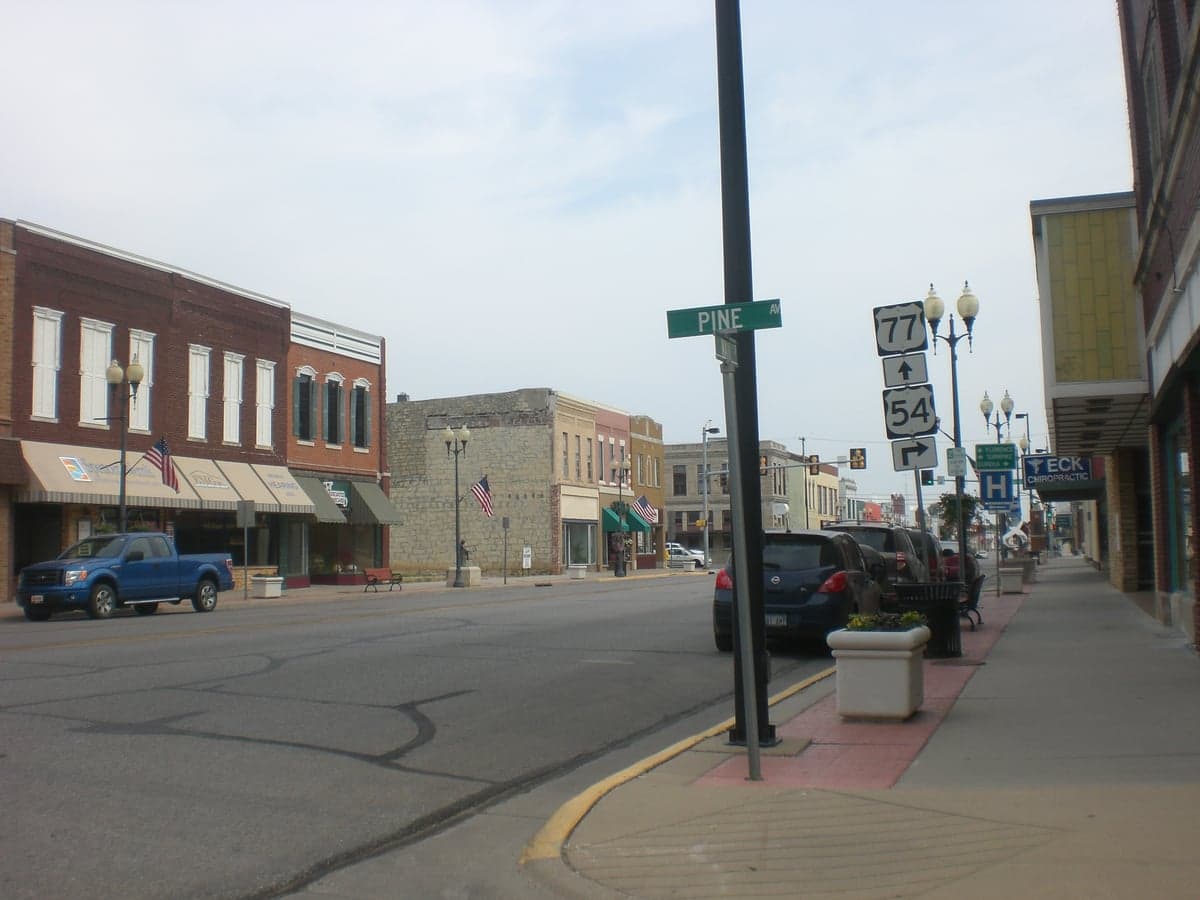
Photo: Wikipedia
Quality of Life in El Dorado, KS
A high quality of life with strong walkability, manageable living costs, healthy neighborhood signals, and solid amenity access.
What does Quality of Life tell us?
Quality of Life blends cost of living, nearby amenities, socioeconomic signals, and neighborhood character. City-level scores represent the whole municipality; individual neighborhoods can differ.
What does this tell us?
Quality of Life blends cost of living, nearby amenities, socioeconomic signals, and neighborhood character. City-level scores represent the whole municipality; individual neighborhoods can differ.
Cost of Living
39% below national average
The Real Cost of Living in El Dorado, KS for 2026
| Tier | Individual | Family (4) |
|---|---|---|
| Survival | $14k | $26k |
| Comfortable | $23k | $34k |
| Luxury | $80k+ | $124k+ |
| Elite (Top 5%) | $94k+ | $146k+ |
163%
The Area Signal
A metric tracking the socioeconomic signals of the area.
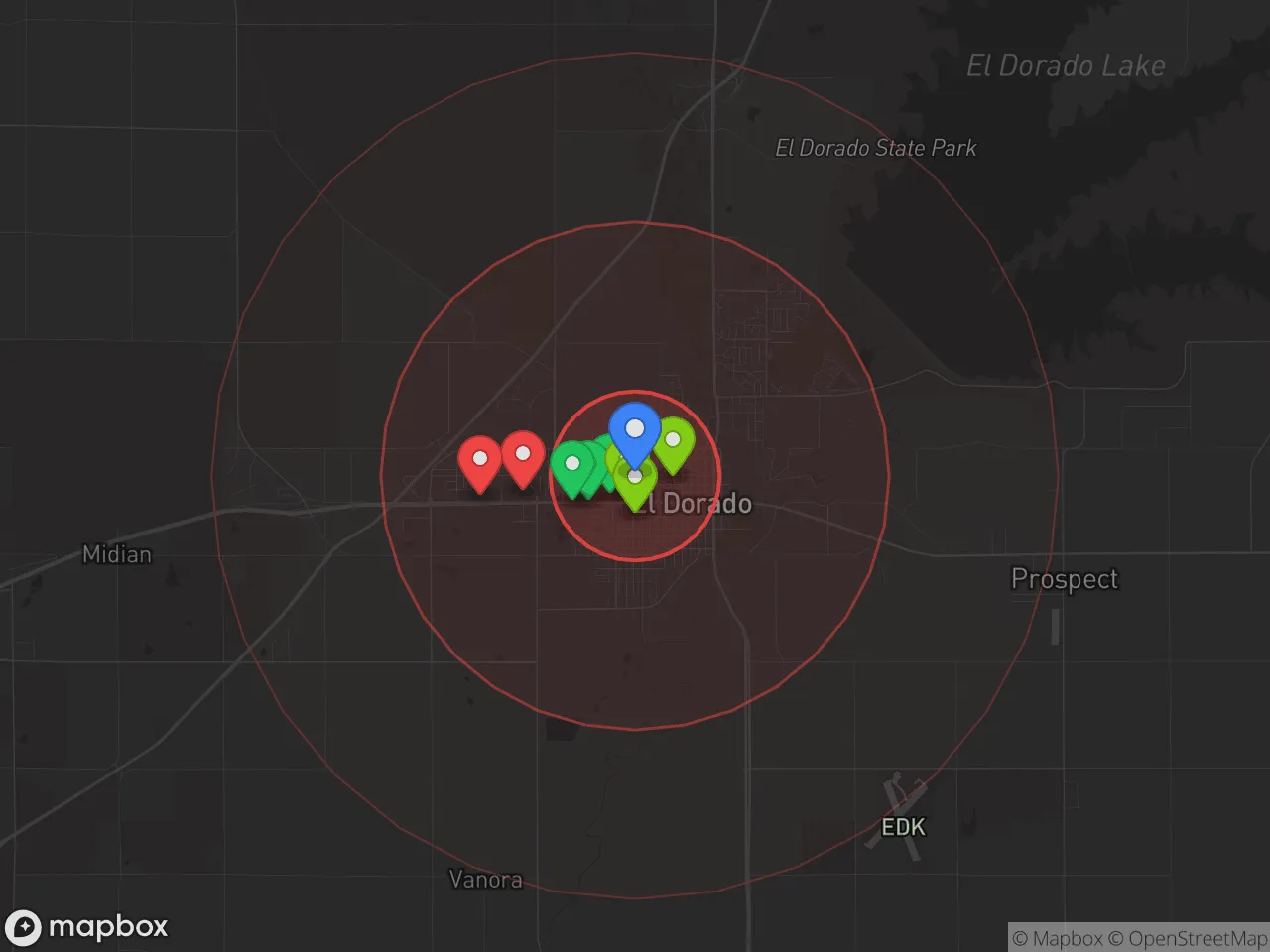
Hobbies
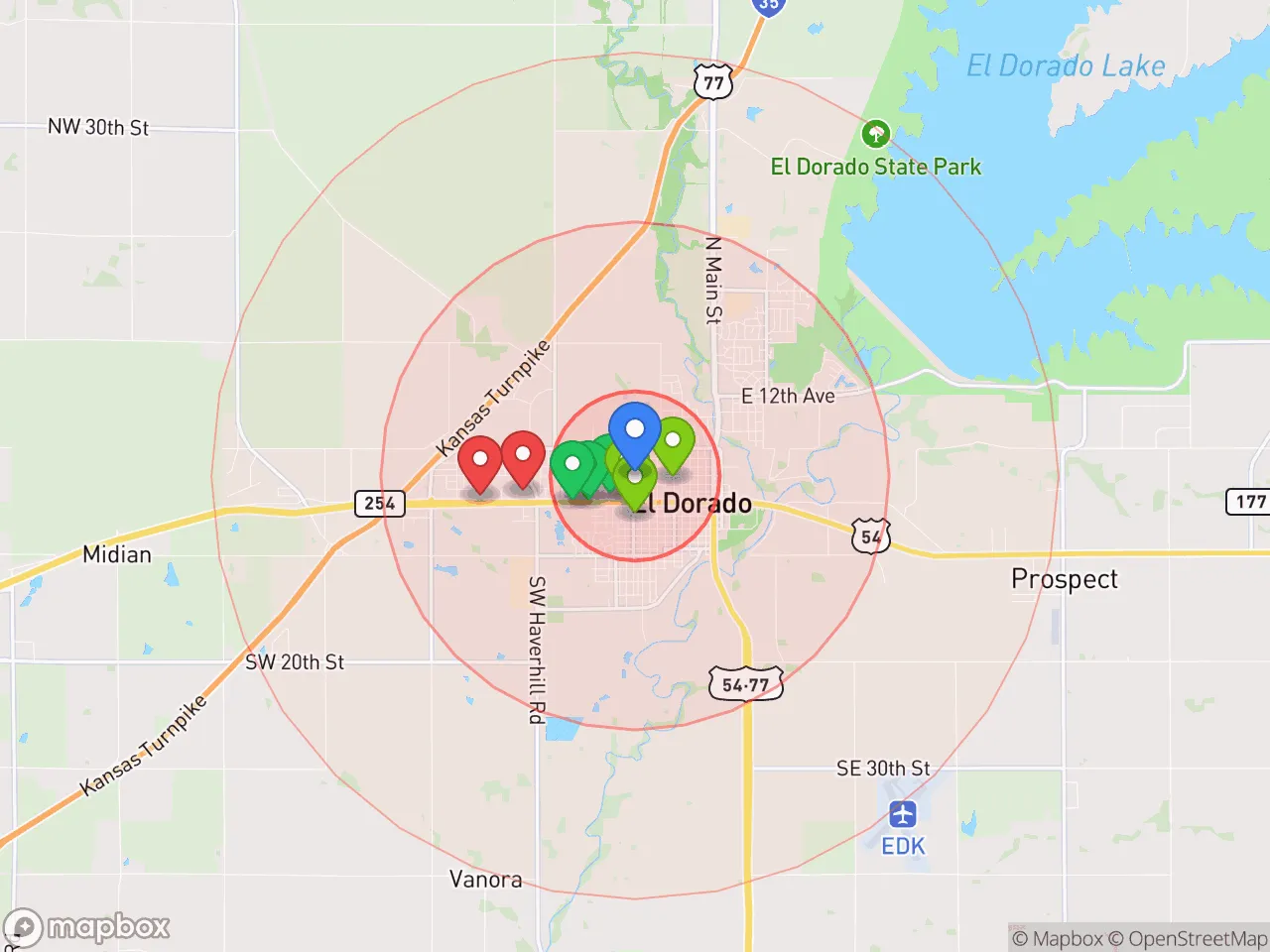
Explore the areaGroceries
2 within 10 miles
Gas
12 within 10 miles
Hospital
2 within 20 miles
Airport
MCI — Kansas City International
Post Office
USPS — El Dorado, KS
Critical Amenities
Quality-of-Life Analysis
El Dorado, Kansas, a small city of roughly 13,000 residents in Butler County, offers a quality of life defined by low costs and a strong sense of community, attracting families, retirees, retirees, and workers seeking refuge from Wichita’s higher prices. With a cost of living index of 61—39 percent below the U.S. average—the area draws those who prioritize affordability and space over urban amenities. The population skews older and more settled, with a median age around 38, and the community is known for its quiet, self-reliant character, anchored by local employers like the El Dorado Correctional Facility and the nearby oil and gas industry.
How housing costs and everyday expenses compare to Wichita and surrounding towns
El Dorado’s housing market is among the most affordable in the Wichita metro area. The median home value sits at $113,800, roughly half the national median and about 30 percent below Wichita’s median of $165,000. Median rent is $877, well under the national figure of $1,200 and competitive with nearby towns like Augusta ($950) and Andover ($1,100). The average commute of 17.9 minutes is short by national standards—most residents work locally or make the 30-minute drive to Wichita. Utility costs are slightly below the Kansas average, and grocery prices run about 10 percent lower than in Wichita, thanks to the presence of discount grocers like Aldi and Price Chopper. Property taxes in Butler County are assessed at a relatively low effective rate of roughly 1.1 percent, keeping monthly housing costs manageable even for households earning the county median income of $62,000.
What daily life is like for families: schools, parks, and local amenities
Daily life in El Dorado revolves around a compact downtown and a handful of community anchors. The El Dorado USD 490 school district serves about 2,800 students and includes El Dorado High School, which offers a strong vocational program in partnership with Butler Community College. The college itself, a two-year institution with 8,000 students, provides affordable associate degrees and workforce training, drawing commuters from across the region. Outdoor recreation centers on El Dorado State Park, a 8,000-acre reservoir offering fishing, boating, and hiking just minutes from downtown. The city’s small hospital, Susan B. Allen Memorial Hospital, provides basic care, but residents travel to Wichita for specialized services. Dining options are limited to local diners and fast-food chains; for a wider variety, most residents drive to Wichita’s Old Town district. The rhythm of life is slow and predictable, with community events like the annual Walnut Valley Festival (bluegrass) and folk music) and the Butler County Fair drawing consistent local crowds.
El Dorado is best suited for those who value low cost of living, short commutes, and a slower pace over urban convenience. Retirees on fixed incomes, remote workers seeking a quiet home base with access to Wichita’s medical and cultural resources, will find the housing and tax burden especially light. Families with school-age children benefit from the district’s manageable class sizes and the community college’s dual-enrollment options. Workers in manufacturing, corrections, or energy sectors will appreciate the short commute and affordable homeownership path. However, those seeking vibrant nightlife, diverse dining, or high-end retail will likely feel constrained. For the right resident—someone who prioritizes financial breathing room and outdoor recreation over urban hustle—El Dorado offers a stable, low-stress quality of life that is increasingly rare in the broader Wichita metro.

Crime in El Dorado, KS
Generally safer than 68% of comparable U.S. locations.
Violent CrimeViolent Crime Analysis
Property CrimeProperty Crime Analysis
Crime Analysis
El Dorado, Kansas, Kansas reports a violent crime rate of 323.5 incidents per 100,000 residents and a property crime rate of 1,357 per 100,000, placing it is important to be noted that these figures place the city in a moderate risk category compared to national averages. While not among the most dangerous cities in Kansas, the data suggests that residents face a tangible risk of becoming a crime victim, particularly regarding property offenses. The overall safety picture is mixed, with the community benefiting from a relatively low population density but also facing challenges common to small cities situated within commuting distance of a larger metropolitan area.
Crime in context
El Dorado's violent crime rate of 323.5 per 100,000 is notably higher than the national average of approximately 380 per 100,000, but it is significantly lower than rates seen in larger Kansas cities like Wichita or Kansas City. Property crime in El Dorado, at 1,357 per 100,000, is substantially higher than the national average of roughly 1,954 per 100,000, indicating that while property offenses are a concern, they are less frequent than in many other parts of the country. However, these statistics must be viewed with caution, as they represent reported incidents and may not capture the full scope of crime in the area. The presence of progressive judicial philosophies in the broader region, particularly in nearby Wichita and Sedgwick County, can contribute to a revolving-door justice system that prioritizes offender rehabilitation over public safety, potentially leading to higher recidivism and more criminals on the street.
What residents experience
* Values derived from national, state, county, city and local statistics and may differ in a specific area. Last updated: 2026-10-10T16:27:24.000Z
Narrative content on this page is AI-generated and may contain mistakes. Verify any details that matter before acting on them.
ReloMaps may earn a commission from affiliate links at no extra cost to you.

