
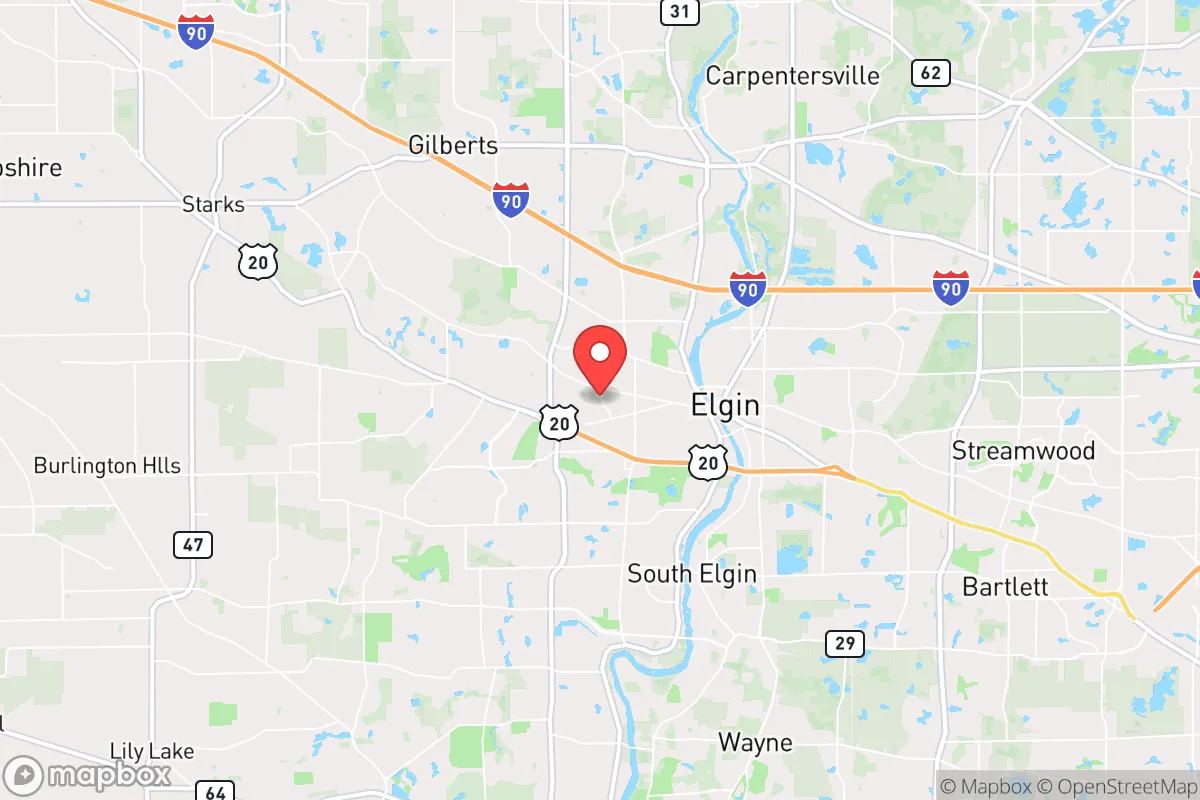
Photo: Wikipedia
Personal Sovereignty in Elgin, IL
Viable for self-reliance. Generally workable, though some barriers may limit total independence.
What does Personal Sovereignty tell us?
Personal Sovereignty measures your capacity for self-reliance and independence with minimal government friction. Higher scores mean fewer barriers between you and the way you want to live... but it assumes you have the space you need and good neighbors.
What does this tell us?
Personal Sovereignty measures your capacity for self-reliance and independence with minimal government friction. Higher scores mean fewer barriers between you and the way you want to live... but it assumes you have the space you need and good neighbors.
State Policy
Energy independence: Importer (45% of energy produced in-state)
Personal Liberty
Homesteading

Personal Liberty Analysis
For the individual or family prioritizing personal sovereignty, Elgin, Illinois presents a deeply conflicted picture. While the city offers a relatively affordable path to homeownership compared to the rest of the Chicago metro area, it operates under the full weight of Illinois state law, which imposes some of the most restrictive gun regulations in the nation, a heavy tax burden, and a political culture that often prioritizes collective mandates over individual choice. A survivalist or prepper mindset will find the area’s regulatory climate a significant headwind, requiring careful navigation of state preemptions and local ordinances that can erode the autonomy a self-reliant person seeks.
Tax burden and regulatory posture: How Illinois law constrains your financial autonomy
Illinois is a high-tax state, and Elgin residents feel that pressure directly. The state’s flat income tax rate of 4.95% is coupled with some of the highest property taxes in the country. In Elgin, effective property tax rates often hover around 2.5% of a home’s assessed value, meaning a $250,000 home can carry an annual tax bill of $6,000 or more. This is a permanent, escalating cost that directly reduces your ability to save, invest, or stockpile resources. The state’s regulatory posture is equally burdensome. Illinois has a complex web of environmental and building codes, and the state’s aggressive pursuit of renewable energy mandates can limit a homeowner’s ability to make independent decisions about their property. For example, while the state offers incentives for solar, the permitting process can be slow and costly, and homeowners associations (HOAs) in many Elgin subdivisions retain the power to block visible modifications like solar panels or rainwater collection systems. The state’s pension debt crisis also creates a long-term fiscal overhang, meaning tax increases are a recurring threat, not a remote possibility. For a prepper, this financial environment feels less like a foundation for self-reliance and more like a permanent lease on your own labor.
Self-defense and gun law specifics: Navigating Illinois’ restrictive firearms environment
This is the most critical sovereignty issue for a conservative audience. Illinois is not a gun-friendly state, and Elgin residents must comply with state-level laws that are among the strictest in the Midwest. The state requires a Firearm Owner’s Identification (FOID) card to even possess a firearm or ammunition, a process that involves a background check and can take months to process. For concealed carry, a separate Concealed Carry License (CCL) is required, which mandates 16 hours of training and a live-fire qualification. Illinois does not recognize concealed carry permits from any other state, meaning visitors or new residents must immediately apply for an Illinois CCL. The state also bans so-called “assault weapons” and high-capacity magazines under the Protect Illinois Communities Act, passed in 2023. This law directly impacts a prepper’s ability to own common defensive rifles like the AR-15. While the law is facing legal challenges, it is currently in effect. Elgin itself has not added additional local gun restrictions beyond state law, but the city’s proximity to Chicago means law enforcement is generally aligned with the state’s restrictive posture. For the self-defender, the legal landscape requires meticulous compliance, and the state’s regulatory apparatus can feel like a deliberate obstacle to the right of self-preservation.
Self-reliance and homesteading viability: Lot sizes, zoning, and off-grid feasibility in Elgin
Elgin offers a mixed bag for those seeking a more self-sufficient lifestyle. The city is a mix of older, denser neighborhoods and newer suburban subdivisions. In the older parts of town, particularly near the historic downtown, lot sizes are small (often under 0.2 acres), making significant gardening or livestock keeping impractical. The newer subdivisions on the city’s fringes, such as those near Randall Road, offer larger lots, sometimes up to a half-acre or more, but these are almost universally governed by HOAs with strict covenants. Zoning in Elgin generally prohibits keeping chickens, goats, or other livestock on standard residential lots, and the city’s code enforcement is active. For off-grid feasibility, the picture is bleak. Illinois law requires grid connection for new homes, and the state’s building codes make it difficult to legally construct a home without municipal water and sewer connections. Rainwater harvesting is technically legal but heavily regulated, and any system must be installed by a licensed plumber. The best option for a prepper in the Elgin area is to look at unincorporated Kane County, just outside city limits, where zoning is looser, lot sizes can be 1-5 acres, and there are fewer restrictions on structures and self-reliance projects. However, even there, the state’s tax and regulatory reach remains long.
Personal liberties: Parental rights, medical autonomy, speech, and property in Illinois
On paper, Illinois protects free speech, but the state’s political culture can create a chilling effect for conservative viewpoints. The state has a strong “hate speech” statute that has been used to prosecute individuals for online comments, and local governments in the Chicago area have been known to take official stances on national issues, which can alienate residents who disagree. Parental rights are a major flashpoint. Illinois has some of the most progressive education laws in the country, including a mandate that schools teach LGBTQ+ history and a law that allows students to use a name and pronouns without parental consent. This directly undermines a parent’s authority over their child’s upbringing. Medical autonomy is also constrained. Illinois has a strict vaccine mandate for schoolchildren, and during the COVID-19 pandemic, the state was aggressive in imposing lockdowns and mask mandates. While those specific mandates have expired, the legal precedent for state control over individual medical decisions remains. Property rights are relatively strong in terms of eminent domain, but the state’s environmental regulations can limit what you can do with your land, particularly near waterways or wetlands. For a parent or individual who values the right to make decisions for their family without government interference, Elgin and Illinois present a persistent adversarial environment.
Overall, Elgin offers a lower cost of entry than many other Chicago suburbs, but that financial benefit comes at the cost of significant personal sovereignty. The state’s heavy tax burden, restrictive gun laws, and progressive education mandates create a landscape where a survivalist or prepper must be constantly vigilant and legally compliant. For those who can afford it, moving to a neighboring state like Indiana or Wisconsin would provide a far more favorable environment for self-reliance, with lower taxes, constitutional carry, and stronger parental rights. Elgin is a place to live within the system, not to build a life outside of it. If your priority is maximum personal autonomy, this area is a strategic compromise at best, and a long-term liability at worst.

* Values derived from national, state, county, city and local statistics and may differ in a specific area. Last updated: 2026-04-29T19:26:55.000Z
Narrative content on this page is AI-generated and may contain mistakes. Verify any details that matter before acting on them.
ReloMaps may earn a commission from affiliate links at no extra cost to you.

