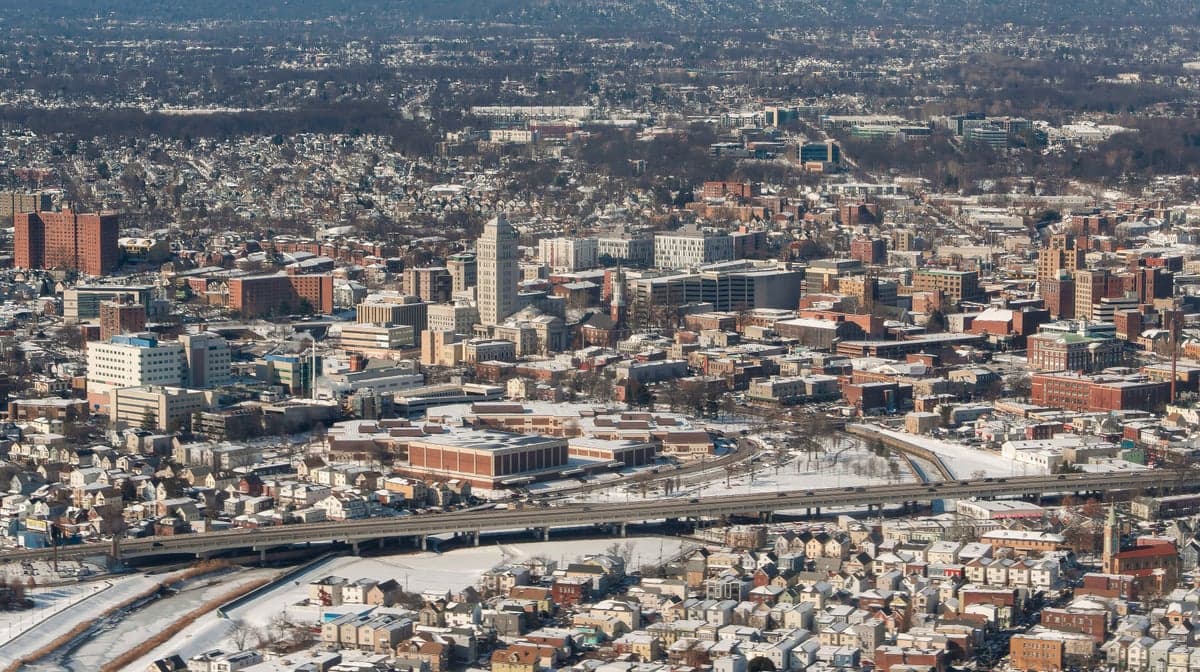
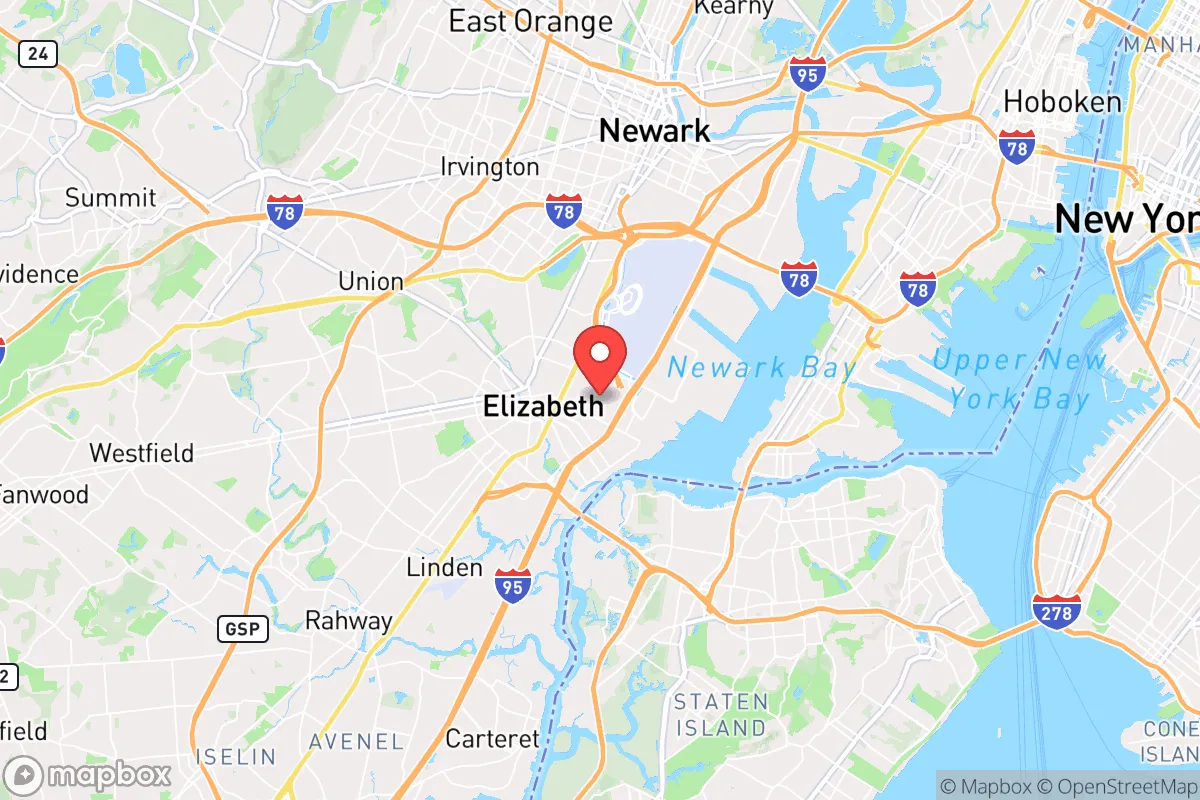
Photo: Wikipedia
Political ClimatePolitical Climate in Elizabeth, NJ
District shown is the primary district for this city’s centroid. Cities may span multiple districts.
Local Political AnalysisPolitical Analysis of Elizabeth, NJ
Look, I’ve lived in Elizabeth my whole life, and I’ve watched this town shift from a solidly blue-collar, union Democrat stronghold into something that feels a lot more like a one-party machine with a progressive agenda. The Cook PVI of D+15 tells you the headline—this is deep blue territory—but it doesn’t capture the real story. In the 2020 presidential election, Elizabeth gave Joe Biden over 78% of the vote, and in 2024, Kamala Harris likely pulled similar numbers. But the real shift isn’t just about party registration; it’s about how the local government has started leaning hard into policies that feel less about helping working families and more about top-down social engineering. You used to be able to disagree with a mayor or a council member and still have a voice at a town hall. Now, it feels like if you’re not on board with every progressive plank—from sanctuary city status to zoning changes that prioritize density over neighborhood character—you’re treated like you’re out of step.
How it compares
Drive ten miles west to Cranford or Westfield, and you’re in a completely different political universe. Those towns are still competitive, often splitting tickets between Republicans and moderate Democrats. Elizabeth, by contrast, is surrounded by cities like Newark (D+35) and Jersey City (D+30) that are even more uniformly blue, but the difference is that Elizabeth’s politics feel more insular. The city council hasn’t had a Republican member in decades, and the local Democratic party machinery is so entrenched that primary elections are often the only real contests. What’s concerning is how that lack of competition has allowed some pretty aggressive policies to slide through without much debate—like the 2023 ordinance that effectively limited public comment at council meetings, or the push to eliminate single-family zoning in certain districts. Compare that to nearby Linden or Rahway, where there’s still a vocal minority pushing back on tax hikes and school curriculum changes. In Elizabeth, that kind of pushback gets drowned out.
What this means for residents
For the average person living here, the political climate translates into a few concrete realities. First, your property taxes are among the highest in Union County, and there’s very little appetite at city hall to cut spending—especially on programs that many residents see as ideological, like diversity, equity, and inclusion initiatives in the school district. Second, if you own a small business, you’ve probably noticed the regulatory creep: new paid leave mandates, stricter licensing rules, and a general attitude that the city knows better than you do about how to run your operation. Third, and this is the one that bothers me most, there’s a growing sense that your personal freedoms—like choosing what your kids read in school or whether you want to opt out of certain public health mandates—are being treated as negotiable. The city’s sanctuary policy, for instance, was expanded in 2024 to limit cooperation with federal immigration authorities even in cases involving serious crimes, which a lot of long-time residents see as putting ideology above public safety.
On the cultural side, Elizabeth has always been a proud immigrant city, and that’s not changing. But the political leadership has increasingly framed that identity as a reason to resist any kind of law-and-order approach. The police department has been defunded in practice if not in name—budget cuts have reduced officer numbers by about 15% since 2020—while the city pours money into social service programs that sound good on paper but often lack accountability. If you’re a conservative or even a moderate who values limited government and personal responsibility, you’ll feel like you’re swimming against the current here. The trajectory is clear: more government, less individual choice, and a political culture that punishes dissent. I don’t see it reversing anytime soon, but if you’re considering a move, just know what you’re signing up for.

State Political ClimatePolitical Climate in New Jersey
State Political AnalysisPolitical Environment in the State
New Jersey has long been one of the most reliably Democratic states in the nation, but don’t let the overall numbers fool you—the political reality is far more fractured than the headlines suggest. The state hasn’t voted for a Republican for president since 1988, and Democrats hold every statewide office and both chambers of the legislature by wide margins. But beneath that blue veneer, a deep urban-suburban-rural divide has been widening for the past 15 years, and the state’s trajectory on taxes, regulation, and personal freedom has many conservatives feeling like they’re living in a one-party state that’s increasingly hostile to their values.
Urban vs. rural divide
The political map of New Jersey is essentially a tale of three regions. The urban core—Newark, Jersey City, Paterson, and Elizabeth—drives the state’s Democratic dominance, producing massive vote margins that swamp the rest of the state. These cities are heavily unionized, diverse, and reliably progressive, with turnout machines that deliver 70-80% for Democratic candidates. In contrast, the rural and exurban areas—Sussex County, Warren County, and much of Hunterdon and Salem counties—vote Republican by similar margins, but they simply don’t have the population to counterbalance the cities. The real battleground is the suburbs, and that’s where the story gets interesting. Bergen County, once a Republican stronghold, has flipped decisively blue over the past two decades, driven by an influx of New York City commuters and changing demographics. Ocean County, on the other hand, remains a Republican bastion, powered by a large senior population and a strong law-and-order sentiment. Monmouth County is a true swing county, often deciding statewide races, but it’s trending left as younger, more educated voters move in from the cities. The bottom line: if you’re a conservative looking for like-minded neighbors, you’ll find them in the northwest and along the shore, but you’ll be living in a state where your vote is effectively diluted by the urban centers.
Policy environment
New Jersey’s policy environment is a textbook case of progressive governance that conservatives find deeply frustrating. The state has the highest property taxes in the nation, averaging over $9,500 per year, and the second-highest overall tax burden. The income tax is progressive, topping out at 10.75% for earners over $1 million, but the middle class feels the squeeze from every angle. The regulatory posture is aggressive: the state has its own strict environmental rules that go far beyond federal standards, a costly energy mandate that has driven up utility bills, and a notoriously complex business tax code that has pushed many small businesses to neighboring Pennsylvania or Delaware. On education, New Jersey spends more per pupil than almost any other state, but the results are uneven—wealthy suburbs get top-tier schools, while urban districts like Newark and Camden remain chronically underperforming despite massive funding. Healthcare is heavily regulated, with a state-run insurance exchange and strict certificate-of-need laws that limit competition. Election laws are among the most liberal in the country: no-excuse mail-in voting, automatic voter registration, and same-day registration are all in place, which conservatives argue erodes election integrity. The state also has a “sanctuary” policy that limits cooperation with federal immigration enforcement, a flashpoint for many residents.
Trajectory & freedom
On the freedom front, New Jersey has been moving in a decidedly less free direction over the past decade, and the trend shows no sign of reversing. Gun rights have been systematically eroded: the state passed a “concealed carry reform” law in 2022 that effectively bans carrying in most public places, and it has some of the strictest magazine capacity limits and purchase permit requirements in the nation. Parental rights took a hit with the passage of a law that prohibits schools from notifying parents if a child changes their gender identity or pronouns—a policy that has sparked massive backlash and lawsuits. On medical autonomy, the state has aggressively pushed COVID-19 vaccine mandates for healthcare workers and school employees, and it maintains one of the strictest vaccine schedules for children. Property rights are weak: the state’s affordable housing mandates force towns to build high-density developments, often overriding local zoning laws, and the eminent domain powers are broad. The tax burden continues to rise, with no serious talk of reform from the Democratic supermajority. The only bright spot for conservatives is that the state has not followed California and New York in enacting rent control statewide, and it has a relatively strong right-to-work law for public employees, though private-sector unionization remains high.
Civil unrest & political movements
New Jersey has seen its share of political flashpoints, though they tend to be more bureaucratic than violent. The 2020 Black Lives Matter protests were large and mostly peaceful in cities like Newark and Trenton, but there were instances of property damage and looting in Jersey City and Paterson. The parents’ rights movement has been particularly active here, with massive school board protests in Montgomery, Marlboro, and Middletown over curriculum transparency and gender policies. These protests have led to a wave of conservative school board candidates winning seats in suburban districts, though the state legislature has largely ignored their concerns. Immigration politics are a constant source of tension: the state’s sanctuary policies have led to high-profile incidents of ICE detainers being ignored, and the influx of migrants from New York City has strained resources in places like Elizabeth and Newark. There’s been no serious secession or nullification rhetoric, but there is a growing “exit” movement among conservatives who feel politically homeless, with many relocating to Florida, Texas, or the Carolinas. Election integrity remains a hot-button issue: the 2020 and 2022 elections saw widespread use of mail-in ballots, and while no major fraud was proven, the lack of voter ID laws and the state’s automatic voter registration system have left many conservatives deeply skeptical.
Projection
Looking ahead 5-10 years, the trajectory is clear: New Jersey will continue to become more progressive, more expensive, and less friendly to conservative values. The demographic trends are working against Republicans: the state is becoming more diverse, more urban, and more reliant on public-sector employment, all of which favor Democrats. The in-migration patterns are also telling—New Jersey loses more residents to other states than it gains, and those leaving are disproportionately higher-income and more conservative. The people moving in are largely from New York City and other blue states, and they tend to support the status quo. The one wild card is the suburban backlash: if the parents’ rights movement continues to grow and if the state’s tax burden drives more middle-class families out, there could be a realignment in the suburbs. But given the structural advantages Democrats have—gerrymandered districts, a compliant media, and a heavily unionized electorate—it’s hard to see a path back to competitiveness for Republicans. A new resident moving in now should expect to live in a state where their vote for statewide office is essentially meaningless, where their taxes will only go up, and where their cultural values will be increasingly marginalized.
For a conservative considering a move to New Jersey, the practical takeaway is this: you can find like-minded communities in the northwestern counties and along the shore, but you’ll be living in a state that is fundamentally at odds with your political and cultural values. The high taxes, aggressive regulation, and progressive social policies are not going away. If you’re willing to pay a premium for proximity to New York or Philadelphia and you’re prepared to fight for your values at the local level, you can make it work. But if you’re looking for a state that respects your freedom, your wallet, and your voice, you’d be better off looking elsewhere.
* Values derived from national, state, county, city and local statistics and may differ in a specific area. Last updated: 2026-04-30T05:31:32.000Z
Narrative content on this page is AI-generated and may contain mistakes. Verify any details that matter before acting on them.
ReloMaps may earn a commission from affiliate links at no extra cost to you.

