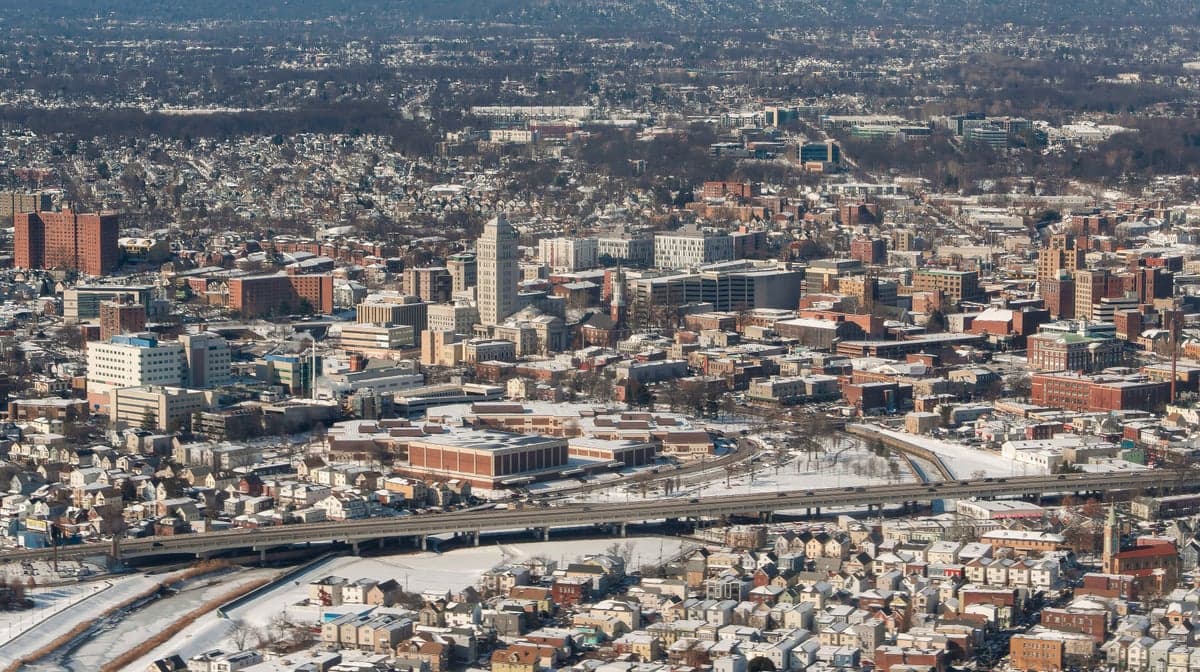
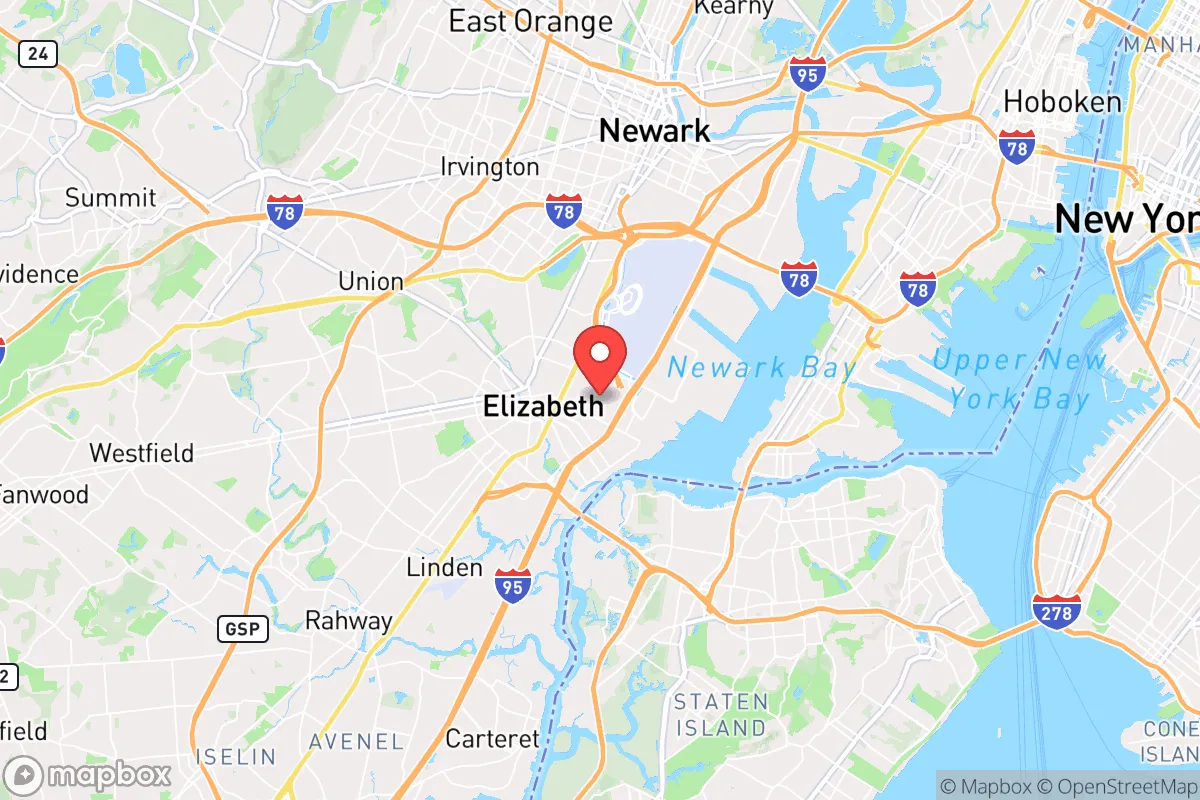
Photo: Wikipedia
Quality of Life in Elizabeth, NJ
A high quality of life with strong walkability, manageable living costs, healthy neighborhood signals, and solid amenity access.
What does Quality of Life tell us?
Quality of Life blends cost of living, nearby amenities, socioeconomic signals, and neighborhood character. City-level scores represent the whole municipality; individual neighborhoods can differ.
What does this tell us?
Quality of Life blends cost of living, nearby amenities, socioeconomic signals, and neighborhood character. City-level scores represent the whole municipality; individual neighborhoods can differ.
Cost of Living
31% above national average
The Real Cost of Living in Elizabeth, NJ for 2026
| Tier | Individual | Family (4) |
|---|---|---|
| Survival | $23k | $44k |
| Comfortable | $75k | $111k |
| Luxury | $110k+ | $171k+ |
| Elite (Top 5%) | $130k+ | $201k+ |
58%
The Area Signal
A metric tracking the socioeconomic signals of the area.
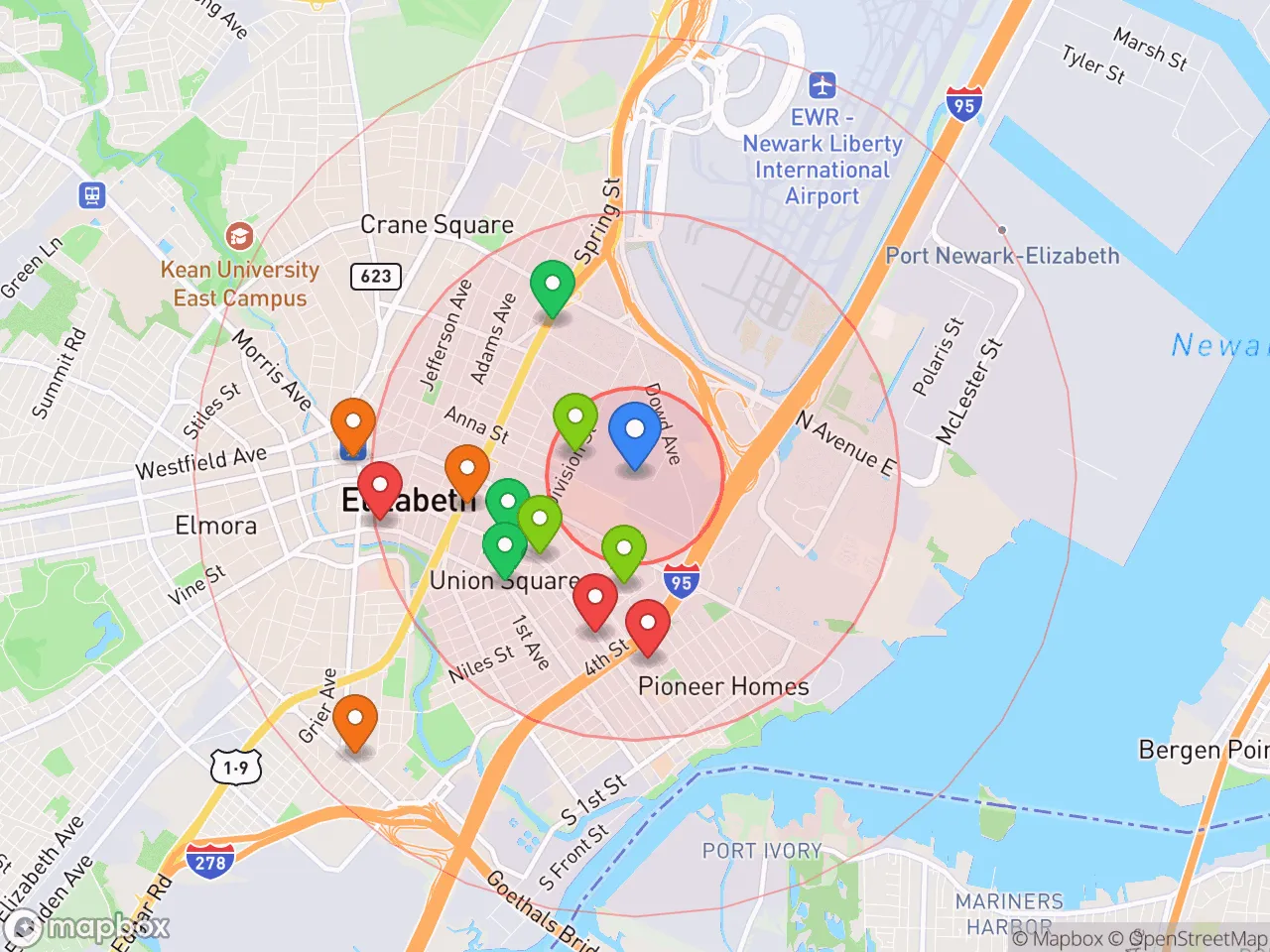
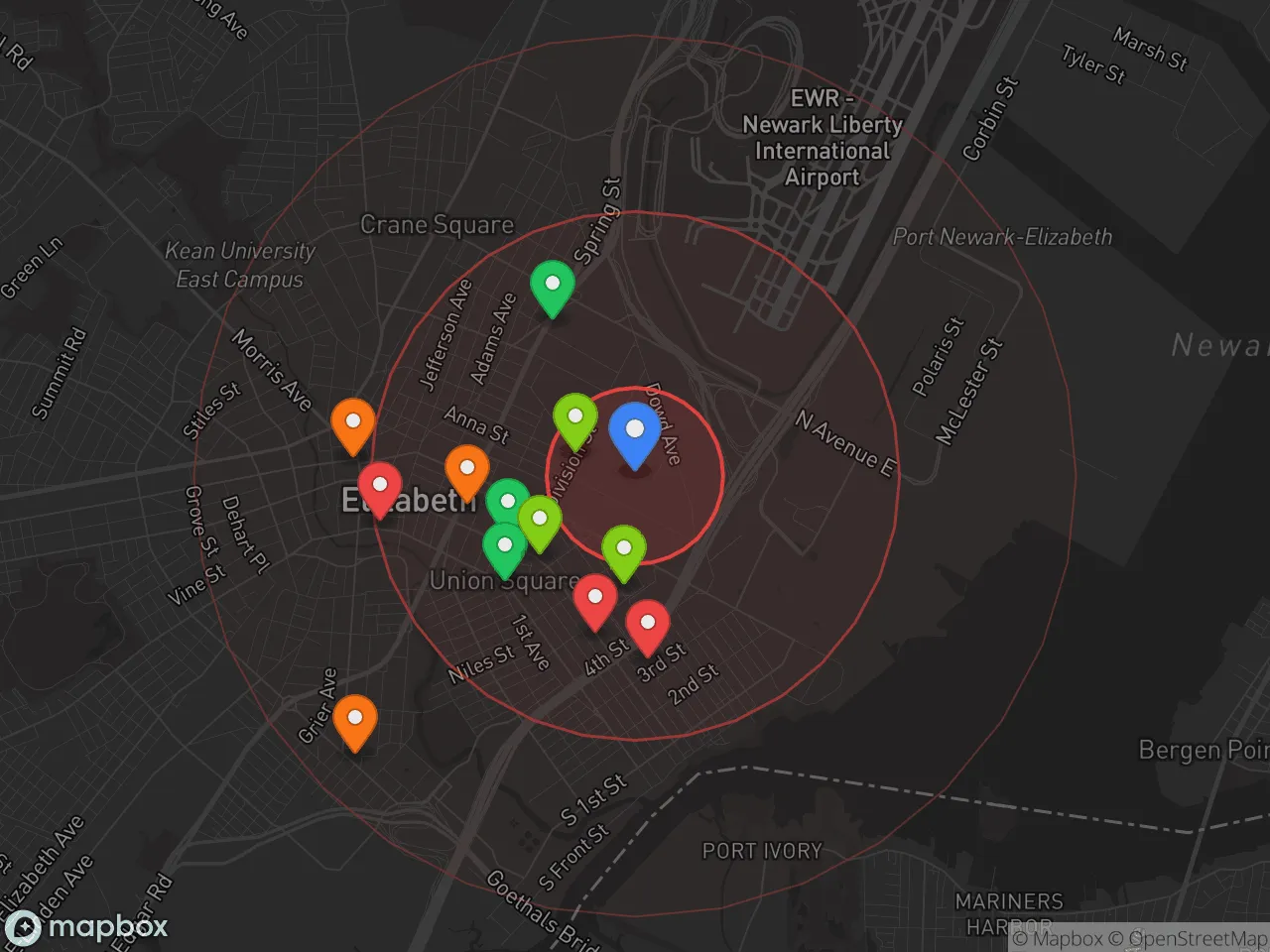
Hobbies
Explore the areaGroceries
6 within 10 miles
Gas
20 within 10 miles
Hospital
20 within 20 miles
Airport
EWR — Newark Liberty International
Post Office
USPS — Elizabeth, NJ
Critical Amenities
Quality-of-Life Analysis
Elizabeth, New Jersey, presents a quality-of-life profile that is distinctly more affordable than its immediate New York City suburbs while remaining costlier than the national average, with a cost of living index of 131 (where 100 equals the U.S. average). The city is a densely populated, majority-minority urban hub where a large share of residents are working-class families, recent immigrants, and commuters who trade higher housing costs for proximity to Manhattan and Newark. With a median home value of $393,500 and a median rent of $1,463, Elizabeth offers a significant price break compared to neighboring communities like Union ($450,000+) or Jersey City ($600,000+), but the trade-offs include older housing stock, higher property taxes, and a longer average commute of roughly 27 minutes.
Cost of living, housing affordability, and how Elizabeth compares to nearby cities
Elizabeth’s cost of living index of 131 is 31% above the national baseline, driven primarily by housing and transportation. The median home value of $393,500 is roughly half that of Jersey City and about 30% less than in Hoboken, making it one of the more attainable entry points for homeownership in Union County. Renters face a median monthly payment of $1,463, which is notably lower than the New York metro median of roughly $2,200. However, property taxes in New Jersey are among the highest in the nation, and Elizabeth’s effective tax rate hovers around 3.5%, adding a substantial annual cost for homeowners. For commuters, the average travel time of 26.98 minutes is shorter than the New York City metro average of 34 minutes, thanks to NJ Transit rail and bus connections to Newark Penn Station and New York Penn Station. Still, car ownership is common, and parking in the city can be tight. Compared to nearby Rahway or Linden, Elizabeth offers slightly lower home prices but similar tax burdens, making it a pragmatic choice for budget-conscious buyers who prioritize transit access over suburban space.
Schools, amenities, and what daily life is like for families and professionals
Daily life in Elizabeth is shaped by its role as a transit-oriented, multicultural city with a strong industrial and logistics base. The Elizabeth Public Schools district serves over 28,000 students, with several magnet and dual-language programs, though overall academic performance trails state averages — a key consideration for families. The city is home to The Mills at Jersey Gardens, one of the largest outlet malls in the region, and offers numerous parks including Warinanco Park and Mattano Park. For dining and groceries, Elizabeth’s diverse population means a wide array of Latin American, Portuguese, and Caribbean restaurants and markets, particularly along Elizabeth Avenue and Morris Avenue. The city’s proximity to Newark Liberty International Airport (a 10-minute drive) and Port Newark-Elizabeth adds both convenience and noise, especially for neighborhoods near the airport. Cultural amenities include the Union County Performing Arts Center in nearby Rahway and the Elizabeth Public Library system. The overall rhythm is urban and fast-paced, with a strong sense of community in specific neighborhoods like Elmora and Peterstown, but limited nightlife and entertainment options compared to larger cities.
Elizabeth is best suited for commuters, first-time homebuyers, and immigrant families who value affordability and transit access over suburban quiet or top-tier schools. Professionals working in Newark, Elizabeth’s own logistics and healthcare sectors, or Manhattan will find the commute manageable and the housing costs a relief compared to core New York City suburbs. Families should weigh the school district’s challenges against the availability of magnet programs and the lower cost of living. Retirees or those seeking a slower pace may find the city’s density, traffic, and airport noise less appealing. For those who prioritize budget, transit connectivity, and cultural diversity, Elizabeth offers a grounded, functional urban lifestyle that is increasingly rare in the New York metro area.

Crime in Elizabeth, NJ
Crime rates similar to the national median for U.S. locations.
Violent CrimeViolent Crime Analysis
Property CrimeProperty Crime Analysis
Crime Analysis
Elizabeth, New Jersey, presents a mixed safety profile for potential residents. While its violent crime rate of 156.7 per 100,000 residents is notably lower than the national average, its property crime rate of 1,048.2 per 100,000 is significantly higher, reflecting challenges common in dense, transit-oriented urban centers near New York City. The city’s location in Union County, within the broader New York metropolitan area, means it shares the region’s complex public safety dynamics, including the influence of progressive prosecutorial policies that can affect crime trends and community confidence.
Crime in context
Elizabeth’s violent crime rate sits well below the U.S. average of roughly 380 per 100,000, placing it among safer large cities for personal safety. However, the property crime rate is about 30% higher than the national figure, driven by theft, burglary, and motor vehicle theft. Compared to neighboring cities like Newark (which has a violent crime rate near 1,100 per 100,000) or Jersey City (around 300 per 100,000), Elizabeth is a relative outlier—lower in violence but elevated in property offenses. The city’s status as a major transportation hub, with Newark Liberty International Airport and extensive rail connections, contributes to transient populations and opportunistic property crime. Progressive district attorneys in Union County have emphasized alternatives to incarceration and reduced bail requirements, a policy approach that critics argue can lead to higher recidivism and more offenders on the street, directly impacting property crime rates and public perception of safety.
What residents experience
Daily life in Elizabeth involves a heightened awareness of property crime. Residents commonly report package theft, car break-ins, and occasional home burglaries, particularly in areas near transit stations and commercial corridors. Violent incidents are less frequent but do occur, often concentrated in specific blocks rather than citywide. The Elizabeth Police Department has responded with targeted patrols and community policing initiatives, but the broader judicial environment—where progressive reforms prioritize diversion over detention—means that repeat property offenders may cycle through the system quickly. This can erode trust among victims and law-abiding residents, who may feel that the justice system prioritizes offender rehabilitation over public protection. For families and professionals, this translates into practical precautions: secure parking, home security systems, and avoiding certain areas after dark.
Neighborhood-level variation is significant. The Elmora and Peterstown sections, with their strong community ties and active block associations, tend to report lower crime rates than areas near the Elizabethport waterfront or the industrial zones along the Turnpike. Prospective residents should examine block-by-block data and visit at different times of day, as safety can shift dramatically within a few streets. Overall, Elizabeth offers affordability and transit access but demands a realistic assessment of its crime landscape, shaped by both local conditions and the broader progressive justice policies common in the New Jersey metro area.
* Values derived from national, state, county, city and local statistics and may differ in a specific area. Last updated: 2026-04-30T05:31:32.000Z
Narrative content on this page is AI-generated and may contain mistakes. Verify any details that matter before acting on them.
ReloMaps may earn a commission from affiliate links at no extra cost to you.

