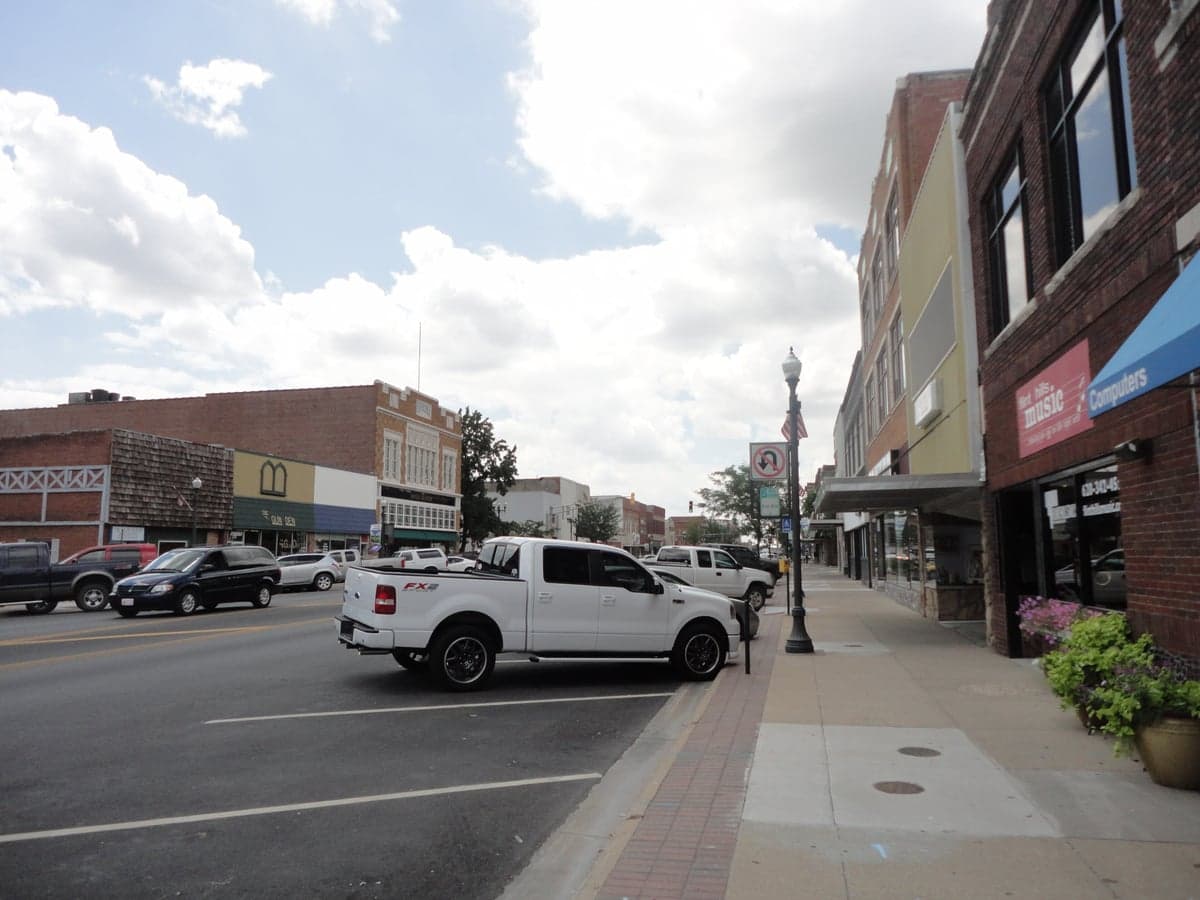
Photo: Wikipedia
Strategic Assessment of Emporia, KS
Workable tactical position. Some exposure to population density or targets, but generally defensible in a crisis.
What does the Strategic Assessment tell us?
Our Strategic Assessment grades tactical survivability of an area. Major population centers, military targets, fallout zones, natural disasters, and border exposure all drive risk — lower exposure means a more defensible position in a crisis.
This is heavily inspired by Joel Skousen's Strategic Relocation book. Highly recommended you checkout the book ($)What does this tell us?
Our Strategic Assessment grades tactical survivability of an area. Major population centers, military targets, fallout zones, natural disasters, and border exposure all drive risk — lower exposure means a more defensible position in a crisis.
This is heavily inspired by Joel Skousen's Strategic Relocation book. Highly recommended you checkout the book ($)Strategic Pillars

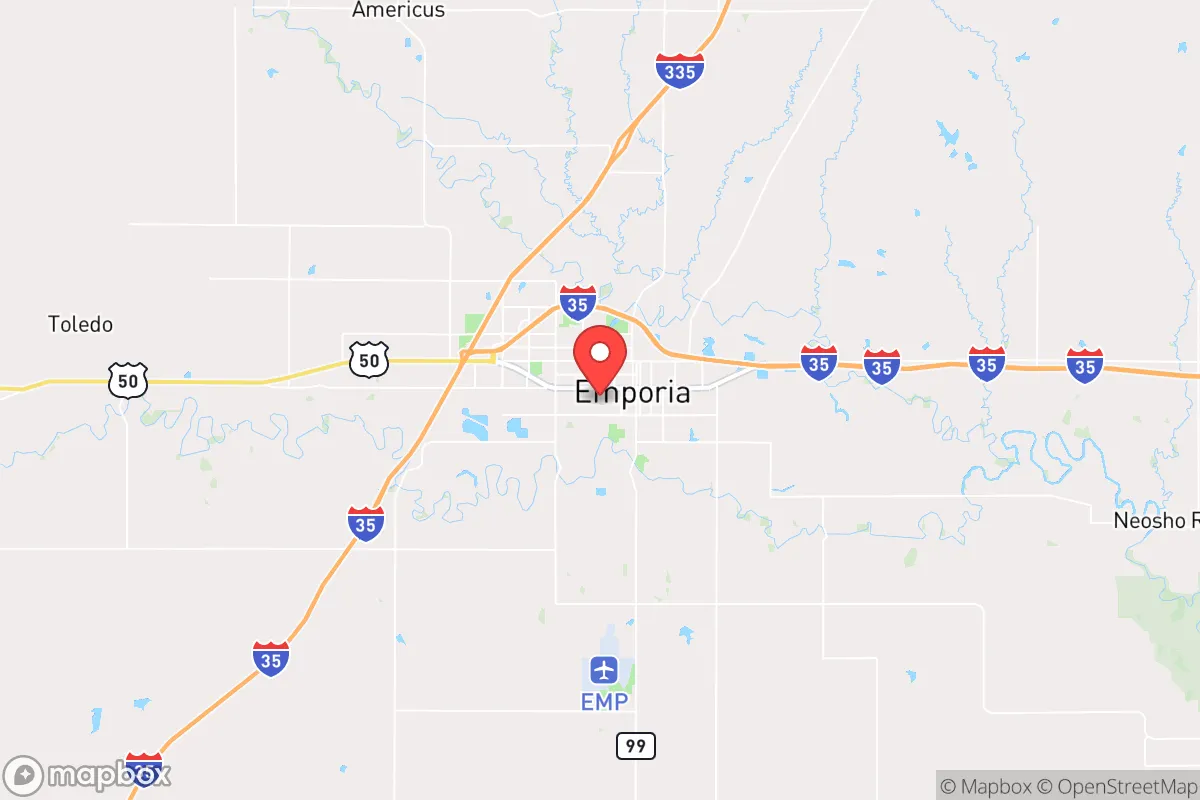
Key Distances
Regional Safe Places
Below is our recommended "safe zones" in Kansas and the surrounding area based on our strategic heuristics. For most people, it's unrealistic to live in a “safe zone” full-time due to work, family or other personal reasons. They tend to be more rural. However, many of these areas are perfect for second homes and retreat properties that double as a vacation home or even a short-term rental.
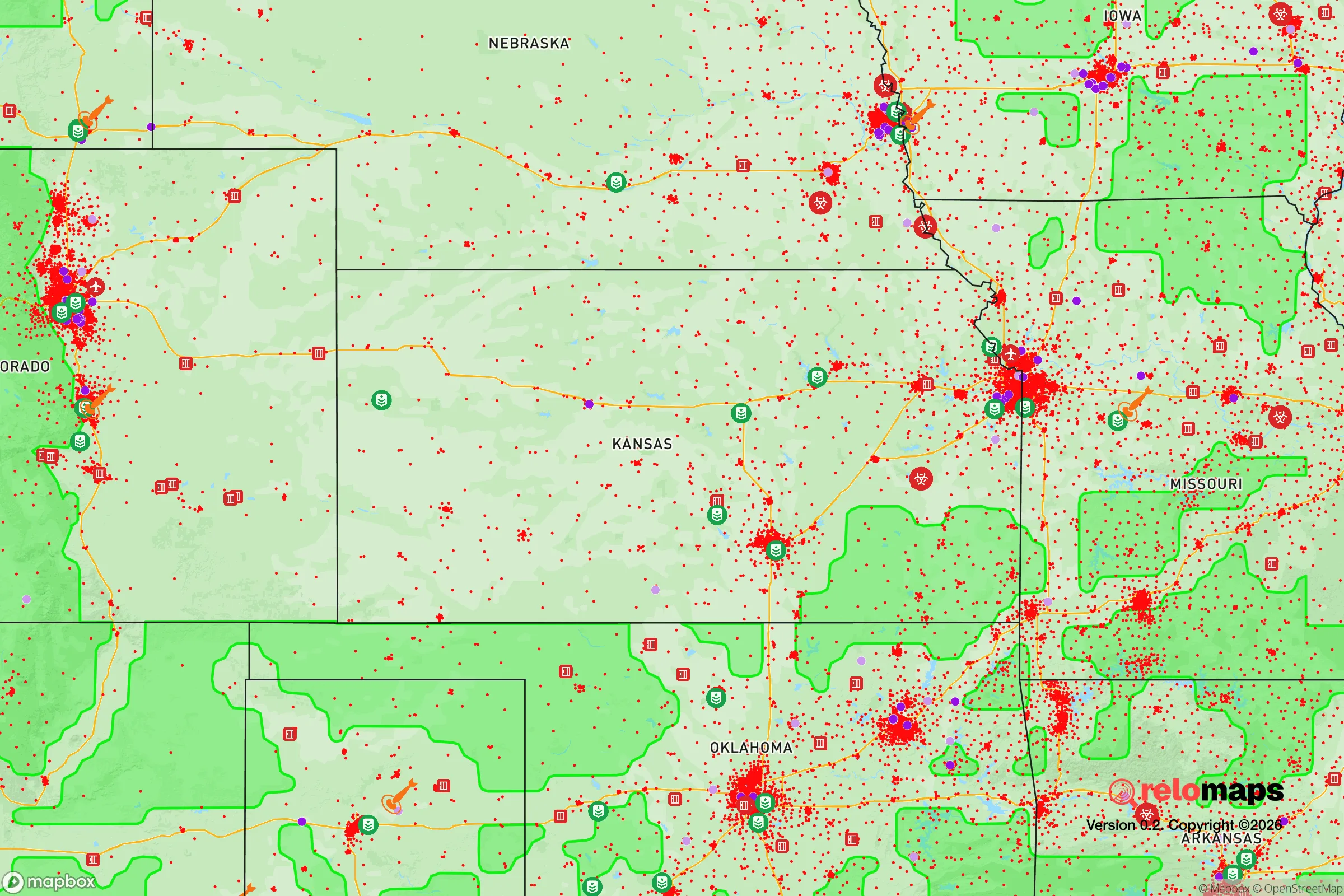
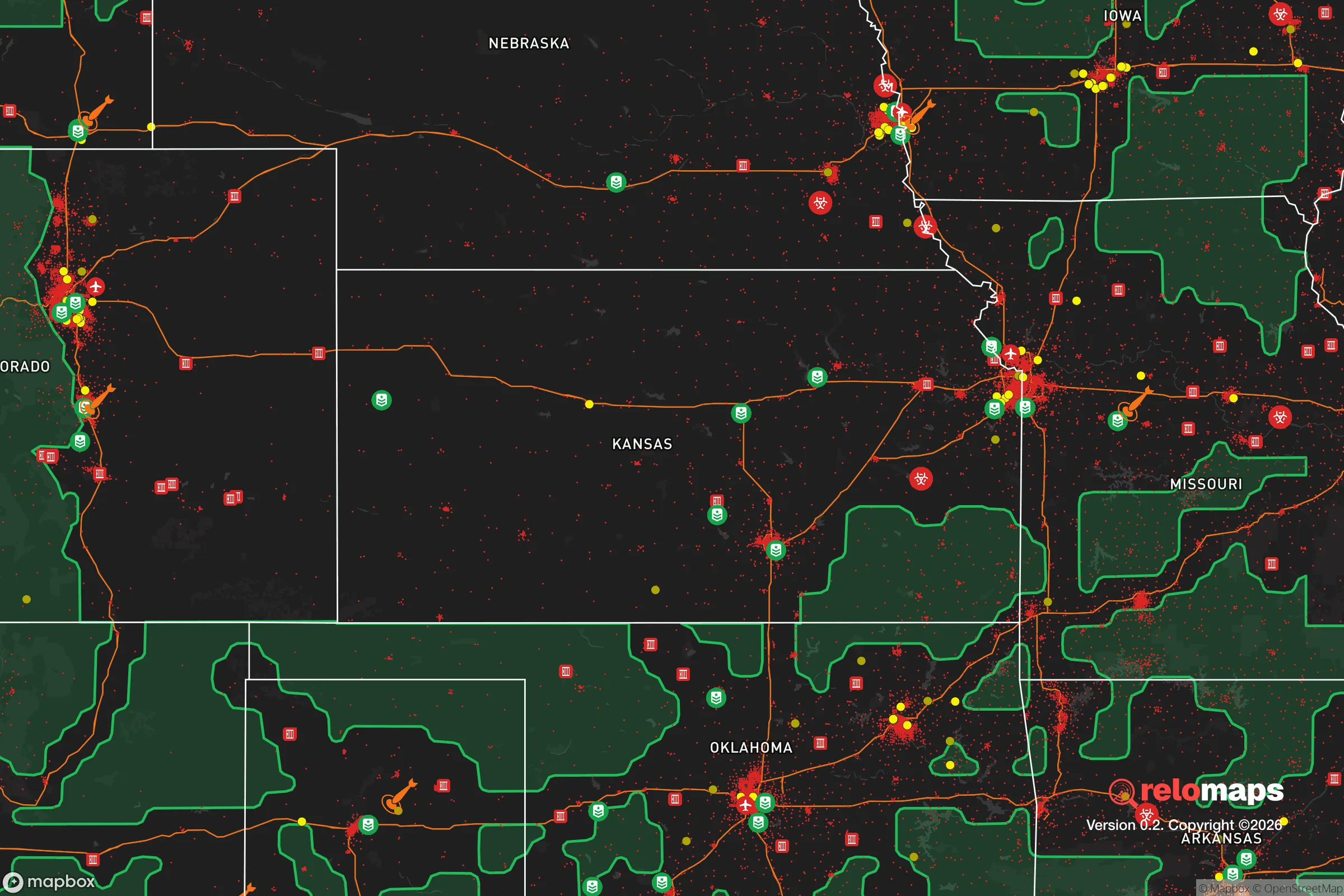


Important Note: For informational purposes only. This does not mean nothing bad ever happens in the green zones. Please use common sense. This is based on public data and modeled with AI. We tried to take a conservative approach but mistakes happen. We update this regularly as new information becomes available.
Solar Generator Recommendations
Backup power matters more here than in safer locations. We've picked three solar generators across budgets and capacity tiers — start with the budget unit if you only need a few essentials, or step up if you want to run a fridge and HVAC for days at a time.

Jackery Portable Power Station Explorer 300
Budget OptionPower on the Go: Weighing only 11 lbs, it's convenient to set up and store with book-sized foldable solar panels

BLUETTI Portable Power Station AC180
Designed for both indoor and outdoor scenarios, AC180 is highly capable as it has a robost capacity and continuous output power.

EF ECOFLOW DELTA Pro Ultra Power Station
Upgraded PickEcoFlow DELTA Pro Ultra is a whole-home energy system designed to grow with your family. Integrated with the Smart Home Panel 2, it scales to meet your evolving energy needs — keeping your home powered, intelligent, and secure through every stage of life.
We earn a commission, at no additional cost to you.
Strategic Assessment Analysis
Emporia, Kansas, sits at a strategic crossroads that makes it a surprisingly resilient relocation option for those prioritizing self-sufficiency and distance from major population centers. Located roughly 110 miles southwest of Kansas City and 130 miles northeast of Wichita, this town of about 24,000 offers a buffer from the immediate fallout zones of large cities while still providing access to rail and interstate infrastructure. The area’s agricultural base, low population density, and position in the Flint Hills region give it natural advantages for those thinking long-term about food security, water access, and defensibility in an uncertain future.
Geographic position and natural advantages for long-term security
Emporia’s location in the Flint Hills is its primary strategic asset. This region is one of the last remaining tallgrass prairie ecosystems in North America, underlain by limestone bedrock that provides excellent groundwater filtration and natural aquifer recharge. The area receives roughly 35 inches of annual rainfall, making it less drought-prone than western Kansas but still dry enough to avoid the humidity-driven mold and pest issues common in the eastern U.S. The surrounding landscape is open and rolling, offering long sightlines that are tactically useful for monitoring approach routes. The Cottonwood River and Neosho River converge just south of town, providing surface water sources that are less likely to be contested than in more arid regions. For a relocator, this means the basic inputs for subsistence—water, grazing land, and arable soil—are present without relying on fragile municipal systems. The town itself is a regional hub for agriculture, with grain elevators, livestock processing, and farm supply stores that would remain functional even during supply chain disruptions. Emporia is also a railroad town, sitting on the BNSF mainline and a major east-west highway (I-35), which is a double-edged sword: it provides logistical access but also makes the town a potential chokepoint during unrest. Still, the surrounding rural areas offer numerous retreat options within a 20- to 30-minute drive, where a family could establish a more isolated homestead while maintaining ties to the town’s resources.
Risks, exposures, and proximity to fallout-relevant landmarks
The most significant risk for Emporia is its proximity to the Kansas City metropolitan area, which is roughly 110 miles northeast. While that distance provides a meaningful buffer from a nuclear detonation’s immediate blast and thermal effects, it is well within the range of radioactive fallout depending on wind patterns. A ground burst at the Kansas City metro would likely deposit significant fallout across eastern Kansas, including Emporia, within 12 to 24 hours. The same applies to a strike on Wichita, which is about 130 miles southwest. Emporia is also within 60 miles of the Wolf Creek Generating Station, a nuclear power plant near Burlington, Kansas. While the plant has a solid safety record, any major incident there—whether from sabotage, natural disaster, or grid failure—would put Emporia in a potential evacuation or contamination zone. On the plus side, the town itself has no major military bases, chemical plants, or high-value infrastructure that would make it a primary target. The nearest significant military installation is Fort Riley, about 80 miles northwest, which is a conventional Army post and not a strategic nuclear asset. For a relocator concerned with civil unrest, Emporia’s small size and homogeneous population (roughly 70% white, 20% Hispanic, with a strong agricultural community) mean fewer flashpoints for ideological conflict compared to larger, more diverse cities. However, the town does have a sizable university (Emporia State University, about 6,000 students), which could become a gathering point for protests or disruptions during national crises. The local law enforcement presence is modest—the Emporia Police Department has about 40 sworn officers—so in a widespread breakdown of order, residents would largely need to rely on themselves and their immediate neighbors.
Practical resilience for a relocator: food, water, energy, and defensibility
For someone serious about prepping, Emporia offers a realistic path to self-reliance. The surrounding agricultural land is productive, with corn, soybeans, and wheat being the primary crops. A family with a few acres could easily establish a vegetable garden, raise chickens or goats, and tap into the local hunting culture—deer, turkey, and quail are abundant in the Flint Hills. Water access is manageable: the average well depth in Lyon County is around 100 to 150 feet, and groundwater quality is generally good, though testing for agricultural runoff (nitrates) is advisable. Rainwater catchment is also viable given the annual precipitation. For energy, the area has decent solar potential—Kansas averages about 4.5 peak sun hours per day—and wind is consistent on the open prairie, making small-scale wind turbines a practical supplement. The town’s grid is served by Evergy, which has a mixed generation portfolio including coal, natural gas, and wind, but grid reliability in rural Kansas is generally better than in coastal or mountainous regions due to flat terrain and fewer weather extremes. Defensibility is a mixed bag. The open terrain means you can see threats coming from miles away, but it also means you are exposed. A rural homestead with a good perimeter, reinforced doors, and a clear field of fire would be easier to secure than a property in wooded or hilly country. The local culture is heavily gun-friendly—Kansas has constitutional carry, and Lyon County has a strong hunting and sport shooting tradition—so a relocator will not face social stigma for owning firearms. The biggest practical challenge is the lack of immediate medical infrastructure. Emporia has a small hospital (Newman Regional Health) with a basic emergency room, but for major trauma or specialized care, you are looking at a 90-minute drive to Topeka or Kansas City. In a collapse scenario, this would be a critical vulnerability, so having a well-stocked medical kit and training is non-negotiable.
Overall, Emporia presents a solid strategic picture for a conservative-leaning relocator who wants to be prepared for the worst while still living a functional, low-key life in the present. It is not a hardened bunker location, nor is it a remote mountain redoubt—but it offers a realistic balance of agricultural sustainability, water security, and distance from primary targets. The town’s small size and rural character mean that community ties are stronger and more trust-based than in urban areas, which is invaluable during crises. The downsides—fallout risk from Kansas City or Wolf Creek, limited medical capacity, and exposure to open terrain—are manageable with proper planning. For someone looking to get out of the city and build a resilient life in the heartland, Emporia is worth a serious look. Just do not expect to be invisible; the Flint Hills are wide open, and your neighbors will know exactly who you are and what you are doing. That is the trade-off for security, and in this part of Kansas, it is one most people are willing to make.

* Values derived from national, state, county, city and local statistics and may differ in a specific area. Last updated: 2026-05-01T01:51:47.000Z
Narrative content on this page is AI-generated and may contain mistakes. Verify any details that matter before acting on them.
ReloMaps may earn a commission from affiliate links at no extra cost to you.

