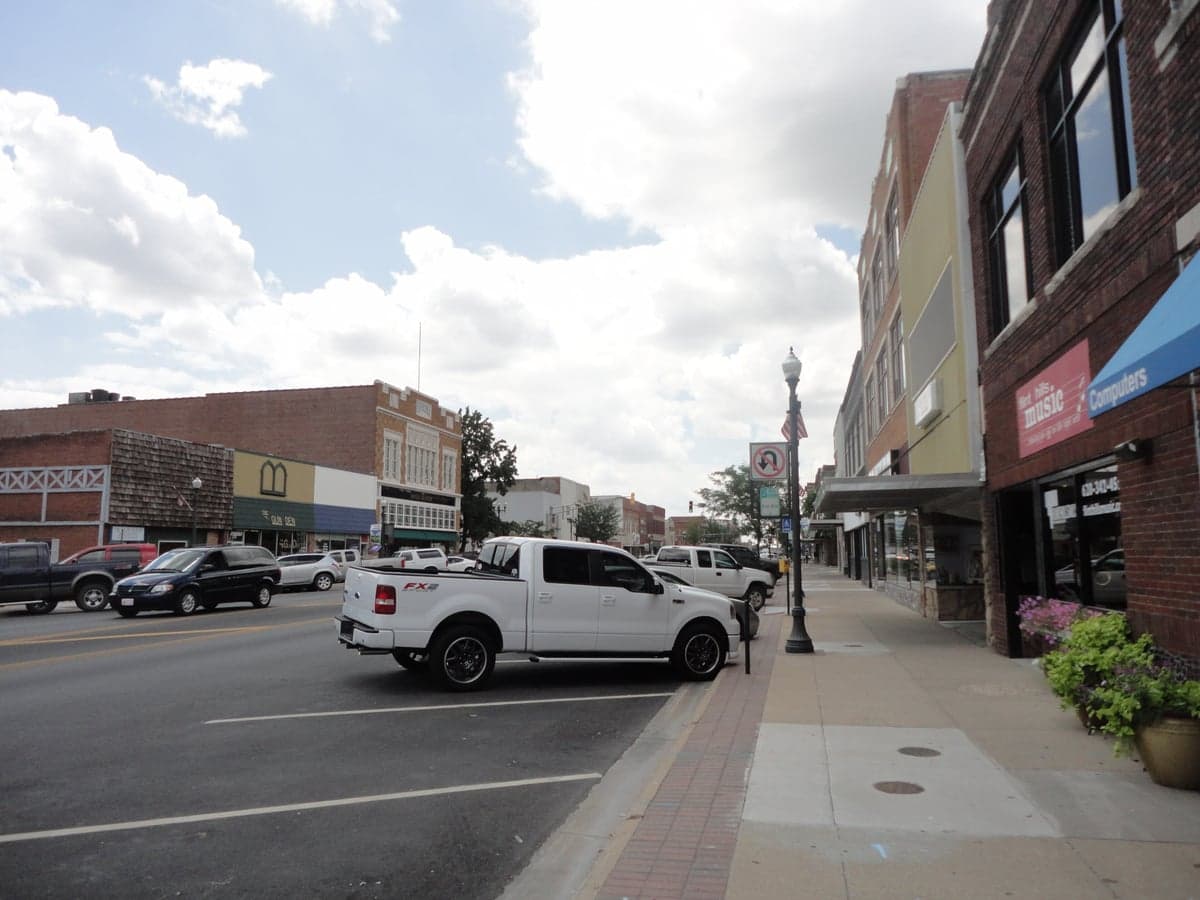
Photo: Wikipedia
Political ClimatePolitical Climate in Emporia, KS
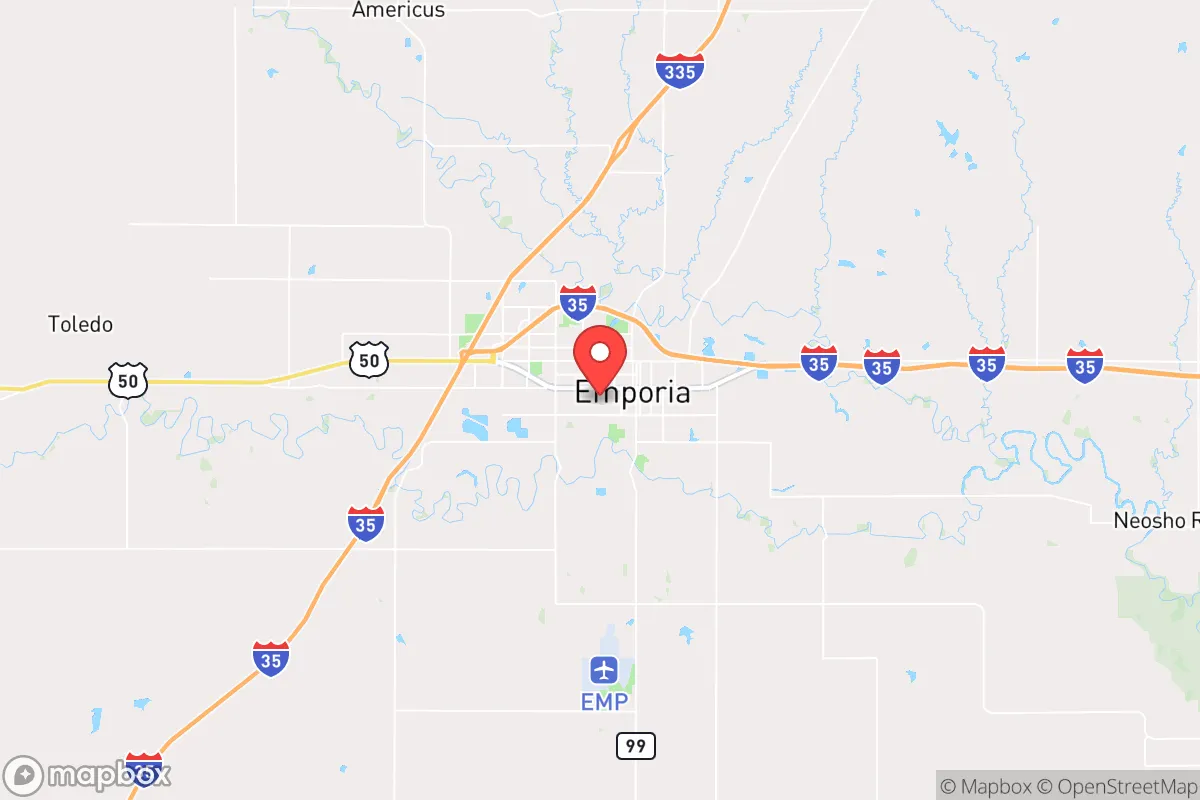
District shown is the primary district for this city’s centroid. Cities may span multiple districts.
Local Political AnalysisPolitical Analysis of Emporia, KS
Emporia’s political climate has long been a steady, conservative anchor in east-central Kansas, but like a lot of small towns, you can feel the ground shifting under your feet. The Cook PVI of R+10 tells you the math is still solidly red, but that number hides a story of a community wrestling with its identity. Back in the day, you could count on Emporia to vote its values without a second thought—limited government, personal responsibility, and a healthy skepticism of anyone telling you how to live your life. Now, there’s a quiet tension between the old guard who remember when Main Street was the center of everything and newer voices pushing for changes that feel a little too close to the kind of government overreach we’ve always resisted.
How it compares
Drive twenty minutes north to Topeka, and you’re in a different world—a state capital where the political machinery and state employee base tilt the scales noticeably left. Emporia, by contrast, has always been more like its rural neighbors: Council Grove, Burlington, and Yates Center all share that same independent, don’t-tread-on-me spirit. But here’s the thing—Emporia’s got the university (Emporia State) and the hospital (Newman Regional Health), which bring in a steady flow of folks from outside. That’s where the contrast gets sharp. You’ll see a few more Harris-Walz yard signs in the college neighborhoods than you would have ten years ago, and the city council has had some close votes on things like nondiscrimination ordinances that would have been unthinkable in the 90s. Compared to Lyon County’s rural precincts, which vote 70%+ Republican, Emporia itself is the blue-ish dot on the red map—still conservative, but with a growing progressive undercurrent that worries a lot of us who remember when “live and let live” meant the government staying out of your business, not mandating how you run it.
What this means for residents
For a family or a small business owner looking at Emporia, the practical takeaway is that your local government is still mostly run by folks who believe in low taxes and common sense. Property taxes here are manageable compared to Johnson County, and there’s no city income tax. But you need to keep an eye on the school board and city commission races—those are where the real battles are happening. A few years back, there was a push to adopt a “proclamation” on racial equity that sounded an awful lot like a backdoor way to bring in DEI training and all the bureaucracy that comes with it. It got voted down, but only barely. The concern is that as Emporia grows—and it is growing, slowly—the same cultural shifts that have turned places like Lawrence and Manhattan into echo chambers of progressive orthodoxy could creep in here. That means more regulations on landlords, more pressure to raise the minimum wage beyond what the market can bear, and more noise about “inclusivity” that often ends up excluding anyone who disagrees.
One thing that hasn’t changed, and I hope never does, is the strong Second Amendment culture. You can still walk into a gun shop on Commercial Street and buy a hunting rifle without a background check taking three weeks. The county sheriff’s office is solidly pro-2A, and there’s no appetite for red flag laws in the state legislature. That’s the kind of freedom that keeps Emporia feeling like Kansas, not California. But the warning signs are there—national money flows into local races now, and the same groups that pushed mask mandates and vaccine passports are trying to get a foothold here. If you’re thinking of moving to Emporia, you’ll find good people and a low cost of living, but you’ll also need to stay engaged. The fight to keep this town from becoming another progressive experiment is real, and it’s not over.

State Political ClimatePolitical Climate in Kansas
State Political AnalysisPolitical Environment in the State
Kansas has long been a reliably Republican state, but the picture is more nuanced than a simple red-state label suggests. Over the past 20 years, the state has shifted from a solidly conservative stronghold to a more contested battleground, with the GOP’s dominance now tempered by a growing suburban-liberal coalition in the eastern counties. The 2022 governor’s race saw Democrat Laura Kelly win a second term by a narrow 2-point margin, while the state legislature remains firmly under Republican supermajority control. This tension between a moderate-to-progressive executive and a conservative legislature defines the current political climate, and it’s a dynamic that matters deeply for anyone considering a move here.
Urban vs. rural divide
The political map of Kansas is a study in contrasts. The eastern third of the state, anchored by the Kansas City metro area, is the engine of Democratic and moderate Republican strength. Johnson County, the state’s wealthiest and most populous county, has been trending blue for a decade; in 2020, Joe Biden won it by 8 points, and in 2022, Democratic Governor Laura Kelly carried it by 12 points. Overland Park, Olathe, and Lenexa are the key suburbs where college-educated professionals and younger families have pushed the needle left on social issues, though they remain fiscally conservative. Conversely, the rest of the state is deeply red. Western Kansas—places like Garden City, Dodge City, and Hays—votes Republican by margins of 60-70% or more, driven by agricultural interests, strong gun culture, and a distrust of federal regulation. The rural-urban split is stark: Wichita, the largest city, is a purple island in a sea of red Sedgwick County, with its suburbs like Derby and Andover leaning conservative while the city core votes Democratic. This geographic divide means that state-level policy often reflects the priorities of rural and suburban Republicans, even as the governor’s office pushes a more moderate agenda.
Policy environment
Kansas’s policy environment is a mixed bag for conservatives. On the plus side, the state has a flat income tax rate of 5.7% (down from a top rate of 6.45% in 2012), and the legislature has repeatedly passed tax cuts, including a 2022 bill that accelerated the elimination of the state’s food sales tax. Property taxes are moderate, and there is no estate tax. The state’s regulatory posture is generally business-friendly, with right-to-work laws in place and a relatively low minimum wage ($7.25, tied to the federal floor). However, the education landscape is contentious: the state has seen a decade of school funding lawsuits, with the Kansas Supreme Court repeatedly ordering the legislature to increase spending, leading to a $500 million annual increase since 2018. School choice is limited—there is no robust voucher program, though charter schools exist in Wichita and Kansas City. On healthcare, Kansas has not expanded Medicaid under the Affordable Care Act, a point of pride for conservatives, but this leaves roughly 150,000 low-income adults without coverage. Election laws are moderately restrictive: voter ID is required, and the state has a 20-day advance registration deadline, but no strict drop-box limits or signature-matching requirements that have caused controversy elsewhere. Overall, the policy environment leans conservative on taxes and regulation, but the education and healthcare battles show a legislature that is often at odds with the courts and the governor.
Trajectory & freedom
Kansas’s trajectory on personal freedom is a mixed record, with some clear wins and some concerning trends. On the positive side, the state has strong Second Amendment protections: it is a constitutional carry state (permitless carry for adults 21 and older, passed in 2015), and there is no state-level assault weapons ban or magazine capacity limit. In 2021, the legislature passed a law preempting local gun ordinances, ensuring uniform gun laws across the state. Parental rights have also seen gains: the 2023 Parental Bill of Rights (HB 2238) requires schools to notify parents of any changes in a student’s mental, emotional, or physical health, and prohibits school districts from withholding information about a child’s well-being. On the medical autonomy front, Kansas has a strong pro-life stance: a 2022 constitutional amendment (the Value Them Both Amendment) was defeated by voters, but the legislature has since passed a near-total abortion ban (the 2022 “No Taxpayer Funding for Abortion” law and a 15-week ban that was later struck down by the state Supreme Court). The current legal landscape is chaotic, with the state Supreme Court ruling in 2019 that the Kansas Constitution protects abortion rights, leading to a standoff with the legislature. On property rights, the state has no statewide rent control, and eminent domain is limited. However, the biggest freedom concern is the growing influence of the state’s regulatory bureaucracy, particularly on energy and environmental issues. The 2023 “Energy Choice” bill, which would have restricted local governments from banning natural gas hookups, failed, leaving cities like Lawrence and Kansas City free to pursue green building codes. For a conservative, the trajectory is cautiously optimistic on guns and parental rights, but the abortion and energy battles signal that the state is not a lock for traditional freedoms.
Civil unrest & political movements
Kansas has not seen the kind of large-scale civil unrest seen in coastal states, but there are notable flashpoints. The most visible political movement in recent years has been the anti-abortion activism, which is deeply organized and vocal, particularly in Wichita, home to the late Dr. George Tiller’s clinic and a historic site of protests. The 2022 abortion amendment campaign saw massive spending from both sides, with pro-choice groups outspending pro-life ones by a 2-to-1 margin, but the amendment’s defeat was a shock to the conservative base. On the left, the 2020 Black Lives Matter protests in Kansas City and Wichita were relatively small and peaceful, but they did lead to calls for police reform, which the legislature largely ignored. Immigration politics are less heated than in border states, but there is a strong undercurrent of concern in western Kansas, where meatpacking plants in Garden City and Dodge City employ large numbers of immigrant workers. The state has no sanctuary city policies, and the legislature passed a 2017 law requiring local law enforcement to cooperate with federal immigration authorities. Election integrity has been a hot topic: the 2020 election saw no major fraud allegations, but the legislature has tightened absentee ballot rules and banned ballot drop boxes in 2021. The most visible flashpoint for a new resident would likely be the constant tension between the governor and the legislature, which plays out in the media and in local politics, but actual street-level unrest is rare.
Projection
Over the next 5-10 years, Kansas is likely to become more politically competitive, but not necessarily more liberal. The key demographic shift is the continued growth of Johnson County, which is attracting young professionals and remote workers from the coasts. This will push the state’s overall vote share slightly leftward, but the rural counties are not shrinking as fast as in some neighboring states, thanks to strong agricultural and energy sectors. The state’s population is projected to grow by about 3% by 2030, with most of that growth in the Kansas City suburbs. This means the state legislature will remain Republican, but the governor’s race will be a toss-up every four years. The biggest wildcard is the state Supreme Court, which has a 5-2 liberal majority and will continue to block conservative legislation on abortion and education funding. A conservative moving in now should expect a state where the legislature fights for traditional values but is often stymied by the courts and the governor. The practical takeaway: you’ll have a strong voice in local and state legislative races, but don’t expect a conservative revolution anytime soon.
For a new resident, the bottom line is that Kansas offers a solidly conservative environment on taxes, guns, and parental rights, but with a persistent progressive counterweight in the governor’s office and the courts. If you’re looking for a state where your vote for conservative candidates matters in legislative races, and where you can live without state income tax on Social Security (exempted since 2021) and with strong Second Amendment protections, Kansas is a good fit. Just be prepared for the occasional policy battle over education funding and abortion, and know that the eastern suburbs are becoming more purple by the year. It’s a state where you can still find a conservative community in places like Wichita’s suburbs or the rural towns of central Kansas, but the political winds are shifting, and it pays to stay engaged.
* Values derived from national, state, county, city and local statistics and may differ in a specific area. Last updated: 2026-05-01T01:51:47.000Z
Narrative content on this page is AI-generated and may contain mistakes. Verify any details that matter before acting on them.
ReloMaps may earn a commission from affiliate links at no extra cost to you.

