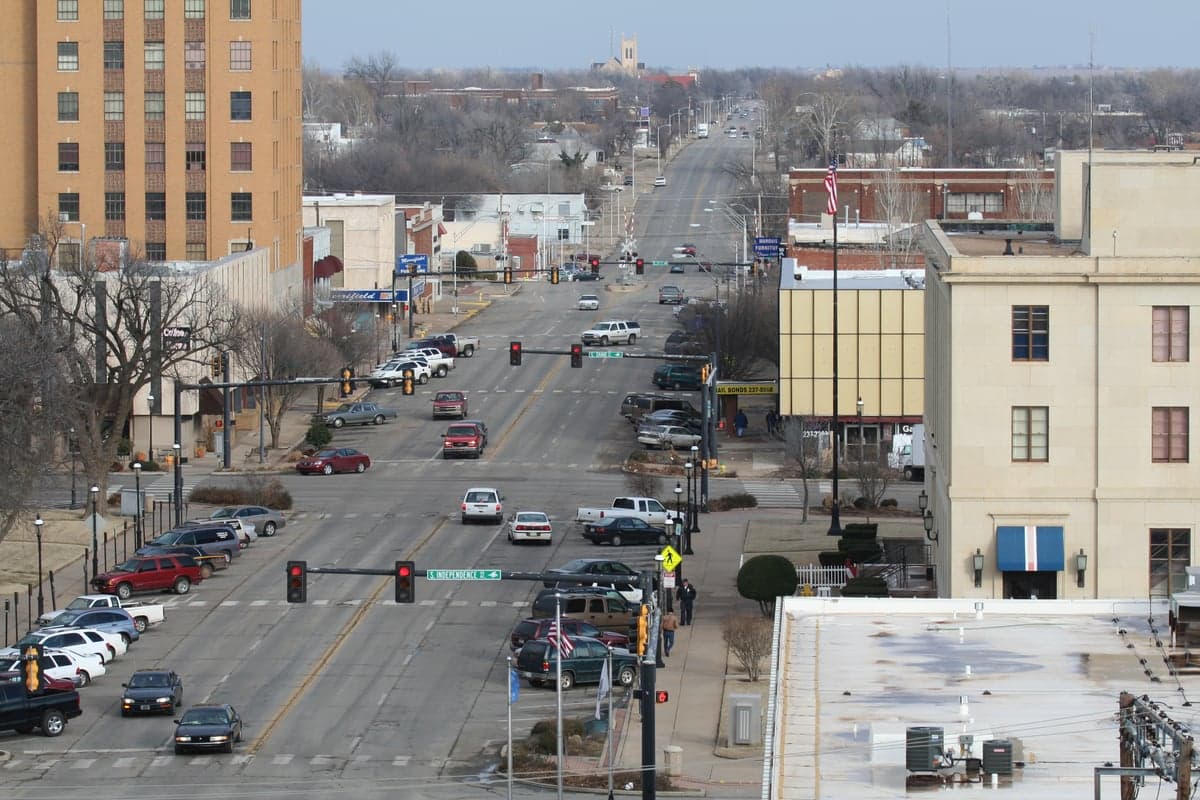
Photo: Wikipedia
Political ClimatePolitical Climate in Enid, OK
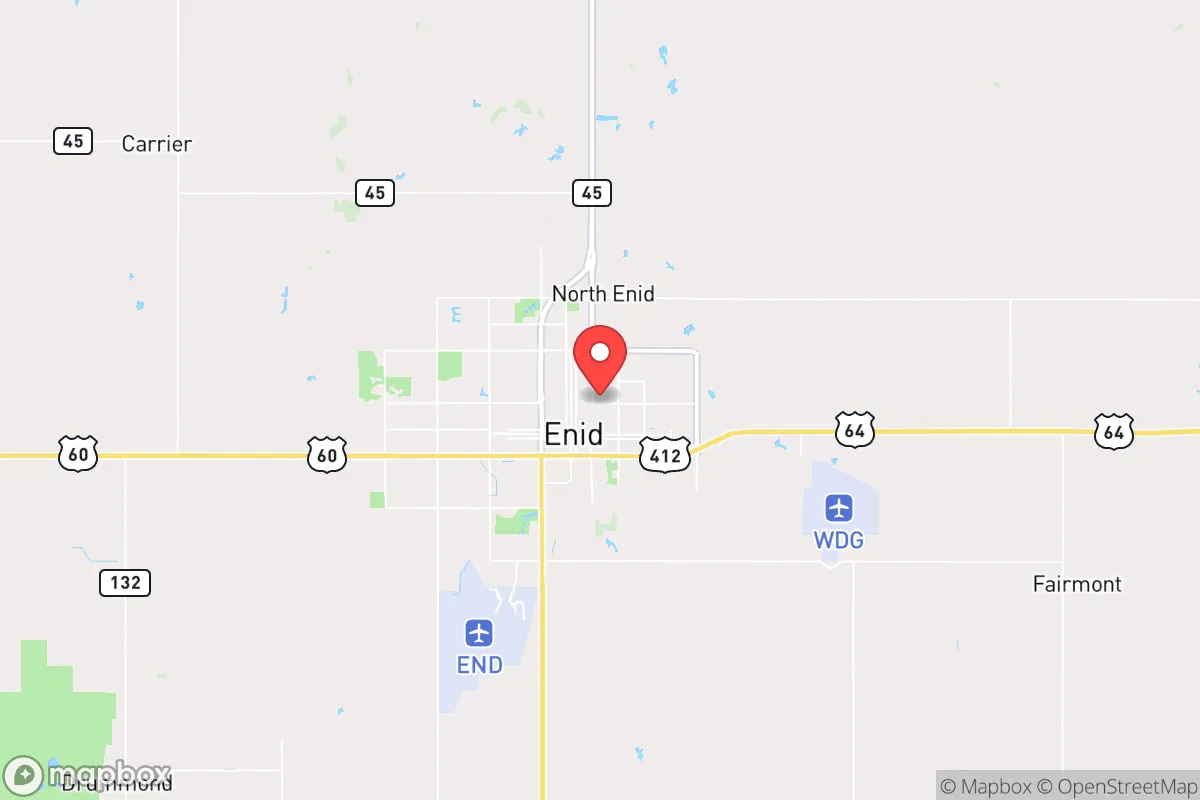
District shown is the primary district for this city’s centroid. Cities may span multiple districts.
Local Political AnalysisPolitical Analysis of Enid, OK
Enid, Oklahoma, sits deep in reliably conservative territory, with a Cook PVI of R+23 that reflects decades of consistent Republican voting. The city and surrounding Garfield County have long been a stronghold for traditional values, with local elections rarely contested by Democrats and most offices held by candidates who prioritize limited government, Second Amendment rights, and local control over schools and zoning. If you’ve lived here a while, you’ve seen the political needle barely move—even as some parts of the state have shifted slightly toward the center, Enid has stayed the course, and most folks see that as a good thing.
How it compares
Drive an hour south to Oklahoma City, and you’ll notice a different political flavor—more suburban swing districts, a growing progressive activist presence, and city council debates over things like sanctuary policies and public art funding that would never fly here. Head east to Stillwater, home of Oklahoma State University, and you’ll find a younger, more transient population that leans left on social issues, especially among faculty and students. Even nearby towns like Ponca City and Woodward, while conservative, don’t have the same deep-rooted Republican machinery that Enid does. Here, the county GOP is active, church attendance is high, and the local newspaper’s opinion page still runs columns defending school choice and gun rights without apology. That R+23 isn’t just a number—it’s a reflection of a community that hasn’t been swayed by coastal trends or federal overreach.
What this means for residents
For families and business owners, Enid’s political stability translates into predictable policies. Property taxes remain low, zoning regulations are minimal, and there’s little appetite for new mandates on energy use, building codes, or land use. The city council and county commission generally take a hands-off approach, trusting residents to make their own choices. That said, there’s been a quiet push in recent years from a small group of activists trying to bring in more progressive ideas—things like diversity training for city staff or symbolic resolutions on national issues. Most locals see this as unnecessary government overreach into personal freedoms, and so far, these efforts have been met with strong pushback at the ballot box and in public meetings. The concern is that if these voices gain traction, Enid could start down a path of more regulation and less liberty, which would be a real departure from what makes this area work.
One cultural distinction worth noting: Enid is home to Vance Air Force Base, which brings in military families from all over the country. While the base itself stays apolitical, the influx of people from more liberal states has occasionally introduced different perspectives on local issues like school curriculum and public health mandates. So far, the community has absorbed these newcomers without shifting its core values, but it’s something to keep an eye on. If you value a place where the government stays out of your business, your church, and your family’s decisions, Enid remains one of the most consistent spots in Oklahoma. The long-term outlook depends on whether the next generation of leaders holds the line against the creeping influence of progressive ideology that’s already reshaped so many other towns.

State Political ClimatePolitical Climate in Oklahoma
State Political AnalysisPolitical Environment in the State
Oklahoma has long been one of the most reliably Republican states in the nation, with a partisan lean that has only deepened over the past two decades. The state hasn't voted for a Democratic presidential candidate since 1964, and in 2024, Donald Trump carried it by a margin of over 34 points. The dominant coalition is a mix of rural conservatives, evangelical Christians, and energy-sector workers, with a growing libertarian streak in the suburbs. Over the last 10-20 years, the trajectory has been a steady march rightward, with Democrats losing nearly all statewide offices and rural counties flipping from competitive to deeply red. However, the urban cores—Oklahoma City and Tulsa—have become more competitive, creating a sharp internal divide that defines the state's politics today.
Urban vs. rural divide
The political map of Oklahoma is a textbook study in contrast. The vast rural expanse—places like Woodward, Guymon, and McAlester—votes overwhelmingly Republican, often by margins of 70-80% or more. These areas are driven by agriculture, oil and gas, and a deep cultural conservatism. In contrast, Oklahoma City and Tulsa are the only real blue-ish islands, though even they are not reliably Democratic. Oklahoma County (Oklahoma City) has trended purple, with Democrats winning it in recent presidential cycles, while Tulsa County remains a toss-up. The suburbs around these cities—places like Edmond, Broken Arrow, and Norman—are reliably red but with a more educated, libertarian-leaning flavor. The real story is the rural-urban chasm: the state's 77 counties are a sea of red, with the two major metros providing the only real political competition. This divide means that state policy is overwhelmingly shaped by rural and suburban conservatives, with urban Democrats having little say in statewide races.
Policy environment
Oklahoma's policy environment is a conservative's dream, with low taxes, minimal regulation, and a strong emphasis on individual liberty. The state has a flat income tax of 4.75%, which is being phased down to 3.99% by 2027, and no estate tax. Property taxes are among the lowest in the nation, thanks to a constitutional cap. The regulatory posture is business-friendly, particularly for energy and agriculture, with few environmental hurdles. On education, the state has embraced school choice, with a robust voucher program (the Oklahoma Parental Choice Tax Credit) that allows families to use public funds for private or homeschool expenses. Healthcare is more mixed: the state did expand Medicaid under a 2020 ballot initiative, but the legislature has resisted further expansion of government-run programs. Election laws are strict—voter ID is required, and the state has purged inactive voters regularly. Overall, the policy environment is designed to maximize personal freedom and limit government overreach, though critics argue it underfunds public services.
Trajectory & freedom
Oklahoma has been on a clear trajectory of expanding personal freedom over the past decade, particularly in areas of gun rights, parental rights, and tax relief. In 2019, the state passed constitutional carry (permitless concealed carry), and in 2024, it expanded that to allow open carry without a license. The "Parental Bill of Rights" (HB 1775) was passed in 2021, prohibiting schools from teaching certain concepts about race and gender without parental consent, and in 2024, the state enacted a near-total ban on gender transition procedures for minors (SB 613). On medical autonomy, the state has a robust medical marijuana program (approved by voters in 2018), but recreational use remains illegal. Property rights are strong, with no statewide zoning mandates. The biggest concern for freedom-minded residents is the state's heavy reliance on sales taxes and the growing influence of federal dollars in state budgets. But overall, the trend is toward less government intrusion, with the legislature actively pushing back against federal overreach, particularly on energy and environmental regulations.
Civil unrest & political movements
Oklahoma has seen relatively little civil unrest compared to coastal states, but there have been notable flashpoints. The 2020 protests in Tulsa and Oklahoma City were smaller and less violent than in many cities, largely due to a strong police presence and a less activist population. The state has a vibrant Second Amendment movement, with groups like the Oklahoma Rifle Association actively lobbying against any gun restrictions. Immigration politics are tense but not explosive: the state passed a strict anti-sanctuary city law in 2018 (HB 4156), and local law enforcement cooperates with ICE. There is a growing "county supremacy" movement in rural areas, with some counties passing resolutions asserting local control over federal lands and mandates. Election integrity has been a hot topic, with the state passing voter ID laws and banning ballot drop boxes in 2022. The most visible political movement is the rise of the "Freedom Caucus" in the state legislature, which pushes for even lower taxes, school choice, and resistance to federal mandates. A new resident would notice a general sense of political stability, with most people agreeing on the basics of limited government, even if they disagree on specifics.
Projection
Over the next 5-10 years, Oklahoma is likely to become even more conservative, driven by in-migration from blue states and a growing libertarian influence. The state's population is growing modestly, with many newcomers from California, Texas, and Colorado seeking lower costs and more freedom. This influx is likely to reinforce the existing political lean, as these migrants tend to be conservative or libertarian. The urban cores of Oklahoma City and Tulsa may become slightly more competitive for Democrats, but the rural and suburban areas will remain deeply red. The biggest wildcard is the energy transition: if federal policies push hard against oil and gas, Oklahoma's economy could take a hit, potentially fueling more anti-Washington sentiment. Expect continued tax cuts, further expansion of school choice, and more preemption of local ordinances by the state. The state will likely remain a leader in Second Amendment rights and parental rights, with new laws targeting transgender issues and critical race theory. For someone moving in now, the Oklahoma of 2035 will look much like today—only more so: lower taxes, more school choice, and a political culture that values individual liberty over collective action.
For a new resident, the bottom line is this: Oklahoma offers a stable, predictable political environment where your personal freedoms are broadly protected and your taxes are low. You won't face the kind of political turmoil or government overreach common in states like California or New York. The trade-off is that public services—roads, schools, healthcare—are less robust, and you'll need to be self-reliant. If you value liberty, low taxes, and a community that largely shares your values, Oklahoma is a solid bet. Just be prepared for the heat, the wind, and the occasional political debate over how much government is too much.
* Values derived from national, state, county, city and local statistics and may differ in a specific area. Last updated: 2026-04-21T11:41:21.000Z
Narrative content on this page is AI-generated and may contain mistakes. Verify any details that matter before acting on them.
ReloMaps may earn a commission from affiliate links at no extra cost to you.

