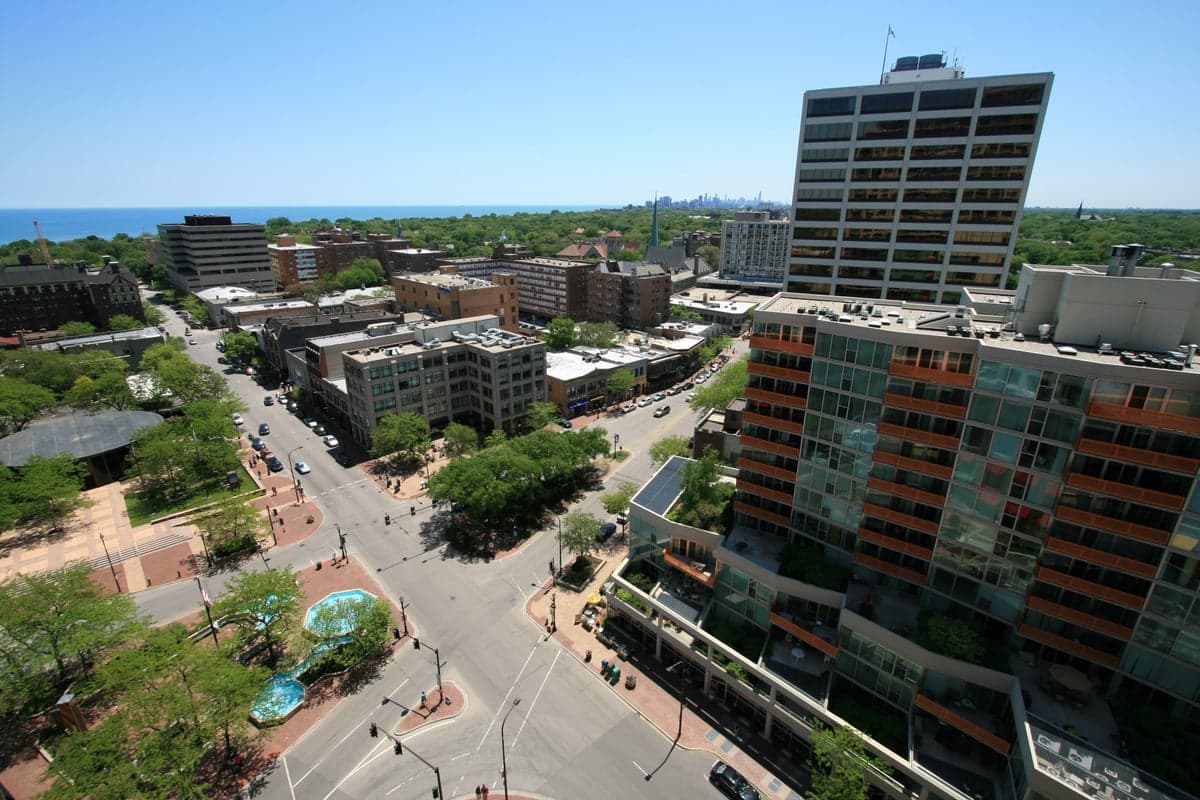
Photo: Wikipedia
Strategic Assessment of Evanston, IL
Multiple tactical vulnerabilities. Population density, target proximity, or disaster risk are likely compounding. A retreat property and exit planning is required.
What does the Strategic Assessment tell us?
Our Strategic Assessment grades tactical survivability of an area. Major population centers, military targets, fallout zones, natural disasters, and border exposure all drive risk — lower exposure means a more defensible position in a crisis.
This is heavily inspired by Joel Skousen's Strategic Relocation book. Highly recommended you checkout the book ($)What does this tell us?
Our Strategic Assessment grades tactical survivability of an area. Major population centers, military targets, fallout zones, natural disasters, and border exposure all drive risk — lower exposure means a more defensible position in a crisis.
This is heavily inspired by Joel Skousen's Strategic Relocation book. Highly recommended you checkout the book ($)Strategic Pillars

Key Distances
Regional Safe Places
Below is our recommended "safe zones" in Illinois and the surrounding area based on our strategic heuristics. For most people, it's unrealistic to live in a “safe zone” full-time due to work, family or other personal reasons. They tend to be more rural. However, many of these areas are perfect for second homes and retreat properties that double as a vacation home or even a short-term rental.
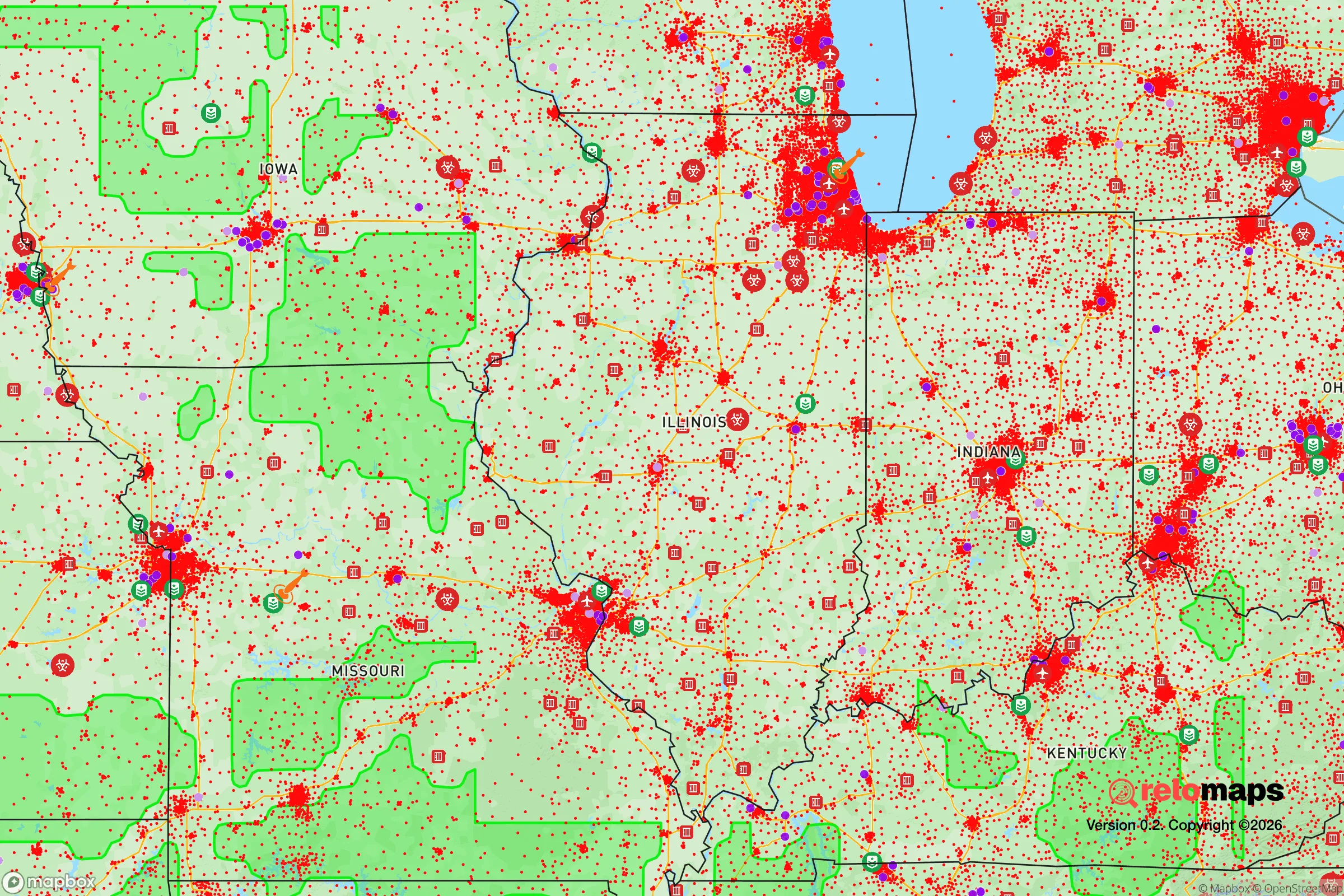
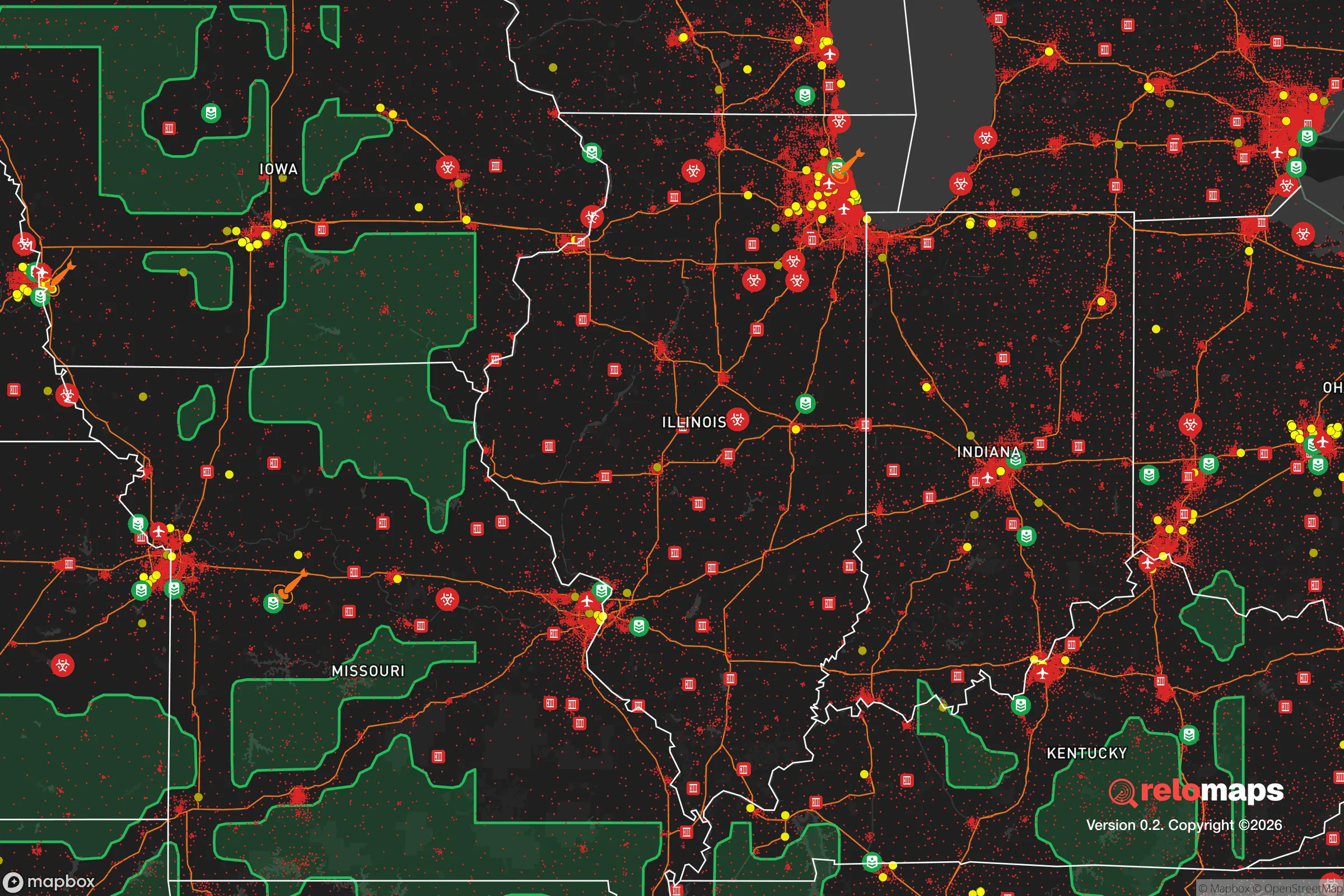


Important Note: For informational purposes only. This does not mean nothing bad ever happens in the green zones. Please use common sense. This is based on public data and modeled with AI. We tried to take a conservative approach but mistakes happen. We update this regularly as new information becomes available.
Solar Generator Recommendations
Backup power matters more here than in safer locations. We've picked three solar generators across budgets and capacity tiers — start with the budget unit if you only need a few essentials, or step up if you want to run a fridge and HVAC for days at a time.

Jackery Portable Power Station Explorer 300
Budget OptionPower on the Go: Weighing only 11 lbs, it's convenient to set up and store with book-sized foldable solar panels

BLUETTI Portable Power Station AC180
Designed for both indoor and outdoor scenarios, AC180 is highly capable as it has a robost capacity and continuous output power.

EF ECOFLOW DELTA Pro Ultra Power Station
Upgraded PickEcoFlow DELTA Pro Ultra is a whole-home energy system designed to grow with your family. Integrated with the Smart Home Panel 2, it scales to meet your evolving energy needs — keeping your home powered, intelligent, and secure through every stage of life.
We earn a commission, at no additional cost to you.
Strategic Assessment Analysis
Evanston, Illinois, presents a complex strategic picture for the conservative prepper. Its immediate proximity to Chicago—a major population center and likely flashpoint for civil unrest—is a significant liability, but its position on Lake Michigan offers a critical, defensible water and resource advantage that few inland suburbs can match. For the relocator prioritizing resilience, Evanston is a high-risk, high-reward location that demands a clear-eyed assessment of its vulnerabilities and a robust personal preparedness plan. The city’s liberal political climate and dense urban fabric are not ideal for a low-profile, self-sufficient lifestyle, but its access to freshwater, established infrastructure, and potential for community-based mutual aid cannot be dismissed outright.
Geographic position and natural advantages for long-term survival
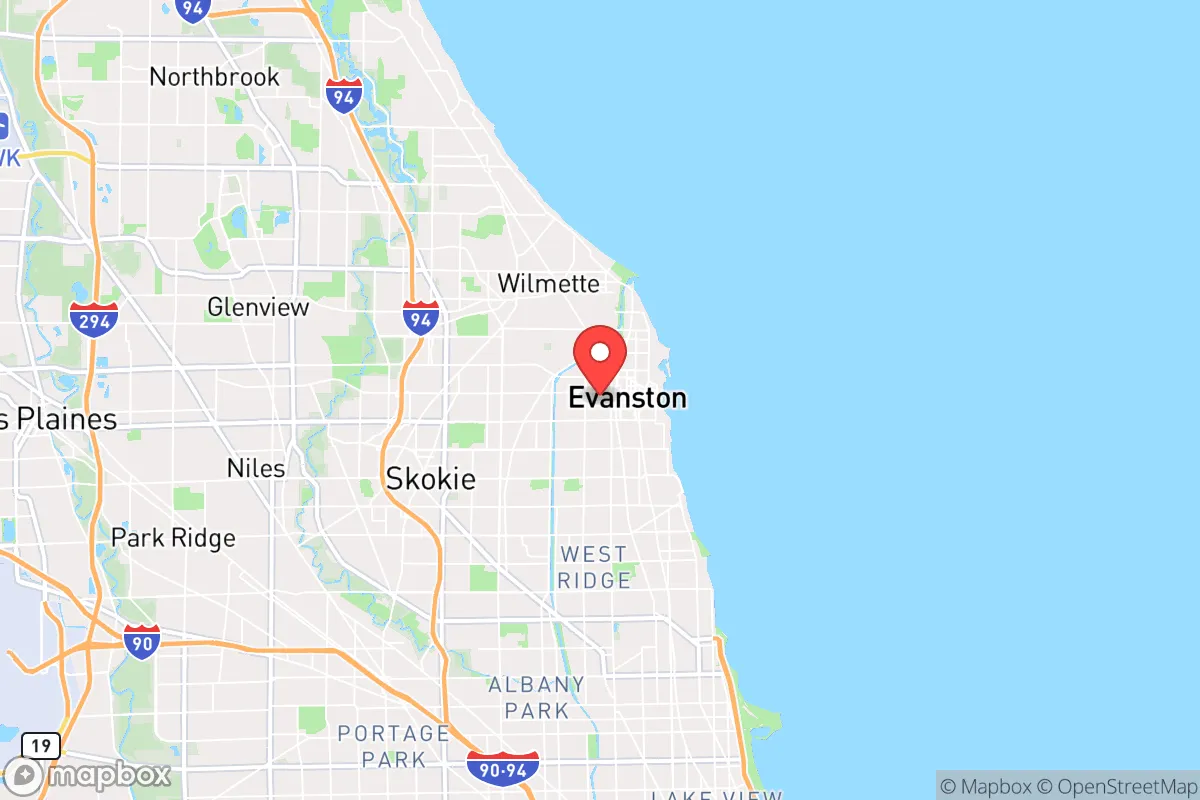
Evanston’s primary strategic asset is its 8-mile lakefront along Lake Michigan, which provides a virtually unlimited, treatable freshwater source—a non-negotiable resource in any extended disruption scenario. The city sits on a relatively flat, elevated bluff, offering decent drainage and reducing flood risk compared to low-lying areas along the Chicago River. Its location 12 miles north of downtown Chicago places it within the “red zone” of a major metropolitan collapse, but it also sits at a natural chokepoint: the lake to the east and the North Shore Channel to the west create a semi-defensible peninsula. The presence of Northwestern University’s campus and its associated research facilities (including a medical school and a 400-bed hospital) means a concentration of skilled professionals and potential medical resources, though these would be contested in a crisis. The city’s tree canopy and numerous parks (like the 80-acre Clark Street Beach and the 20-acre Dawes Park) offer limited but usable space for small-scale gardening and foraging, though soil quality in an urban environment is a concern. The lake moderates temperatures slightly, reducing extreme heat risk, but winter lake-effect snow can complicate mobility and energy needs.
Risks, exposures, and proximity to fallout-relevant landmarks
The most glaring risk is Evanston’s proximity to Chicago, a city of 2.7 million people that would likely experience rapid civil unrest, supply chain collapse, and potential mass migration in any national emergency. The city is directly connected to Chicago via the CTA Purple and Red Lines, as well as major arterial roads like Lake Shore Drive and the Edens Expressway, meaning a fleeing population could overwhelm local resources within hours. Evanston is also within 20 miles of the O’Hare International Airport (a potential military or FEMA staging point, but also a target for disruption) and the Argonne National Laboratory (a nuclear research facility 25 miles southwest). The city itself hosts the Northwestern University nuclear reactor (a 1 MW research reactor) on its campus, which, while low-risk, is a psychological and practical concern for those seeking to avoid any radiation-related hazards. The area is not in a major earthquake zone, but the region’s aging infrastructure—including the 100-year-old water and sewer systems—is vulnerable to failure during a prolonged grid-down event. The city’s dense, walkable layout means that a single point of failure (a bridge collapse, a chemical spill on the rail lines) could trap residents or force them into dangerous evacuation routes. The presence of the Evanston Police Department (about 150 sworn officers) and the Northwestern University Police (about 70 officers) provides some security, but these forces would be overwhelmed in a widespread crisis, and the city’s progressive policies on policing and gun control mean that law-abiding residents may face legal hurdles to self-defense.
Practical resilience for a relocator: food, water, energy, and defensibility
For the relocator serious about self-sufficiency, Evanston requires a heavy investment in pre-positioned supplies and off-grid capabilities. Water is the one clear advantage: Lake Michigan is a reliable source, but you’ll need a high-quality filtration system (e.g., a Berkey or a Sawyer filter) and a manual pump or solar-powered pump to draw it, as municipal water treatment plants will fail without power. The city’s water utility draws from an intake crib 2 miles offshore, so even if the grid goes down, the lake itself remains clean. Food is a major challenge: Evanston has no significant agricultural land, and the few community gardens (like the one at the Levy Senior Center) are small. You’ll need to stockpile at least 3-6 months of non-perishable food, as local grocery stores (Jewel-Osco, Whole Foods) will be stripped within hours of a crisis. Energy resilience is possible but limited: rooftop solar is viable (the city gets about 190 sunny days per year), but most homes are older and may require structural upgrades to support panels. Natural gas is piped in, but a grid-down scenario would cut that supply. A backup generator (preferably dual-fuel) with a secure fuel cache is essential, but noise discipline is a concern in a dense neighborhood. Defensibility is poor: Evanston’s grid-like street pattern and high population density (about 12,000 people per square mile) make it difficult to secure a perimeter. A single-family home with a fenced yard offers some buffer, but apartment dwellers are at a severe disadvantage. The city’s location on the lake does provide a potential escape route by water (a small boat or kayak could be used to reach less populated areas along the Wisconsin shoreline), but this requires pre-planning and equipment. The local gun culture is weak—Illinois has strict firearm laws, and Evanston itself has an assault weapons ban—so you’ll need to navigate legal hurdles to maintain a defensive capability. For those willing to invest in a bug-out location (e.g., a rural property in Wisconsin or Michigan), Evanston can serve as a staging point, but it is not a sustainable long-term retreat.
The overall strategic picture for Evanston is one of calculated risk. It offers a unique freshwater advantage and access to high-quality medical and educational resources, but these are offset by extreme vulnerability to urban collapse, population density, and legal restrictions on self-defense. For the conservative prepper who values community and is willing to invest heavily in on-site resilience (water filtration, food stockpiles, solar power, and a robust security plan), Evanston could be a viable base of operations—but only if you are prepared to leave within 48 hours if the situation deteriorates. The city is not a retreat; it is a forward operating base with a single, critical resource. If you are looking for a low-profile, defensible, and self-sufficient location, look further inland. If you want to bet on the lake and are ready for the chaos that comes with being next to a major city, Evanston is a gamble worth understanding.

* Values derived from national, state, county, city and local statistics and may differ in a specific area. Last updated: 2026-04-29T20:20:56.000Z
Narrative content on this page is AI-generated and may contain mistakes. Verify any details that matter before acting on them.
ReloMaps may earn a commission from affiliate links at no extra cost to you.

