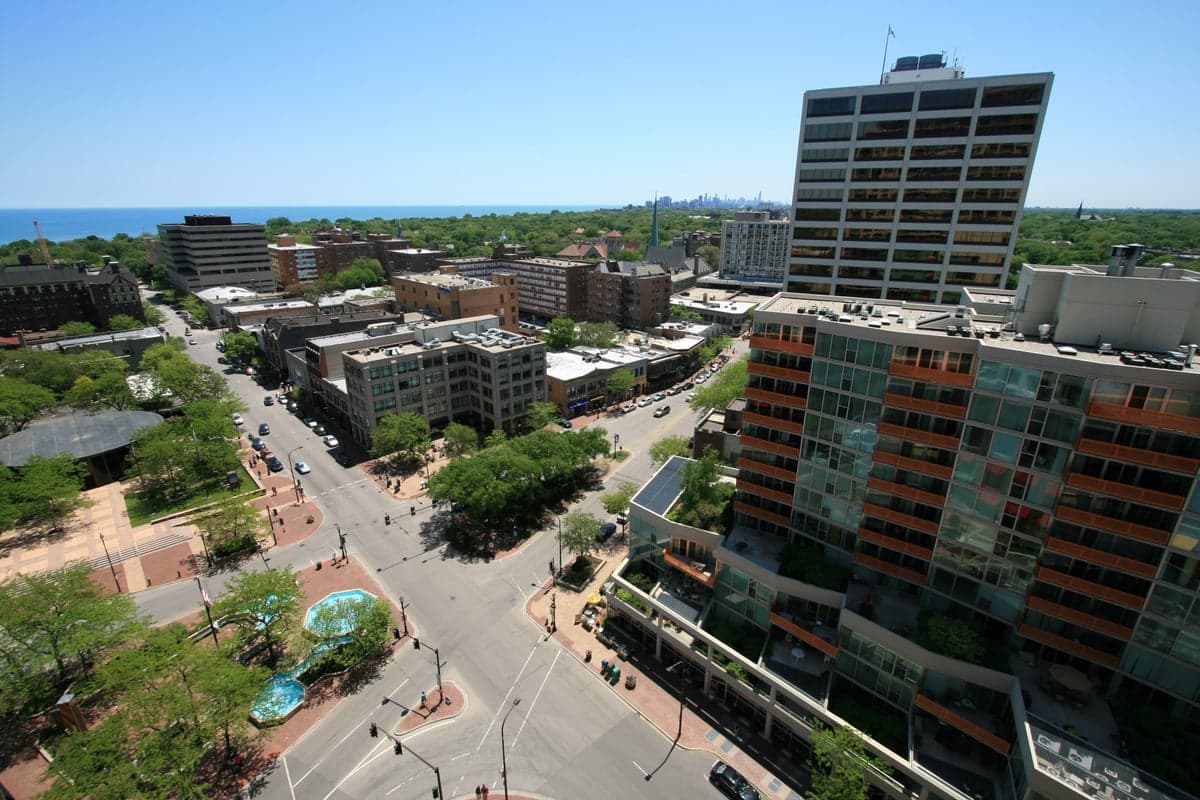
Photo: Wikipedia
Personal Sovereignty in Evanston, IL
Viable for self-reliance. Generally workable, though some barriers may limit total independence.
What does Personal Sovereignty tell us?
Personal Sovereignty measures your capacity for self-reliance and independence with minimal government friction. Higher scores mean fewer barriers between you and the way you want to live... but it assumes you have the space you need and good neighbors.
What does this tell us?
Personal Sovereignty measures your capacity for self-reliance and independence with minimal government friction. Higher scores mean fewer barriers between you and the way you want to live... but it assumes you have the space you need and good neighbors.
State Policy
Energy independence: Importer (45% of energy produced in-state)
Personal Liberty
Homesteading

Personal Liberty Analysis
Evanston, Illinois presents a challenging environment for personal sovereignty, where a dense regulatory framework and high tax burden significantly constrain individual autonomy. As a strategic relocation advisor, I have to tell you plainly: this city, like much of Cook County, operates with a governing philosophy that prioritizes collective outcomes over individual freedoms, making it a difficult fit for those with a survivalist or prepper mindset. The state's aggressive posture on taxation, gun control, and parental rights creates a landscape where self-reliance is actively discouraged, and government oversight permeates daily life. For a conservative-leaning individual or family seeking to maximize personal liberty, Evanston represents a location where you will be constantly navigating restrictions rather than enjoying freedoms.
Tax burden and regulatory posture: how much of your income and time the government takes
The financial and bureaucratic cost of living in Evanston is a primary concern for anyone valuing economic sovereignty. Illinois has the second-highest property tax burden in the nation, and Evanston sits squarely within that reality. The combined state and local tax burden is among the highest in the country, with a flat state income tax of 4.95% and a sales tax rate in Evanston that reaches 10.25% when you factor in Cook County and city levies. This means a significant portion of your earnings is redirected before you ever have a chance to allocate it toward your own preparedness, land, or supplies. The regulatory posture is equally aggressive: the city maintains strict zoning codes, building permit requirements, and environmental regulations that make even modest home improvements a bureaucratic ordeal. For a prepper, this translates into constant friction—whether you want to install a backup generator, build a root cellar, or simply keep chickens in your backyard, you will likely need permits, inspections, and approvals that can take months. The state's regulatory environment also extends to business ownership, with high licensing fees and complex compliance requirements that discourage the kind of side hustles and small-scale enterprises that build financial resilience. In short, Evanston's tax and regulatory climate actively works against the accumulation of personal capital and the freedom to use your property as you see fit.
Self-defense and gun law specifics: what you can and cannot do to protect your home and family
For those who believe the right to self-defense is non-negotiable, Evanston's gun laws are a major red flag. Illinois is one of the most restrictive states in the nation for firearm ownership, and Evanston adds its own layer of local ordinances. The state requires a Firearm Owner's Identification (FOID) card for possession of any firearm or ammunition, a process that involves background checks, fingerprinting, and a waiting period that can stretch for months. The state also mandates a 72-hour waiting period for handgun purchases and a 24-hour wait for long guns. Concealed carry is legal only with a state-issued license, which requires 16 hours of training, a background check, and a fee—and even then, Evanston has designated "gun-free zones" that include parks, public transportation, and any property where the owner posts signage. The state's "red flag" law allows law enforcement or family members to petition a court to temporarily remove firearms from an individual deemed a risk, a process that can be initiated without a criminal conviction. For a survivalist, this means your ability to defend your home and family is heavily dependent on government permission and subject to revocation at any time. The practical reality is that self-defense in Evanston is largely outsourced to law enforcement, which in a crisis may not arrive quickly enough. If you prioritize the ability to keep and bear arms without bureaucratic hurdles, Evanston is not the place for you.
Self-reliance and homesteading viability: lot sizes, zoning, and off-grid feasibility
Evanston's urban density and zoning laws make traditional homesteading or off-grid living virtually impossible. The city is a dense suburb of Chicago, with most residential lots averaging between 5,000 and 7,000 square feet—far too small for meaningful food production or livestock. Zoning codes prohibit keeping chickens, goats, or bees in most residential areas, and any attempt to raise animals for food would require a special use permit that is rarely granted. The city's building codes also effectively ban off-grid systems: solar panels require permits and must be connected to the grid, rainwater collection is heavily restricted due to public health regulations, and composting toilets are not permitted in homes connected to municipal sewer. The climate itself is a challenge for self-reliance, with harsh winters that limit growing seasons to about five months. For a prepper looking to establish a homestead with food security, water independence, and energy autonomy, Evanston offers none of the necessary conditions. The city's infrastructure is entirely dependent on centralized systems—the electrical grid, municipal water, and natural gas lines—meaning any disruption to those systems leaves you without alternatives. If self-reliance is a core value, you would need to look to rural areas of Illinois or neighboring states like Indiana or Missouri to find the land and regulatory freedom to pursue it.
Personal liberties: parental rights, medical autonomy, speech, and property
Evanston's approach to personal liberties reflects a broader trend in Illinois toward government involvement in family and medical decisions. Parental rights have been a contentious issue, with the state passing laws that allow minors to access certain medical procedures without parental consent, including reproductive health services and gender-affirming care. The state's education system, including Evanston's public schools, has adopted curriculum standards that some parents find intrusive, including comprehensive sex education and social-emotional learning programs that can override family values. Medical autonomy is similarly constrained: Illinois has strict vaccine mandates for school attendance, and during public health emergencies, the governor has broad authority to issue executive orders that can limit personal medical choices. Free speech is protected under the First Amendment, but local ordinances on noise, signage, and public assembly can create friction for those who want to express dissenting views. Property rights are perhaps the most constrained area: the city's zoning laws, historic preservation ordinances, and environmental regulations give the government significant control over what you can do with your own land. The city has also implemented inclusionary zoning policies that require developers to set aside units for affordable housing, a policy that some property owners view as an infringement on their right to sell or lease as they see fit. For a conservative individual, the cumulative effect is a sense that the government is a constant presence in decisions that should be personal and private.
Overall, Evanston's personal sovereignty profile is among the weakest in the Midwest for those with a survivalist or prepper mindset. The combination of high taxes, restrictive gun laws, impossible homesteading conditions, and government overreach into family and medical decisions creates an environment where individual autonomy is heavily circumscribed. Compared to areas in Indiana, Wisconsin, or even downstate Illinois, Evanston offers far fewer opportunities for self-reliance and personal freedom. If your relocation strategy prioritizes maximizing personal sovereignty, this city should be at the bottom of your list. The trade-offs for living in a culturally vibrant, walkable community with strong public services are real, but for those who value the ability to protect their family, control their property, and live without constant government interference, the costs are simply too high.

* Values derived from national, state, county, city and local statistics and may differ in a specific area. Last updated: 2026-04-29T20:20:56.000Z
Narrative content on this page is AI-generated and may contain mistakes. Verify any details that matter before acting on them.
ReloMaps may earn a commission from affiliate links at no extra cost to you.

