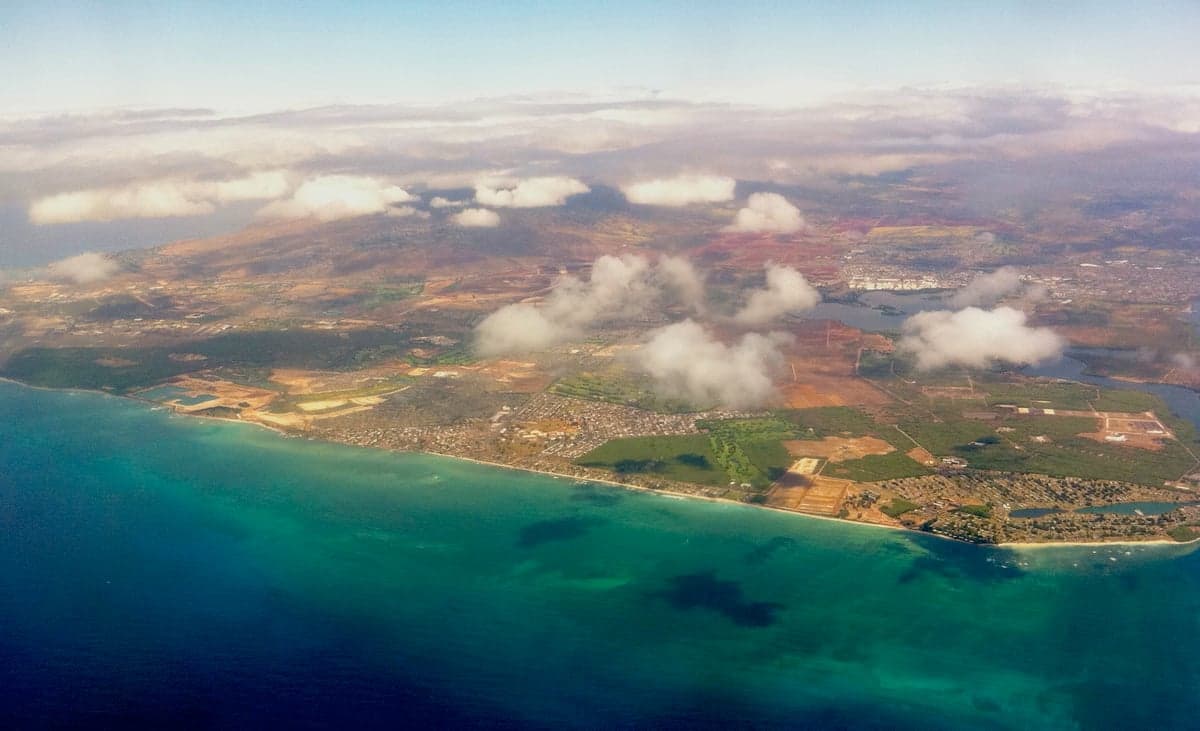
Photo: Wikipedia
Strategic Assessment of Ewa Beach, HI
Meaningful friction. Expect exposure to either population pressure, blast zones, or natural disaster risk. Consider buying a retreat property.
What does the Strategic Assessment tell us?
Our Strategic Assessment grades tactical survivability of an area. Major population centers, military targets, fallout zones, natural disasters, and border exposure all drive risk — lower exposure means a more defensible position in a crisis.
This is heavily inspired by Joel Skousen's Strategic Relocation book. Highly recommended you checkout the book ($)What does this tell us?
Our Strategic Assessment grades tactical survivability of an area. Major population centers, military targets, fallout zones, natural disasters, and border exposure all drive risk — lower exposure means a more defensible position in a crisis.
This is heavily inspired by Joel Skousen's Strategic Relocation book. Highly recommended you checkout the book ($)Strategic Pillars

Key Distances
Regional Safe Places
Below is our recommended "safe zones" in Hawaii and the surrounding area based on our strategic heuristics. For most people, it's unrealistic to live in a “safe zone” full-time due to work, family or other personal reasons. They tend to be more rural. However, many of these areas are perfect for second homes and retreat properties that double as a vacation home or even a short-term rental.

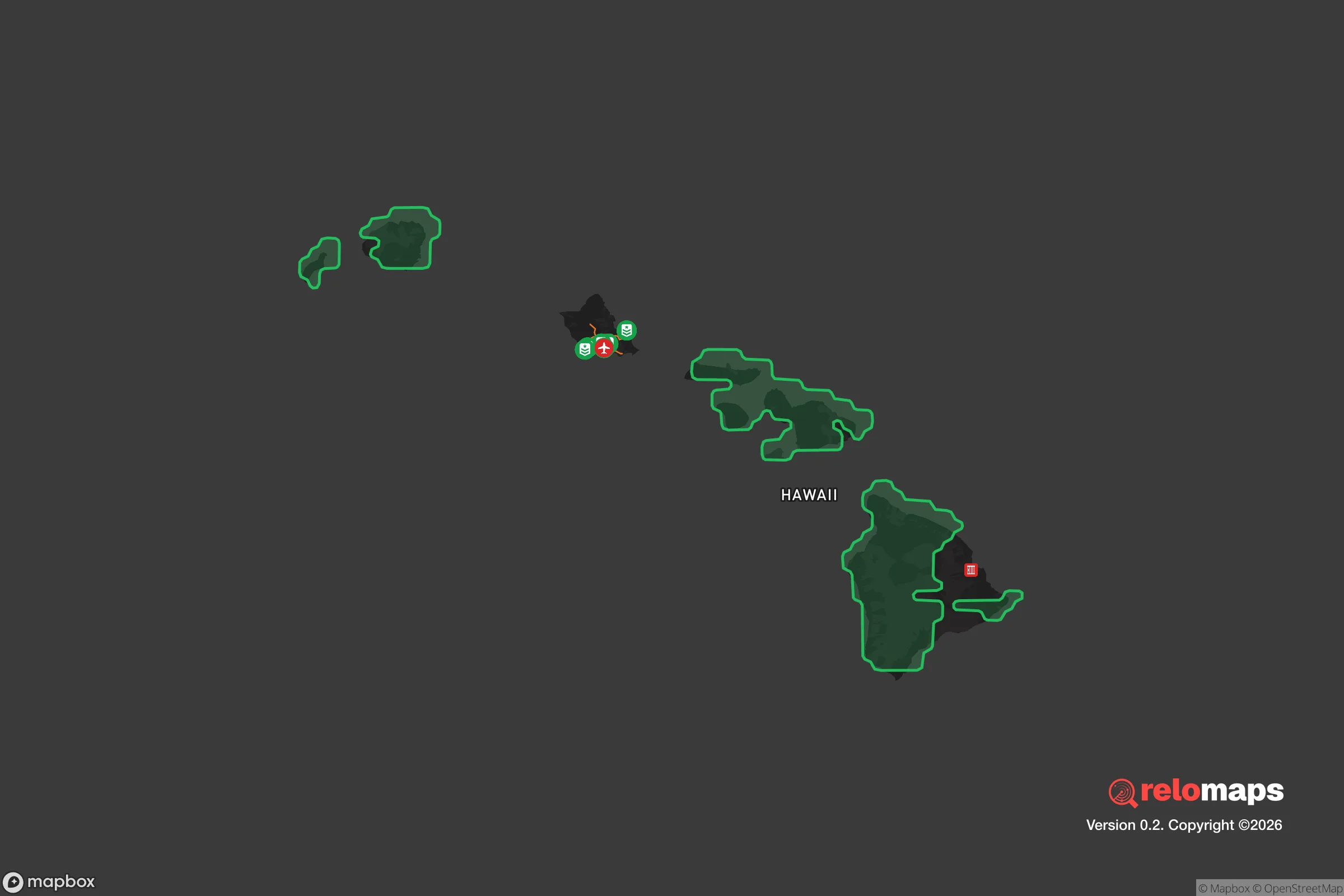


Important Note: For informational purposes only. This does not mean nothing bad ever happens in the green zones. Please use common sense. This is based on public data and modeled with AI. We tried to take a conservative approach but mistakes happen. We update this regularly as new information becomes available.
Solar Generator Recommendations
Backup power matters more here than in safer locations. We've picked three solar generators across budgets and capacity tiers — start with the budget unit if you only need a few essentials, or step up if you want to run a fridge and HVAC for days at a time.

Jackery Portable Power Station Explorer 300
Budget OptionPower on the Go: Weighing only 11 lbs, it's convenient to set up and store with book-sized foldable solar panels

BLUETTI Portable Power Station AC180
Designed for both indoor and outdoor scenarios, AC180 is highly capable as it has a robost capacity and continuous output power.

EF ECOFLOW DELTA Pro Ultra Power Station
Upgraded PickEcoFlow DELTA Pro Ultra is a whole-home energy system designed to grow with your family. Integrated with the Smart Home Panel 2, it scales to meet your evolving energy needs — keeping your home powered, intelligent, and secure through every stage of life.
We earn a commission, at no additional cost to you.
Strategic Assessment Analysis
Ewa Beach, on the southwest coast of Oahu, presents a complex strategic picture for the conservative prepper. Its primary advantage is geographic isolation from the mainland's cascading failure scenarios, but this is offset by extreme dependence on imported resources and proximity to Honolulu’s high-value target density. For a relocator prioritizing resilience, Ewa Beach offers a defensible suburban buffer zone—close enough to leverage urban resources, far enough to avoid the immediate blast radius of a major event, but with critical vulnerabilities that demand serious mitigation planning.
Geographic position and natural advantages for a survival scenario
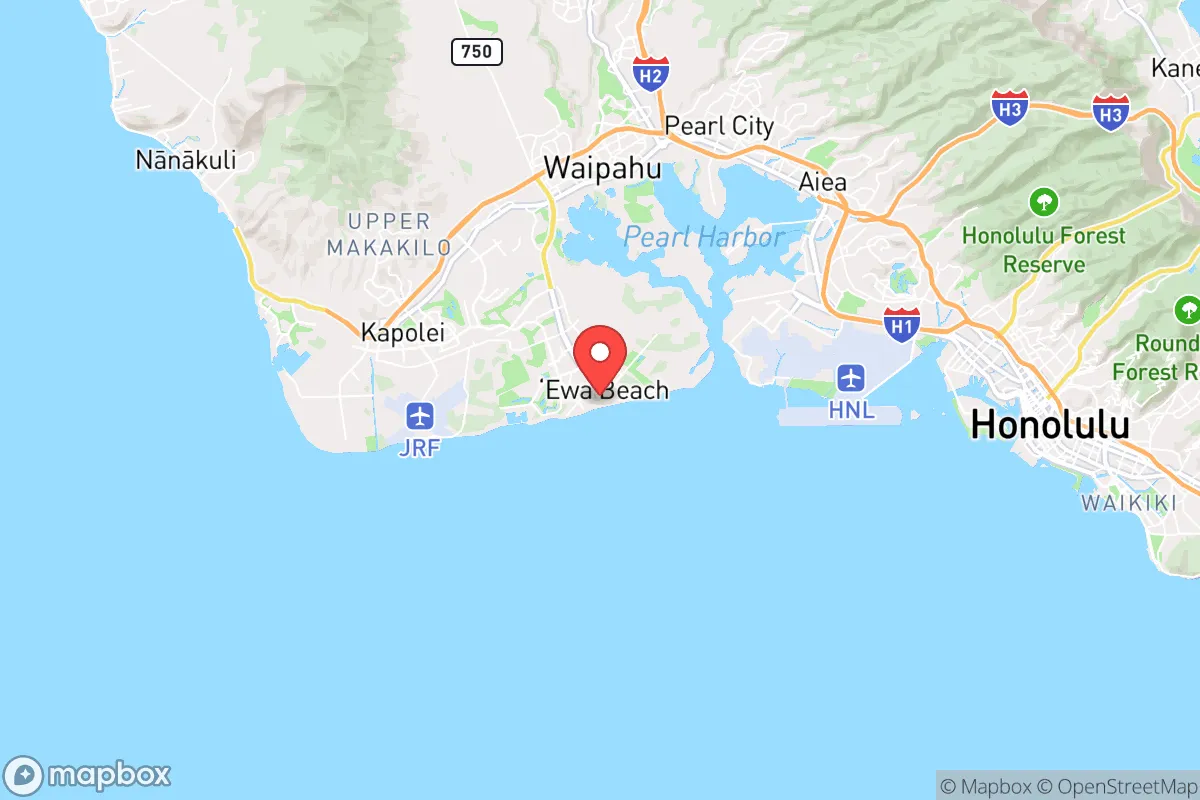
Ewa Beach sits roughly 20 miles west of Honolulu, placing it outside the immediate fallout zone of a major strike on Pearl Harbor or downtown Honolulu, yet within a practical distance for supply runs or medical evacuation in a non-catastrophic event. The area is on the leeward (dry) side of Oahu, meaning it receives less rainfall than the windward coast—a double-edged sword for water collection but a plus for solar energy generation. The surrounding landscape is relatively flat and open, with the Waianae Range to the west providing a natural barrier against tsunami surges from the open Pacific. The Ewa Plain itself is a former sugarcane plantation area, now suburbanized, but with pockets of undeveloped land that could support small-scale agriculture or serve as bug-out points. The proximity to Barbers Point (Kalaeloa) offers a secondary harbor and airport, which could be critical for resupply if Honolulu’s main port is compromised. For a prepper, this location provides a reasonable balance of concealment and access—you’re not in the urban core, but you’re not so remote that you’re cut off from all infrastructure.
Risks, exposures, and proximity to fallout-relevant landmarks
The single greatest strategic liability of Ewa Beach is its location on an island that hosts multiple high-value military installations. Pearl Harbor and Hickam Air Force Base are less than 10 miles east, making them primary targets in any peer-level conflict. A nuclear or conventional strike on those facilities would generate significant fallout and secondary effects—electromagnetic pulse (EMP) disruption, fires, and mass panic—that would directly impact Ewa Beach. Additionally, the nearby Barbers Point Naval Air Station (now Kalaeloa Airport) is a former military airfield that could be reactivated or targeted in a crisis. The area is also within the tsunami inundation zone for a major seismic event; the 2011 Japan tsunami caused minor surge damage here, and a larger local earthquake could be devastating. Ewa Beach is directly downwind of the Honolulu urban corridor, meaning any biological or chemical release in the city would drift this way. For the conservative prepper, the key takeaway is that while Ewa Beach avoids the worst of Honolulu’s immediate dangers, it is not a safe haven—it’s a secondary exposure zone that requires active monitoring and a pre-planned evacuation route to the north or west.
Practical resilience for a relocator: food, water, energy, and defensibility
Water is the most pressing concern. Oahu’s freshwater comes from a single basal aquifer, and Ewa Beach relies on the Board of Water Supply’s municipal system. In a grid-down scenario, this system fails within hours. There are no major perennial streams in Ewa Beach; the area is arid. A prepper must install rainwater catchment (minimum 5,000 gallons) and have a backup well or desalination capability—saltwater is less than a mile away at White Plains Beach. Food security is equally challenging. Hawaii imports roughly 85-90% of its food, and Ewa Beach’s grocery stores would empty within 48 hours of a supply chain disruption. Local soil is volcanic and rocky, but with raised beds and composting, you can grow taro, sweet potatoes, and leafy greens. The Ewa Beach Community Garden is a resource, but it’s small. For protein, consider aquaculture (tilapia or shrimp) or small livestock—chickens are common here. Energy is a bright spot: Ewa Beach averages over 270 sunny days per year, making solar photovoltaic (PV) with battery storage highly viable. The local utility, Hawaiian Electric, has a net metering program, but for resilience, you want a standalone off-grid system. Defensibility is mixed. Ewa Beach is a suburban grid of cul-de-sacs and single-family homes; it’s not a natural fortress. However, the area’s layout—with limited access points via Fort Weaver Road and the H-1 freeway—means you can establish observation posts and choke points. The nearby Ewa Villages area has a historic plantation layout with narrow lanes, which could be advantageous for a small team defending a perimeter. The biggest threat is not a military assault but civil unrest—looting and mobs from Honolulu fleeing the city. A well-armed and organized neighborhood watch, combined with physical barriers (concrete planters, reinforced gates), is essential.
The overall strategic picture for Ewa Beach is one of calculated risk. It offers a foothold in a remote, defensible island chain with a stable climate and a like-minded community of military veterans and conservative families. But it is not a self-sufficient homestead. You are trading mainland exposure for island dependency. The prepper who relocates here must invest heavily in water independence, food production, and community networking. The proximity to Honolulu is a double-edged sword—it provides access to medical facilities, hardware stores, and a potential labor pool, but it also makes Ewa Beach a likely destination for refugees in a crisis. For the single individual or family willing to put in the work, Ewa Beach can be a viable long-term base of operations, provided you treat it as a forward operating location rather than a final redoubt. If you are looking for a place to ride out a short-term disruption, it works. If you are planning for a permanent collapse of the mainland supply chain, you will need to be fully off-grid and prepared to defend your position against both the elements and the desperate.

* Values derived from national, state, county, city and local statistics and may differ in a specific area. Last updated: 2026-04-24T00:11:09.000Z
Narrative content on this page is AI-generated and may contain mistakes. Verify any details that matter before acting on them.
ReloMaps may earn a commission from affiliate links at no extra cost to you.

