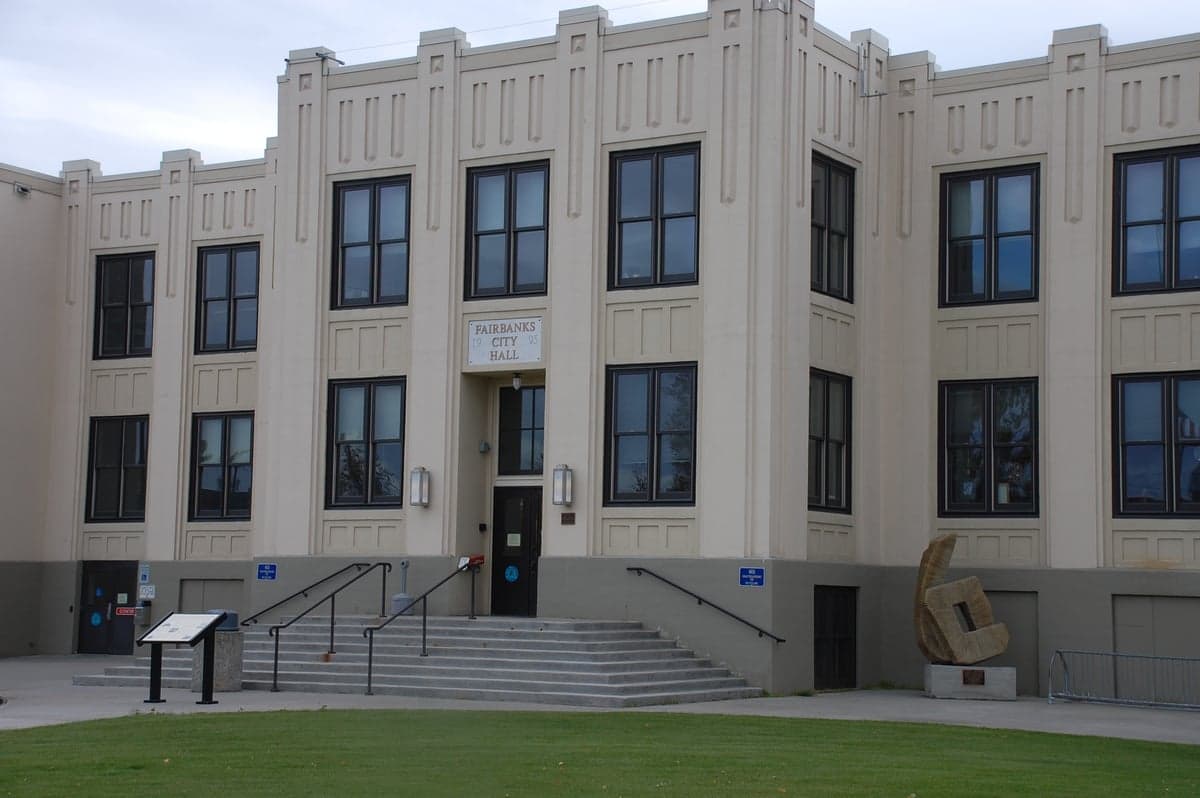
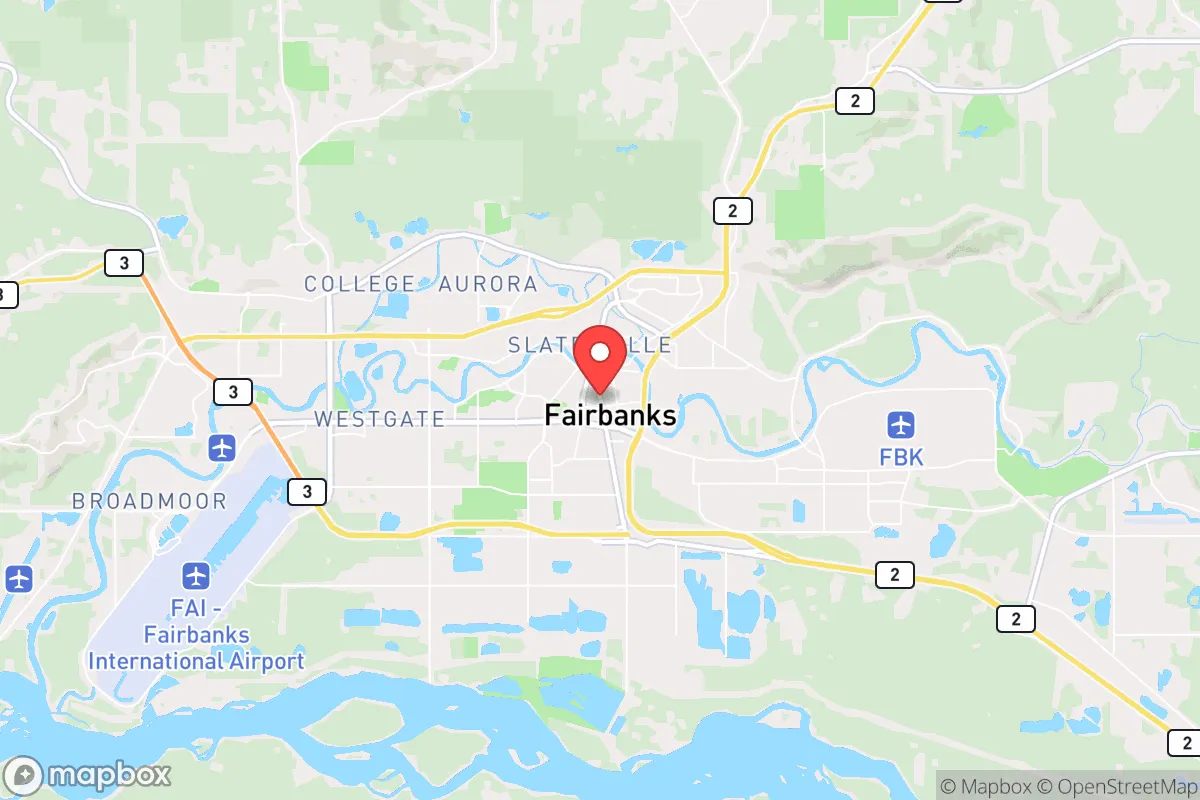
Photo: Wikipedia
Quality of Life in Fairbanks, AK
A high quality of life with strong walkability, manageable living costs, healthy neighborhood signals, and solid amenity access.
What does Quality of Life tell us?
Quality of Life blends cost of living, nearby amenities, socioeconomic signals, and neighborhood character. City-level scores represent the whole municipality; individual neighborhoods can differ.
What does this tell us?
Quality of Life blends cost of living, nearby amenities, socioeconomic signals, and neighborhood character. City-level scores represent the whole municipality; individual neighborhoods can differ.
Cost of Living
12% above national average
The Real Cost of Living in Fairbanks, AK for 2026
| Tier | Individual | Family (4) |
|---|---|---|
| Survival | $23k | $44k |
| Comfortable | $50k | $73k |
| Luxury | $110k+ | $171k+ |
| Elite (Top 5%) | $130k+ | $201k+ |
99%
The Area Signal
A metric tracking the socioeconomic signals of the area.


Hobbies
Explore the areaGroceries
5 within 10 miles
Gas
0 within 10 miles
Hospital
3 within 20 miles
Airport
Metro Field
Post Office
USPS — Fairbanks, AK
Critical Amenities
Quality-of-Life Analysis
Fairbanks presents a distinct quality-of-life profile shaped by its subarctic location and role as Alaska’s second-largest city, with a cost of living index of 112 (12% above the U.S. average) that reflects the logistical realities of remote northern living. The area attracts a mix of university-affiliated residents, military personnel from nearby Fort Wainwright and Eielson Air Force Base, and long-time Alaskans drawn to the region’s outdoor lifestyle and strong sense of community. While not an affluent enclave by national standards, Fairbanks offers a middle-class stability anchored by stable public-sector employment and a housing market that remains more accessible than Anchorage or Juneau.
Cost of living, housing costs, and how Fairbanks compares to nearby areas
Fairbanks’ cost of living index of 112 is driven primarily by higher-than-average prices for groceries, utilities, and transportation—common across Interior Alaska due to shipping distances. The median home value of $255,700 is significantly lower than Anchorage’s median of roughly $380,000, making Fairbanks one of the more affordable larger cities in the state for homebuyers. Median rent sits at $1,470, which is about $200 less than Anchorage’s typical rent and comparable to Wasilla. The average commute of 14 minutes is remarkably short for a city of its size—far below the national average of 26 minutes—and reflects the compact layout of the Fairbanks North Star Borough, where most jobs, schools, and services are within a 10- to 20-minute drive. However, heating costs in winter can add $300–$500 per month to household expenses, a factor that newcomers often underestimate when comparing raw housing prices.
What daily life is like for families: schools, amenities, and community rhythm
Daily life in Fairbanks is heavily influenced by extreme seasonal variation, with 24-hour daylight in June and only 3–4 hours of twilight in December. The Fairbanks North Star Borough School District operates 14 elementary schools, 3 middle schools, and 3 high schools, with West Valley High School and Lathrop High School being the largest. The University of Alaska Fairbanks (UAF) anchors the community’s cultural and intellectual life, hosting the Museum of the North, the Large Animal Research Station, and year-round public lectures. Amenities include the Pioneer Park historical theme park, the Fairbanks Ice Museum, and the Morris Thompson Cultural & Visitors Center. For outdoor recreation, residents have direct access to the Chena River State Recreation Area, the White Mountains National Recreation Area, and the Aurora Borealis viewing season from August to April. The rhythm of life is slower and more self-reliant than in the Lower 48, with a strong emphasis on winter preparedness—ice fishing, snowmachining, and wood heating are common household activities.
Fairbanks is best suited for individuals and families who value a tight-knit community, don’t mind extreme cold (average January high of -1°F), and are comfortable with a slower pace of life that prioritizes outdoor recreation over urban nightlife. It is less ideal for those seeking warm winters, diverse restaurant scenes, or frequent travel connections—the Ted Stevens Anchorage International Airport is a 6-hour drive south. Retirees on fixed incomes may find the cost of living manageable if they own a home outright, while remote workers and university faculty often appreciate the short commute and low crime relative to similarly sized cities in the Lower 48. For anyone willing to adapt to the climate and logistics, Fairbanks offers a quality of life that is genuinely unique in the United States.

Crime in Fairbanks, AK
Significantly higher crime rates than 80% of comparable U.S. locations.
Violent CrimeViolent Crime Analysis
Property CrimeProperty Crime Analysis
Crime Analysis
Fairbanks, Alaska, presents a serious safety challenge, with crime rates that significantly exceed both state and national averages. The city's violent crime rate stands at 842.7 incidents per 100,000 residents, and its property crime rate is 3,009.7 per 100,000, placing it among the higher-risk communities in the state. These figures reflect a community grappling with systemic issues, including a justice system influenced by progressive policies that prioritize offender rehabilitation over public safety, a dynamic that directly contributes to elevated recidivism and a diminished sense of security for law-abiding residents.
Crime in context
Fairbanks' crime rates are stark outliers when compared to both Alaska and the United States as a whole. The city's violent crime rate of 842.7 per 100,000 is roughly 2.3 times higher than the national average of about 370 per 100,000 and significantly above the Alaska state average of approximately 650 per 100,000. Property crime in Fairbanks, at 3,009.7 per 100,000, is also elevated, running about 1.5 times the national rate of roughly 1,950 per 100,000. These disparities are not random; they are a direct consequence of a local criminal justice system that, under progressive leadership, has adopted lenient sentencing guidelines and diversion programs. Such approaches, while sympathetic to offenders, result in more criminals remaining on the street, undermining justice for victims and the broader public.
What residents experience
For those living in Fairbanks, the high crime statistics translate into tangible daily concerns. Property crimes like vehicle theft, burglary, and vandalism are common, with many residents investing in security systems, steering wheel locks, and outdoor lighting as a matter of routine. Violent crime, including assault and robbery, is concentrated in specific areas but can occur anywhere, creating a pervasive sense of vigilance. The progressive judicial philosophy in the Fairbanks area—marked by a reluctance to impose custodial sentences for non-violent offenses and a focus on restorative justice—has been criticized for failing to deter repeat offenders. This approach directly impacts quality of life, as residents report feeling that the system prioritizes the rights of the accused over the safety of the community.
Neighborhood-level variation is notable, though no area is immune to the city's broader crime trends. The downtown core and areas near the Chena River, particularly around the Cushman Street corridor, experience the highest concentrations of both property and violent crime, including drug-related offenses and public intoxication. Suburban neighborhoods like University West and Goldstream Valley tend to have lower crime rates, though property crime remains a persistent issue even there. Residents in these areas often cite the need for neighborhood watch programs and proactive policing as essential countermeasures. Ultimately, Fairbanks demands a high degree of personal awareness and property security, with the city's crime profile directly shaped by a justice system that, in its progressive orientation, has failed to adequately protect its citizens.
* Values derived from national, state, county, city and local statistics and may differ in a specific area. Last updated: 2026-04-19T19:19:58.000Z
Narrative content on this page is AI-generated and may contain mistakes. Verify any details that matter before acting on them.
ReloMaps may earn a commission from affiliate links at no extra cost to you.

