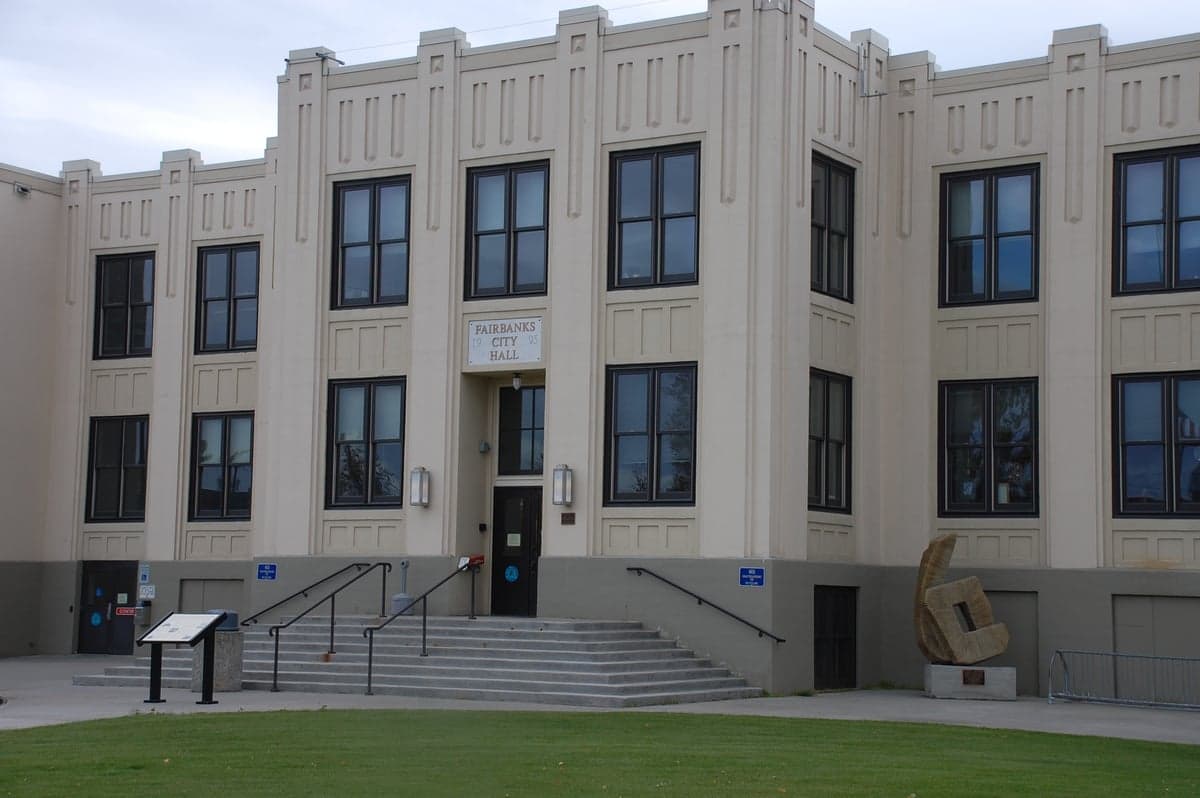
Photo: Wikipedia
Strategic Assessment of Fairbanks, AK
Workable tactical position. Some exposure to population density or targets, but generally defensible in a crisis.
What does the Strategic Assessment tell us?
Our Strategic Assessment grades tactical survivability of an area. Major population centers, military targets, fallout zones, natural disasters, and border exposure all drive risk — lower exposure means a more defensible position in a crisis.
This is heavily inspired by Joel Skousen's Strategic Relocation book. Highly recommended you checkout the book ($)What does this tell us?
Our Strategic Assessment grades tactical survivability of an area. Major population centers, military targets, fallout zones, natural disasters, and border exposure all drive risk — lower exposure means a more defensible position in a crisis.
This is heavily inspired by Joel Skousen's Strategic Relocation book. Highly recommended you checkout the book ($)Strategic Pillars

Key Distances
Regional Safe Places
Below is our recommended "safe zones" in Alaska and the surrounding area based on our strategic heuristics. For most people, it's unrealistic to live in a “safe zone” full-time due to work, family or other personal reasons. They tend to be more rural. However, many of these areas are perfect for second homes and retreat properties that double as a vacation home or even a short-term rental.
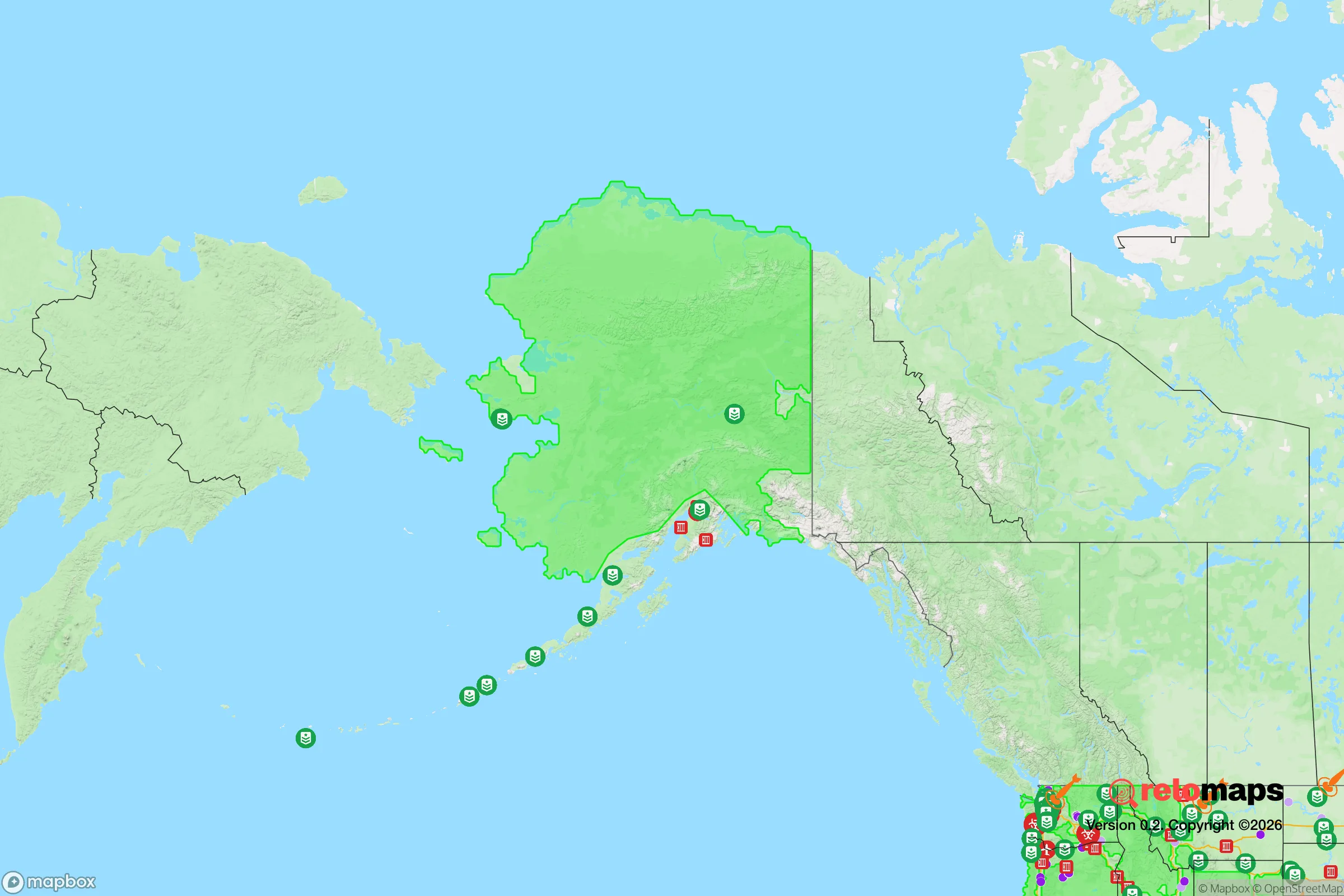
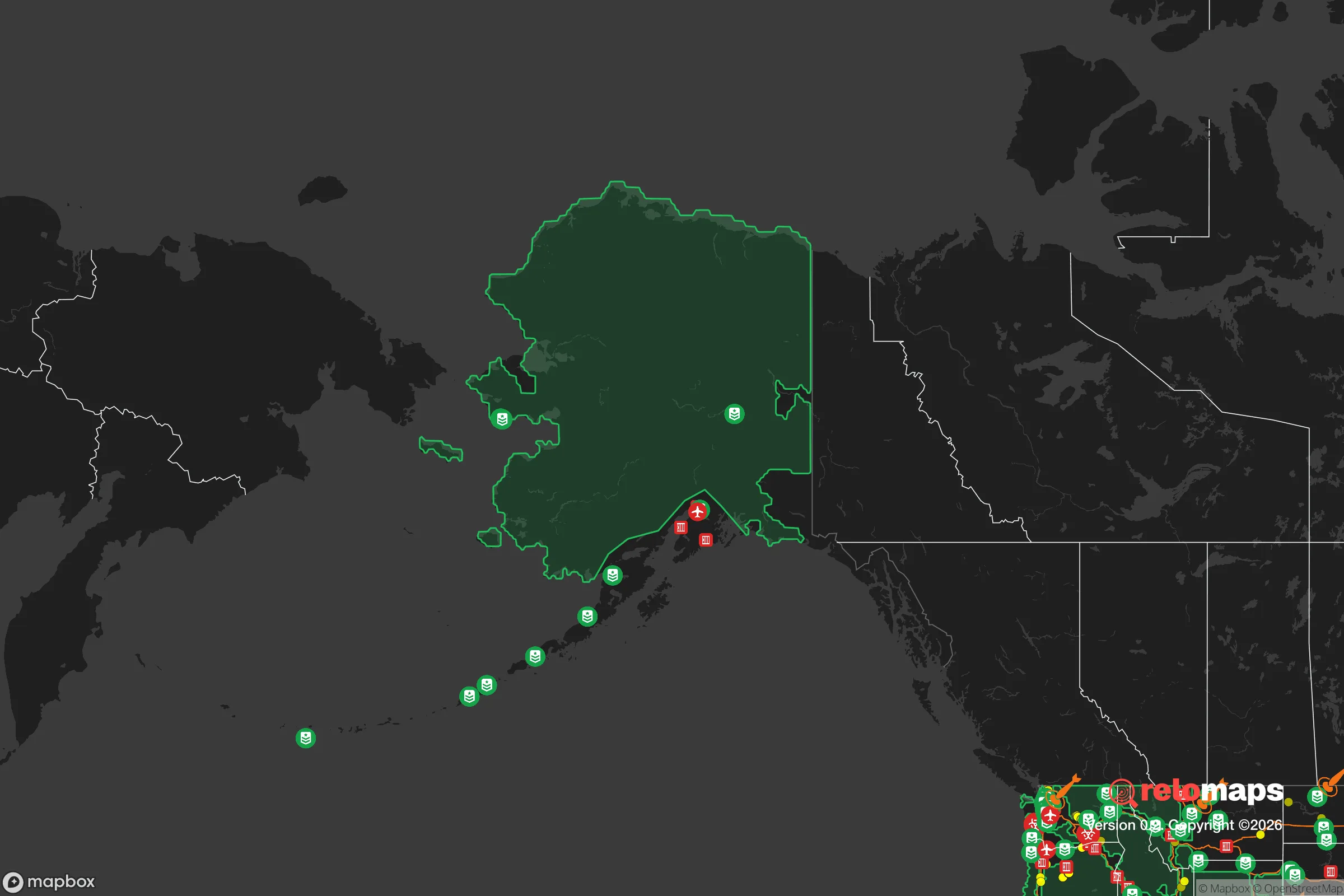


Important Note: For informational purposes only. This does not mean nothing bad ever happens in the green zones. Please use common sense. This is based on public data and modeled with AI. We tried to take a conservative approach but mistakes happen. We update this regularly as new information becomes available.
Solar Generator Recommendations
Backup power matters more here than in safer locations. We've picked three solar generators across budgets and capacity tiers — start with the budget unit if you only need a few essentials, or step up if you want to run a fridge and HVAC for days at a time.

Jackery Portable Power Station Explorer 300
Budget OptionPower on the Go: Weighing only 11 lbs, it's convenient to set up and store with book-sized foldable solar panels

BLUETTI Portable Power Station AC180
Designed for both indoor and outdoor scenarios, AC180 is highly capable as it has a robost capacity and continuous output power.

EF ECOFLOW DELTA Pro Ultra Power Station
Upgraded PickEcoFlow DELTA Pro Ultra is a whole-home energy system designed to grow with your family. Integrated with the Smart Home Panel 2, it scales to meet your evolving energy needs — keeping your home powered, intelligent, and secure through every stage of life.
We earn a commission, at no additional cost to you.
Strategic Assessment Analysis
Fairbanks, Alaska, offers a strategic relocation option for those prioritizing resilience and distance from the vulnerabilities of the Lower 48. Its location, deep in the interior, provides a unique combination of natural resource abundance, low population density, and significant separation from the primary targets of a major conflict or societal collapse. For a conservative-leaning individual or family focused on preparedness, Fairbanks represents a serious, long-term hedge against the instability of urban centers and the fragility of national supply chains.
Geographic isolation and natural advantages for long-term security
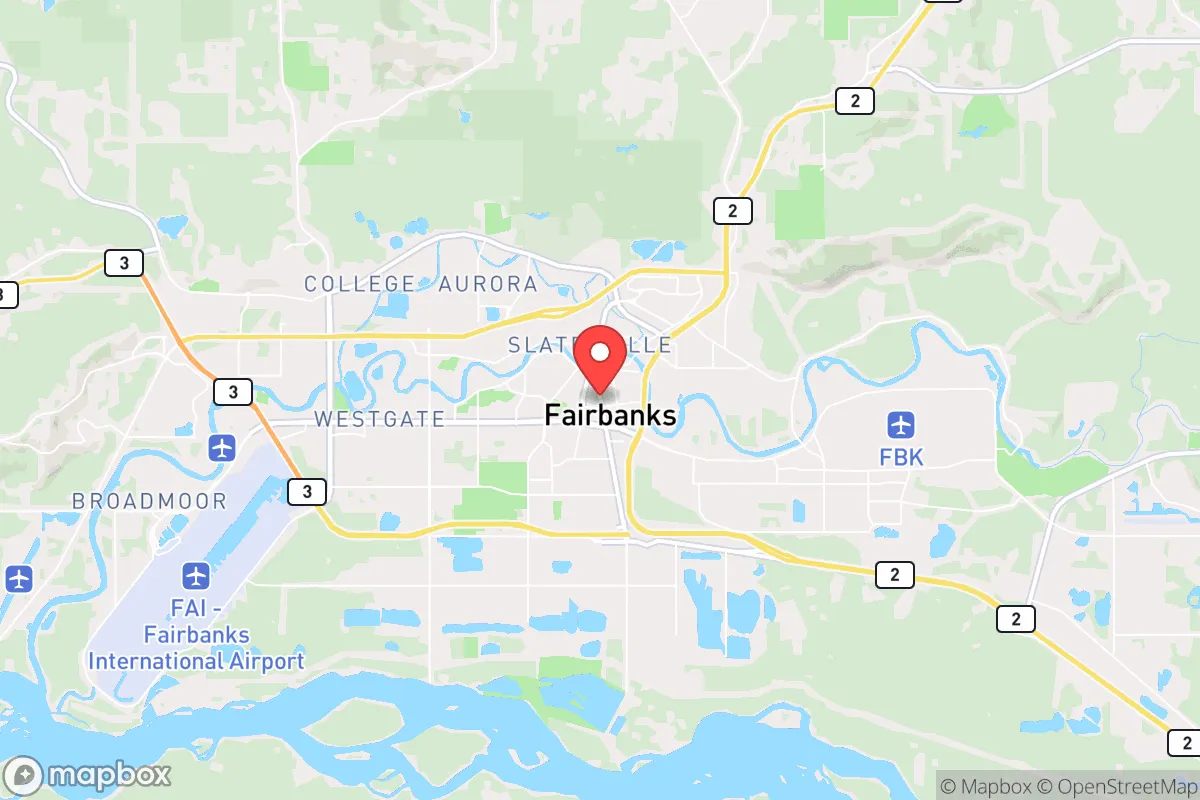
Fairbanks sits at the heart of Alaska's interior, roughly 360 miles north of Anchorage and over 2,000 miles from the nearest contiguous US state border. This sheer distance is a primary strategic asset. The city is not a major port or a hub for intercontinental trade, which significantly reduces its attractiveness as a target for any large-scale kinetic event. The surrounding terrain is a mix of boreal forest, rivers, and low mountains, offering ample space for dispersion and a natural buffer against the chaos that would engulf more populated regions. The Tanana River and its tributaries provide a reliable freshwater source, and the long summer daylight hours (up to 22 hours near the solstice) allow for intensive food production. The area's cold climate, while demanding, is a natural deterrent to unprepared populations and limits the viability of many pathogens and pests that thrive in warmer zones. For the prepper, this is a location where the environment itself enforces a level of discipline and self-reliance that is absent in most of the country.
Risks, exposure, and proximity to potential fallout zones
While Fairbanks is distant from the primary geopolitical flashpoints, it is not without its own risk profile. The most significant concern is its proximity to Eielson Air Force Base, located about 26 miles southeast of the city. Eielson is a key strategic installation for the US Air Force, housing F-35 and F-16 fighter squadrons and serving as a critical node for Arctic defense. In a major power conflict, this base would be a high-value target. The prevailing wind patterns in the interior generally move from west to east, but a ground burst at Eielson could still deposit significant fallout over parts of Fairbanks depending on the specific weather conditions. Another consideration is the Trans-Alaska Pipeline System, which runs near the city. While not a nuclear target itself, a coordinated attack on the pipeline could cripple the state's economy and fuel supply, creating a secondary crisis. The city also faces natural risks: the region lies in a seismically active zone, and a major earthquake could disrupt the road and rail links (the Parks Highway and Alaska Railroad) that connect Fairbanks to Anchorage and the rest of the state. The primary risk, however, remains the military presence. For the strategic relocator, this means that a location farther from Eielson—such as the areas north of Fairbanks near Fox or along the Steese Highway—would offer a better buffer against a direct strike.
Practical resilience: food, water, energy, and defensibility
Fairbanks offers a surprisingly robust foundation for a self-sufficient lifestyle, but it requires serious upfront investment. Water is abundant from the Chena and Tanana Rivers, as well as from shallow wells, though winter freezing is a constant challenge that demands insulated or buried water lines. Food production is viable during the intense summer growing season, with hardy crops like potatoes, carrots, cabbage, and greens thriving in the 24-hour daylight. However, the short growing season (roughly 100 days) and the risk of a killing frost in any month mean that a greenhouse is not a luxury—it's a necessity. Hunting and fishing are excellent: moose, caribou, and salmon are available, but require skill, gear, and a freezer (or a cache) for preservation. Energy is the critical vulnerability. Most homes rely on heating oil, which is delivered by truck and subject to supply chain disruptions. A serious prepper will invest in a wood stove or a multi-fuel boiler, as the surrounding forests provide a virtually limitless fuel source if you have the means to harvest and split it. Solar panels are effective in summer but nearly useless in the deep winter darkness, so a backup generator or a small wind turbine is advisable. Defensibility is a mixed bag. The city itself has a population of about 32,000, with a total borough population around 100,000. The outlying areas are very sparsely populated, which means a determined group could secure a perimeter. However, the road network is limited—the main arteries are the Parks, Steese, and Richardson Highways—and a single bridge or road closure could isolate a neighborhood. The best strategy is to choose a property with a well, a septic system, and a woodlot, located on a dead-end road or a spur off the main highway. The local culture is already heavily oriented toward self-reliance, with a strong tradition of hunting, fishing, and mechanical repair. This means you are less likely to be seen as an outsider for stockpiling supplies or maintaining a large garden.
The overall strategic picture for Fairbanks is one of high potential reward paired with significant, but manageable, risks. It offers a genuine escape from the density and fragility of the Lower 48, with abundant natural resources and a population that understands the value of preparedness. The primary threat is the military target at Eielson, which is a real and sobering consideration. For the relocator willing to invest in a well-insulated home, a reliable heating system, and the skills to live off the land, Fairbanks provides a defensible, resource-rich redoubt. It is not a place for the faint of heart or the under-resourced, but for those serious about building a resilient, independent life, it is one of the most viable options left in the United States. The cold, the darkness, and the distance are not bugs—they are features that filter out the unprepared and preserve the space for those who are ready to work for their security.

* Values derived from national, state, county, city and local statistics and may differ in a specific area. Last updated: 2026-04-19T19:19:58.000Z
Narrative content on this page is AI-generated and may contain mistakes. Verify any details that matter before acting on them.
ReloMaps may earn a commission from affiliate links at no extra cost to you.

