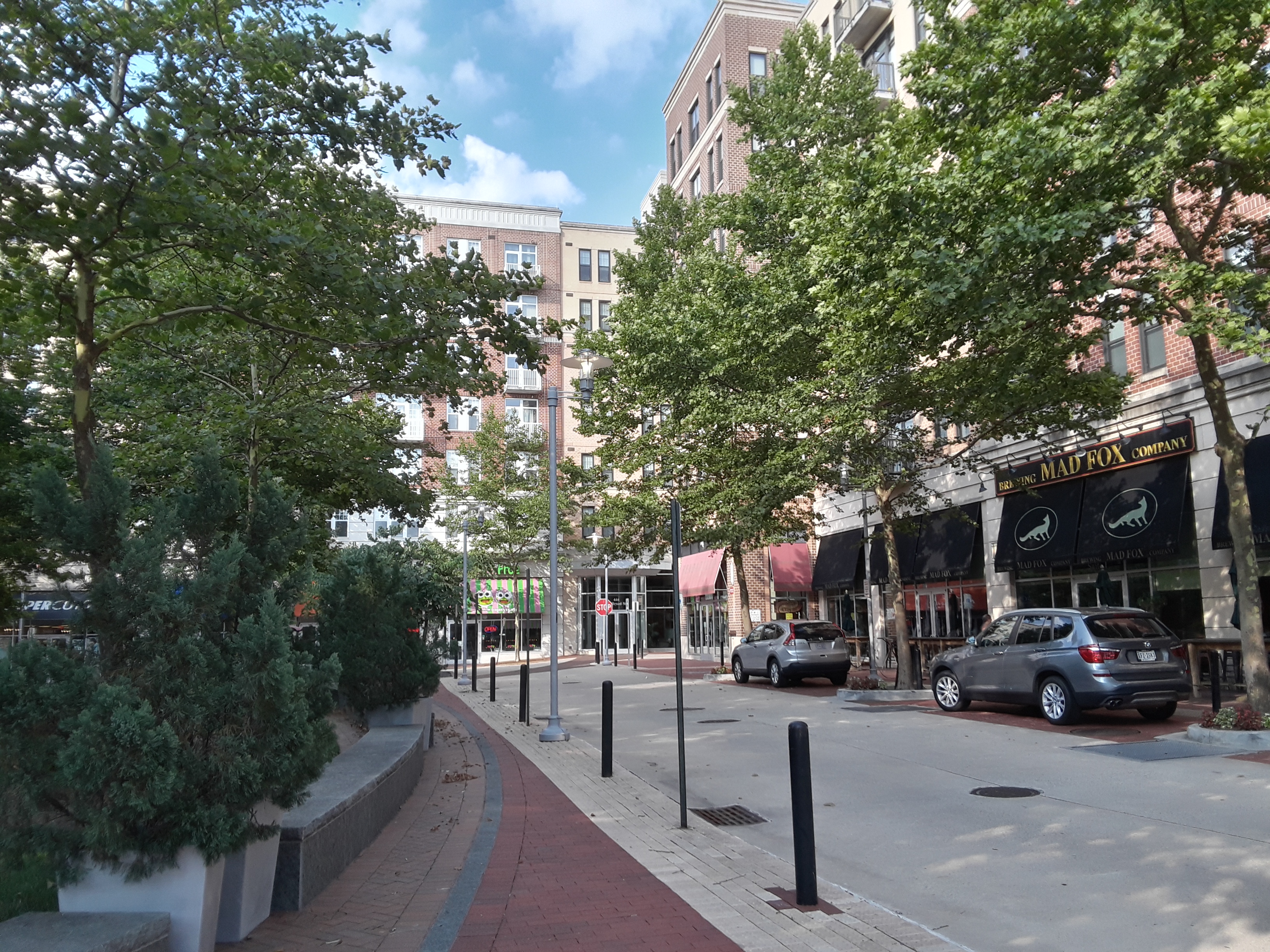
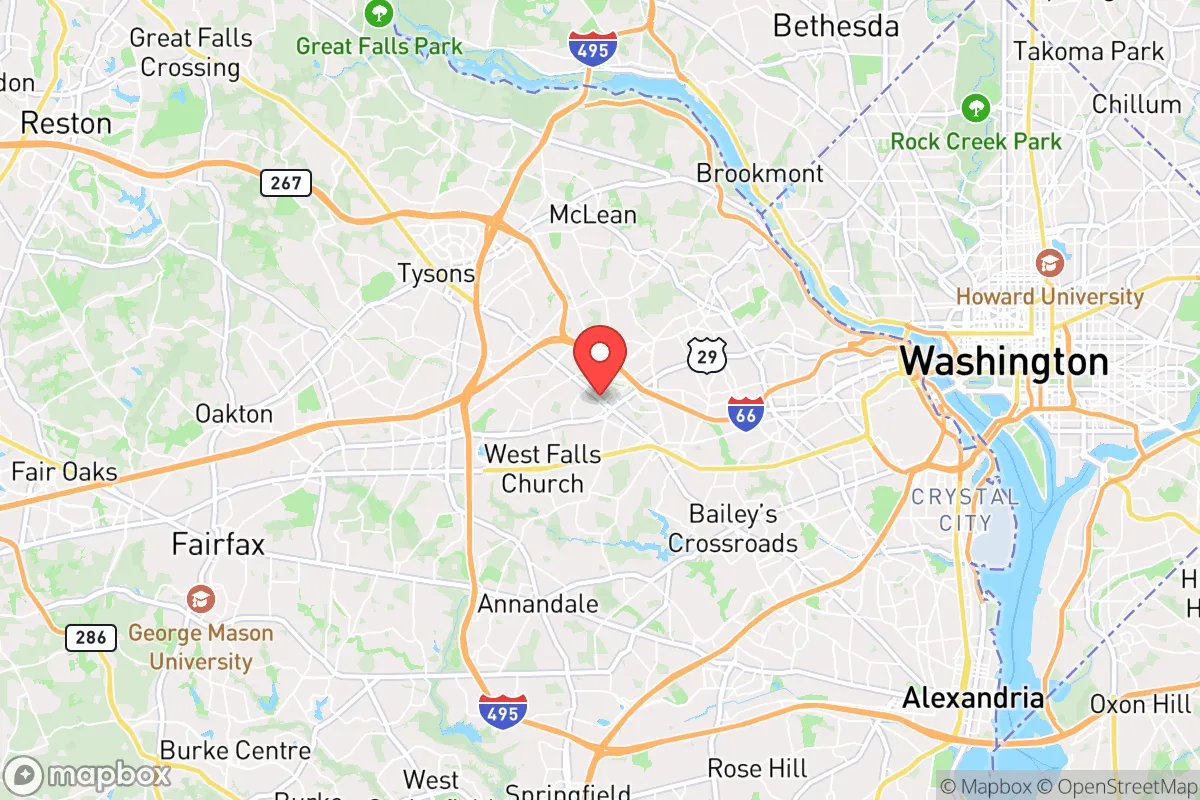
Photo: Wikipedia
Personal Sovereignty in Falls Church, VA
Viable for self-reliance. Generally workable, though some barriers may limit total independence.
What does Personal Sovereignty tell us?
Personal Sovereignty measures your capacity for self-reliance and independence with minimal government friction. Higher scores mean fewer barriers between you and the way you want to live... but it assumes you have the space you need and good neighbors.
What does this tell us?
Personal Sovereignty measures your capacity for self-reliance and independence with minimal government friction. Higher scores mean fewer barriers between you and the way you want to live... but it assumes you have the space you need and good neighbors.
State Policy
Energy independence: Importer (20% of energy produced in-state)
Personal Liberty
Homesteading

Personal Liberty Analysis
Falls Church, Virginia presents a complex and often contradictory environment for personal sovereignty, where the promise of individual autonomy is heavily mediated by one of the most assertive state governments in the Mid-Atlantic. While the city itself is a small, independent enclave with a strong sense of local control, it operates entirely under the umbrella of Virginia state law, which has moved decisively in recent years toward expanded government oversight in areas of self-defense, taxation, and personal lifestyle choices. For the survivalist or prepper, this means the strategic advantages of proximity to federal resources and a relatively high-income population are offset by a regulatory climate that demands careful navigation and a willingness to operate within increasingly narrow legal boundaries.
Tax burden and regulatory posture for the self-reliant individual
Virginia’s tax structure is a significant factor in any sovereignty calculation. The state imposes a progressive income tax with rates ranging from 2% to 5.75%, which is moderate compared to neighboring Maryland but higher than states like Texas or Florida. Falls Church adds its own local income tax (a "tax on tax") via the state system, meaning residents pay both state and local income taxes. Property taxes in Falls Church are notably high, with a rate of approximately $1.28 per $100 of assessed value, and assessments have risen sharply in recent years, reflecting the city’s desirability. This creates a direct financial drag on anyone trying to build self-sufficiency through land ownership or savings. The regulatory posture is similarly burdensome: Virginia has a strong statewide building code, environmental regulations that restrict land use, and a business licensing framework that can be cumbersome for home-based enterprises. For the prepper, this means that any attempt to establish a homestead, run a side business, or even make significant modifications to a property will require permits, inspections, and compliance with state-level mandates that can feel like government overreach into personal property rights.
Self-defense and gun law specifics in a restrictive state
Virginia’s gun laws have tightened considerably since 2020, and Falls Church residents must operate within this more restrictive framework. The state now requires universal background checks for all firearm sales, including private transactions, and has a "one handgun per month" purchase limit. Open carry is legal for those 18 and older with a valid concealed handgun permit, but localities like Falls Church can restrict firearms in government buildings and public parks. The state also has a "red flag" law (Extreme Risk Protective Order) that allows law enforcement to seize firearms based on a court order without a criminal conviction, a provision that many in the prepper community view as a direct threat to due process and personal sovereignty. Concealed carry permits are shall-issue for residents who complete a training course, but non-residents cannot obtain a Virginia permit. For the survivalist, this means that while you can legally own firearms, the process is more bureaucratic than in free states, and the legal environment is less forgiving of self-defense incidents. The city’s proximity to Washington, D.C., also means that any travel across the Potomac introduces a completely different, far more restrictive legal regime for firearms.
Self-reliance and homesteading viability: lot sizes, zoning, and off-grid feasibility
Falls Church is a densely developed urban suburb, and the reality for homesteading is stark. The median lot size in the city is less than 0.2 acres, and most residential zoning is R-1 (single-family detached) with strict setback requirements and height limits. Raising livestock is effectively prohibited within city limits, and even keeping chickens requires a permit and is limited to a small number of hens. Off-grid living is not feasible due to mandatory connection to city water and sewer systems, and any attempt to install solar panels, rainwater collection, or composting toilets must comply with state and local building codes that effectively mandate grid-tied infrastructure. The city’s tree canopy and stormwater management regulations also restrict what you can do with your property. For the prepper seeking true self-reliance, Falls Church is a poor fit; the land is too expensive, too small, and too regulated to support meaningful food production, water independence, or energy autonomy. The strategic value lies instead in its proximity to supply chains, medical facilities, and transportation networks, but not in any capacity for long-term off-grid survival.
Personal liberties: parental rights, medical autonomy, speech, and property
On personal liberties, Falls Church reflects the broader Virginia trend of expanding state authority in areas traditionally left to families and individuals. Parental rights have been a flashpoint, with the state legislature passing laws that require schools to adopt policies on transgender students that can override parental notification, and the state has moved to expand access to abortion and gender-affirming care for minors without parental consent. For the conservative parent, this represents a direct erosion of the family’s sovereignty over their children’s upbringing and medical decisions. Medical autonomy is similarly constrained: Virginia has a vaccine mandate for school attendance (with limited exemptions), and the state’s health department has broad authority to impose public health orders. Free speech is protected under the First Amendment, but the state has enacted laws against "hate speech" in public spaces and has a strong anti-discrimination framework that can be used to penalize speech deemed offensive. Property rights are under constant pressure from zoning regulations, historic preservation overlays, and environmental restrictions that limit what you can build, how you can use your land, and even what trees you can remove. For the individualist, the cumulative effect is a sense that the state is increasingly present in every aspect of life, from the schoolhouse to the backyard.
In the broader context of the Mid-Atlantic, Falls Church offers a mixed sovereignty profile. It is less restrictive than neighboring Washington, D.C., or Montgomery County, Maryland, where gun laws are even tighter and taxes are higher. However, it is far more regulated than rural Virginia counties like Frederick or Shenandoah, where land is cheaper, zoning is looser, and the local political culture is more aligned with individual liberty. For the strategic relocator with a prepper mindset, Falls Church is best viewed as a temporary base or a location for those whose work requires proximity to the capital, but not as a long-term homestead. The trade-off is clear: you gain access to economic opportunity and infrastructure, but you surrender a significant degree of personal sovereignty to a state government that is actively expanding its reach. If your priority is maximum autonomy, look west; if you need to be in the D.C. orbit, Falls Church is a workable but watchful compromise.

* Values derived from national, state, county, city and local statistics and may differ in a specific area. Last updated: 2026-04-24T01:52:41.000Z
Narrative content on this page is AI-generated and may contain mistakes. Verify any details that matter before acting on them.
ReloMaps may earn a commission from affiliate links at no extra cost to you.

