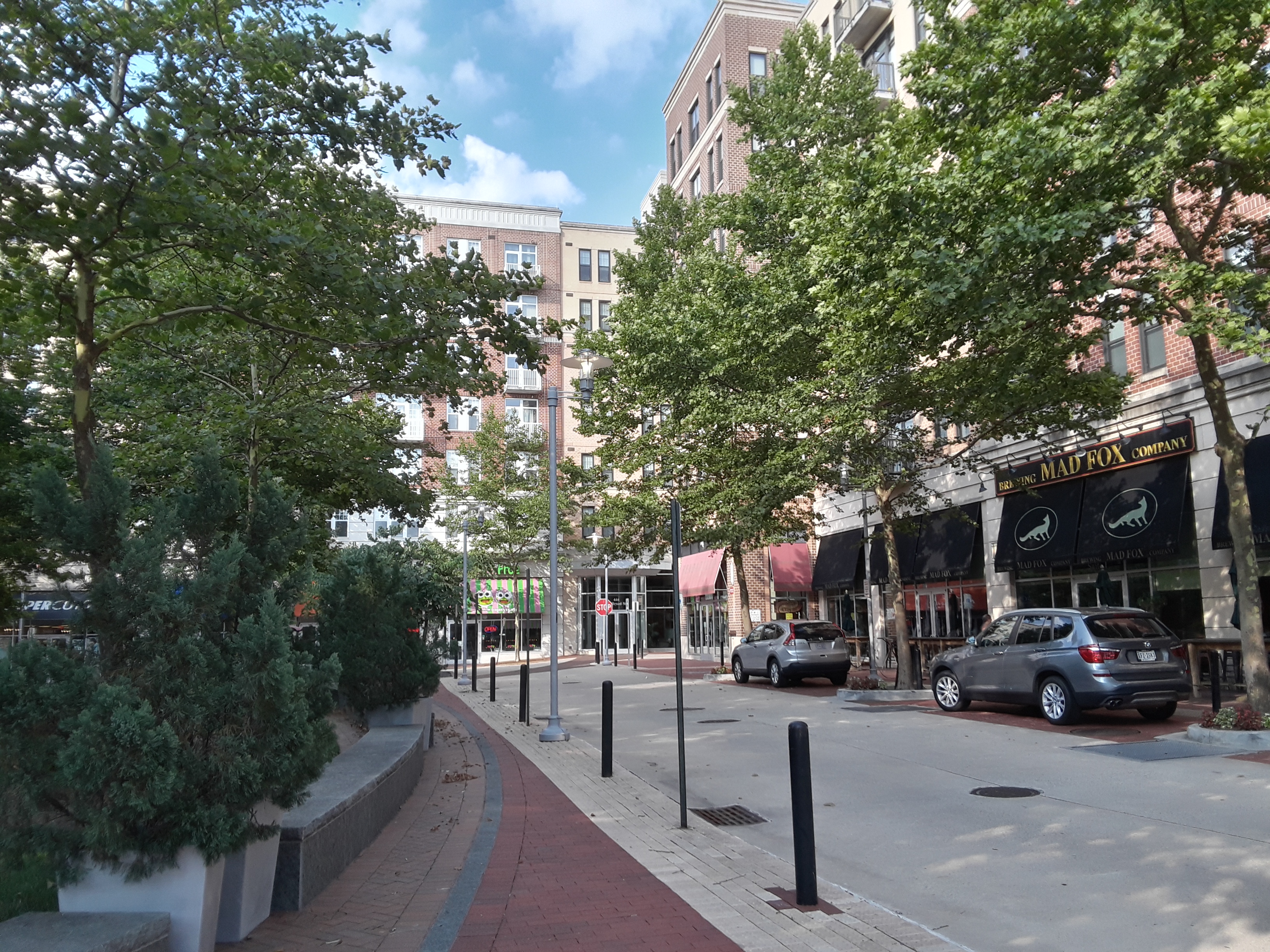

Photo: Wikipedia
Political ClimatePolitical Climate in Falls Church, VA
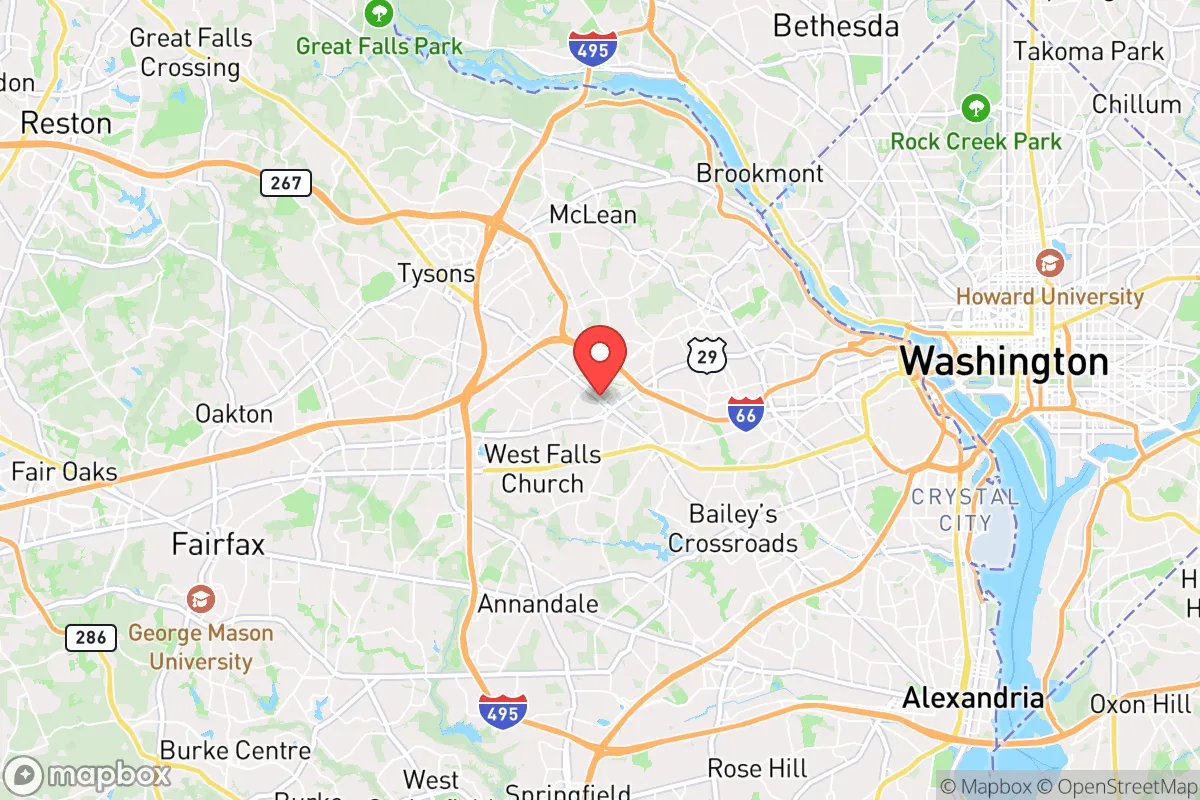
District shown is the primary district for this city’s centroid. Cities may span multiple districts.
Local Political AnalysisPolitical Analysis of Falls Church, VA
Falls Church, Virginia, is about as deep blue as it gets in the Commonwealth, with a Cook Partisan Voting Index of D+26. That means in a typical election, Democrats win this city by 26 points more than the national average. It wasn't always this way—I remember when this was a quieter, more moderate place, but over the last 15 years, the shift has been dramatic and relentless. The local government and school board are now firmly in the hands of progressive activists, and the trajectory is toward even more aggressive policy experimentation, not less.
How it compares
To understand just how lopsided Falls Church is, you have to look at the surrounding areas. Drive 10 minutes west to Vienna or Oakton in Fairfax County, and you're still in blue territory, but it's a softer, more pragmatic shade—places where fiscal concerns and property rights still get a hearing. Head 20 minutes south to Burke or Springfield, and you'll find a mix of military families and federal workers who lean center-left but aren't eager to remake society overnight. Even Arlington and Alexandria, both reliably Democratic, have more internal debate than Falls Church does. Here, the city council and school board races are effectively decided in the Democratic primary, and the general election is a formality. The contrast with Loudoun County to the west is stark—Loudoun has become a battleground over school policies and land use, while Falls Church has already consolidated progressive control.
What this means for residents
For a conservative or even a moderate libertarian, living in Falls Church means constantly feeling like you're swimming against the current. Property taxes have climbed steadily to fund a school system that prioritizes equity initiatives over academic rigor, and the city has embraced zoning changes that reduce single-family home protections under the banner of "missing middle" housing. If you value local control over your property and your children's education, you'll find yourself on the losing side of most votes. The police department has been defunded in spirit if not in name—budgets have been slashed, and officers are discouraged from proactive enforcement. Traffic enforcement is nearly nonexistent, and petty crime has crept up as a result. The city's response to any dissent is to double down on messaging about "inclusivity," which often feels like a way to shut down debate rather than engage with it.
Looking ahead, I don't see this changing anytime soon. The demographics are shifting younger and more transient, with newcomers drawn by the proximity to D.C. and the progressive reputation. Long-term residents who remember when Falls Church was a sleepy, family-oriented town are aging out or selling to developers. The near-term future likely means more density, more taxes, and more top-down social engineering from city hall. If you're considering a move here, be prepared to either adapt or become a vocal minority. It's a beautiful, walkable city with great parks and a strong sense of community—but that community now comes with a political price tag that not everyone is willing to pay.

State Political ClimatePolitical Climate in Virginia
State Political AnalysisPolitical Environment in the State
Virginia has transformed from a reliably conservative-leaning state into a competitive battleground that now leans blue at the statewide level, driven by explosive growth in the Washington D.C. suburbs. Over the past 20 years, the state has shifted from voting Republican in every presidential election from 1968 to 2004 to becoming a solidly Democratic stronghold in presidential races, with Democrats winning the state in every election since 2008. However, the state remains deeply divided, with a Republican trifecta in the Governor’s mansion and House of Delegates as of 2025, while the State Senate is narrowly Democratic, creating a tense, split-control environment that makes major policy shifts difficult.
Urban vs. rural divide
The political map of Virginia is a textbook case of the urban-rural divide. The entire political gravity of the state is pulled by the Northern Virginia suburbs of Washington D.C., including Arlington, Alexandria, and Fairfax County. These areas, home to federal workers, defense contractors, and a highly educated, diverse population, vote overwhelmingly Democratic — often by margins of 60-70% or more. This bloc alone can swing a statewide election. In contrast, the rest of the state is largely red. Richmond and Norfolk are blue islands, but the vast rural and exurban areas — from the Shenandoah Valley to Southside Virginia — vote heavily Republican. The Richmond suburbs like Chesterfield and Hanover counties have been trending redder, while Loudoun County, once a GOP stronghold, flipped blue in the 2010s and now votes Democratic by double digits. The Hampton Roads region around Norfolk is a mixed bag, with military families leaning conservative but the urban core voting blue. The key takeaway: if you live outside the D.C. orbit, you’re in a conservative area; if you’re inside it, you’re in a deep blue bubble.
Policy environment
Virginia’s policy environment is a patchwork of competing priorities. The state has a flat income tax rate of 5.75%, which is moderate but not low, and a sales tax of 5.3% (higher in some localities). Property taxes are set at the local level and vary widely — Loudoun County has high rates to fund its schools, while Bedford County is much lower. The regulatory posture is mixed: Virginia is a right-to-work state, which keeps unions weak, but it has adopted many progressive environmental regulations, including the Virginia Clean Economy Act, which aims for a carbon-free grid by 2050. Education policy is a flashpoint. The state has seen a fierce battle over parental rights, with Governor Glenn Youngkin signing a model policy in 2022 that required schools to notify parents if a child requests to change their gender identity or pronouns. This policy was later struck down by a court, but the fight continues. Election laws are relatively secure — Virginia requires photo ID to vote and has no same-day registration, but it does offer no-excuse absentee voting, which conservatives view as a vulnerability. Healthcare policy is dominated by the expansion of Medicaid under the Affordable Care Act, which was approved by a Republican governor in 2018, a move that still angers many on the right.
Trajectory & freedom
On the freedom front, Virginia is a state in flux. The most significant recent expansion of personal liberty was the 2021 repeal of the state’s “one-gun-a-month” law, which had limited handgun purchases to one per 30 days. This was a win for gun rights advocates. However, the state has also seen major contractions. In 2020, the Democratic-controlled legislature passed a suite of gun control measures, including universal background checks, a red flag law, and a ban on assault weapons (the latter was later blocked by a court). The 2023 “skill games” ban — which outlawed certain video gaming machines in convenience stores — was seen by many as a government overreach into small business owners’ property rights. On medical autonomy, Virginia has not gone as far as some states in restricting COVID-19 mandates, but it did end the public health emergency in 2022. Parental rights took a hit when the courts struck down Youngkin’s model policy on transgender students, leaving school districts to set their own rules — a patchwork that some parents find unsettling. The state’s tax burden is not getting lighter; the 2024 budget included a modest tax cut, but overall, the trend is toward higher spending and more regulation, particularly on energy and land use.
Civil unrest & political movements
Virginia has been a flashpoint for political movements on both sides. The 2017 Unite the Right rally in Charlottesville remains a scar on the state’s reputation, leading to a heavy police presence and ongoing debates about public monuments. On the left, the 2020 racial justice protests in Richmond and Northern Virginia were large and sometimes violent, with statues being toppled and property damage. On the right, the 2021 “Parents Matter” movement — sparked by school closures and critical race theory debates — was a major force in electing Glenn Youngkin. Immigration politics are relatively quiet compared to border states, but Fairfax County has declared itself a “sanctuary” jurisdiction, limiting cooperation with federal immigration enforcement. Election integrity remains a hot topic; the 2020 election in Virginia was widely seen as secure, but many conservatives remain skeptical of the state’s widespread use of drop boxes and mail-in voting. The 2024 presidential election saw no major irregularities, but the issue is not going away. A new resident would notice the political tension most in the suburbs — yard signs, bumper stickers, and heated local school board meetings are common.
Projection
Over the next 5-10 years, Virginia is likely to continue its slow drift leftward at the statewide level, driven by the relentless growth of Northern Virginia. The D.C. suburbs are adding population faster than the rest of the state, and those new residents tend to be younger, more diverse, and more liberal. However, the rural and exurban areas are not shrinking — they’re just being outvoted. The state’s split-control government will likely persist, with Republicans holding the Governor’s mansion and House of Delegates while Democrats control the Senate, leading to gridlock on major issues. The biggest wild card is the 2025 gubernatorial election, which could shift the balance. If a Democrat wins, expect a push for more gun control, higher taxes, and expanded social programs. If a Republican holds the seat, the focus will be on parental rights, tax cuts, and energy independence. For a conservative moving in now, the reality is that you can find a comfortable, like-minded community in the exurbs or rural areas, but you will be living in a state where the political culture is increasingly shaped by the D.C. suburbs. The freedom to live your life without government interference is still strong in many parts of the state, but the trend lines are concerning.
Bottom line for a new resident: If you’re a conservative looking to relocate, Virginia offers a mixed bag. You can find excellent schools, low crime, and a strong economy in places like Hanover County or Roanoke, but you’ll be living under a state government that is increasingly hostile to your values. The key is to choose your locality carefully — the county you live in matters more than the state as a whole. Avoid the D.C. suburbs and the urban cores, and you can still find a community that respects your freedoms. But be prepared for the political winds to shift further left over the next decade, and consider whether you’re willing to fight for your rights at the local level.
* Values derived from national, state, county, city and local statistics and may differ in a specific area. Last updated: 2026-04-24T01:52:41.000Z
Narrative content on this page is AI-generated and may contain mistakes. Verify any details that matter before acting on them.
ReloMaps may earn a commission from affiliate links at no extra cost to you.

