Photo: Wikipedia
Demographics of Falls Church, VA
Affluence Level in Falls Church, VA
An upper-middle-class area. Household wealth, education levels, and homeownership run ahead of national benchmarks.
People of Falls Church, VA
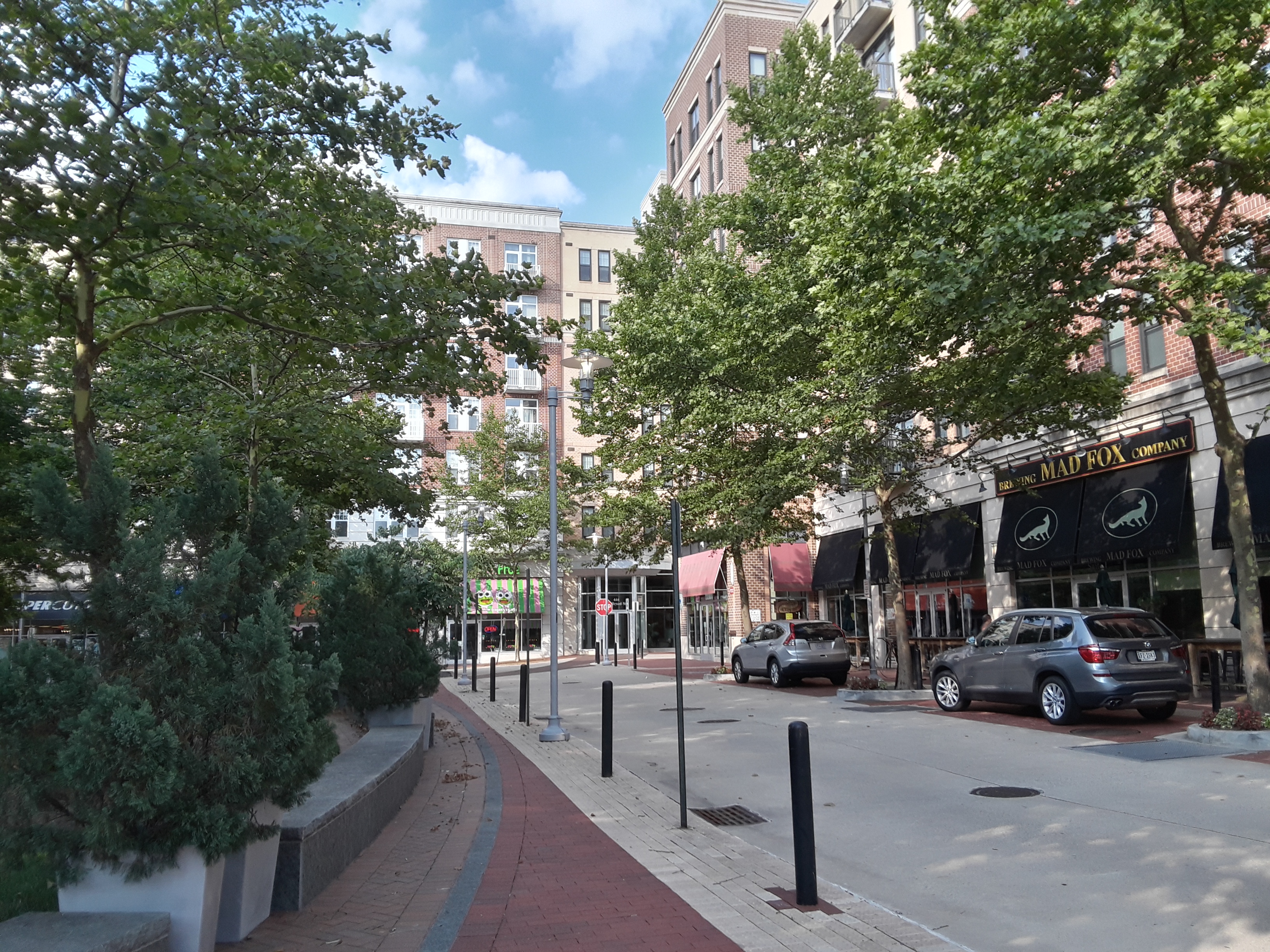
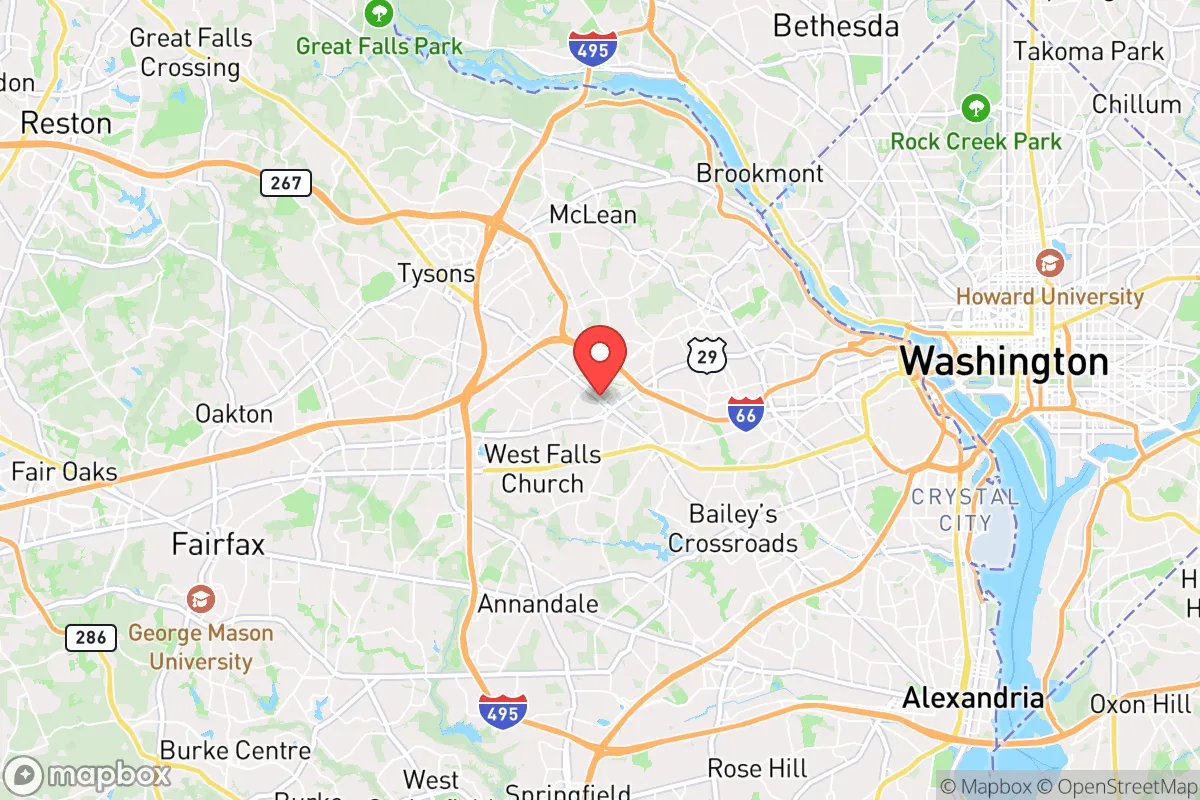
Falls Church, Virginia, is a small, densely populated city of 14,593 residents that blends historic small-town character with modern urbanity. Its population is notably well-educated, with 79.7% holding a college degree, and predominantly White (68.5%), though it has become more diverse in recent decades. The city’s identity is shaped by its deep roots as a colonial crossroads, its transformation into a commuter suburb of Washington, D.C., and its current status as a high-cost, high-opportunity enclave for professionals and families.
How the city was settled and grew
Falls Church’s human history begins in the early 1700s, when English and Scottish settlers moved inland from the Tidewater region, drawn by land grants along the Potomac River’s tributaries. The area was named for the 1734 Anglican church built near the Little Falls of the Potomac, which served as a community anchor. The original population was overwhelmingly Anglo-Saxon Protestant, with families like the Tuckers and the Crossmans establishing farms and mills. The historic City of Falls Church core, around Broad Street and Washington Street, became a stagecoach stop on the Leesburg Turnpike. By the mid-19th century, the village remained small, with fewer than 500 residents, many of whom worked in agriculture or served travelers. The arrival of the Washington & Old Dominion Railroad in the 1850s spurred modest growth, but Falls Church remained a rural hamlet until the 20th century. The West End neighborhood, near the railroad depot, saw early development of modest homes for railroad workers and tradesmen. The city’s first major population wave came after World War II, when returning veterans and federal employees sought affordable housing within commuting distance of D.C. The Lake Barcroft area (partially within Falls Church) and the Seven Corners corridor saw rapid suburban development in the 1950s and 1960s, attracting mostly White middle-class families from the city and other states.
Modern era (post-1965)
The 1965 Hart-Cellar Immigration Act and the expansion of the federal government reshaped Falls Church’s population. The city’s proximity to D.C. and its excellent public schools drew a wave of highly educated professionals, including a growing number of East/Southeast Asian immigrants, particularly from Vietnam, Korea, and the Philippines. These families settled in the Jefferson Park and Broyhill Park neighborhoods, drawn by affordable post-war housing and access to the burgeoning Asian commercial corridor along Annandale Road. By 2020, East/Southeast Asian residents made up 6.4% of the population. A smaller but notable Indian-subcontinent community (2.7%) also arrived, concentrated in the Woodley Hills area, attracted by tech and consulting jobs. The Hispanic population (10.7%) grew steadily from the 1980s onward, with many families from Central America settling in the Seven Corners area, a transit hub with lower-cost apartments. The Black population (4.8%) remained relatively stable, with roots in the historic Falls Church Village area, where a small African American community had existed since the 1800s. The foreign-born share (4.9%) is low compared to neighboring Arlington or Fairfax County, reflecting Falls Church’s high housing costs and limited rental stock, which filter for wealthier, often native-born residents.
The future
Falls Church’s population is trending toward greater affluence and educational attainment, with the college-educated share (79.7%) among the highest in Virginia. The city is not homogenizing into a single enclave but rather tribalizing along income and lifestyle lines: young professionals and families in the City Center redevelopment area, long-time White families in the West End and Lake Barcroft, and immigrant communities in Seven Corners and Jefferson Park. The East/Southeast Asian and Hispanic populations are plateauing, as high home prices push new arrivals to more affordable suburbs like Centreville or Manassas. The Indian-subcontinent community is growing slowly, primarily through in-migration of tech workers. The next 10–20 years will likely see Falls Church become even more educated and White-collar, with the foreign-born share remaining low as housing costs continue to rise. The city’s small land area (2.2 square miles) and strict zoning limit new development, meaning population growth will be modest, likely reaching 15,500–16,000 by 2040.
For someone moving in now, Falls Church offers a stable, highly educated, and safe community with strong schools and a walkable historic core. The trade-off is high cost of living and limited demographic diversity compared to larger D.C. suburbs. It is becoming a place for those who can afford to buy in early and stay long-term, rather than a gateway for new immigrants or a transient rental market.

* Values derived from national, state, county, city and local statistics and may differ in a specific area. Last updated: 2026-04-24T01:52:41.000Z
Narrative content on this page is AI-generated and may contain mistakes. Verify any details that matter before acting on them.
ReloMaps may earn a commission from affiliate links at no extra cost to you.

