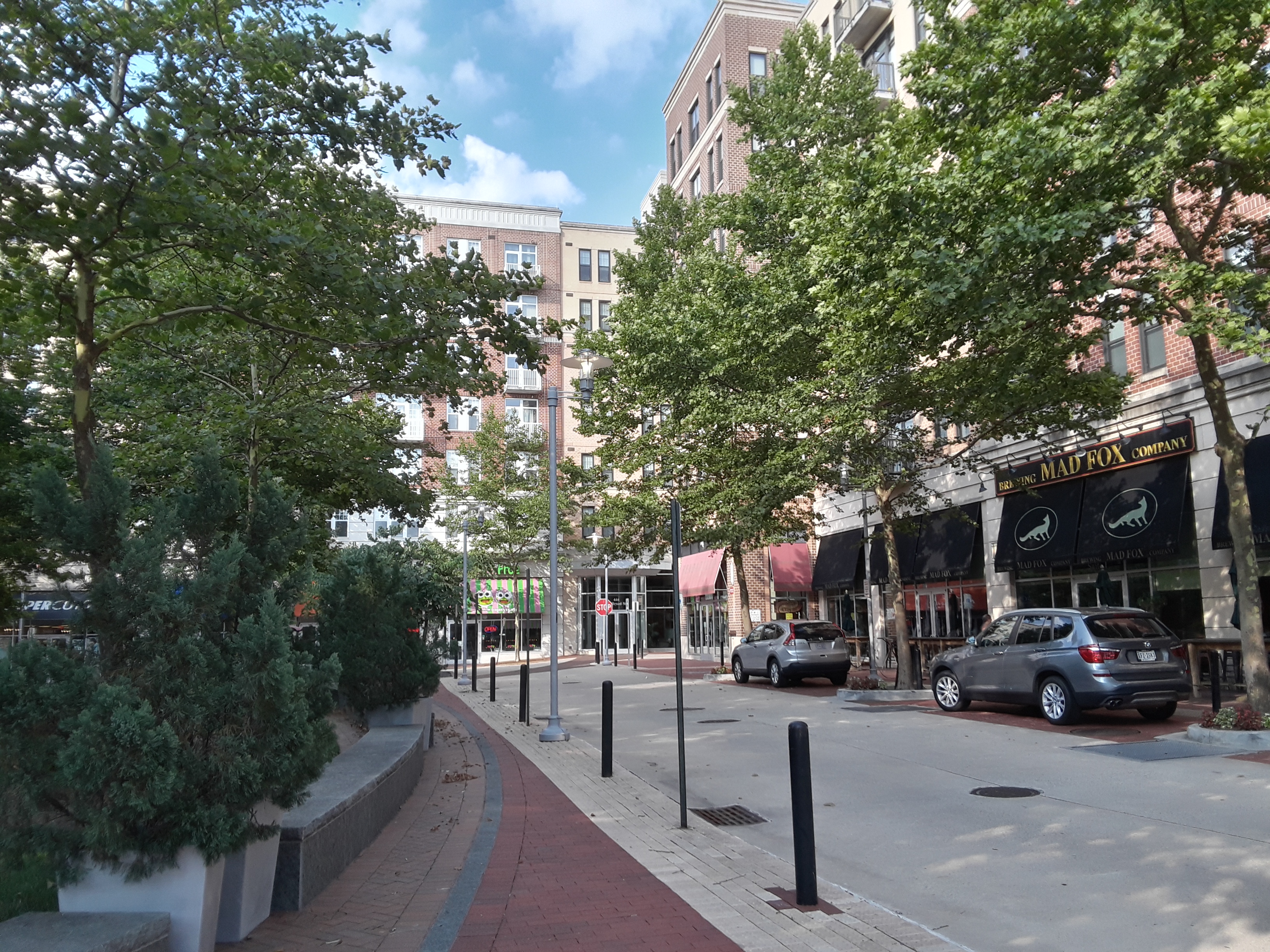
Photo: Wikipedia
Strategic Assessment of Falls Church, VA
Meaningful friction. Expect exposure to either population pressure, blast zones, or natural disaster risk. Consider buying a retreat property.
What does the Strategic Assessment tell us?
Our Strategic Assessment grades tactical survivability of an area. Major population centers, military targets, fallout zones, natural disasters, and border exposure all drive risk — lower exposure means a more defensible position in a crisis.
This is heavily inspired by Joel Skousen's Strategic Relocation book. Highly recommended you checkout the book ($)What does this tell us?
Our Strategic Assessment grades tactical survivability of an area. Major population centers, military targets, fallout zones, natural disasters, and border exposure all drive risk — lower exposure means a more defensible position in a crisis.
This is heavily inspired by Joel Skousen's Strategic Relocation book. Highly recommended you checkout the book ($)Strategic Pillars

Key Distances
Regional Safe Places
Below is our recommended "safe zones" in Virginia and the surrounding area based on our strategic heuristics. For most people, it's unrealistic to live in a “safe zone” full-time due to work, family or other personal reasons. They tend to be more rural. However, many of these areas are perfect for second homes and retreat properties that double as a vacation home or even a short-term rental.
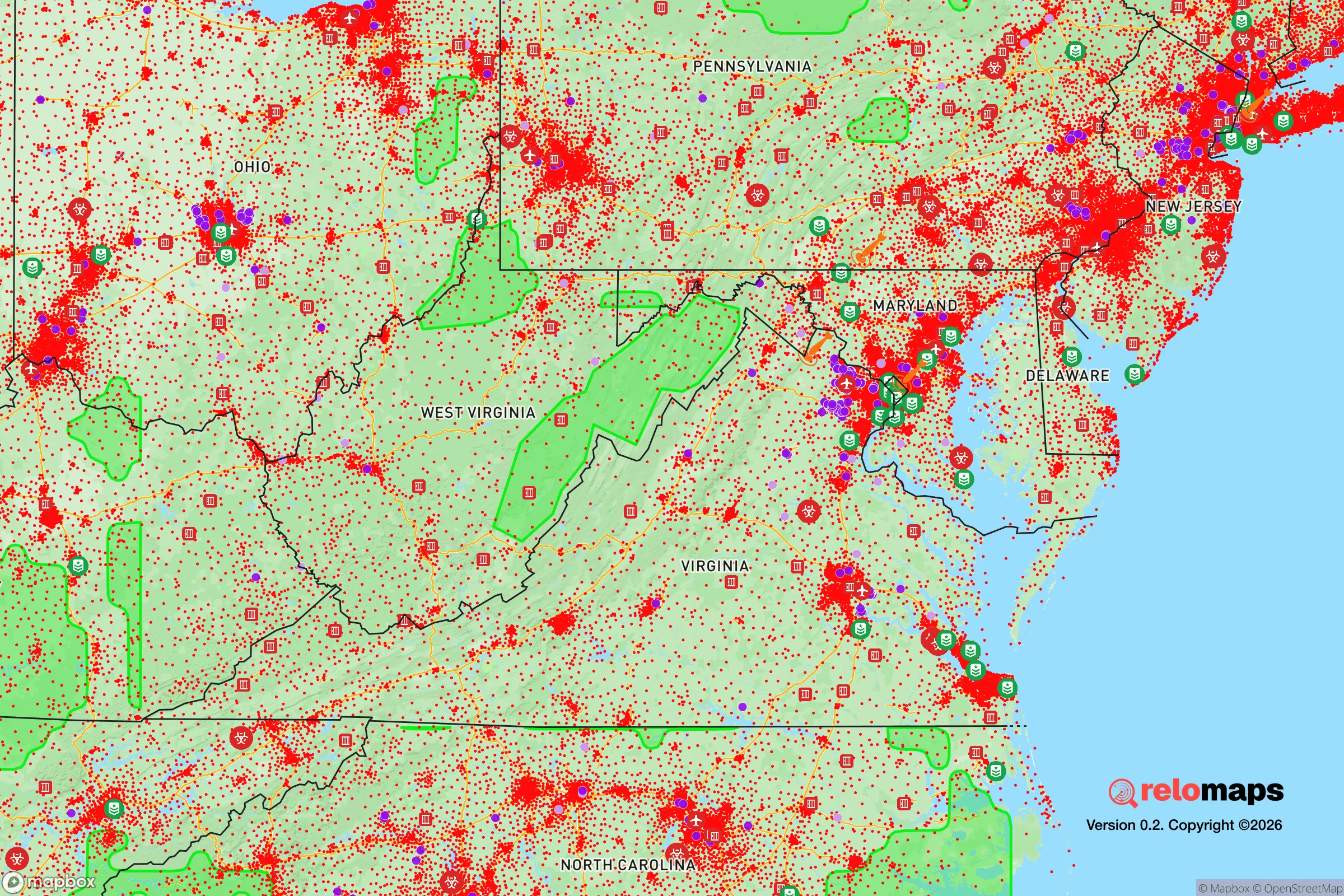
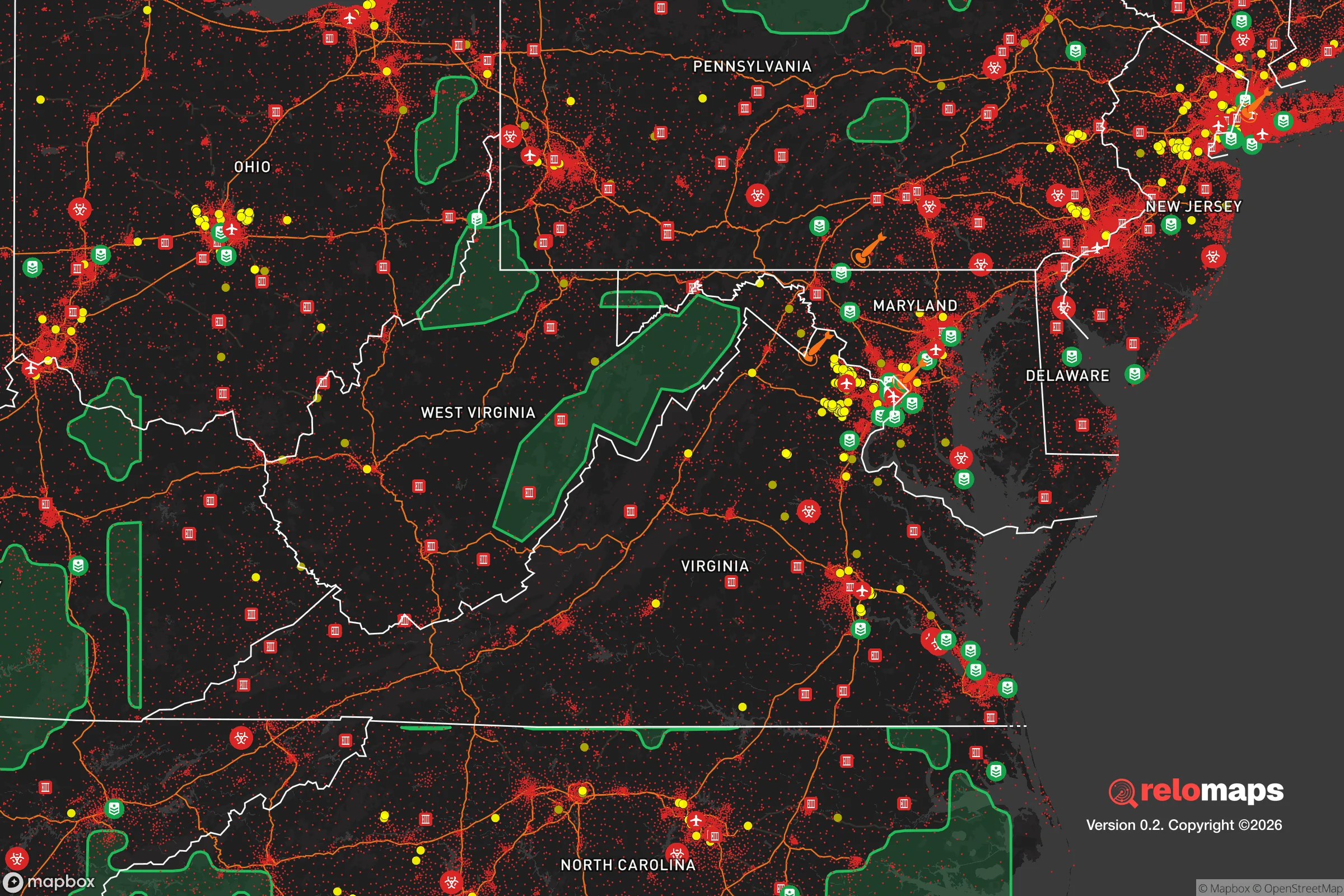


Important Note: For informational purposes only. This does not mean nothing bad ever happens in the green zones. Please use common sense. This is based on public data and modeled with AI. We tried to take a conservative approach but mistakes happen. We update this regularly as new information becomes available.
Solar Generator Recommendations
Backup power matters more here than in safer locations. We've picked three solar generators across budgets and capacity tiers — start with the budget unit if you only need a few essentials, or step up if you want to run a fridge and HVAC for days at a time.

Jackery Portable Power Station Explorer 300
Budget OptionPower on the Go: Weighing only 11 lbs, it's convenient to set up and store with book-sized foldable solar panels

BLUETTI Portable Power Station AC180
Designed for both indoor and outdoor scenarios, AC180 is highly capable as it has a robost capacity and continuous output power.

EF ECOFLOW DELTA Pro Ultra Power Station
Upgraded PickEcoFlow DELTA Pro Ultra is a whole-home energy system designed to grow with your family. Integrated with the Smart Home Panel 2, it scales to meet your evolving energy needs — keeping your home powered, intelligent, and secure through every stage of life.
We earn a commission, at no additional cost to you.
Strategic Assessment Analysis
Falls Church, Virginia, presents a deeply conflicted strategic picture for the conservative prepper or survivalist. Its proximity to the nation’s capital offers immense economic opportunity and infrastructure, but that same proximity makes it a high-priority target zone in any major crisis. The city’s resilience is a double-edged sword: it benefits from some of the best emergency services in the country, yet it sits squarely in the bullseye of potential civil unrest, grid collapse, and fallout scenarios. For a relocator weighing long-term security against daily convenience, Falls Church demands a brutally honest assessment of trade-offs.
Geographic position and natural advantages for a strategic relocation
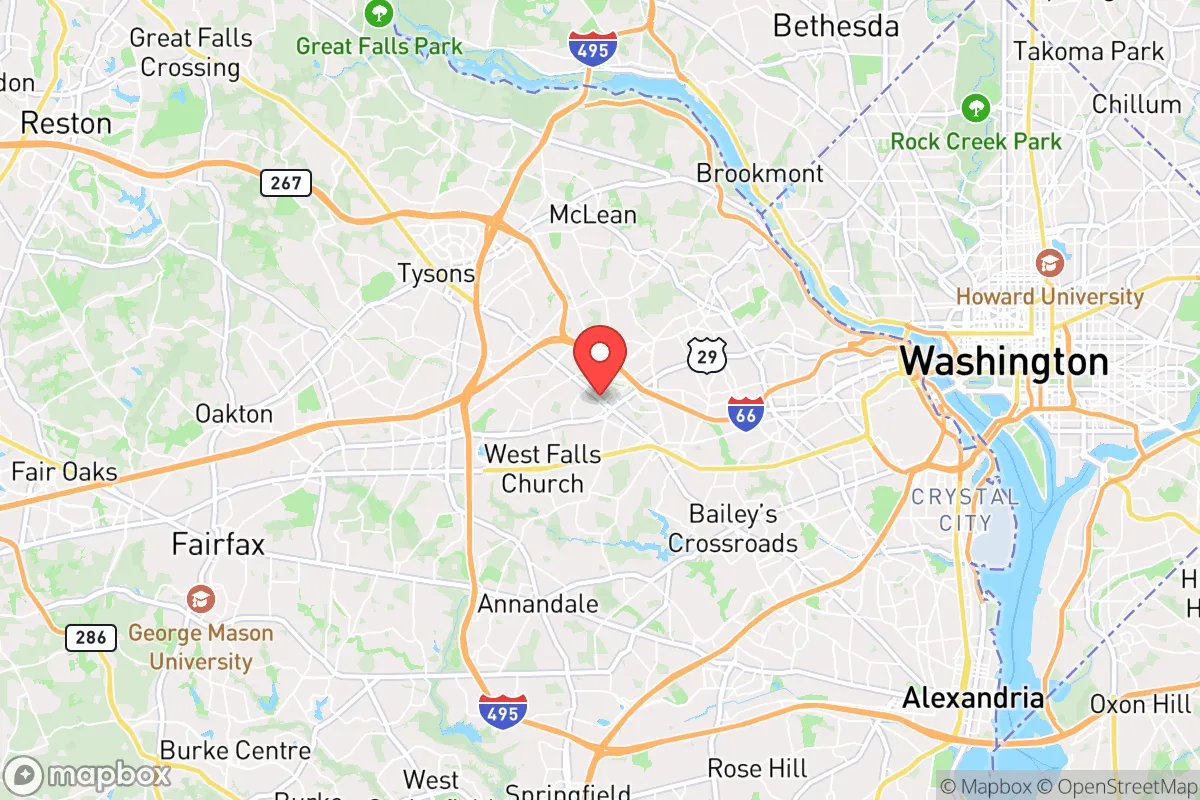
Falls Church occupies a narrow, landlocked position in Northern Virginia, roughly 7 miles west of Washington, D.C. Its geography offers few natural defensive barriers—no rivers wide enough to choke movement, no mountain passes, and no significant elevation changes. The terrain is rolling hills and dense suburban development, which provides some concealment but little in the way of chokepoints. The area’s primary natural advantage is its access to the Potomac River watershed and the Occoquan Reservoir, which supply the region’s drinking water. However, Falls Church itself relies entirely on municipal water from the Falls Church Water Treatment Plant, a centralized system vulnerable to contamination or disruption. The local climate is temperate, with four distinct seasons, meaning winter storms can paralyze the region for days—a recurring risk for anyone dependent on grid power. The soil is mostly clay-heavy and poorly drained, making large-scale gardening a challenge without raised beds or significant amendment. For a prepper, the land here is not a survivalist’s dream; it’s a suburban patchwork where self-sufficiency requires serious investment in infrastructure like rainwater catchment, solar panels, and reinforced basements.
Risks, exposures, and proximity to fallout-relevant landmarks
This is where the analysis gets sobering. Falls Church sits within the primary blast and fallout zone for any nuclear or radiological event targeting Washington, D.C. The city is roughly 7 miles from the White House, 8 miles from the Pentagon, and 10 miles from the Capitol. In a high-yield detonation, Falls Church would likely experience severe blast damage, firestorms, and lethal radiation within hours. Even a smaller-scale dirty bomb or attack on the region’s power grid would cripple the area. Beyond nuclear threats, Falls Church is a prime target for civil unrest. The city is a liberal stronghold in a blue state, and its proximity to D.C. means it’s a staging ground for protests, riots, and political violence. The 2020 riots in D.C. and Arlington spilled into Falls Church’s commercial corridors, with businesses boarded up and police stretched thin. Falls Church is also surrounded by high-value infrastructure: I-66, the Capital Beltway (I-495), and the East Coast’s main rail lines all run through or near the city. In a grid-down or supply-chain collapse scenario, these arteries become chokepoints for looters, refugees, and military checkpoints. The city’s police force is well-funded but small—around 60 officers—and would be overwhelmed in a regional crisis. For a prepper, the risk calculus is clear: Falls Church offers no strategic depth. You are living in the shadow of the most targeted 10-mile radius in America.
Practical resilience for a relocator: food, water, energy, and defensibility
If you’re determined to make Falls Church work, you need a hard-nosed plan for self-sufficiency. Food security is the weakest link. The city has no significant agricultural land; the nearest working farms are in Loudoun County, 30 miles west. Grocery stores like the Falls Church Giant and Harris Teeter rely on just-in-time delivery, meaning shelves empty within 48 hours of a crisis. A prepper here needs at least a 90-day supply of non-perishable food, plus a deep pantry of seeds, tools, and knowledge for container gardening on patios or small yards. Water is equally precarious. The Falls Church Water Treatment Plant draws from the Potomac, but a contamination event—chemical spill, upstream attack, or power failure—would cut supply instantly. A minimum of 55 gallons per person in storage, plus a Berkey or similar filter, is non-negotiable. Rainwater collection is legal in Virginia but limited to 50 gallons per downspout without a permit; you’ll want to max that out. Energy resilience is achievable but expensive. The grid is reliable day-to-day, but winter storms like the 2022 ice event knocked out power for days. Solar panels with battery backup (Tesla Powerwall or similar) are a solid investment, but Falls Church’s tree canopy and suburban lot sizes limit exposure. A dual-fuel generator with 50+ gallons of propane stored safely is a cheaper alternative. Defensibility is the hardest nut to crack. Falls Church is a dense, interconnected suburb with no natural chokepoints. Your best bet is a home on a corner lot with reinforced doors, window film, and a clear line of sight to the street. Neighborhood watch groups exist but are informal; you’ll need to build relationships with like-minded neighbors. The city’s proximity to D.C. means law enforcement response times are fast in normal times—under 5 minutes—but in a widespread event, you’re on your own. Evacuation routes are limited to I-66 west, Route 7 west, or Route 29 south, all of which will gridlock within hours. A bug-out location in the Shenandoah Valley or West Virginia is not optional; it’s a requirement for anyone serious about survival here.
The overall strategic picture for Falls Church is one of high risk with moderate reward. For the conservative prepper, the city offers excellent employment opportunities, top-tier schools, and a stable community in normal times. But in a crisis—whether a nuclear event, civil unrest, or a prolonged grid failure—Falls Church becomes a trap. The city’s density, proximity to D.C., and lack of natural defenses make it a poor choice for long-term survival without a robust, well-funded plan. If you’re a single individual or a family with the resources to harden a home, stockpile supplies, and maintain a bug-out location, Falls Church can work as a base of operations. But if you’re looking for a place where you can ride out a major disaster with minimal preparation, look further west—Loudoun County, Fauquier County, or beyond. Falls Church is a place to live well, not to survive well. Make your choice with eyes wide open.

* Values derived from national, state, county, city and local statistics and may differ in a specific area. Last updated: 2026-04-24T01:52:41.000Z
Narrative content on this page is AI-generated and may contain mistakes. Verify any details that matter before acting on them.
ReloMaps may earn a commission from affiliate links at no extra cost to you.

