 Popular
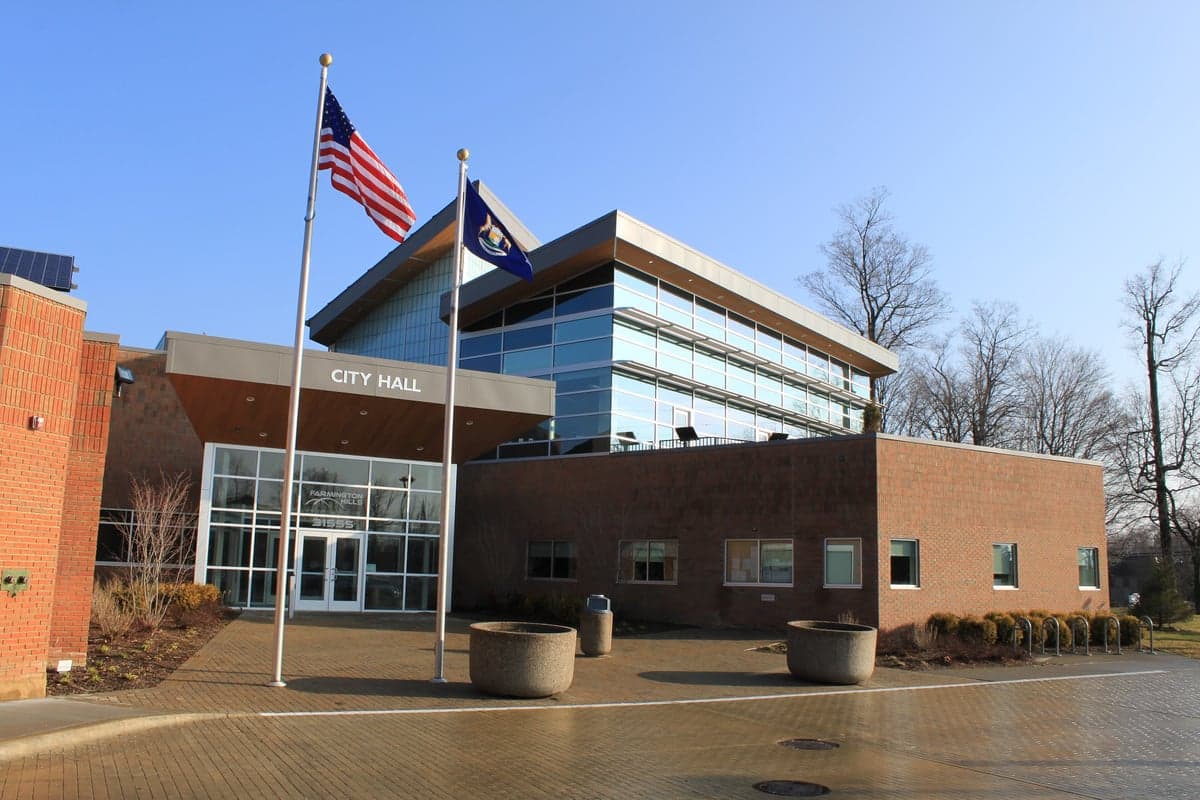
Photo: Wikipedia
Personal Sovereignty in Farmington Hills, MI
Strong independent fundamentals that actively favor personal liberty and low regulation.
What does Personal Sovereignty tell us?
Personal Sovereignty measures your capacity for self-reliance and independence with minimal government friction. Higher scores mean fewer barriers between you and the way you want to live... but it assumes you have the space you need and good neighbors.
What does this tell us?
Personal Sovereignty measures your capacity for self-reliance and independence with minimal government friction. Higher scores mean fewer barriers between you and the way you want to live... but it assumes you have the space you need and good neighbors.
State Policy
Energy independence: Importer (20% of energy produced in-state)
Personal Liberty
Homesteading

Personal Liberty Analysis
Farmington Hills, Michigan, offers a mixed bag for those prioritizing personal sovereignty, where state-level preemption on certain rights clashes with local governance that can feel intrusive. While Michigan’s constitution provides a baseline of protections—including a right to keep and bear arms and limits on property taxes—the city’s zoning codes, tax structure, and proximity to Detroit’s regulatory orbit create friction for anyone seeking maximum autonomy. For a survivalist or prepper mindset, the key question is whether this affluent Oakland County suburb provides enough breathing room to live by your own rules, or if it’s just another layer of government overreach dressed up in suburban comfort. The answer depends heavily on your specific priorities: tax burden, self-defense laws, homesteading feasibility, and the broader climate for personal liberties.
Tax burden and regulatory posture in Oakland County
Michigan’s tax environment is a double-edged sword for sovereignty-minded residents. The state’s 4.25% flat income tax is moderate, and Proposal A (1994) caps annual property tax increases at the rate of inflation or 5%, whichever is lower—a boon for long-term homeowners. However, Farmington Hills levies a city income tax of 1% for residents and 0.5% for non-residents, which is an extra layer of fiscal control that many conservative-leaning individuals view as an infringement on earnings. Property taxes in the city average around 1.5% of assessed value, which is higher than rural Michigan counties but typical for Oakland County. The regulatory posture is similarly mixed: the city enforces strict zoning codes (minimum lot sizes, setback requirements, and home occupation permits) that limit how you can use your property. For a prepper, this means no backyard chicken coops without a permit, no unlicensed home-based businesses, and no structures (like sheds or greenhouses) without city approval. The state’s Right to Farm Act offers some protection for agricultural activities, but it’s weak in suburban settings—Farmington Hills can and does restrict livestock and farm operations under local ordinances. If you value low taxes and minimal bureaucracy, the city’s regulatory posture feels like a slow squeeze on your financial and operational freedom.
Self-defense and gun law specifics in Michigan
Michigan is a shall-issue state for concealed pistol licenses (CPL), meaning no subjective discretion by local authorities—if you meet the requirements, you get the permit. Farmington Hills does not impose additional local gun restrictions beyond state law, which is a positive for self-defense advocates. The state preempts local firearm ordinances, so the city cannot ban open carry or restrict magazine capacities beyond state limits. However, Michigan’s gun laws have shifted leftward in recent years: universal background checks for all firearm sales (including private transfers) took effect in 2024, and the state now requires a purchase license for handguns and long guns alike. Safe storage laws (requiring firearms to be locked if a minor could access them) were also enacted, which some see as government overreach into personal responsibility. For a survivalist, the key takeaway is that while you can legally own and carry firearms in Farmington Hills, the state’s regulatory creep—background checks, storage mandates, and a 30-day waiting period for handgun purchases—adds friction. Stand-your-ground laws remain intact, and there is no duty to retreat in your home or vehicle. The city’s police department is professional but not known for aggressive enforcement of gun laws; most interactions are routine. If self-defense is your top priority, Michigan’s framework is workable but requires staying on top of evolving state statutes.
Self-reliance and homesteading viability: lot sizes, zoning, and off-grid feasibility
Farmington Hills is a classic suburb with average lot sizes around 0.3 to 0.5 acres in most subdivisions, though some older neighborhoods have larger parcels up to 1 acre. This is not homesteading territory. The city’s zoning code explicitly prohibits keeping livestock (chickens, goats, bees) without a special land use permit, which is rarely granted for residential lots under 2 acres. Vegetable gardens are allowed, but front-yard gardens are restricted by aesthetic ordinances. Off-grid living is effectively illegal: the city requires connection to municipal water and sewer systems, and solar panels must comply with building codes and HOA rules (if applicable). Rainwater collection is legal under Michigan law, but the city can regulate storage tanks as structures. For a prepper seeking self-reliance, the constraints are significant. You can grow a substantial garden on a half-acre, but you cannot raise meat animals, store large quantities of fuel, or build a detached workshop without permits. The city’s minimum square footage requirement for new homes (often 1,500+ sq ft) also discourages tiny houses or minimalist living. If you want true homesteading viability, you need to look at rural Oakland County townships like Groveland or Brandon, or move north to Lapeer County. Farmington Hills is a suburb designed for commuters, not survivalists.
Personal liberties: parental rights, medical autonomy, speech, and property
Michigan law generally respects parental rights in education and healthcare, but recent state-level actions have eroded some autonomy. The 2023 repeal of the parental consent requirement for minors seeking abortion was a flashpoint for conservative families, as it removed a layer of parental authority. In Farmington Hills, the school district (Farmington Public Schools) has adopted policies on LGBTQ+ inclusivity and critical race theory that some parents view as ideological overreach. The state does not have a universal school choice program, but charter schools and homeschooling are legal with minimal regulation—a plus for those seeking educational sovereignty. Medical autonomy is mixed: Michigan has a broad religious exemption for vaccine mandates, but the state’s COVID-era emergency orders (mask mandates, business closures) were enforced aggressively in Oakland County, including Farmington Hills. The city council and mayor have shown a willingness to impose local health orders beyond state minimums, which is a red flag for those wary of government overreach. Free speech is protected under the First Amendment, but the city enforces noise ordinances and sign restrictions that limit political expression on private property. Property rights are the weakest link: the city’s blight ordinances, rental registration requirements, and tree preservation rules give officials broad discretion to dictate what you can do with your land. For a conservative individualist, these micro-regulations feel like a slow erosion of personal dominion.
Overall, Farmington Hills offers a moderate level of personal sovereignty compared to other Michigan suburbs, but it falls short for anyone seeking a high degree of self-reliance or resistance to government overreach. The state’s gun laws are workable, taxes are manageable, and parental rights in education are intact, but the city’s zoning codes, regulatory posture, and local political culture lean toward control rather than freedom. For a survivalist or prepper, this is a location to tolerate, not embrace—a place where you can defend yourself and keep your earnings, but where homesteading, off-grid living, and true autonomy are off the table. If you value proximity to Detroit’s job market and are willing to trade some sovereignty for suburban amenities, it’s a viable option. But if your priority is maximum personal liberty with minimal government interference, you’ll find more breathing room in Michigan’s rural northern counties or in states like Texas or Idaho.

* Values derived from national, state, county, city and local statistics and may differ in a specific area. Last updated: 2026-05-03T04:20:59.000Z
Narrative content on this page is AI-generated and may contain mistakes. Verify any details that matter before acting on them.
ReloMaps may earn a commission from affiliate links at no extra cost to you.

