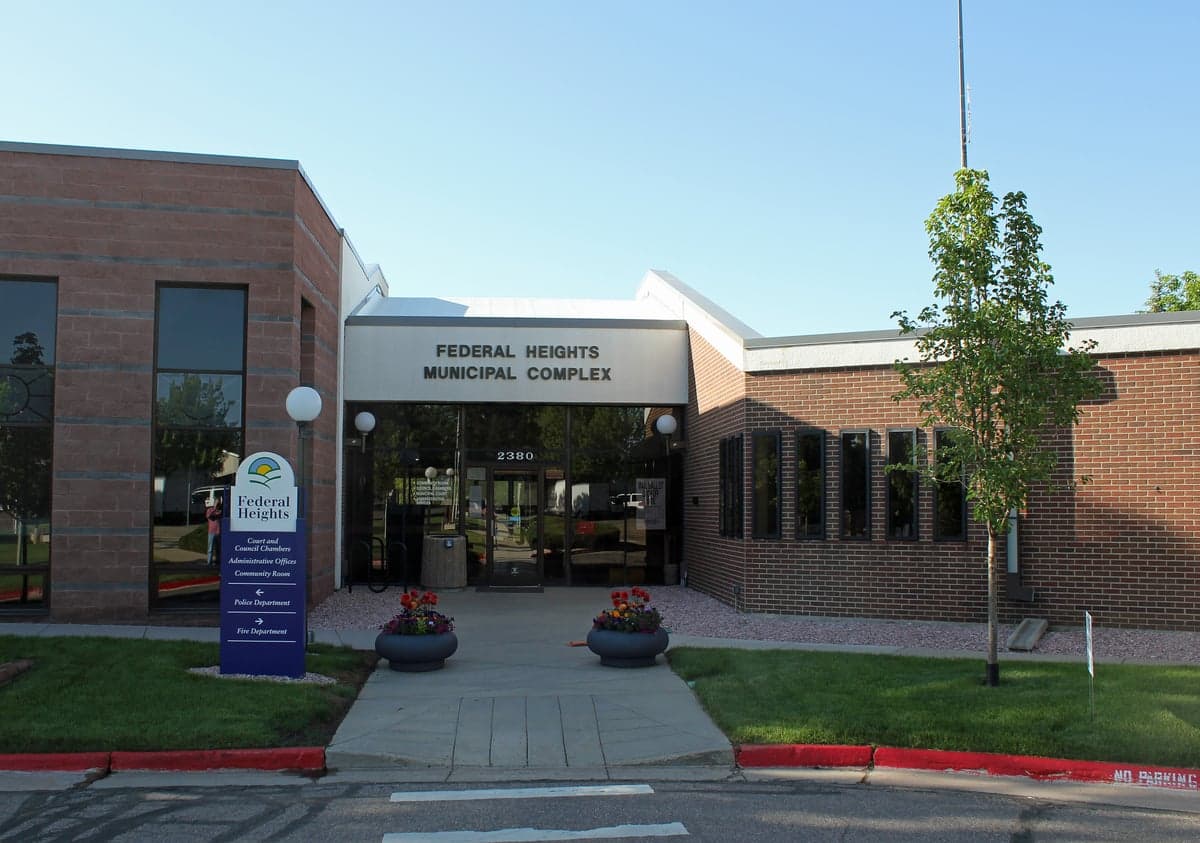
Photo: Wikipedia
Personal Sovereignty in Federal Heights, CO
Viable for self-reliance. Generally workable, though some barriers may limit total independence.
What does Personal Sovereignty tell us?
Personal Sovereignty measures your capacity for self-reliance and independence with minimal government friction. Higher scores mean fewer barriers between you and the way you want to live... but it assumes you have the space you need and good neighbors.
What does this tell us?
Personal Sovereignty measures your capacity for self-reliance and independence with minimal government friction. Higher scores mean fewer barriers between you and the way you want to live... but it assumes you have the space you need and good neighbors.
State Policy
Energy independence: Net exporter (110% of energy produced in-state)
Personal Liberty
Homesteading

Personal Liberty Analysis
Federal Heights, Colorado, offers a mixed bag for those prioritizing personal sovereignty, where the state's progressive tilt clashes with the city's more pragmatic, working-class character. For the survivalist or prepper, this is not a haven of unchecked liberty, but rather a location where strategic awareness of state-level overreach is essential. The city's small size and proximity to larger conservative areas like Weld County provide some buffer, but residents must navigate Colorado's increasingly restrictive regulatory environment, particularly regarding firearms and land use. The overall autonomy environment here is one of constant vigilance, where individual freedoms are protected more by local culture than by state law.
Tax burden and regulatory posture for self-reliant individuals
Colorado's state-level tax structure is a double-edged sword for the sovereignty-minded. The state income tax is a flat 4.4% as of 2025, which is moderate but represents a direct claim on your earnings that cannot be avoided through local residency. Sales tax in Federal Heights is around 8.31% (state + county + city), which is noticeable but not crippling for bulk prepping supplies. The more concerning aspect is the regulatory posture: Colorado has a robust state building code, strict environmental regulations, and a growing list of mandates that can feel like government overreach. For example, the state's energy code requirements can complicate off-grid or alternative construction projects. Property taxes are relatively low, around 0.49% of assessed value, which is a plus for landowners, but the state's Gallagher Amendment repeal in 2020 means residential property tax rates are no longer capped in the same way, creating future uncertainty. For the prepper, the tax burden is manageable, but the regulatory creep is a red flag that requires careful planning and possibly legal counsel for any major property improvements.
Self-defense and gun law specifics in a restrictive state
This is the most critical sovereignty issue in Federal Heights. Colorado has moved aggressively to restrict gun rights, and Federal Heights residents are subject to these state-level infringements. The state now requires universal background checks for all firearm transfers, including private sales, and has a red flag law (Extreme Risk Protection Order) that allows for temporary seizure of firearms without a criminal conviction. Magazine capacity is limited to 15 rounds for handguns and 10 rounds for long guns, a direct limitation on defensive capability. There is no state preemption for local gun laws, meaning cities like Denver and Boulder have passed even stricter ordinances, though Federal Heights itself has not added additional restrictions. Concealed carry permits are issued on a "shall issue" basis, but the process involves a 90-day wait and a training course. For the survivalist, this means you can legally own firearms, but the state has created a bureaucratic maze that can be weaponized against you. Open carry is legal without a permit, but doing so in Adams County will likely attract police attention and public scrutiny. The bottom line: Federal Heights is not a gun-friendly jurisdiction by national standards, and residents must be prepared to navigate a hostile legal landscape to maintain their Second Amendment rights.
Self-reliance and homesteading viability in a suburban setting
Federal Heights is a densely developed suburb, not a rural homesteading area. The typical lot size is 0.1 to 0.25 acres, which severely limits self-reliance activities. Zoning is primarily residential with strict codes on outbuildings, livestock, and even gardening structures. Keeping chickens is allowed in some areas but requires a permit and adherence to setback rules; larger livestock like goats or pigs are generally prohibited. Off-grid feasibility is essentially zero within city limits—the city requires connection to municipal water and sewer, and solar panel installations must comply with HOA and city aesthetic guidelines. For the prepper seeking true self-reliance, Federal Heights is a compromise location. The better strategy is to use it as a base of operations while owning rural land in a less restrictive county like Weld or Las Animas for actual homesteading. The city's proximity to the Front Range means you can access bulk supplies and community resources, but you cannot achieve meaningful food or energy independence on a standard suburban lot. The regulatory environment actively discourages visible self-reliance measures, so any prepping must be discreet and low-profile.
Personal liberties: parental rights, medical autonomy, speech, and property
On parental rights, Colorado has moved in a direction that concerns many sovereignty-minded families. The state has enacted laws that limit parental notification regarding a child's gender identity or sexual orientation in school settings, and the Colorado Department of Education has pushed curriculum standards that some parents view as ideological overreach. Homeschooling is legal but requires notification and standardized testing, which is a moderate burden. Medical autonomy is under significant threat: Colorado has legalized assisted suicide and has some of the most permissive vaccine mandates in the country, particularly for school attendance. The state's public health orders during the pandemic were among the most aggressive, and the legal framework for future mandates remains in place. Free speech is generally protected, but Colorado has a strong anti-discrimination law that has been used to compel speech in commercial contexts (e.g., the Masterpiece Cakeshop case). Property rights are relatively strong for existing homeowners, but the state's 2023 "right to repair" law for agricultural equipment is a positive sign for self-reliance. However, the state's planning and zoning authority can be used to block development or land use changes that don't align with state environmental goals. Overall, personal liberties in Federal Heights are constrained by a state government that views individual autonomy as secondary to collective goals, requiring residents to be proactive in protecting their rights.
Compared to other areas in the Mountain West, Federal Heights offers a moderate level of personal sovereignty that is under constant pressure from state-level policies. It is more restrictive than Wyoming or rural Colorado counties, but less so than Boulder or Denver proper. For the survivalist or prepper, this is a location that demands strategic thinking: use the city's affordability and access to resources, but recognize that true autonomy requires either legal advocacy or a secondary property in a more liberty-friendly jurisdiction. The overall sovereignty environment is one of managed decline, where vigilance and community organization are the only defenses against further government overreach. If you value your freedoms and are willing to fight for them, Federal Heights can work—but it is not a place to let your guard down.

* Values derived from national, state, county, city and local statistics and may differ in a specific area. Last updated: 2026-04-23T02:11:02.000Z
Narrative content on this page is AI-generated and may contain mistakes. Verify any details that matter before acting on them.
ReloMaps may earn a commission from affiliate links at no extra cost to you.

