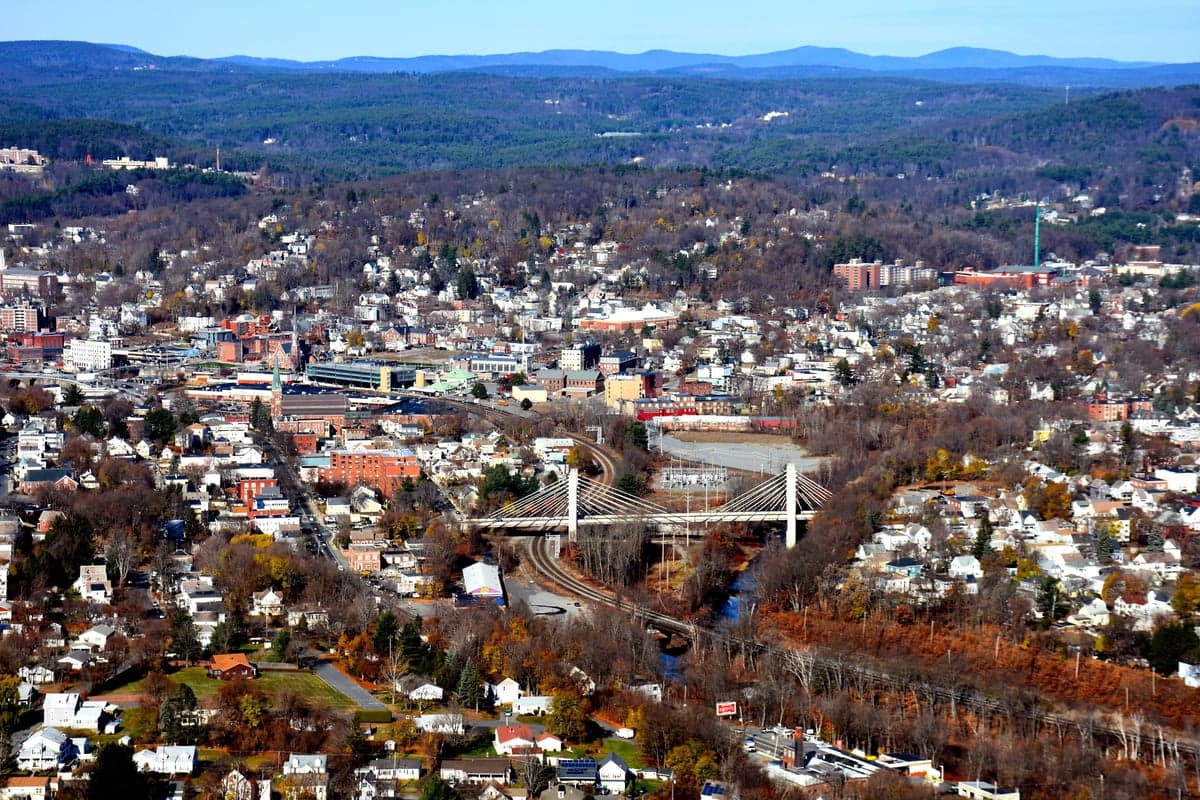
Photo: Wikipedia
Strategic Assessment of Fitchburg, MA
Multiple tactical vulnerabilities. Population density, target proximity, or disaster risk are likely compounding. A retreat property and exit planning is required.
What does the Strategic Assessment tell us?
Our Strategic Assessment grades tactical survivability of an area. Major population centers, military targets, fallout zones, natural disasters, and border exposure all drive risk — lower exposure means a more defensible position in a crisis.
This is heavily inspired by Joel Skousen's Strategic Relocation book. Highly recommended you checkout the book ($)What does this tell us?
Our Strategic Assessment grades tactical survivability of an area. Major population centers, military targets, fallout zones, natural disasters, and border exposure all drive risk — lower exposure means a more defensible position in a crisis.
This is heavily inspired by Joel Skousen's Strategic Relocation book. Highly recommended you checkout the book ($)Strategic Pillars

Key Distances
Regional Safe Places
Below is our recommended "safe zones" in Massachusetts and the surrounding area based on our strategic heuristics. For most people, it's unrealistic to live in a “safe zone” full-time due to work, family or other personal reasons. They tend to be more rural. However, many of these areas are perfect for second homes and retreat properties that double as a vacation home or even a short-term rental.
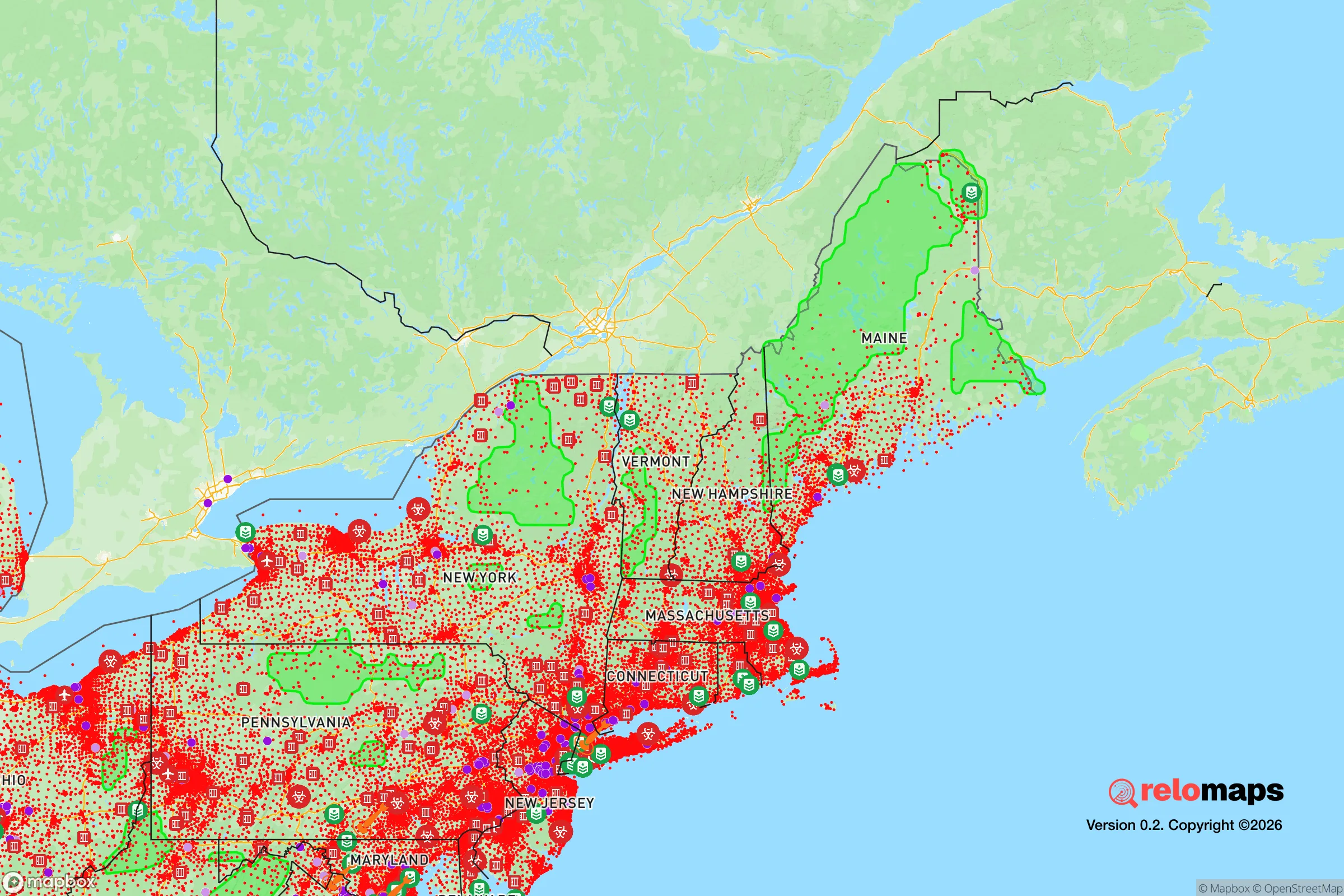
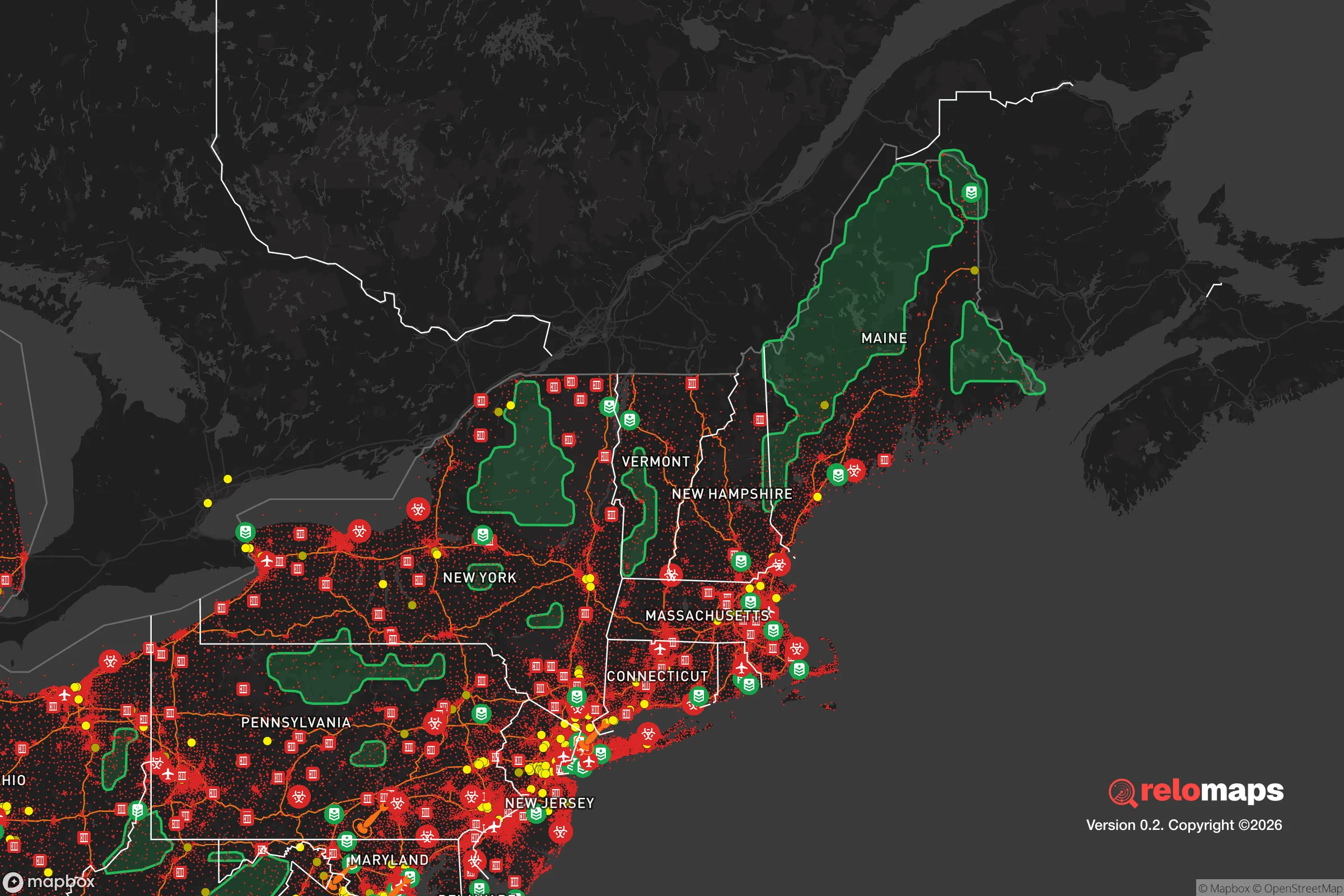


Important Note: For informational purposes only. This does not mean nothing bad ever happens in the green zones. Please use common sense. This is based on public data and modeled with AI. We tried to take a conservative approach but mistakes happen. We update this regularly as new information becomes available.
Solar Generator Recommendations
Backup power matters more here than in safer locations. We've picked three solar generators across budgets and capacity tiers — start with the budget unit if you only need a few essentials, or step up if you want to run a fridge and HVAC for days at a time.

Jackery Portable Power Station Explorer 300
Budget OptionPower on the Go: Weighing only 11 lbs, it's convenient to set up and store with book-sized foldable solar panels

BLUETTI Portable Power Station AC180
Designed for both indoor and outdoor scenarios, AC180 is highly capable as it has a robost capacity and continuous output power.

EF ECOFLOW DELTA Pro Ultra Power Station
Upgraded PickEcoFlow DELTA Pro Ultra is a whole-home energy system designed to grow with your family. Integrated with the Smart Home Panel 2, it scales to meet your evolving energy needs — keeping your home powered, intelligent, and secure through every stage of life.
We earn a commission, at no additional cost to you.
Strategic Assessment Analysis
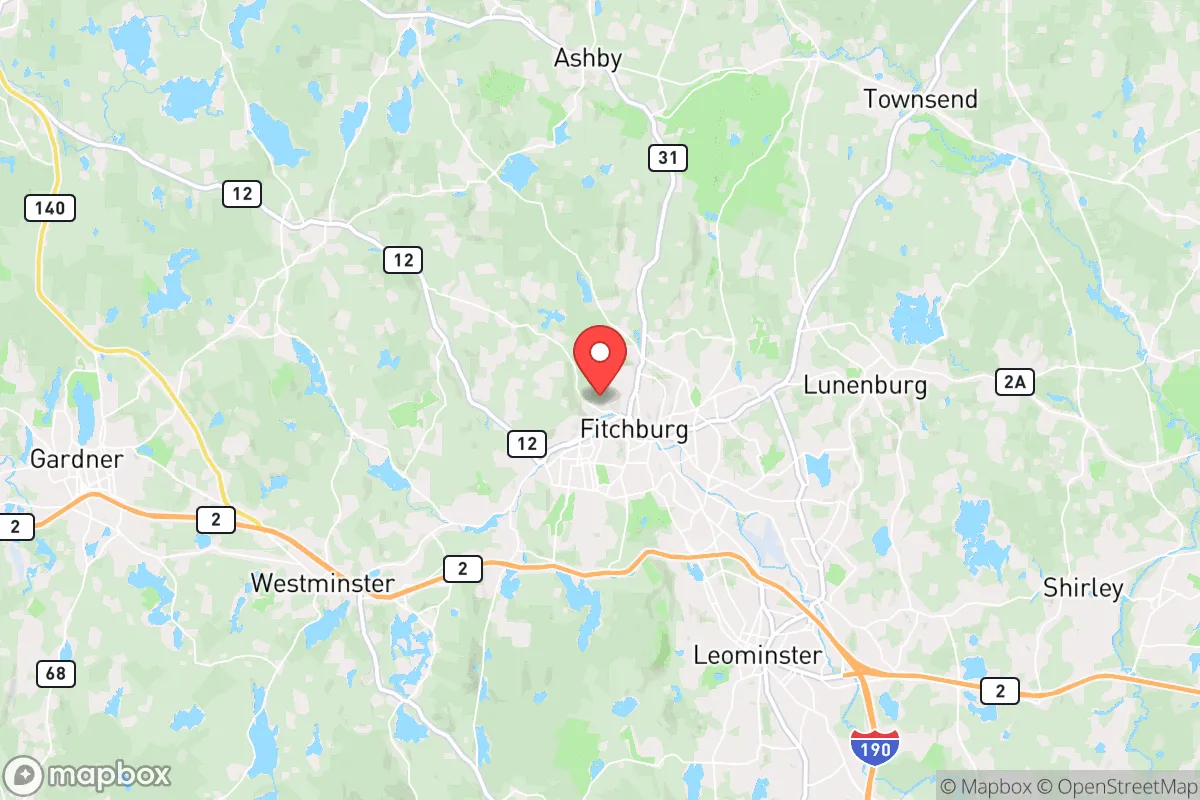
Fitchburg, Massachusetts, occupies a strategic position in north-central Massachusetts that offers a mixed resilience profile for those prioritizing preparedness. Its location roughly 50 miles northwest of Boston places it beyond the immediate blast and fallout zones of a major metropolitan target, yet close enough that secondary effects—refugee flows, supply chain disruptions, and civil unrest—could reach the city within hours. The city sits in the Nashua River Valley, surrounded by the rolling hills and forests of Worcester County, providing natural terrain advantages for those seeking defensible space, though its own industrial history and aging infrastructure introduce vulnerabilities that a relocator must weigh carefully.
Geographic position and natural advantages for long-term survival
Fitchburg’s geography is defined by its position in the Nashua River watershed, with the river itself running through the city center and multiple smaller streams and ponds dotting the area. The surrounding landscape is a mix of second-growth forest, abandoned farmland, and granite outcroppings—terrain that offers both cover and challenges. To the north and west, the Wachusett Mountain range rises to over 2,000 feet, providing elevated observation points and potential retreat zones. The city’s elevation averages around 500 feet, which reduces flood risk compared to low-lying communities along the coast. For a relocator, the key natural advantage is water access: the Nashua River is perennial, and several reservoirs—including the Fitchburg Reservoir and the nearby Wachusett Reservoir—offer reliable freshwater sources, though the latter is a protected watershed with restricted access. The region’s dense forest cover also provides ample firewood, building materials, and concealment, but note that much of the land is privately owned or state-protected, so legal access for foraging or timber harvest requires careful research. Winters are harsh, with average snowfall exceeding 60 inches, meaning cold-weather preparedness is non-negotiable—a factor that can be both a deterrent to unprepared refugees and a survival challenge for those without adequate shelter and heating.
Risks, exposures, and proximity to fallout-relevant landmarks
Fitchburg’s proximity to several high-value targets is the most significant risk factor in a strategic assessment. Boston, with its port, financial district, and Logan International Airport, is roughly an hour’s drive southeast—close enough that a ground burst or airburst over the city would produce fallout that could reach Fitchburg within hours, depending on wind patterns. Hanscom Air Force Base in Bedford, about 30 miles southeast, is a potential secondary target. Closer still, the Seabrook Nuclear Power Station in New Hampshire lies about 40 miles northeast; while not a military target, a catastrophic failure there—whether from accident or sabotage—could render large swaths of the region uninhabitable. Fitchburg itself has no major military or industrial targets, but its position along Route 2, a major east-west artery, makes it a natural chokepoint for evacuation traffic and potential refugee movement. The city’s own infrastructure—aging water mains, a combined sewer system, and a reliance on the regional power grid—means that a prolonged grid-down scenario would quickly degrade sanitation and water quality. Civil unrest risks are moderate: Fitchburg has a population of roughly 41,000 with a median household income around $55,000, and while crime rates are above the state average, they are concentrated in specific neighborhoods. A mass casualty event or economic collapse could trigger looting and violence, particularly near commercial corridors like Main Street and the Mall at Whitney Field. For a relocator, the takeaway is that Fitchburg is not a remote bug-out location—it is a semi-urban environment with real exposure to cascading failures from regional disasters.
Practical resilience for a relocator: food, water, energy, and defensibility
For those committed to living in or near Fitchburg, practical resilience requires a layered approach. Water is the most immediate concern: while the Nashua River is a year-round source, it carries industrial runoff from the city’s manufacturing history—testing and filtration are mandatory. Rainwater collection is viable, with average annual precipitation of 45 inches, but winter freezing requires indoor storage or heated collection systems. The city’s municipal water supply comes from the Fitchburg Reservoir, but a grid failure would disable pumping stations, so a backup well or surface water plan is essential. Food resilience is limited by the short growing season (roughly 140 frost-free days) and rocky, acidic soil typical of central Massachusetts. Raised beds, greenhouses, and cold frames can extend production, but significant calorie self-sufficiency would require acreage outside the city. Local agriculture is present—there are several farms in neighboring Lunenburg and Westminster—but these are commercial operations, not a guaranteed food supply in a crisis. Energy resilience is a bright spot: Massachusetts has net metering and solar incentives, and Fitchburg’s latitude still provides adequate solar insolation for off-grid panels, though snow cover in winter demands regular clearing. Wood heat is the most reliable backup, with abundant firewood available on private land with permission. Defensibility is mixed. The city’s layout—a dense urban core with surrounding residential neighborhoods and forested hills—offers multiple egress routes via back roads and trails, but the population density means that a determined group could be hard to hold off without a prepared retreat property. The ideal setup for a prepper in this area is a rural property within 15–20 minutes of Fitchburg, on a dead-end road with good sightlines, a well, and a wood stove. The city itself can serve as a resupply point for hardware, medical supplies, and information, but should not be the primary residence for anyone prioritizing long-term survival.
Overall, Fitchburg presents a strategic picture of calculated risk. It is not a safe haven—no location within 100 miles of Boston truly is—but it offers a middle ground between urban vulnerability and remote isolation. The terrain, water access, and forest resources are genuine advantages, while the proximity to targets, aging infrastructure, and population density are real liabilities. For a relocator with a conservative, preparedness-minded outlook, the smart play is to use Fitchburg as a base for building relationships and stockpiling resources, while identifying a secondary retreat location further north or west—perhaps in the Berkshires or southern New Hampshire—for when the situation deteriorates. The city’s best use is as a staging ground, not a final destination. If you are willing to invest in off-grid capabilities, build a local network, and maintain a low profile, Fitchburg can work. But do not mistake its quiet appearance for safety—the threats are real, and the margin for error is thin.

* Values derived from national, state, county, city and local statistics and may differ in a specific area. Last updated: 2026-05-01T11:11:37.000Z
Narrative content on this page is AI-generated and may contain mistakes. Verify any details that matter before acting on them.
ReloMaps may earn a commission from affiliate links at no extra cost to you.

