Photo: Wikipedia
Political ClimatePolitical Climate in Fitchburg, MA
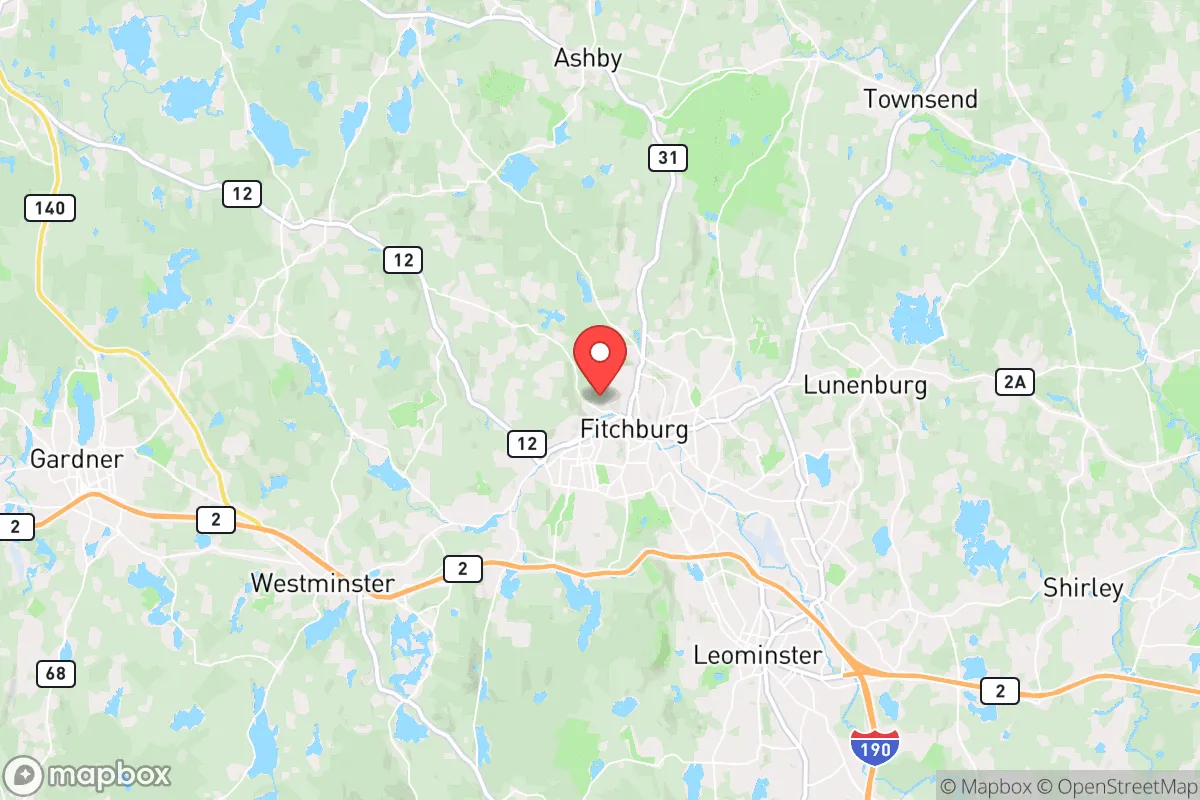
District shown is the primary district for this city’s centroid. Cities may span multiple districts.
Local Political AnalysisPolitical Analysis of Fitchburg, MA
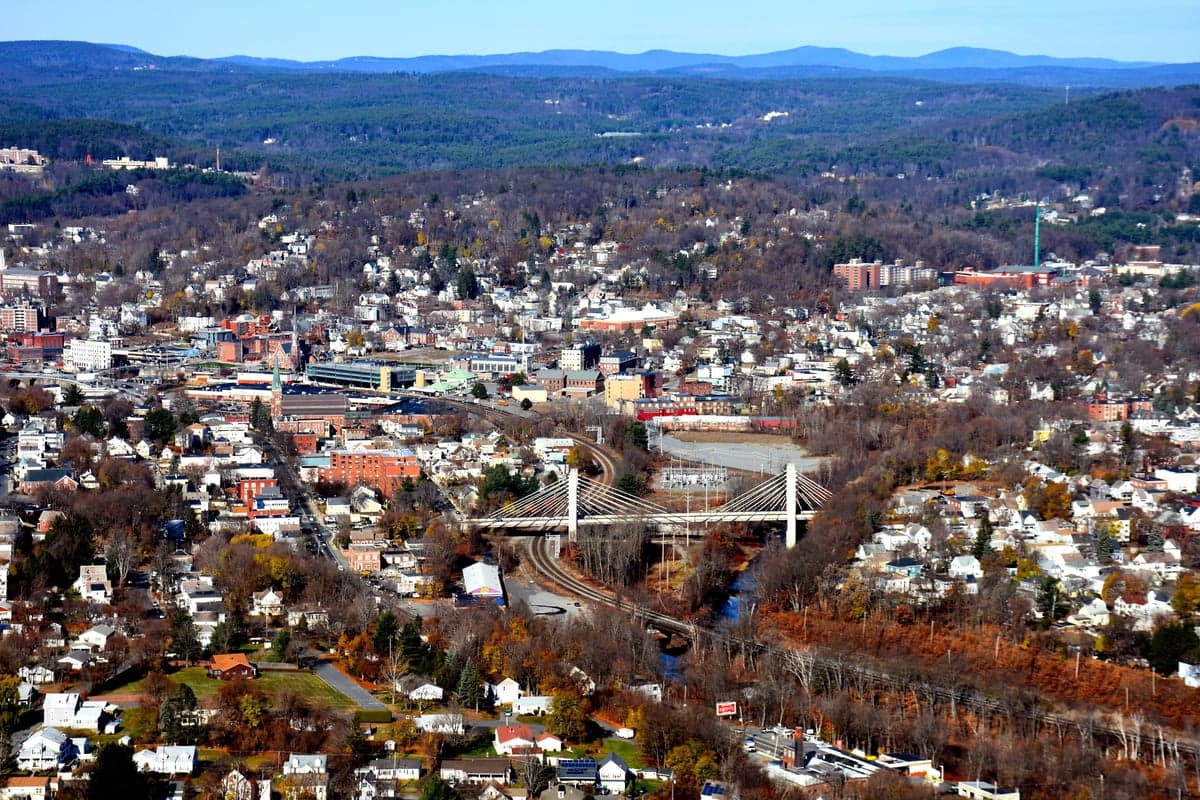
Look, I've been around Fitchburg long enough to remember when this town had a different feel entirely. Today, the political climate here is solidly blue, with a Cook PVI of D+11, meaning it votes about 11 points more Democratic than the national average. That shift didn't happen overnight, but it's been accelerating, and if you're someone who values personal freedoms and limited government, it's worth paying attention to where things are headed.
How it compares
Drive ten miles east to Leominster, and you'll find a more balanced mix—still leans left, but with a stronger conservative undercurrent that keeps things from tipping too far. Head south toward Worcester, and you're in an even deeper blue stronghold. But the real contrast is north and west: towns like Ashburnham, Westminster, and Lunenburg are noticeably more red, with lower taxes, fewer regulations, and a general attitude of "leave us alone." Fitchburg used to be more like them, but over the last decade, the city government has embraced progressive policies that feel out of step with the working-class roots a lot of us remember. The school board, city council, and even the police department have all been pushed toward equity initiatives and diversity mandates that sound good on paper but often translate into more bureaucracy and less local control.
What this means for residents
For a longtime resident like me, the biggest concern is how much the city's political direction affects daily life. Property taxes have crept up to fund programs that feel more like social engineering than practical services. There's a growing push for zoning changes that could bring higher-density housing into established neighborhoods, which sounds like "affordable housing" but often means less say for homeowners about what happens on their own street. The school system has shifted focus toward social-emotional learning and DEI training, sometimes at the expense of core academics. If you're a parent who wants your kid to just learn math and history without a side of activism, you might find yourself looking at private options or even moving to one of those surrounding towns. The city's also been aggressive with mask mandates, vaccine requirements for city employees, and other public health measures that went beyond what neighboring communities did—a pattern that suggests a comfort with government overreach that doesn't sit well with folks who believe in personal responsibility.
On the cultural side, Fitchburg still has its charms—the downtown is trying to revive, and there are good people here from all walks of life. But the political trajectory is clear: more progressive leadership, more top-down mandates, and less room for dissenting voices. If you're considering a move here, I'd say come with your eyes open. The cost of living is lower than in Boston or Cambridge, but you'll be paying for it in other ways—through your tax bill, your kids' curriculum, and your patience with a city government that seems to think it knows better than you do. For now, the conservative voice here is a minority, but it's not silent. Whether that changes depends on whether enough people decide they've had enough.

State Political ClimatePolitical Climate in Massachusetts
State Political AnalysisPolitical Environment in the State
Massachusetts has long been one of the most reliably Democratic states in the country, with a partisan lean that has only deepened over the past two decades. In 2024, Kamala Harris carried the state by over 25 points, and Democrats hold every statewide office, a supermajority in both legislative chambers, and all 11 U.S. House seats. The state’s political trajectory has been steadily leftward since the early 2000s, when it was still possible for a Republican governor like Mitt Romney or Charlie Baker to win. Today, the GOP is a shell of its former self, holding less than 15% of legislative seats and struggling to field credible candidates. For a conservative considering relocation, the political climate here is not just blue—it’s deep indigo, with little room for dissent in public life or policy.
Urban vs. rural divide
The political map of Massachusetts is a tale of two worlds: the dense, liberal Boston metroplex and the rest of the state. Greater Boston—including Boston proper, Cambridge, Somerville, and Brookline—is the engine of Democratic dominance, routinely delivering 80-90% of the vote for Democrats. These areas are home to the state’s academic and tech elite, with Harvard, MIT, and the biotech corridor driving a culture that is aggressively progressive on social and economic issues. The western part of the state, including Springfield, Worcester, and Pittsfield, is more mixed but still leans Democratic, though with a working-class, union-heavy flavor that sometimes bucks the coastal elite on issues like energy and housing. The true conservative redoubts are in the rural central and southeastern regions—places like Plymouth County, the Berkshires’ hill towns, and Cape Cod’s outer reaches. In 2024, Plymouth County voted for Trump by a narrow margin, making it one of the few bright spots for the GOP. But even there, the trend is negative: the county flipped from +7 Romney in 2012 to +2 Trump in 2024, showing that the urban-rural gap is narrowing as the Boston exurbs get bluer.
Policy environment
Massachusetts’ policy environment is a textbook case of progressive governance, with high taxes, heavy regulation, and a strong state role in daily life. The state has a flat income tax of 5% (recently increased from 5% to 9% for income over $1 million via a 2022 ballot measure), a sales tax of 6.25%, and some of the highest property taxes in the nation—averaging 1.2% of home value. The regulatory climate is dense: the state has its own healthcare mandate (the 2006 model for Obamacare), a strict gun licensing system that requires a license to purchase (LTC) and bans most assault weapons, and a sanctuary state law (the 2017 Trust Act) that limits local police cooperation with federal immigration enforcement. Education policy is dominated by the teachers’ unions, with Massachusetts consistently ranking #1 in K-12 test scores but also having some of the most restrictive charter school caps in the country. Election laws are among the most liberal: no-excuse mail-in voting, same-day registration, and automatic voter registration are all in place. For a conservative, the policy environment feels like a one-way ratchet—every session brings new mandates, new taxes, and new restrictions on personal choice.
Trajectory & freedom
Over the past five years, Massachusetts has become less free by any objective measure, especially for conservatives. The 2022 Massachusetts Gun Safety Act expanded the state’s assault weapons ban, required microstamping for new handguns, and created a new licensing category for “large capacity” firearms—effectively criminalizing many common rifles and magazines. In 2023, the legislature passed the Parental Rights in Education Act (S. 2631), which, despite its name, actually weakened parental notification by allowing schools to withhold information about a child’s gender identity from parents. The same year, a right-to-shelter law was expanded to guarantee emergency housing for all homeless families, including migrants, straining state budgets and local services. On the economic front, the 2022 millionaire’s tax (Question 1) added a 4% surcharge on income over $1 million, driving some high-earners to consider leaving. The state has also moved to ban natural gas hookups in new construction by 2030, a policy that will raise energy costs and limit homeowner choice. The trajectory is clear: more regulation, higher taxes, and less individual autonomy in areas from guns to education to energy.
Civil unrest & political movements
Massachusetts has a long history of activism, but recent years have seen a sharp uptick in visible political conflict. The 2020 George Floyd protests in Boston were among the largest in the country, with sustained demonstrations that led to the removal of a statue of Christopher Columbus and the renaming of Faneuil Hall’s slave-trade connections. The sanctuary state policy has created flashpoints in towns like Methuen and Lynn, where local officials have clashed with state authorities over housing migrants in hotels and schools. On the right, the Massachusetts Fiscal Alliance and the Massachusetts Gun Owners Action League have been active, but they are vastly outmatched by progressive groups like ACLU Massachusetts and the Massachusetts Teachers Association. Election integrity has been a minor issue—the state’s universal mail-in voting system (made permanent in 2022) has drawn criticism from conservatives, but no major fraud has been proven. The most visible flashpoint for a new resident would be the constant presence of political signage and activism in Boston and Cambridge, where progressive causes dominate public discourse. In rural areas, you’ll see more Trump flags and “Don’t Tread on Me” plates, but these are increasingly isolated.
Projection
Looking ahead 5-10 years, Massachusetts is likely to become even more progressive, driven by demographic and economic trends. The state’s population is aging and slowly declining, but the growth is concentrated in the Boston metro area, which is attracting young, college-educated professionals from around the world—a demographic that leans heavily Democratic. The in-migration from other states is actually negative (more people leave than arrive), but those who come tend to be in tech, biotech, and academia, reinforcing the liberal tilt. The GOP’s only realistic path to relevance would be a moderate, pro-business candidate like Charlie Baker, but the party’s base has shifted rightward, making that harder. Expect more policies like rent control expansion (a 2024 ballot initiative), single-payer healthcare proposals, and further gun restrictions. The state’s right-to-shelter mandate will continue to strain budgets and local services, especially in gateway cities like Worcester and Lowell. For a conservative moving in now, the next decade will feel like a slow-motion squeeze: higher taxes, less personal freedom, and a public square that is increasingly hostile to traditional values.
For a conservative individual or family, the bottom line is that Massachusetts offers world-class education, healthcare, and economic opportunity—but at the cost of living under a government that is actively hostile to your values. If you can afford the taxes and navigate the regulations, you’ll find excellent schools and a strong job market, especially in biotech and finance. But you’ll also face a culture that expects conformity on social issues, a legal system that restricts gun ownership and parental rights, and a political climate where your vote is essentially irrelevant. If you’re looking for a state where your voice matters and your freedoms are respected, Massachusetts is not that place. If you’re willing to trade those things for top-tier public services and a vibrant economy, it might work—but know what you’re signing up for.
* Values derived from national, state, county, city and local statistics and may differ in a specific area. Last updated: 2026-05-01T11:11:37.000Z
Narrative content on this page is AI-generated and may contain mistakes. Verify any details that matter before acting on them.
ReloMaps may earn a commission from affiliate links at no extra cost to you.

