 Popular
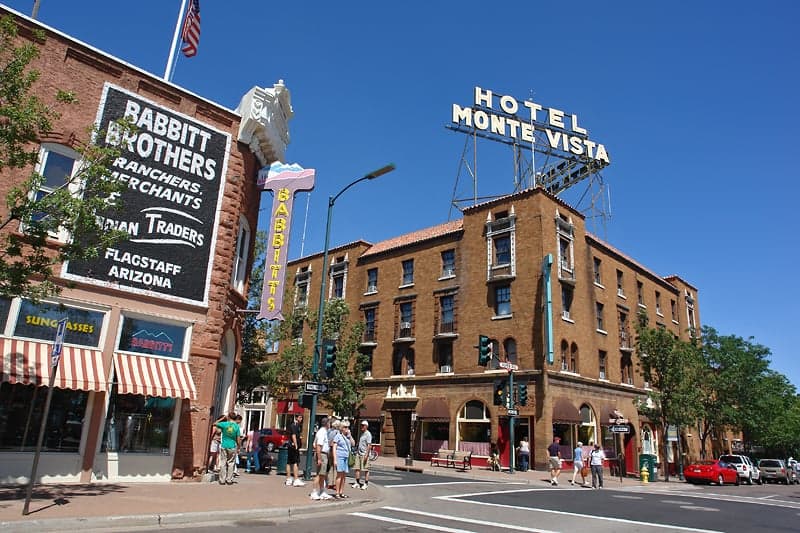
Photo: Wikipedia
Personal Sovereignty in Flagstaff, AZ
Viable for self-reliance. Generally workable, though some barriers may limit total independence.
What does Personal Sovereignty tell us?
Personal Sovereignty measures your capacity for self-reliance and independence with minimal government friction. Higher scores mean fewer barriers between you and the way you want to live... but it assumes you have the space you need and good neighbors.
What does this tell us?
Personal Sovereignty measures your capacity for self-reliance and independence with minimal government friction. Higher scores mean fewer barriers between you and the way you want to live... but it assumes you have the space you need and good neighbors.
State Policy
Energy independence: Importer (20% of energy produced in-state)
Personal Liberty
Homesteading

Personal Liberty Analysis
Flagstaff, Arizona, presents a complex picture for those prioritizing personal sovereignty, where the city’s progressive local governance clashes with the state’s generally libertarian-leaning legal framework. For a survivalist or prepper, the immediate takeaway is that while Arizona’s state constitution and laws offer strong protections for gun rights, property use, and limited government, Flagstaff’s city council has consistently pushed ordinances that erode those freedoms—from restrictive short-term rental bans to aggressive environmental regulations that limit off-grid living. The net effect is a sovereignty environment that requires constant vigilance: you can own your firearms and keep your taxes relatively low, but you’ll be fighting city hall on everything from building a chicken coop to storing rainwater. This isn’t a place where you can simply disappear into the woods; it’s a battleground where personal autonomy is won or lost at the ballot box and in city council chambers.
Tax burden and regulatory posture: How Flagstaff compares to the rest of Arizona
Arizona’s overall tax climate is a bright spot for sovereignty-minded individuals. The state has a flat income tax rate of 2.5% (as of 2025), no estate tax, and a sales tax rate of 5.6% that, while not the lowest, is manageable. Property taxes are also low by national standards, with an effective rate around 0.62% of assessed value. However, Flagstaff adds its own layers. The city’s sales tax rate is 3.4% on top of the state’s, bringing the combined rate in some areas to over 9%. More critically, the regulatory posture is hostile to self-reliance. Flagstaff has some of the strictest building codes in northern Arizona, heavily influenced by its dark-sky ordinance and wildfire mitigation rules. This means any new construction, even a simple shed or greenhouse, requires permits and inspections that can take months. The city also aggressively enforces its “livability” codes, which limit the number of unrelated adults who can live in a single-family home and ban vehicles parked on dirt or grass. For a prepper wanting to build a secure, self-sufficient compound, these regulations are a direct obstacle. The county (Coconino) is slightly more lenient, but still subject to state-level environmental review that can stall projects.
Self-defense and gun law specifics: What the Second Sanctuary status actually means
On paper, Arizona is a gold standard for gun rights. It is a constitutional carry state, meaning no permit is required to carry a concealed firearm. There is no state-level waiting period, no magazine capacity limit, and no universal background check law. The state also has a strong “stand your ground” statute and a preemption law that generally prevents cities from passing stricter gun ordinances than the state. Flagstaff, however, has tested these limits. In 2022, the city council passed a resolution declaring itself a “Second Amendment Sanctuary City,” but this was largely symbolic. The real tension is that Flagstaff’s police department has been directed to not enforce certain state preemption laws regarding local gun restrictions, creating a legal gray area. For example, while the state allows firearms in vehicles on school parking lots, Flagstaff schools have their own policies that can lead to trespassing charges. The practical advice for a prepper: you can legally own and carry almost any firearm in Flagstaff, but you must be hyper-aware of local “sensitive places” (parks, city buildings, public events) where the city may try to enforce its own rules. The Coconino County Sheriff’s Office is generally pro-2A, but the Flagstaff Police Department is more progressive and less likely to side with a gun owner in a dispute. If self-defense is a top priority, the rural areas outside city limits—like Kachina Village or Munds Park—offer far fewer legal headaches.
Self-reliance and homesteading viability: Lot sizes, zoning, and off-grid feasibility
This is where Flagstaff’s appeal for sovereignty-minded individuals takes a serious hit. The city’s zoning code is designed to prevent rural living within the urban core. Minimum lot sizes in most residential zones are 6,000 to 7,000 square feet, and the city outright bans “tiny houses” on wheels and restricts accessory dwelling units (ADUs) to owner-occupied properties. Raising chickens is allowed only with a permit and strict coop requirements; goats, pigs, and other livestock are prohibited entirely within city limits. Off-grid living is virtually impossible: Flagstaff requires all homes to be connected to the municipal water and sewer system, and solar panels must be grid-tied with city approval. Rainwater harvesting is legal but heavily regulated—you can collect up to 10,000 gallons without a permit, but any larger system requires a complex water rights analysis. The county areas outside Flagstaff offer more freedom. In unincorporated Coconino County, you can find parcels as small as 1 acre that allow for a well, septic, and solar, but the county still enforces building codes and fire safety setbacks. The real sweet spot for homesteading is in the rural pockets east of town, like the area around Mormon Lake or the Forest Lakes community, where zoning is minimal and you can live largely off-grid. But even there, the high altitude (7,000+ feet) and short growing season (about 100 days) make serious food production a challenge.
Personal liberties: Parental rights, medical autonomy, speech, and property
Arizona’s state-level protections for parental rights are strong. The state has a “Parental Bill of Rights” law that affirms parents’ authority to direct their children’s education, medical care, and religious upbringing. Flagstaff’s school district, however, is one of the most progressive in the state, with a heavy emphasis on social-emotional learning and diversity initiatives that some conservative parents view as overreach. School choice is robust—Arizona has universal ESA (Empowerment Scholarship Account) vouchers that can be used for private school or homeschooling, and Flagstaff has a growing homeschool community. Medical autonomy is a mixed bag. Arizona has no state-level vaccine mandate, but Flagstaff’s hospital system (Northern Arizona Healthcare) has its own policies that can require COVID-19 vaccination for elective procedures. The city also has a strict mask mandate that was re-imposed during the 2023-2024 respiratory season, though enforcement was lax. Free speech is protected under the First Amendment, but Flagstaff’s city council has been criticized for limiting public comment periods and using “disruptive conduct” rules to remove speakers. Property rights are the biggest concern: Flagstaff’s rental registration and inspection program, along with its short-term rental cap, have been challenged in court as violations of property rights. The city’s aggressive use of code enforcement—fining homeowners for overgrown weeds, unregistered vehicles, or even the color of their front door—is a constant source of friction. For a prepper, this means you cannot simply “hunker down” without city interference; your property is subject to constant scrutiny.
Overall, personal sovereignty in Flagstaff is a study in contrasts. The state of Arizona provides a solid foundation—low taxes, strong gun rights, school choice, and parental authority—but the city of Flagstaff actively works against those principles with its regulatory overreach and progressive social policies. For a survivalist or prepper, the best strategy is to live outside city limits, preferably in a rural area of Coconino County, and commute into Flagstaff for work or supplies. If you must live within the city, be prepared for a constant low-grade war with local government over your right to live as you see fit. Compared to other areas in the Southwest, Flagstaff offers more legal autonomy than California or New Mexico, but less than rural Texas or Idaho. It’s a place where you can be well-armed and low-taxed, but you’ll never be truly left alone.

* Values derived from national, state, county, city and local statistics and may differ in a specific area. Last updated: 2026-04-16T00:46:22.000Z
Narrative content on this page is AI-generated and may contain mistakes. Verify any details that matter before acting on them.
ReloMaps may earn a commission from affiliate links at no extra cost to you.

