 Popular
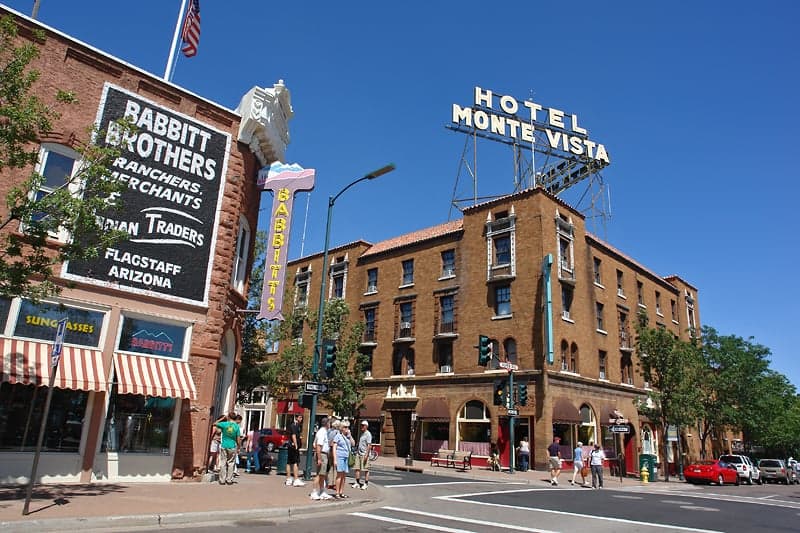
Photo: Wikipedia
Quality of Life in Flagstaff, AZ
A high quality of life with strong walkability, manageable living costs, healthy neighborhood signals, and solid amenity access.
What does Quality of Life tell us?
Quality of Life blends cost of living, nearby amenities, socioeconomic signals, and neighborhood character. City-level scores represent the whole municipality; individual neighborhoods can differ.
What does this tell us?
Quality of Life blends cost of living, nearby amenities, socioeconomic signals, and neighborhood character. City-level scores represent the whole municipality; individual neighborhoods can differ.
Cost of Living
52% above national average
The Real Cost of Living in Flagstaff, AZ for 2026
| Tier | Individual | Family (4) |
|---|---|---|
| Survival | $25k | $47k |
| Comfortable | $92k | $135k |
| Luxury | $123k+ | $191k+ |
| Elite (Top 5%) | $159k+ | $246k+ |
50%
The Area Signal
A metric tracking the socioeconomic signals of the area.


Hobbies
Explore the areaGroceries
5 within 10 miles
Gas
0 within 10 miles
Hospital
3 within 20 miles
Airport
PHX — Phoenix Sky Harbor International
Post Office
USPS — Flagstaff, AZ
Critical Amenities
Quality-of-Life Analysis
Flagstaff, Arizona, presents a distinctive quality-of-life profile shaped by its high elevation (7,000 feet), its role as a university town (Northern Arizona University), and its position as the largest city on the Colorado Plateau. The area attracts a mix of outdoor enthusiasts, academic professionals, and second-home buyers, resulting in a population that is notably more educated and affluent than the state average, yet also younger and more transient than typical Arizona retirement communities. This combination creates a community where environmental consciousness and active lifestyles are the norm, but where economic pressures are increasingly acute.
Cost of living and housing affordability compared to Phoenix and Sedona
Flagstaff's cost of living index stands at 152, meaning it is 52% more expensive than the national average and significantly pricier than the state's major metro areas. The median home value of $503,400 is roughly double that of the Phoenix metro area, while the median rent of $1,555 places it among the most expensive rental markets in Arizona outside of Scottsdale. This housing premium is driven by a combination of factors: a constrained supply of buildable land due to the surrounding Coconino National Forest, strong demand from NAU students and faculty, and the city's desirability as a mountain getaway for Phoenix residents. Compared to Sedona, Flagstaff offers more inventory and slightly lower per-square-foot costs, but the gap is narrowing. The average commute of just under 16 minutes is a notable counterbalance to the high housing costs, as residents avoid the hour-plus commutes common in Phoenix suburbs. However, service workers and younger professionals often face a difficult choice between paying a high percentage of income on rent or commuting from more affordable outlying communities like Bellemont or Munds Park.
What daily life is like for families and outdoor enthusiasts
Daily life in Flagstaff is defined by its four-season climate and access to world-class outdoor recreation. The Flagstaff Unified School District consistently ranks among the top in Arizona, with schools like Flagstaff High School and Mount Elden Middle School offering strong academic programs and outdoor education components. The city's amenity base is robust for its size, anchored by the historic downtown Heritage Square, the Lowell Observatory, and the Flagstaff Symphony Orchestra. The rhythm of the year is dictated by the seasons: summer brings hiking on the San Francisco Peaks and mountain biking at Fort Tuthill, while winter transforms the area into a ski destination with the Arizona Snowbowl. The presence of NAU injects a youthful energy and cultural diversity uncommon in a city of roughly 77,000 people, with regular concerts, lectures, and Division I athletics. However, the tourist economy also means that downtown can feel crowded during peak seasons, and the city's altitude requires a genuine adjustment period for newcomers, with dehydration and sun exposure being real concerns.
Flagstaff is best suited for individuals and families who prioritize outdoor recreation, a strong sense of community, and a slower pace of life over career opportunities and low housing costs. Professionals in education, healthcare (Flagstaff Medical Center is the largest employer), and remote tech work will find the most economic stability here. Those who thrive are typically willing to accept a higher cost of living in exchange for immediate access to national forest land, clean air, and a climate that offers all four seasons without the extreme heat of lower-elevation Arizona. Conversely, those seeking a booming job market, flat terrain, or affordable single-family homes on a modest budget will likely find Flagstaff's trade-offs untenable.

Crime in Flagstaff, AZ
Lower crime rates than 88% of comparable U.S. locations.
Violent CrimeViolent Crime Analysis
Property CrimeProperty Crime Analysis
Crime Analysis
Flagstaff, Arizona, presents a mixed safety profile that demands careful scrutiny from potential residents. While the city's violent crime rate of 139.1 per 100,000 residents is notably lower than the national average, its property crime rate of 648.9 per 100,000 is a significant concern, exceeding both state and national benchmarks. The overall safety picture is further complicated by local governance and prosecutorial philosophies that can directly impact public security.
Crime in context
Flagstaff's violent crime rate of 139.1 per 100,000 is roughly half the national average, placing it in a safer tier for serious offenses like homicide and assault. However, the property crime rate of 648.9 per 100,000 is substantially higher than the Arizona state average of approximately 500 per 100,000 and the national average of roughly 600 per 100,000. This disparity means residents face a notably elevated risk of theft, burglary, and vehicle break-ins. The city's status as a mountain tourist hub and a college town (home to Northern Arizona University) contributes to transient populations and opportunistic property crime, but the underlying justice system approach is a critical factor. Flagstaff is located in Coconino County, which has elected progressive district attorneys and judges who have implemented policies emphasizing diversion and reduced incarceration for property offenses. This ideological approach, while sympathetic to offenders, directly results in more criminals remaining on the street, undermining deterrence and negatively impacting justice for victims and the general public.
What residents experience
For daily life, the most tangible safety issue is property crime. Residents commonly report theft from vehicles, bicycle theft, and package theft, particularly in areas near downtown and the university campus. Violent crime is less frequent but does occur, often concentrated in specific neighborhoods and linked to domestic disputes or alcohol-related incidents. The presence of a large student population and seasonal tourism creates a fluctuating risk environment. While many residents feel safe walking in well-trafficked areas during the day, concerns about property security are pervasive. The progressive criminal justice policies in Coconino County mean that repeat property offenders often face minimal consequences, a reality that frustrates homeowners and business owners alike. This leniency contributes to a sense that the system prioritizes offender rehabilitation over public safety and victim restitution.
Neighborhood-level variation is significant. Areas near the historic downtown and Southside neighborhoods see higher rates of both property and violent crime. The more affluent and residential areas to the north and east, such as those near the Flagstaff Country Club or in the Kachina Village area, generally report lower crime rates. Prospective residents should research specific block-level data and consider that the county's progressive judicial philosophy applies uniformly, meaning even safer neighborhoods are not insulated from the effects of a system that keeps more offenders on the streets. For those prioritizing safety, a thorough review of local crime maps and an understanding of the prevailing political and prosecutorial climate are essential before relocating.
* Values derived from national, state, county, city and local statistics and may differ in a specific area. Last updated: 2026-04-16T00:46:22.000Z
Narrative content on this page is AI-generated and may contain mistakes. Verify any details that matter before acting on them.
ReloMaps may earn a commission from affiliate links at no extra cost to you.

