 Popular
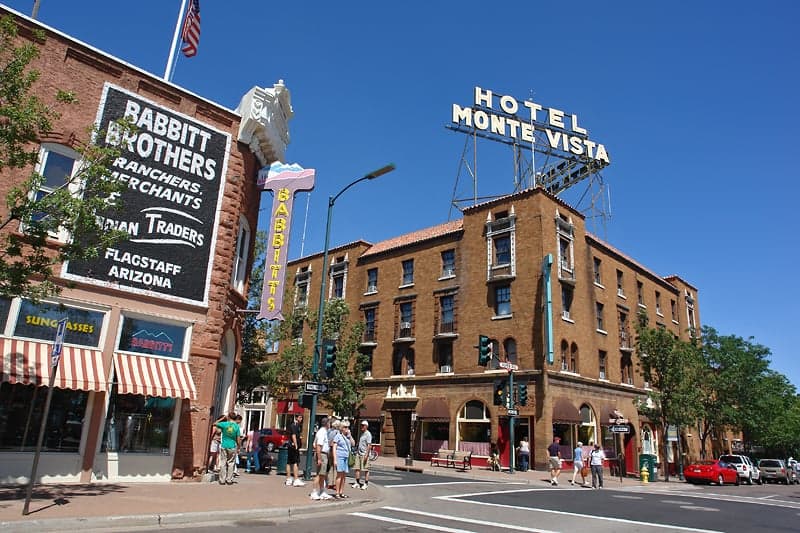
Photo: Wikipedia
Political ClimatePolitical Climate in Flagstaff, AZ
District shown is the primary district for this city’s centroid. Cities may span multiple districts.
Local Political AnalysisPolitical Analysis of Flagstaff, AZ
Flagstaff sits in a strange political pocket for Arizona. The city itself has drifted noticeably left in recent years, but the surrounding Coconino County and the state’s overall Cook PVI of R+7 tell a different story. If you’ve been here a while, you remember when local politics were more about keeping the place livable than pushing social experiments. Now, you’ve got city council votes that feel like they’re imported from Portland, while the rest of the county—places like Williams, Page, and the rural stretches toward Sedona—still lean solidly conservative. The trajectory is clear: Flagstaff’s progressive wing has gained ground, but it’s not a done deal. The 2024 election showed that even in this blue-leaning city, ballot measures on housing and taxes still split voters along practical lines, not ideological ones.
How it compares
Drive 30 minutes south to Sedona, and you’ll find a similar tourist-driven economy but a more libertarian-leaning electorate—less eager to impose new regulations on short-term rentals or property rights. Head east to Winslow or Holbrook, and you’re in deep red territory where the idea of a city-run “equity office” would get laughed out of the room. Flagstaff’s political climate is an outlier in northern Arizona. The city council has pushed through zoning changes that limit single-family home construction and expanded the city’s role in rental markets, moves that feel like government overreach to many longtime residents. Meanwhile, the county sheriff’s office and most school board members still reflect the area’s traditional values. The contrast is stark: you can live in Flagstaff and feel like you’re in a blue bubble, but the moment you cross the city limits, the political air changes completely.
What this means for residents
For anyone who values personal freedoms—whether it’s the right to build a workshop on your own property, keep a firearm without extra local hoops, or run a small business without a dozen new permits—Flagstaff’s recent trajectory is worth watching closely. The city has adopted stricter short-term rental rules, expanded its “climate action” mandates to include building codes that drive up construction costs, and debated a city-level minimum wage hike that would bypass state law. These aren’t abstract policies; they hit your wallet and your autonomy. If you’re considering a move here, understand that the local government is increasingly comfortable telling you how to use your land, your home, and your time. The trade-off is access to the mountains, the university, and a lively downtown—but that trade is getting more expensive in both dollars and freedom.
Culturally, Flagstaff still has a strong independent streak. The NAU presence brings a younger, more transient population that votes differently than the families and retirees who’ve been here for generations. You’ll see “In This House We Believe” signs next to “Don’t Tread on Me” flags in the same neighborhood. The real distinction is in policy: Flagstaff has embraced a “sanctuary city” stance and actively limits cooperation with federal immigration enforcement, which sits poorly with many residents who see it as picking sides over public safety. Long-term, if the city keeps adding layers of regulation and pushing progressive social policies, it risks alienating the very people who built the place—ranchers, small business owners, and outdoor enthusiasts who came here for the lifestyle, not the politics. Keep an eye on the next few city council elections; that’s where the real fight will be.

State Political ClimatePolitical Climate in Arizona
State Political AnalysisPolitical Environment in the State
Arizona has transformed from a reliably Republican stronghold into a genuine battleground state over the past two decades, currently leaning slightly right but with a razor-thin margin that makes every election a nail-biter. The dominant coalition is a mix of traditional conservatives in the suburbs and rural areas, pitted against a growing progressive bloc centered in Maricopa County’s urban core and the Tucson metro. Over the last 10-20 years, the state has shifted from a solid +10-point GOP lean in presidential races to a near-even split, with Democrats winning the presidency here in 2020 by just 10,457 votes out of 3.4 million cast—a flip that still stings for many conservatives who remember when Arizona was a lock for the red column.
Urban vs. rural divide
The political map of Arizona is a tale of two worlds. The Phoenix metro area, particularly Maricopa County, is the epicenter of the state’s swing—home to 60% of the population, it voted for Biden in 2020 after going for Trump in 2016, driven by explosive growth in suburbs like Chandler, Gilbert, and Scottsdale, where transplants from blue states have diluted the old conservative base. Meanwhile, Tucson (Pima County) is a reliably blue stronghold, with its university-driven progressive activism and a large Hispanic population that leans left. The rural counties tell a different story: Yavapai County (Prescott), Mohave County (Kingman), and Pinal County (Casa Grande) are deeply red, often voting 65-70% Republican. The divide is stark—drive 30 minutes outside Phoenix and you’re in Trump country, with signs for “Don’t Tread on Me” and “Let’s Go Brandon” on every other pickup truck.
Policy environment
Arizona’s policy landscape is a mixed bag for conservatives. On taxes, the state is relatively friendly: a flat income tax rate of 2.5% (passed in 2021 under Governor Doug Ducey) and a sales tax around 5.6% keep the burden low compared to California or New York. Property taxes are modest, averaging about 0.62% of home value. Regulatory posture is generally pro-business, with right-to-work laws and minimal red tape for small businesses. Education policy is a flashpoint: the state has a robust school choice program (Empowerment Scholarship Accounts) that lets parents use public funds for private or homeschool, but the public school system is underfunded and often a source of frustration. Healthcare is a mixed bag—Arizona expanded Medicaid under the Affordable Care Act, which some conservatives see as government overreach, but the state also has a strong network of private options. Election laws have been a battleground: the 2020 election audit in Maricopa County (the “Cyber Ninjas” fiasco) was a circus that satisfied no one, but the state has since passed voter ID requirements and tightened mail-in ballot rules, which many conservatives view as necessary safeguards.
Trajectory & freedom
On the freedom front, Arizona is a tale of two trends. On the positive side for conservatives, the state has expanded gun rights significantly: permitless carry (constitutional carry) became law in 2021, meaning you can carry a concealed firearm without a permit—a major win for Second Amendment advocates. Parental rights got a boost with the 2022 law banning “critical race theory” in schools and requiring parental notification for any sex education curriculum. Property rights are strong, with no state income tax on capital gains and a robust “right to farm” law protecting agricultural uses. But there are concerning signs: the state’s water crisis is leading to government restrictions on new home construction in some areas (like the 2023 moratorium on new subdivisions in parts of Maricopa County that lack assured water supplies), which feels like a creeping regulatory overreach. Medical autonomy took a hit with the 2024 ballot measure enshrining abortion rights in the state constitution (Proposition 139), which passed with 61% of the vote—a clear sign that the state’s libertarian streak on personal health is shifting leftward. The trajectory is mixed: more freedom on guns and school choice, but less on water rights and abortion.
Civil unrest & political movements
Arizona has seen its share of political heat. The 2020 election aftermath sparked massive protests in Phoenix, with both “Stop the Steal” rallies and Black Lives Matter demonstrations clashing in the streets—a tense period that left many residents feeling the state was on the edge. Immigration politics are a constant flashpoint: the 2010 SB 1070 law (the “show me your papers” law) made Arizona the face of hardline immigration enforcement, but the political winds have shifted, with Yuma and Nogales border communities now dealing with record crossings and a federal government that many locals feel has abandoned them. The “Build the Wall” movement is still strong in rural areas, but in Phoenix, activist groups like “Mijente” push for sanctuary city policies. Election integrity remains a raw nerve: the 2020 audit and subsequent lawsuits have created a permanent undercurrent of distrust, with some conservative counties (like Cochise County) threatening to hand-count ballots in future elections. You’ll see “Trump Won” flags flying alongside “Arizona is Not for Sale” signs—it’s a state that wears its politics on its sleeve.
Projection
Over the next 5-10 years, Arizona is likely to become more competitive, with a slight leftward drift driven by demographic changes. The influx of transplants from California and Illinois—many of whom are moderate or liberal—is reshaping Maricopa County’s suburbs. Mesa and Surprise are growing fast, and while they’re still red, the margins are shrinking. The Hispanic population, now 32% of the state, is trending younger and more Democratic, though it’s not monolithic—many Hispanic voters in rural areas are culturally conservative. The water crisis will force more government intervention, which could alienate libertarian-leaning conservatives. Expect the state to remain a presidential battleground, with Republicans holding the legislature and governorship (for now) but losing ground in statewide races. If you’re moving here, you’ll find a state that’s still freer than most, but the fight over that freedom is intensifying every year.
For a new resident, the bottom line is this: Arizona offers low taxes, strong gun rights, and school choice, but you’ll need to be politically engaged to keep it that way. The urban-rural divide means your experience will vary wildly—live in Prescott and you’re in a conservative bubble; live in Tempe and you’re surrounded by progressive activism. The state is not a safe bet for conservatives long-term, but it’s still a better bet than most of the West Coast. If you value personal liberty and want to live somewhere you can still push back against government overreach, Arizona is worth a serious look—just be ready to vote in every election, because your voice matters more here than almost anywhere else.
* Values derived from national, state, county, city and local statistics and may differ in a specific area. Last updated: 2026-04-16T00:46:22.000Z
Narrative content on this page is AI-generated and may contain mistakes. Verify any details that matter before acting on them.
ReloMaps may earn a commission from affiliate links at no extra cost to you.

