 Popular
Photo: Wikipedia
Find The Best Places To Live
in Flagstaff
PRO TIP! You can paste a Zillow or Redfin link to get info on that property.
What It's Like Living in Flagstaff, AZ
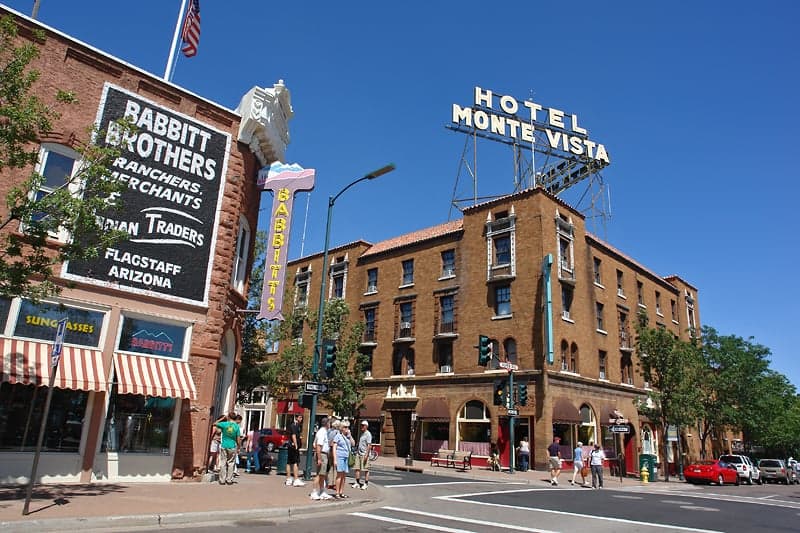
Flagstaff is a high-altitude college town and outdoor recreation hub rolled into one, where the air is thin, the snow is real, and the pace is noticeably slower than Phoenix or Tucson. At 7,000 feet, it’s a place where you can ski in the morning and hike a red rock canyon in the afternoon, but the trade-off is a cost of living that feels more like a coastal city than an Arizona mountain town. The vibe is a mix of Northern Arizona University students, Forest Service employees, and remote workers who chose pine trees over desert heat, creating a community that’s educated, outdoorsy, and distinctly liberal-leaning for the state.
Daily Rhythm: What People Actually Do
Life in Flagstaff revolves around the outdoors and the university calendar. Most residents work in education, healthcare, tourism, or the growing remote-work sector, with Northern Arizona University (NAU) and Flagstaff Medical Center as the largest employers. The average commute is a remarkably short 16 minutes, which means people actually have time to hit the trails after work or grab a beer downtown without fighting traffic. Grocery shopping happens at the local Basha’s or Whole Foods, but the real draw is the Flagstaff Community Market on Saturday mornings, where you’ll find local honey, handmade soap, and a crowd that looks like it walked out of an REI catalog. Weekends are for hiking the San Francisco Peaks, mountain biking on Schultz Creek Trail, or driving 45 minutes to the Grand Canyon’s South Rim for a day trip. In winter, Arizona Snowbowl gets enough snow for legitimate skiing and snowboarding, though the lift lines can test your patience on powder days.
Sports, Community, and the Local Identity
Sports in Flagstaff are more about participation than spectating. NAU Lumberjacks football and basketball games draw decent crowds, but the energy is nothing like a Division I powerhouse — think supportive parents and students rather than rabid fan bases. The real sports culture is in high school athletics: Flagstaff High School and Coconino High School have a genuine rivalry that fills bleachers on Friday nights, and the community rallies around state championship runs in cross-country and soccer. For adults, the Flagstaff Athletic Club and the Flagstaff Biking Organization are the social hubs. The city’s identity is proudly eccentric — you’ll see bumper stickers reading “Keep Flagstaff Weird” alongside Subarus with ski racks. The biggest cultural event is the Flagstaff Festival of Science each fall, which feels like a TED Talk meets a county fair, and the Flagstaff Folk Festival in June brings acoustic music to the Pioneer Museum. The Orpheum Theater downtown hosts national touring acts, while Museum Club (a historic log cabin bar) is the spot for local bands and a genuinely divey atmosphere.
What’s There to Do: Entertainment, Food, and Festivals
Downtown Flagstaff is walkable and packed with character. Weatherford Hotel has been serving drinks since 1897, and its rooftop bar offers views of the train tracks and the peaks. For food, Diablo Burger uses local beef and is a must-try, while Pizzicletta serves wood-fired Neapolitan pizza that rivals anything in Phoenix. The Flagstaff Ale Trail connects a half-dozen breweries including Mother Road Brewing and Historic Brewing Company, both of which are packed on weekends. The Flagstaff Fourth of July Parade is a big deal — think small-town Americana with a mountain backdrop — and the Flagstaff WinterFest in December includes a polar plunge and a holiday market. Outdoor enthusiasts have endless options: Walnut Canyon National Monument is 15 minutes away for ancient cliff dwellings, Lava River Cave offers a mile-long hike through a lava tube, and Lake Mary is the summer spot for paddleboarding and fishing. The biggest downside? Flagstaff is expensive. The cost of living index sits at 152 (52% above the national average), and the median home value is $503,400, which is steep for a city where the median income is only $68,041. Rentals are scarce and competitive, especially near NAU.
Pros and Cons of Living Here
- Pro: Four real seasons. Flagstaff gets an average of 100 inches of snow annually, so you get crisp autumns, snowy winters, and mild summers without the oppressive heat of the rest of Arizona.
- Pro: Walkable, safe downtown. The violent crime rate is 139.1 per 100,000, well below the national average, and the downtown core is safe enough to walk at night.
- Con: High cost of housing. With a median age of 26 and 51.8% of residents holding a bachelor’s degree, Flagstaff attracts young professionals and students, but many are priced out of homeownership. Rent for a one-bedroom often exceeds $1,500.
- Con: Limited job market outside of education and tourism. If you’re not in healthcare, teaching, or remote work, you’ll likely be commuting to Phoenix (2 hours south) or settling for a lower-paying service job.
- Con: Tourist crowds. Summer weekends bring a flood of visitors escaping the Phoenix heat, which means packed trails, full restaurants, and traffic on I-17 that can turn a 2-hour drive into 3.
Flagstaff is best suited for people who value outdoor access over urban amenities, don’t mind snow shoveling, and are willing to pay a premium for a small-town feel with a college-town energy. It’s not a place to get rich — it’s a place to live well, if you can afford the entry fee.

Similar small cities to Flagstaff

* Values derived from national, state, county, city and local statistics and may differ in a specific area. Last updated: 2026-04-16T00:46:22.000Z
Narrative content on this page is AI-generated and may contain mistakes. Verify any details that matter before acting on them.
ReloMaps may earn a commission from affiliate links at no extra cost to you.

