 Popular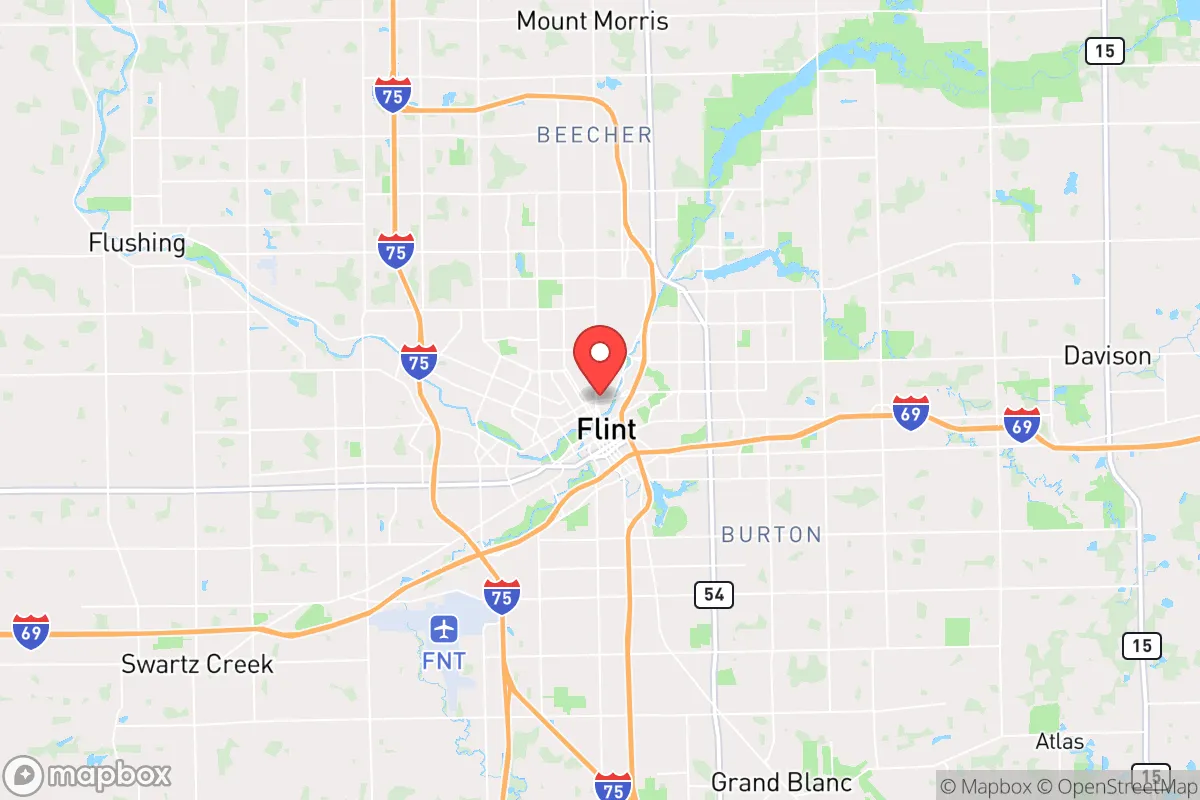
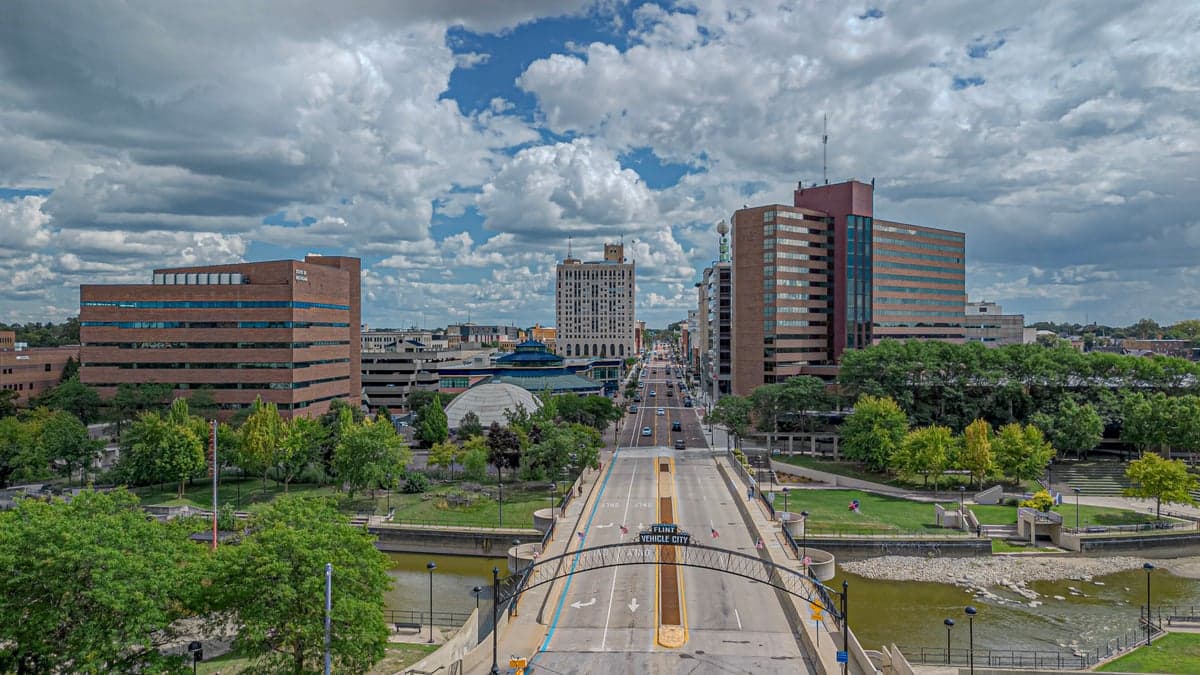
Photo: Wikipedia
Strategic Assessment of Flint, MI
Meaningful friction. Expect exposure to either population pressure, blast zones, or natural disaster risk. Consider buying a retreat property.
What does the Strategic Assessment tell us?
Our Strategic Assessment grades tactical survivability of an area. Major population centers, military targets, fallout zones, natural disasters, and border exposure all drive risk — lower exposure means a more defensible position in a crisis.
This is heavily inspired by Joel Skousen's Strategic Relocation book. Highly recommended you checkout the book ($)What does this tell us?
Our Strategic Assessment grades tactical survivability of an area. Major population centers, military targets, fallout zones, natural disasters, and border exposure all drive risk — lower exposure means a more defensible position in a crisis.
This is heavily inspired by Joel Skousen's Strategic Relocation book. Highly recommended you checkout the book ($)Strategic Pillars

Key Distances
Regional Safe Places
Below is our recommended "safe zones" in Michigan and the surrounding area based on our strategic heuristics. For most people, it's unrealistic to live in a “safe zone” full-time due to work, family or other personal reasons. They tend to be more rural. However, many of these areas are perfect for second homes and retreat properties that double as a vacation home or even a short-term rental.


Important Note: For informational purposes only. This does not mean nothing bad ever happens in the green zones. Please use common sense. This is based on public data and modeled with AI. We tried to take a conservative approach but mistakes happen. We update this regularly as new information becomes available.
Solar Generator Recommendations
Backup power matters more here than in safer locations. We've picked three solar generators across budgets and capacity tiers — start with the budget unit if you only need a few essentials, or step up if you want to run a fridge and HVAC for days at a time.

Jackery Portable Power Station Explorer 300
Budget OptionPower on the Go: Weighing only 11 lbs, it's convenient to set up and store with book-sized foldable solar panels

BLUETTI Portable Power Station AC180
Designed for both indoor and outdoor scenarios, AC180 is highly capable as it has a robost capacity and continuous output power.

EF ECOFLOW DELTA Pro Ultra Power Station
Upgraded PickEcoFlow DELTA Pro Ultra is a whole-home energy system designed to grow with your family. Integrated with the Smart Home Panel 2, it scales to meet your evolving energy needs — keeping your home powered, intelligent, and secure through every stage of life.
We earn a commission, at no additional cost to you.
Strategic Assessment Analysis
Flint, Michigan, offers a complex strategic picture for the conservative prepper or survivalist. While the city itself is synonymous with infrastructure failure and urban decay, its location in the Great Lakes region provides a critical advantage: access to the largest surface freshwater source in the world. For someone thinking about long-term resilience, the ability to secure water, grow food, and stay off major target lists is paramount. Flint sits at a crossroads of risk and opportunity, and understanding that balance is the first step in deciding if this area fits your relocation strategy.
Geographic position and natural advantages for long-term survival
Flint’s geographic position is a mixed bag, but the positives are real. The city is located in Genesee County, roughly 60 miles northwest of Detroit and 60 miles east of Lansing. That puts it within a two-hour drive of Canada and the St. Lawrence Seaway, a major chokepoint for global trade. For a prepper, that proximity to an international border and a major waterway is a double-edged sword—it offers escape routes but also potential chokepoints during a crisis. The real advantage, however, is the Great Lakes themselves. Lake Huron is less than 30 miles to the east, and Lake Michigan is about 150 miles west. In a scenario where municipal water systems fail, having a reliable, massive freshwater source within a short drive or even a day’s hike is a game-changer. The region also sits on the Michigan Basin, which holds significant groundwater reserves. For a relocator willing to drill a well or invest in rainwater catchment, water security is achievable here in a way it isn’t in the arid West or the over-pumped Southeast.
The natural landscape is another plus. Flint is surrounded by agricultural land—Genesee County has over 1,200 farms covering more than 200,000 acres. That means local food production is a real possibility, not just a theoretical one. The growing season is short (roughly 140-160 frost-free days), but the soil is fertile and the rainfall is reliable. For a family looking to become more self-sufficient, this is a region where you can realistically raise livestock, grow vegetables, and store grain. The area is also heavily forested in parts, offering cover and resources for hunting and foraging. Flint’s elevation is modest (around 750 feet), but the terrain is gently rolling, not flat, which aids drainage and defensibility. You’re not dealing with mountains, but you’re also not in a floodplain.
Risks, exposures, and proximity to fallout-relevant landmarks
Now for the hard truths. Flint’s location is a liability when you consider the kind of large-scale events that keep a prepper up at night. The city is within the Detroit-Warren-Ann Arbor Combined Statistical Area, a population center of over 5 million people. In a scenario involving civil unrest, mass casualty events, or a major disaster, that population density becomes a liability. Flint is directly downstream of the I-75 and I-69 corridors, two major evacuation routes that would become clogged and dangerous in a crisis. The city itself has a population of about 80,000, but the surrounding metro area adds another 300,000. That’s a lot of people who will be looking for the same resources you are.
More concerning is the proximity to potential fallout targets. Detroit is a major industrial and transportation hub, home to the Ambassador Bridge and the Detroit-Windsor Tunnel—critical infrastructure that would be a high-value target in any conflict. The city also has a significant petrochemical and automotive manufacturing base. Within a 100-mile radius of Flint, you have the Fermi 2 nuclear power plant (about 50 miles southeast), the Palisades Nuclear Plant (about 120 miles west, though decommissioned), and the Davis-Besse Nuclear Power Station in Ohio (about 150 miles south). In a nuclear event, Flint is within the fallout plume zone for multiple potential targets. The prevailing winds in the region are from the west and southwest, which means fallout from a Detroit or Toledo strike could drift directly over the area. Flint’s own water infrastructure is already a cautionary tale—the 2014-2019 water crisis demonstrated that local governance can fail catastrophically, leaving residents without potable water for years. That’s not a theoretical risk; it’s a lived reality.
Practical resilience for a relocator: food, water, energy, and defensibility
If you’re considering Flint as a base, you need to think about practical resilience on a daily level. Water is the first concern. The Flint River runs through the city, but it’s heavily polluted from decades of industrial use. Do not rely on surface water from the Flint River without advanced filtration and testing. The groundwater in the region is generally good, but you’ll need a well that’s properly sealed and tested for heavy metals and bacteria. Many rural properties in Genesee County already have wells, so that’s a plus. For energy, the grid is aging but stable for now. Michigan’s energy mix is about 30% coal, 30% natural gas, and 30% nuclear, with the rest from renewables. That means you’re vulnerable to grid failures during winter storms—ice storms and lake-effect snow can knock out power for days. A backup generator with a propane or natural gas hookup is non-negotiable here. Solar is viable but less efficient in the cloudy winters; you’ll need battery storage and a backup plan.
Food security is more promising. The agricultural land around Flint is affordable—you can buy a 5-10 acre parcel for $20,000-$50,000, depending on location and improvements. That’s cheap compared to the coasts or even the Midwest. You can raise chickens, goats, or even a small beef herd. The local farmers’ markets and co-ops are active, and there’s a growing network of homesteaders and preppers in the area. For defensibility, Flint itself is a mixed bag. The city has a high crime rate—violent crime is about 3x the national average—but that’s concentrated in certain neighborhoods. If you choose a rural or exurban property outside the city limits, you can achieve a high degree of physical security with a fence, a good dog, and a well-stocked pantry. The terrain is open enough to see threats coming but wooded enough to provide cover. The local law enforcement presence is thin in rural areas, so you’ll need to be your own first responder.
The overall strategic picture for a conservative relocator
Flint is not a bug-out location for the faint of heart. It’s a gritty, hardscrabble area that demands you bring your own infrastructure and your own community. The water crisis is a permanent scar, and the proximity to Detroit and other potential targets is a real liability. But for a prepper who values water security, affordable land, and a lower profile than the coasts, it has genuine merit. The key is to locate outside the city limits, preferably in a rural township like Grand Blanc, Fenton, or Davison, where you have space, well water, and a buffer from the urban core. You’ll need to invest in your own power, water, and food systems, but the raw materials are here. The region’s history of labor unrest and economic decline means there’s a certain self-reliance baked into the local culture—people here know how to fix things themselves. If you’re willing to put in the work and accept the risks, Flint offers a strategic foothold in the Great Lakes region that few other locations can match. Just don’t expect it to be easy.

* Values derived from national, state, county, city and local statistics and may differ in a specific area. Last updated: 2026-04-29T22:44:12.000Z
Narrative content on this page is AI-generated and may contain mistakes. Verify any details that matter before acting on them.
ReloMaps may earn a commission from affiliate links at no extra cost to you.

