 Popular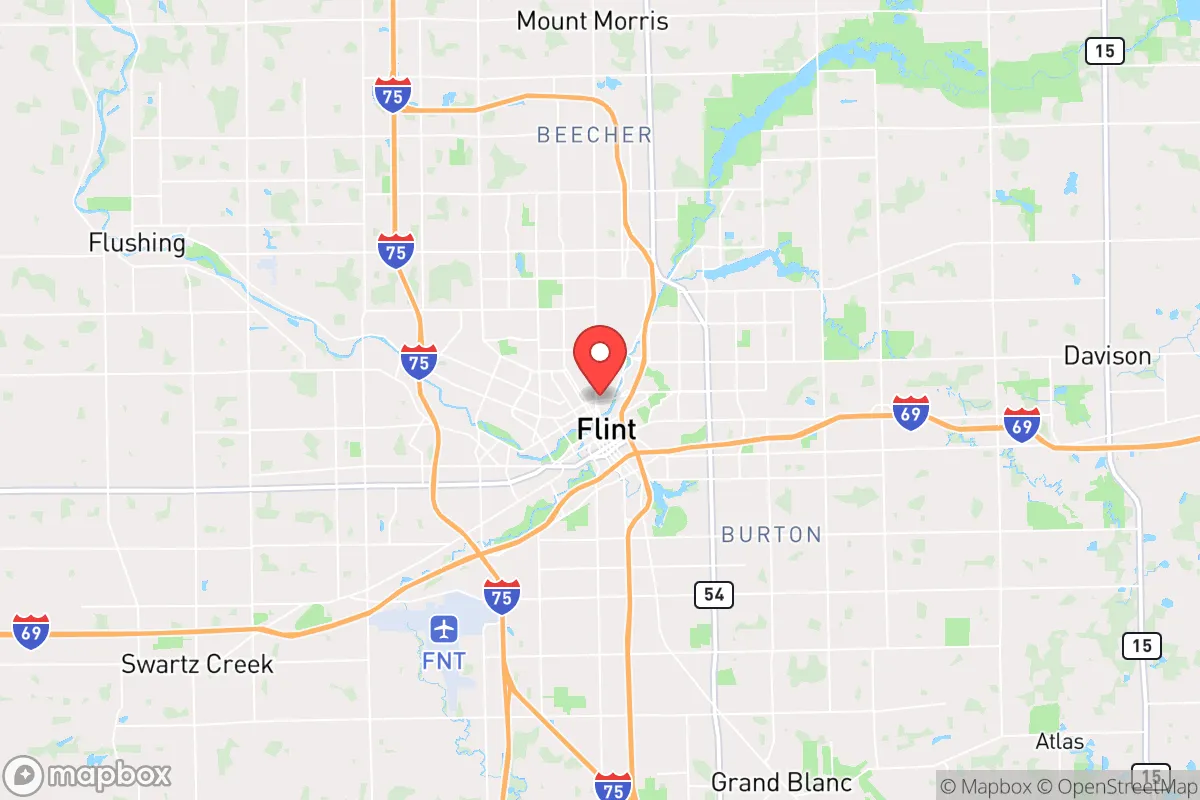
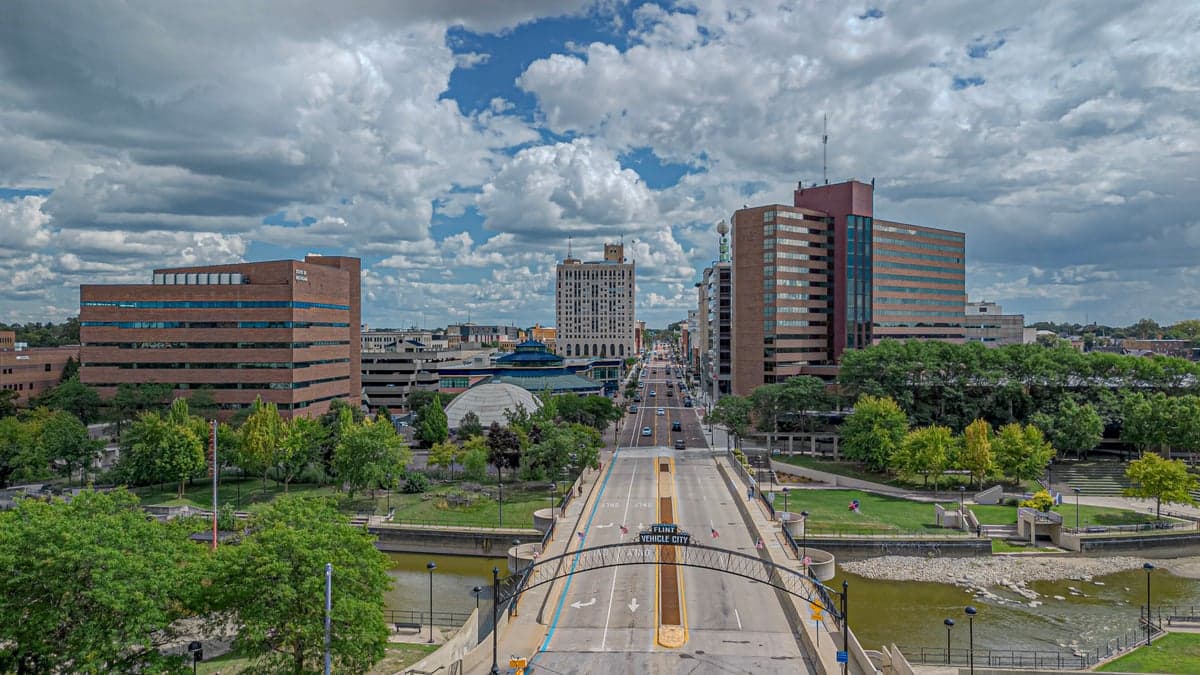
Photo: Wikipedia
Political ClimatePolitical Climate in Flint, MI
District shown is the primary district for this city’s centroid. Cities may span multiple districts.
Local Political AnalysisPolitical Analysis of Flint, MI
Flint, Michigan, has a political climate that’s more complicated than the headlines suggest)Skip. The city itself leans heavily Democratic, but the surrounding Genesee County and the state’s 5th Congressional District are a different story. The Cook PVI of R+1 for the district tells you the real story: this area is a true battleground, and it’s been shifting rightward in recent cycles. If you’re looking at Flint from a conservative perspective, you’ll see a place where the old, union-driven Democratic machine is losing its grip, and where a growing number of residents are fed up with the progressive policies that have failed the city for decades.
How it compares
To understand Flint’s politics, you have to look at the map. The city itself is a Democratic stronghold, but drive 15 minutes in any direction and you’re in solidly red territory. Towns like Grand Blanc, Fenton, and Davison are reliably conservative, and they’re growing. Meanwhile, Flint Township and Burton are more purple, often swinging with the national mood. The contrast is stark: inside the city limits, you’ll see a lot of “Defund the Police” rhetoric and city council fights over mask mandates, while just outside, folks are more concerned with property taxes and school board transparency. This split means that state and federal representation for the area is often moderate, but the city government itself has been a laboratory for progressive experiments that haven’t worked out well.
What this means for residents
For a conservative living in or near Flint, the biggest concern is the overreach of local government into personal freedoms. During the pandemic, the city and county health departments were aggressive with mandates that went beyond state orders, and there’s a lingering distrust of how officials handled the water crisis—not just the lead, but the way they used emergency powers to control information and access. The city council has also pushed for sanctuary city policies and defunding the police, which has led to a spike in crime and a feeling that the government cares more about ideology than public safety. Property taxes are high, and the city’s financial mismanagement has led to repeated state takeovers, which is a double-edged sword: it keeps the city from total collapse, but it also means residents have less local control.
Looking ahead, the trajectory is concerning. The progressive wing of the local Democratic party is gaining influence, pushing for things like rent control, higher minimum wages, and more regulations on small businesses. This is driving out the middle class and making it harder for families to stay. The long-time residents I know are either leaving or just hunkering down, hoping the pendulum swings back. The 2024 election results in the district were a warning shot: the Republican candidate came closer than ever before, and if the city keeps pushing left, the suburbs will only get redder. For now, the best advice is to keep an eye on the county commission and school board races—that’s where the real fights over your rights and your wallet are happening.

State Political ClimatePolitical Climate in Michigan
State Political AnalysisPolitical Environment in the State
Michigan has shifted from a reliably purple battleground to a state where Democrats now hold all three levers of state government, a dramatic change from just a decade ago when Republicans controlled the legislature and governor’s office. The 2022 elections gave Democrats unified control for the first time in 40 years, and they’ve used that power aggressively, passing a wave of progressive legislation that has many conservatives feeling like the state they grew up in is slipping away. The 2024 presidential race saw Michigan flip back to Trump after a narrow Biden win in 2020, but down-ballot races remain intensely competitive, with the state’s political identity still very much in flux.
Urban vs. rural divide
The political map of Michigan is a textbook case of the urban-rural split that defines American politics today. The Democratic stronghold is Wayne County (Detroit), which alone delivers a massive 200,000+ vote margin for Democrats, effectively deciding statewide elections before votes are even counted in the rest of the state. Oakland County, once a Republican bastion, has flipped decisively blue in the last decade, with its affluent suburbs now reliably Democratic. Washtenaw County (Ann Arbor) is the state’s most liberal region, driven by the University of Michigan’s progressive student and faculty population. In contrast, Ottawa County (Holland/Grand Haven) remains a GOP stronghold, consistently voting +30 points Republican. The Thumb region and Upper Peninsula have trended redder as the Democratic Party has moved left on cultural issues, with rural voters feeling increasingly alienated. The key battlegrounds are the Grand Rapids suburbs (Kent County) and Macomb County (north of Detroit), where working-class voters have swung wildly between parties in recent cycles.
Policy environment
Michigan’s policy landscape has shifted hard left since 2023. The state now has a flat income tax of 4.25%, but Democrats repealed the retirement tax exemption and are pushing for higher corporate taxes. Property taxes are capped by Proposal A (1994), which limits annual increases to 5% or inflation, whichever is lower—a double-edged sword that protects long-time homeowners but creates huge disparities for new buyers. The regulatory environment has become notably hostile to business, with the repeal of right-to-work in 2023 being the single biggest blow to economic freedom. Education policy is a flashpoint: the state eliminated the “Read by Grade Three” retention law and expanded LGBTQ+ curriculum mandates in public schools, while simultaneously defunding the school choice programs that had made Michigan a leader in educational freedom. Healthcare is dominated by the Medicaid expansion under the Healthy Michigan Plan, which covers 1.2 million residents. Election laws have been loosened significantly: Proposal 2 (2022) enshrined no-reason absentee voting, nine days of early voting, and ballot drop boxes, changes that conservatives argue reduce election integrity.
Trajectory & freedom
Michigan is clearly trending less free across multiple dimensions. The most alarming shift for conservatives was the repeal of right-to-work in 2023, which forces private-sector workers to pay union dues or fees as a condition of employment—a direct assault on individual liberty. On gun rights, the state passed universal background checks and a red flag law in 2023, despite strong opposition from rural counties. Parental rights took a hit with the expansion of LGBTQ+ curriculum without an opt-out provision, and the state now allows minors to consent to certain medical procedures without parental knowledge. Medical freedom was curtailed by the reinstatement of the 1931 abortion ban being overturned by Proposal 3 (2022), which enshrined abortion rights in the state constitution—a move that also removed parental consent requirements for minors. Property rights remain relatively strong thanks to Proposal A’s tax caps, but the expansion of renewable energy mandates is giving local governments less control over land use. The Michigan Civil Rights Commission has become increasingly activist, pushing for expanded protected classes that some argue infringe on religious liberty.
Civil unrest & political movements
Michigan has been a national flashpoint for political conflict. The 2020 Whitmer kidnapping plot and the Operation Gridlock protests at the state capitol put Michigan on the map for political violence and civil disobedience. The “Unlock Michigan” movement successfully petitioned to repeal the governor’s emergency powers, a rare grassroots victory for limited government. On the left, the Michigan Democratic Party has been energized by the “Rise Up Michigan” coalition, which includes progressive activists pushing for Medicare for All and defunding the police. Immigration politics are relatively quiet compared to border states, but Washtenaw County has declared itself a “sanctuary county”, refusing to cooperate with ICE detainers. Election integrity remains a hot-button issue: the 2020 election audit in Antrim County initially showed irregularities that were later attributed to software errors, but the episode fueled ongoing distrust. The Michigan Republican Party has been torn apart by internal factions, with the “Michigan Conservative Coalition” pushing for more aggressive election reforms while the establishment wing tries to moderate.
Projection
Over the next 5-10 years, Michigan is likely to become more Democratic at the state level, driven by continued suburbanization of Oakland and Kent counties and the in-migration of younger, more liberal residents to cities like Grand Rapids and Traverse City. The 2024 census will likely cost Michigan a congressional seat, further diluting rural conservative influence. However, the Upper Peninsula and northern Lower Peninsula are growing more conservative as retirees and remote workers flee high-tax states, potentially creating a new rural counterweight. The 2026 gubernatorial race will be a key test: if Democrats hold the governor’s office, expect further leftward shifts on energy policy (forced green mandates) and education (expanded DEI programs). The right-to-work repeal will likely be followed by prevailing wage mandates and card-check unionization, further eroding economic freedom. The wild card is school choice: if the state’s new universal school choice program survives legal challenges, it could keep conservative families in Michigan rather than fleeing to Indiana or Ohio.
For a conservative considering a move to Michigan, the bottom line is this: the state is in the middle of a rapid leftward transformation that shows no signs of slowing. If you value low taxes, school choice, and Second Amendment rights, you’ll find strong communities in Ottawa County, the Thumb, or the Upper Peninsula, but you’ll be fighting an uphill battle at the state level. The cost of living is reasonable, the natural beauty is unmatched, and the people are genuine, but the political trajectory means you’ll need to be engaged and active to protect your freedoms. If you’re looking for a state that’s trending conservative, Michigan is not that place—but if you’re willing to be part of the resistance, there’s still plenty worth fighting for.
* Values derived from national, state, county, city and local statistics and may differ in a specific area. Last updated: 2026-04-29T22:44:12.000Z
Narrative content on this page is AI-generated and may contain mistakes. Verify any details that matter before acting on them.
ReloMaps may earn a commission from affiliate links at no extra cost to you.

