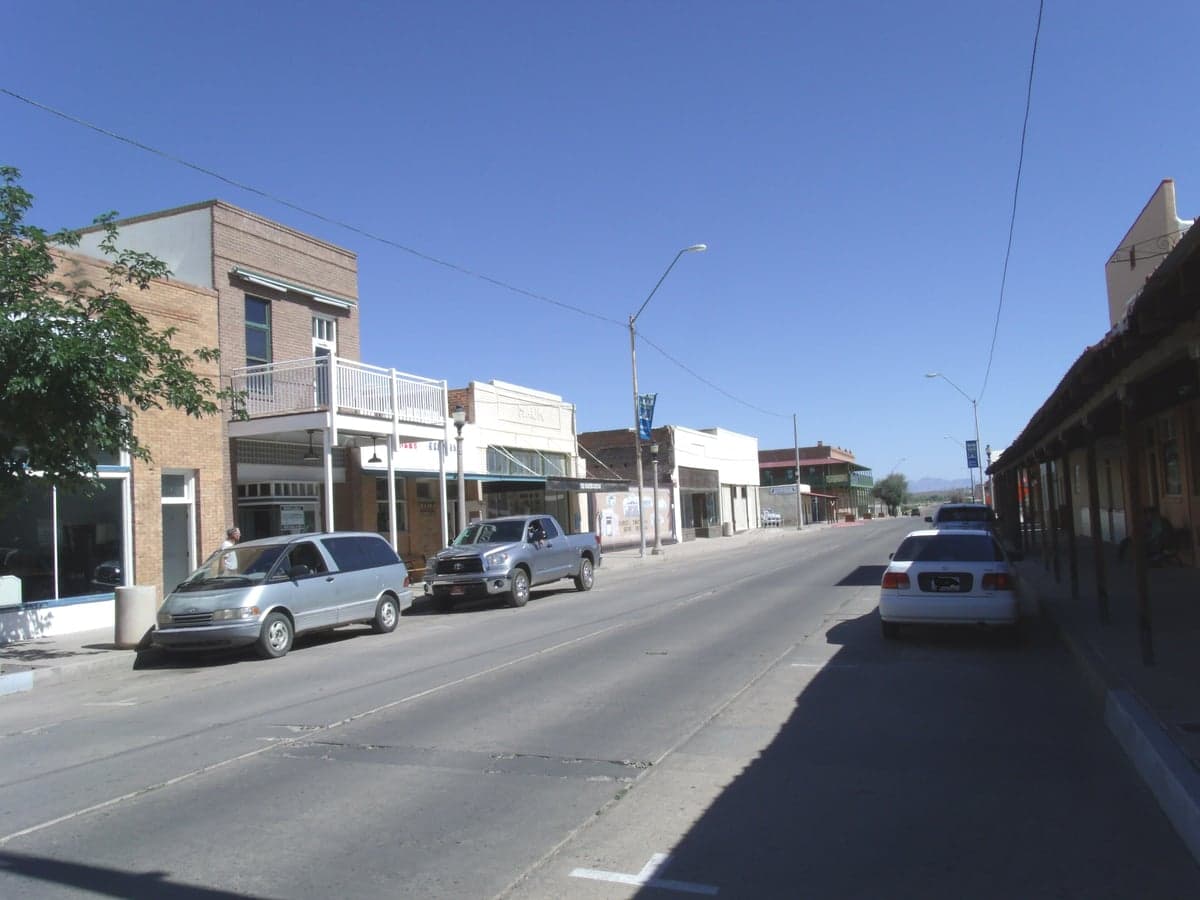
Photo: Wikipedia
Strategic Assessment of Florence, AZ
Multiple tactical vulnerabilities. Population density, target proximity, or disaster risk are likely compounding. A retreat property and exit planning is required.
What does the Strategic Assessment tell us?
Our Strategic Assessment grades tactical survivability of an area. Major population centers, military targets, fallout zones, natural disasters, and border exposure all drive risk — lower exposure means a more defensible position in a crisis.
This is heavily inspired by Joel Skousen's Strategic Relocation book. Highly recommended you checkout the book ($)What does this tell us?
Our Strategic Assessment grades tactical survivability of an area. Major population centers, military targets, fallout zones, natural disasters, and border exposure all drive risk — lower exposure means a more defensible position in a crisis.
This is heavily inspired by Joel Skousen's Strategic Relocation book. Highly recommended you checkout the book ($)Strategic Pillars

Key Distances
Regional Safe Places
Below is our recommended "safe zones" in Arizona and the surrounding area based on our strategic heuristics. For most people, it's unrealistic to live in a “safe zone” full-time due to work, family or other personal reasons. They tend to be more rural. However, many of these areas are perfect for second homes and retreat properties that double as a vacation home or even a short-term rental.
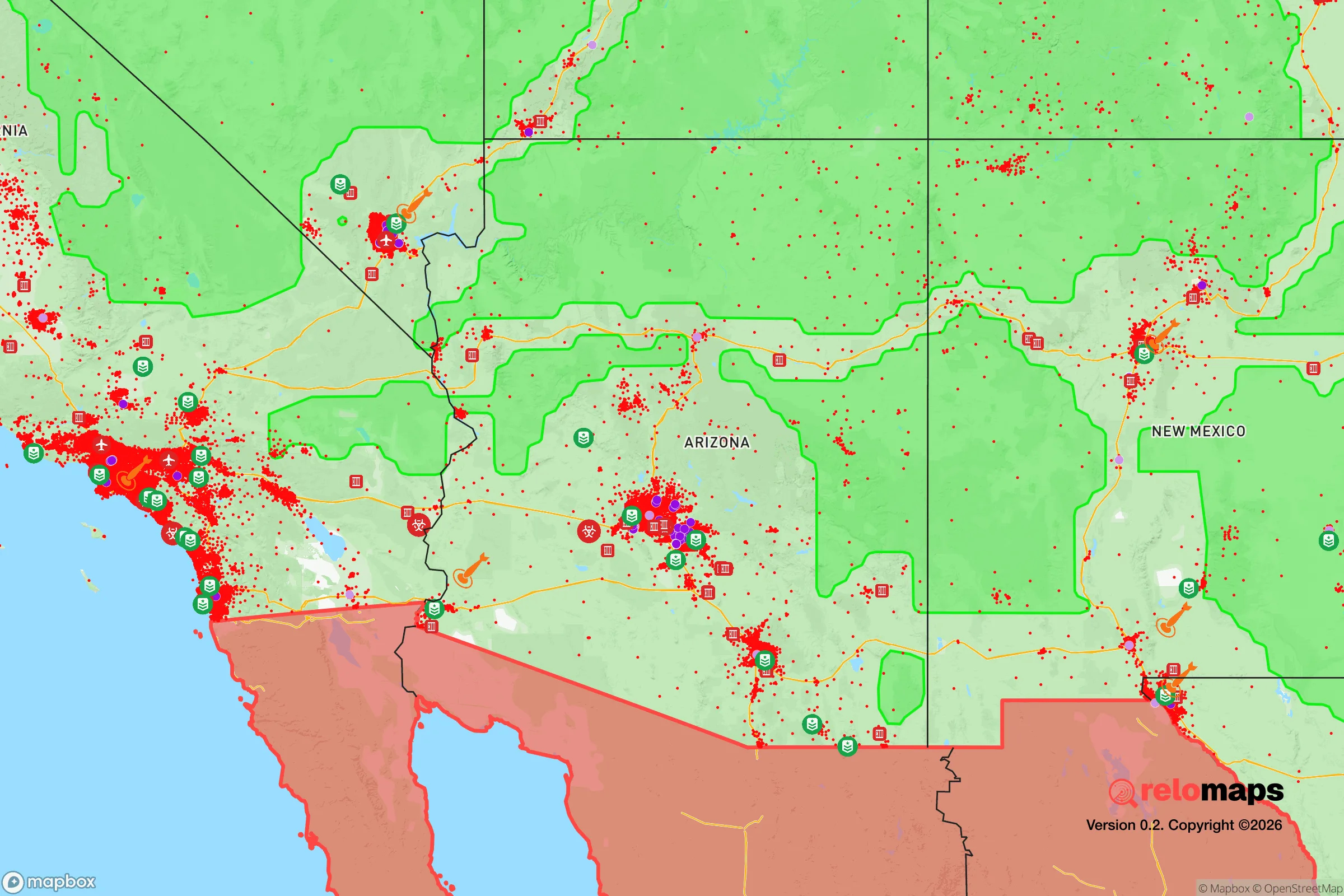
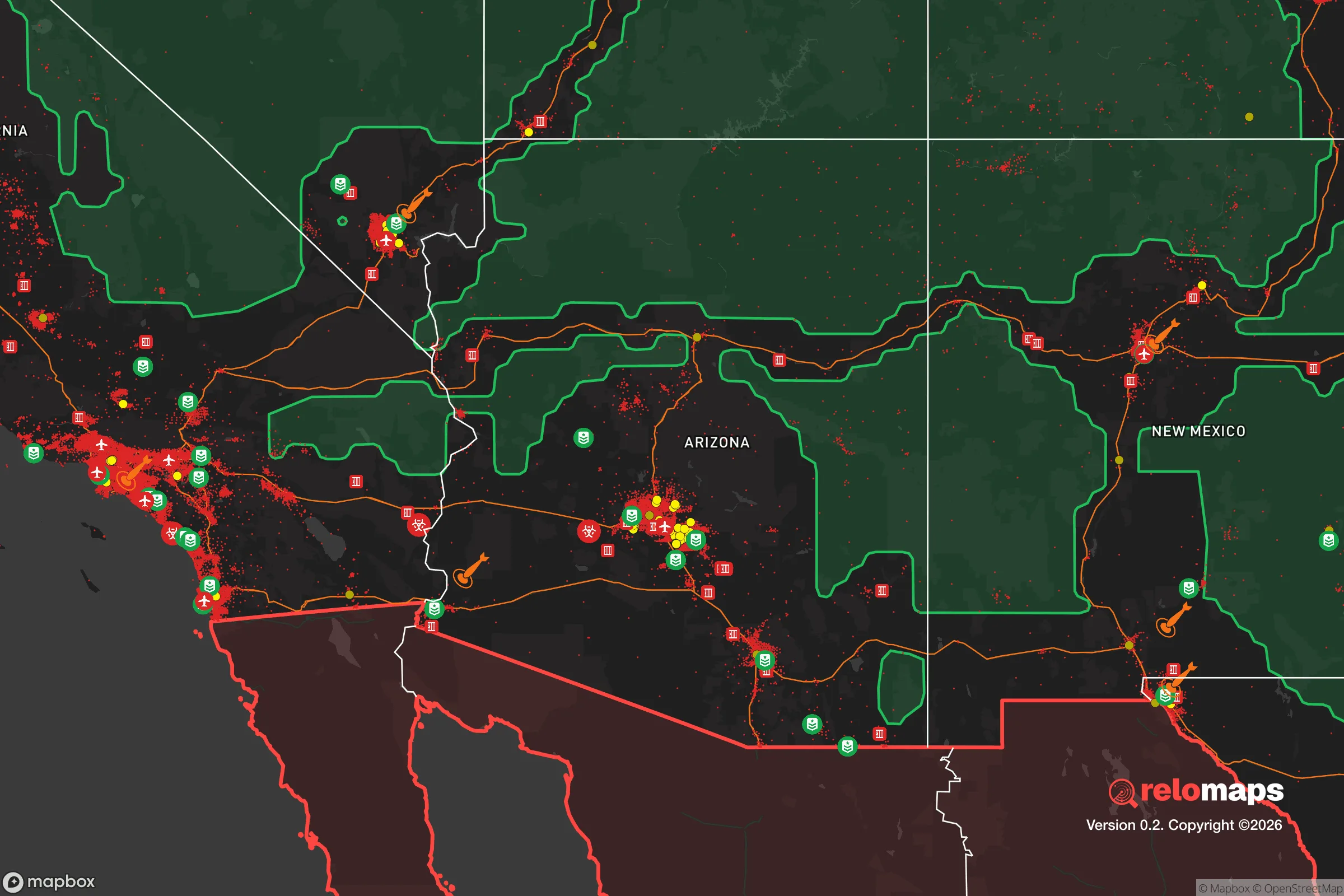


Important Note: For informational purposes only. This does not mean nothing bad ever happens in the green zones. Please use common sense. This is based on public data and modeled with AI. We tried to take a conservative approach but mistakes happen. We update this regularly as new information becomes available.
Solar Generator Recommendations
Backup power matters more here than in safer locations. We've picked three solar generators across budgets and capacity tiers — start with the budget unit if you only need a few essentials, or step up if you want to run a fridge and HVAC for days at a time.

Jackery Portable Power Station Explorer 300
Budget OptionPower on the Go: Weighing only 11 lbs, it's convenient to set up and store with book-sized foldable solar panels

BLUETTI Portable Power Station AC180
Designed for both indoor and outdoor scenarios, AC180 is highly capable as it has a robost capacity and continuous output power.

EF ECOFLOW DELTA Pro Ultra Power Station
Upgraded PickEcoFlow DELTA Pro Ultra is a whole-home energy system designed to grow with your family. Integrated with the Smart Home Panel 2, it scales to meet your evolving energy needs — keeping your home powered, intelligent, and secure through every stage of life.
We earn a commission, at no additional cost to you.
Strategic Assessment Analysis
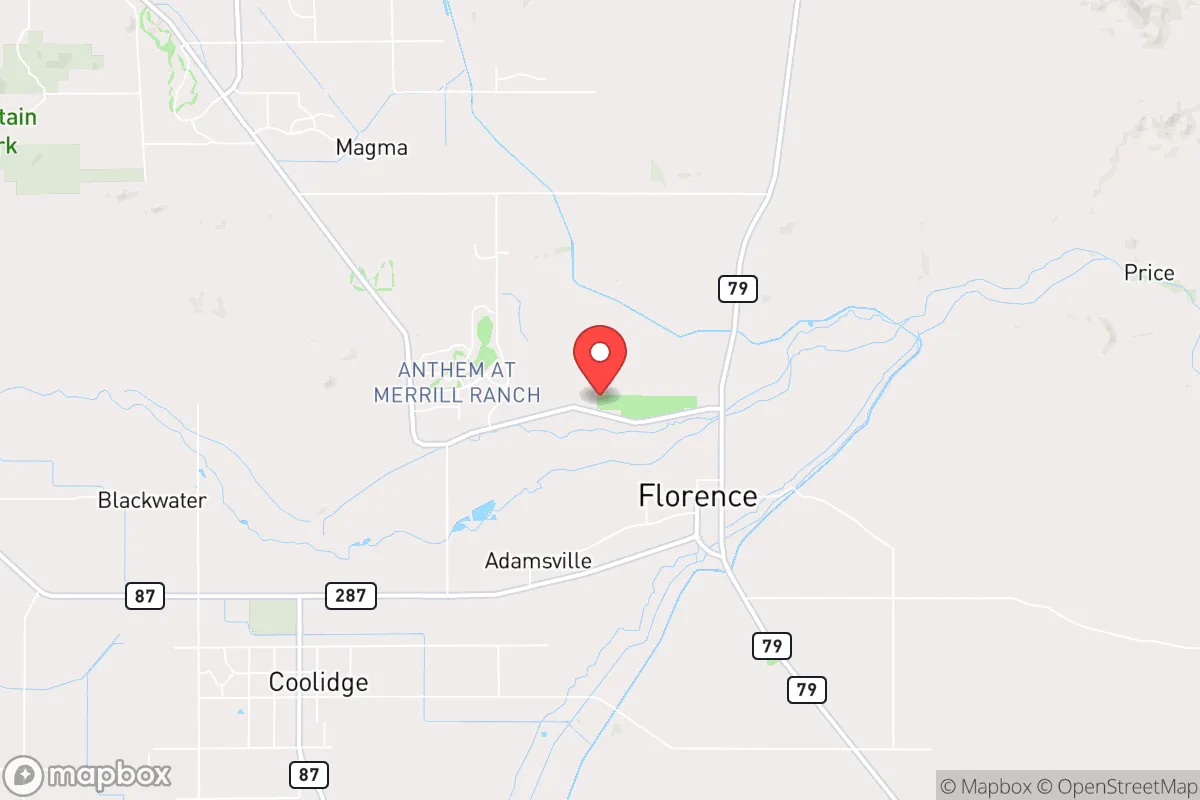
Florence, Arizona, presents a mixed strategic picture for the conservative prepper or survivalist. Its primary advantage is its location at the intersection of major highways (I-10, AZ-79, AZ-287) and its position as the county seat of Pinal County, offering a degree of administrative and logistical centrality. However, its proximity to the Phoenix metro area (roughly 60 miles southeast) and its location near significant infrastructure targets create serious vulnerabilities that must be weighed against its desert isolation and agricultural resources. For a relocator prioritizing long-term resilience, Florence is not a fortress, but it could serve as a viable staging ground or a secondary position if you understand its specific risk profile.
Geographic position and natural advantages for long-term survival
Florence sits in the Sonoran Desert at an elevation of roughly 1,500 feet, which provides a moderate climate relative to the extreme heat of Phoenix or Yuma. The area receives about 10 inches of rain annually, with two distinct rainy seasons (winter and summer monsoon), which is enough to support limited rainwater harvesting and some dryland farming. The surrounding terrain is a mix of flat desert, arroyos, and low mountain ranges (the Dripping Springs Mountains to the east, the Tortilla Mountains to the north). This topography offers natural chokepoints and defensible positions for those who know how to use them. The Gila River runs just south of town, though it is often dry or a trickle; groundwater is the primary water source, and the area sits atop the large but declining Pinal County aquifer. For a prepper, the key natural advantage is the ability to retreat into the rugged, sparsely populated terrain east of town (toward the Tonto National Forest) if the need arises. The area's low population density (Pinal County has about 50 people per square mile, compared to Maricopa County's 300+) means fewer neighbors to compete with for resources in a collapse scenario. However, the desert itself is unforgiving—heat, dehydration, and venomous wildlife are real threats, and anyone without serious water storage and passive cooling will not last a week in summer.
Risks, exposures, and proximity to fallout-relevant landmarks
Florence's biggest liability is its proximity to multiple high-value targets. The town is roughly 60 miles from Phoenix Sky Harbor International Airport, a major transportation hub that would be a primary target in a conflict. It is also about 70 miles from Luke Air Force Base (west of Phoenix), a key fighter wing base, and 90 miles from Davis-Monthan Air Force Base in Tucson. These are all likely first-strike targets in a nuclear exchange. Additionally, the Palo Verde Nuclear Generating Station, the largest nuclear power plant in the U.S. by output, is about 80 miles west-northwest. While Florence is outside the immediate blast radius for most scenarios, fallout patterns depend on wind direction—prevailing winds in the area are from the west and southwest, meaning fallout from a strike on Phoenix or Luke could drift toward Florence. The town itself has a state prison complex (Arizona State Prison Complex – Florence), which in a collapse scenario could become a source of instability or a target for rioters. The nearby Coolidge Dam and the San Carlos Reservoir (about 40 miles east) are also potential targets for sabotage. On the positive side, Florence is far enough from the border (about 100 miles north of the Mexico border) to avoid the worst of cartel activity, but the I-10 corridor is a known smuggling route, and the area has seen increased human and drug trafficking. For a prepper, the risk profile is moderate-to-high: you are not in a primary blast zone, but you are in a fallout zone for multiple high-value targets, and you are on a major transit corridor that could see refugee flow from Phoenix.
Practical resilience for a relocator: food, water, energy, and defensibility
For a relocator looking to establish a resilient homestead, Florence offers some practical advantages but requires significant upfront investment. Water is the single biggest concern. The town's municipal water comes from groundwater wells, but the aquifer is dropping (Pinal County has seen groundwater level declines of 100-200 feet in some areas over the past 50 years). A prepper must have a private well (drilling costs $15,000-$30,000 for a 300-500 foot well) and a backup hand pump or solar pump. Rainwater harvesting is possible but limited—a 1,000-square-foot roof can collect about 600 gallons per inch of rain, but the monsoon season is unpredictable. Food production is viable but challenging. The growing season is long (February through November), but the soil is alkaline and low in organic matter. Raised beds with imported soil and drip irrigation are standard. The area has a strong agricultural history (cotton, alfalfa, pecans), and there are local farmers' markets and feed stores. For energy, solar is excellent—the area averages 300+ sunny days per year. A grid-tied solar system with battery backup is the standard recommendation, but off-grid is feasible with a large enough array and battery bank. Defensibility is moderate. Florence itself is a small town (population ~26,000) with a historic downtown and a grid street layout, which is not ideal for defense. However, the surrounding rural areas (e.g., along AZ-79 toward Winkelman, or east toward the Tonto National Forest) offer properties with long sightlines, limited access roads, and natural barriers. The town has a local police department and a sheriff's office, but response times in rural areas can be 20-30 minutes. For a single individual or family, the best strategy is to buy land at least 10-15 miles outside of town, with a well, solar, and a defensible perimeter. The local gun culture is strong (Arizona is a constitutional carry state), and there are several shooting ranges and gun shops in the area. The biggest practical challenge is the heat—without air conditioning, summer temperatures of 110°F+ make it impossible to work or store food safely. A prepper must have passive cooling (shade, thermal mass, earth-berming) and a backup generator for AC.
Overall, Florence is a strategic compromise for the conservative prepper. It offers proximity to resources (Phoenix for supplies, Tucson for medical care) while still being far enough to avoid the worst of urban collapse. Its agricultural potential and solar resource are real, but the water situation is deteriorating, and the fallout risk from multiple high-value targets is non-trivial. For a relocator who is willing to invest heavily in water infrastructure and off-grid energy, and who is comfortable with the desert environment, Florence could serve as a viable long-term base. However, for those seeking a truly remote, low-risk location, the areas further east (e.g., the White Mountains, or the Mogollon Rim) offer better water, cooler temperatures, and lower target density. Florence is best viewed as a fallback position or a staging area—not a final redoubt, but a place where you can ride out the initial shock and then decide your next move. The key is to have a plan for evacuation east or north if the situation deteriorates, and to never rely on the town's infrastructure alone. In a world of increasing uncertainty, Florence gives you options—but only if you prepare for its specific vulnerabilities.

* Values derived from national, state, county, city and local statistics and may differ in a specific area. Last updated: 2026-05-01T18:54:47.000Z
Narrative content on this page is AI-generated and may contain mistakes. Verify any details that matter before acting on them.
ReloMaps may earn a commission from affiliate links at no extra cost to you.

