Photo: Wikipedia
Political ClimatePolitical Climate in Florence, AZ
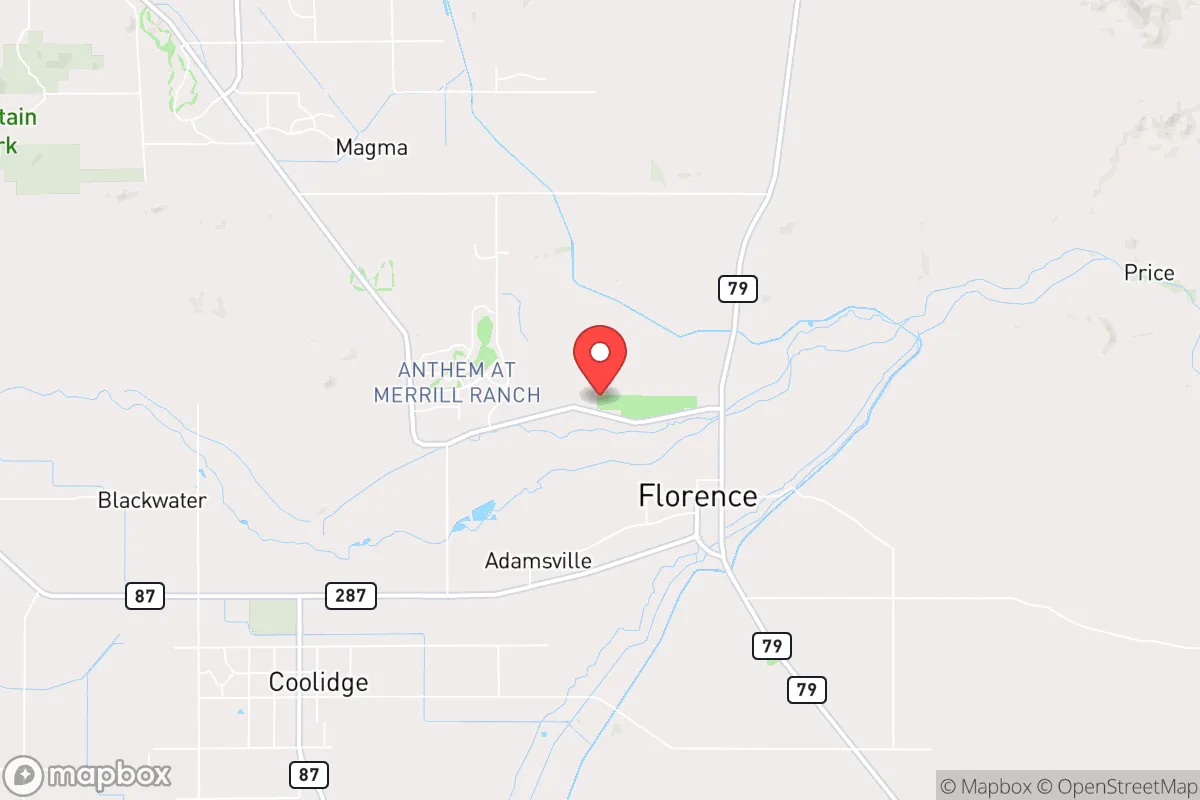
District shown is the primary district for this city’s centroid. Cities may span multiple districts.
Local Political AnalysisPolitical Analysis of Florence, AZ
Florence, Arizona, has long been a rock-ribbed conservative stronghold, and that hasn't changed much despite the state's rapid growth. The town sits in Pinal County, which leans reliably red, and the local Cook PVI of R+7 tells you the story: this is a place where folks generally believe in limited government, personal responsibility, and keeping the feds out of your business. If you're looking for a place where the political culture still values individual liberty over collective mandates, Florence is about as solid as it gets in the Southwest.
How it compares
Drive 20 miles west to Coolidge, and you'll find a similar conservative vibe, though it's a bit more working-class and less tied to the historic courthouse square. Head north toward Apache Junction, and you get a mix of retirees and commuters who still vote red but are more influenced by Maricopa County's suburban sprawl. The real contrast is south to Tucson or east to the Phoenix metro's inner suburbs like Chandler or Gilbert, where you see more purple-leaning districts and a growing progressive influence. Florence, by contrast, has held the line. The town's population is smaller and more rooted, with a strong ranching and agricultural history that keeps the local politics grounded in traditional values. You don't see the same kind of rapid demographic shift here that's turning other parts of the state into battlegrounds.
What this means for residents
For someone who values personal freedoms, Florence is a breath of fresh air. The local government has historically been hands-off on issues like property rights, business regulations, and Second Amendment protections. You won't find the kind of overreach you see in blue cities—no mask mandates that drag on for years, no heavy-handed zoning that tells you what you can do with your own land. The county sheriff's office is known for a conservative approach to law enforcement, focusing on violent crime rather than petty enforcement of state overreach. That said, there's a growing concern among longtime residents about the influx of new development and the potential for outside political influence to creep in. The town council has stayed mostly conservative, but as more people move from places like California or the East Coast, there's a quiet worry that the local culture could shift. For now, though, Florence remains a place where you can live your life without the government breathing down your neck.
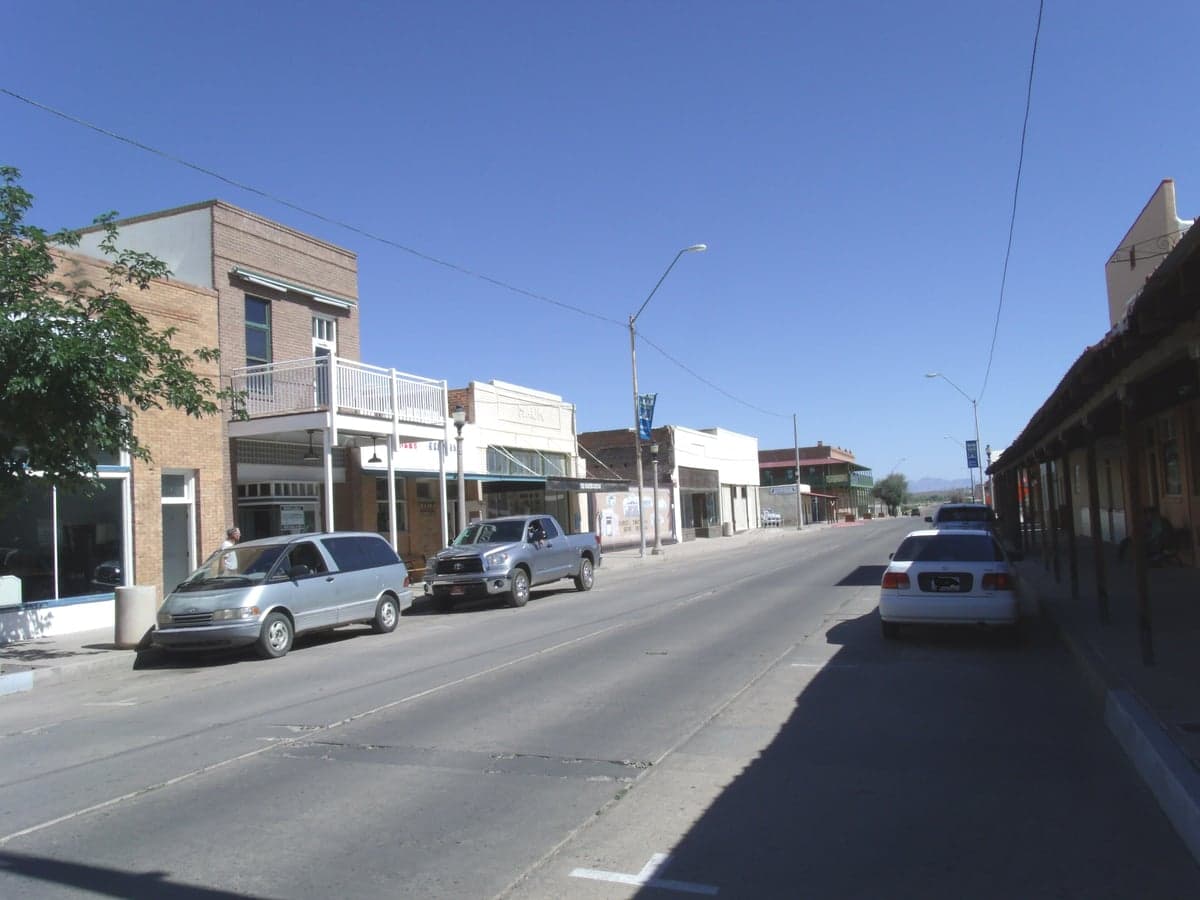
One cultural distinction worth noting: Florence is home to the state's largest prison complex, which brings a unique dynamic. The prison workforce is a major employer, and that tends to reinforce a law-and-order mindset in local politics. You won't hear much talk of defunding the police or criminal justice reform here—most folks see those ideas as dangerous experiments. The town's historic downtown, with its old courthouse and antique shops, feels like a throwback to a time when community values were simpler and more direct. If you're looking for a place that hasn't been completely transformed by the progressive wave sweeping other parts of the country, Florence is still holding strong. Just keep an eye on the newcomers—the political winds can shift fast, and this town's character is worth protecting.

State Political ClimatePolitical Climate in Arizona
State Political AnalysisPolitical Environment in the State
Arizona has transformed from a reliably red state into a purple battleground over the past two decades, with its partisan lean shifting from a solid +10 Republican advantage in 2004 to a razor-thin +0.4 margin in 2024. The state’s political coalition is now a three-way tug-of-war between Maricopa County’s sprawling suburban moderates, the deep-red rural and exurban counties, and the fast-growing blue strongholds of Phoenix and Tucson. For a conservative considering relocation, the key takeaway is that Arizona is no longer a lock for your values—it’s a state where your vote and your voice matter more than ever, but where progressive gains in the metro areas are real and accelerating.
Urban vs. rural divide
The political map of Arizona is a study in contrasts. Maricopa County, home to Phoenix, Mesa, Chandler, and Scottsdale, casts about 60% of the state’s votes and has been the epicenter of the shift. In 2016, Trump won Maricopa by 3 points; in 2020, Biden flipped it by 2 points; in 2024, Trump clawed it back by just 1 point. The county’s suburbs tell the story: Gilbert and Chandler are now competitive swing areas, while Scottsdale and Paradise Valley remain reliably Republican but with growing pockets of blue-leaning transplants. Tucson (Pima County) is a solid blue anchor, delivering 60%+ margins for Democrats, driven by the university and a large Hispanic population. Meanwhile, the rural counties—Yavapai (Prescott), Mohave (Kingman), Pinal (Casa Grande), and Coconino (Flagstaff’s liberal enclave excepted)—vote 65-75% Republican. The divide isn’t just urban vs. rural; it’s also about growth. Pinal County, between Phoenix and Tucson, is a fast-growing exurban frontier where Trump won by 20 points in 2024, but new housing developments are bringing in a mix of Californians and Midwesterners who don’t always vote the same way.
Policy environment
Arizona’s policy landscape is a mixed bag for conservatives. On the plus side, the state has a flat income tax rate of 2.5% (passed in 2021, phased in by 2023), one of the lowest in the nation, and no estate tax. Property taxes are moderate, and the state has right-to-work laws. However, the regulatory posture is uneven: Proposition 207 (2020) legalized recreational marijuana, and the state has a robust solar energy mandate that some conservatives view as government overreach. Education policy is a flashpoint: Empowerment Scholarship Accounts (ESAs) were expanded in 2022 to all students, making Arizona the national leader in school choice—a huge win for parental rights. But the state also saw a 2024 ballot measure (Prop 139) that enshrined a “fundamental right” to abortion up to viability, overriding a 2022 law that banned most abortions after 15 weeks. This passed with 61% of the vote, a clear sign that the electorate is more libertarian than socially conservative on some issues. Election laws have been a rollercoaster: the 2021 Audit of Maricopa County’s 2020 ballots (led by Senate Republicans) found no fraud but fueled ongoing distrust, while the 2024 Secure the Vote Act tightened voter ID requirements and banned ballot harvesting. Still, mail-in voting remains widespread and popular.
Trajectory & freedom
On personal liberty, Arizona is a tale of two trends. Gun rights are strong: the state has constitutional carry (permitless carry since 2010), no magazine capacity limits, and a preemption law that blocks local gun control. Parental rights got a boost with the ESA expansion and a 2023 law requiring schools to notify parents of any changes to a student’s health or well-being (the “Parental Bill of Rights”). But medical autonomy took a hit with the passage of Prop 139, which many conservatives see as a loss of protections for the unborn. Property rights are generally respected, though some rural landowners chafe at federal land management (Arizona is 42% federal land). Taxation is trending in the right direction with the flat tax, but local sales taxes can be high (up to 11% in some cities). The biggest concern for freedom-minded newcomers is the influx of out-of-state voters—many from California and Illinois—who are shifting the culture in Phoenix and Tucson toward progressive policies on housing, zoning, and environmental regulation. The state is becoming more free on economic and educational fronts, but less free on social issues as the electorate moderates.
Civil unrest & political movements
Arizona has been a hotbed of political activism, particularly around immigration and election integrity. Immigration politics are front and center: the state’s SB 1070 (2010) was a landmark law requiring police to check immigration status during stops, but it was largely gutted by courts. Today, the border crisis is a daily reality in Yuma and Nogales, with regular protests from both sides. Sanctuary policies are rare—most counties cooperate with ICE—but Tucson and Phoenix have “welcoming city” ordinances that limit local enforcement. Election integrity remains a raw nerve: the 2020 Maricopa County audit drew national attention, and in 2024, Kari Lake’s gubernatorial loss (by 0.7%) sparked ongoing legal challenges and protests from the right. Left-wing movements are visible in Phoenix and Tucson, with regular climate and abortion rights rallies. Right-wing movements are strong in rural areas, with groups like the Arizona Freedom Caucus pushing for nullification of federal gun laws and election reforms. A new resident in Prescott or Kingman will see a very different political culture than someone in Tempe or Flagstaff—the former feels like a conservative stronghold, the latter like a college town with activist energy.
Projection
Over the next 5-10 years, Arizona will likely remain a purple state, but the trend lines are concerning for conservatives. Demographic shifts are the biggest driver: the state is growing by about 100,000 people per year, with many newcomers from blue states. The Hispanic population (now 32% of the state) leans Democratic, though not overwhelmingly—about 40% voted for Trump in 2024. The suburbs of Maricopa County (Gilbert, Chandler, Peoria) are becoming more diverse and more moderate, while the exurbs (Pinal County, Yavapai) are holding red but may not keep pace. The 2026 and 2028 elections will be decided by a few thousand votes in Maricopa. Expect continued fights over abortion (a possible 2026 ballot measure to ban it after 15 weeks again), school choice (likely safe), and election laws (more tightening from the GOP legislature). The state’s economic freedom will remain a draw, but the cultural and political center of gravity is shifting leftward. A conservative moving to Arizona today should expect to live in a state where their values are still competitive but no longer dominant—and where local elections in their city or county will matter more than ever.
Bottom line for a new resident: If you’re a conservative looking for a state where your vote counts and your freedoms are protected, Arizona is still a solid choice—but you’ll need to be engaged. Pick your location carefully: Gilbert or Prescott will feel more aligned with your values than Phoenix proper or Tucson. Get involved in local school board and city council races, because that’s where the real battles are being fought. And don’t expect the state to stay the same—the next decade will be a fight for Arizona’s soul, and your presence will help decide the outcome.
* Values derived from national, state, county, city and local statistics and may differ in a specific area. Last updated: 2026-05-01T18:54:47.000Z
Narrative content on this page is AI-generated and may contain mistakes. Verify any details that matter before acting on them.
ReloMaps may earn a commission from affiliate links at no extra cost to you.

