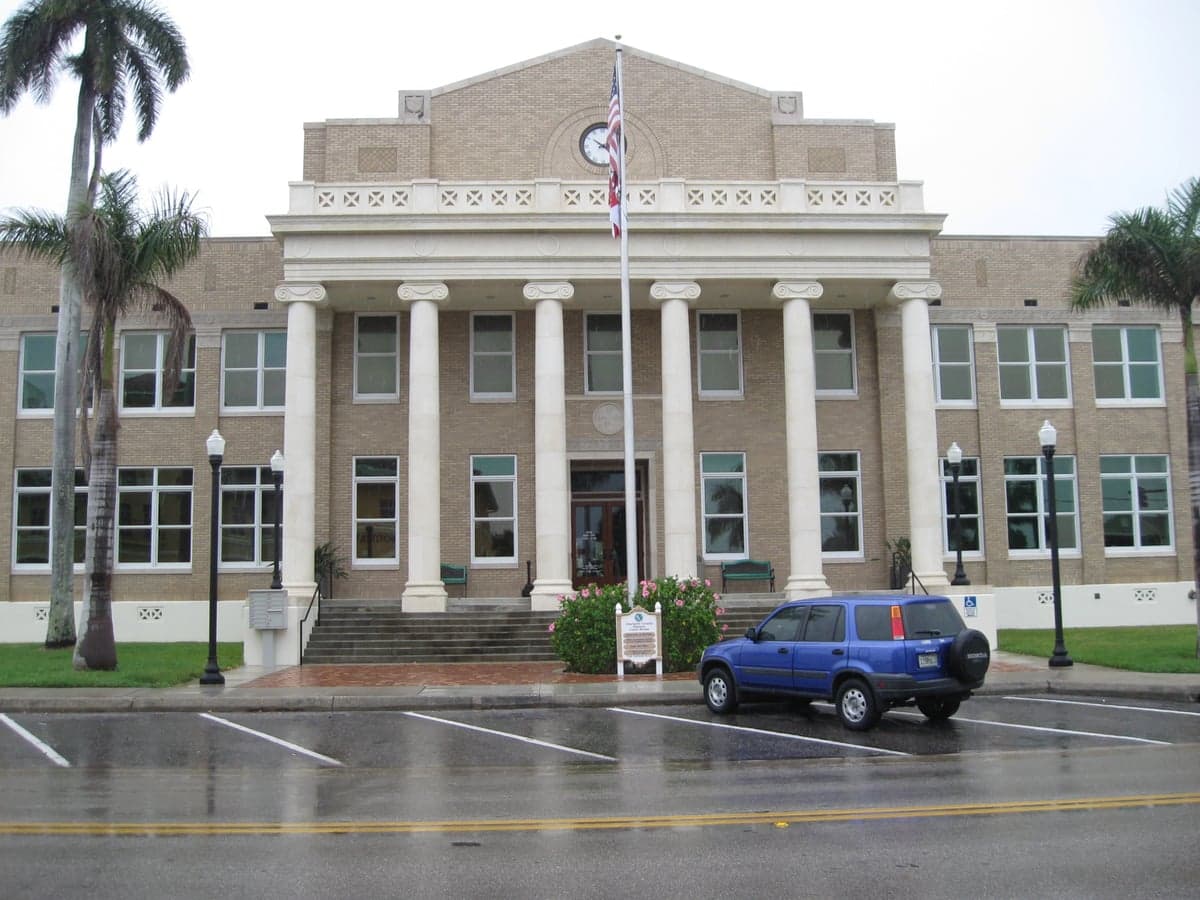
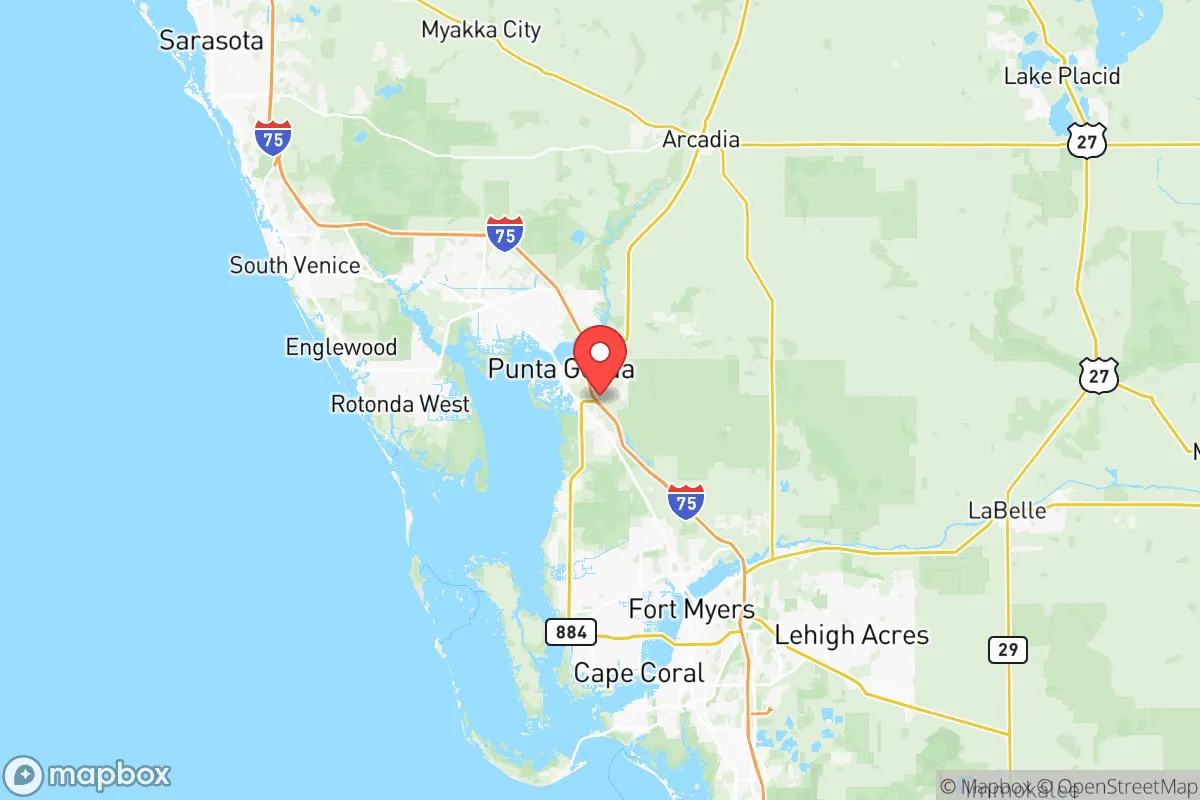
Photo: Wikipedia
Personal Sovereignty in Charlotte County
Viable for self-reliance. Generally workable, though some barriers may limit total independence.
What does Personal Sovereignty tell us?
Personal Sovereignty measures your capacity for self-reliance and independence with minimal government friction. Higher scores mean fewer barriers between you and the way you want to live... but it assumes you have the space you need and good neighbors.
What does this tell us?
Personal Sovereignty measures your capacity for self-reliance and independence with minimal government friction. Higher scores mean fewer barriers between you and the way you want to live... but it assumes you have the space you need and good neighbors.
State Policy
Energy independence: Importer (10% of energy produced in-state)
Personal Liberty
Homesteading

Personal Liberty Analysis
Charlotte County, Florida, offers a notably high degree of personal sovereignty relative to many coastal Florida markets, driven by a combination of low property tax rates, a permissive regulatory environment, and strong state-level preemption on firearms and local ordinances. While not a libertarian enclave, the area's governance leans toward limited interference in daily life, particularly for those who value self-reliance and minimal bureaucracy. The county's unincorporated areas, such as Port Charlotte and Punta Gorda, provide a more hands-off experience than the small city of Punta Gorda Isles, where HOA covenants and city codes are more prevalent.
Tax burden and regulatory posture for residents and property owners
Florida's lack of a state income tax is the foundational advantage, but Charlotte County's local tax structure is what makes it stand out for sovereignty-minded movers. The county's millage rate for property taxes is among the lowest in the state's southwest region, typically hovering around 4.5 to 5.0 mills for the county portion, which keeps annual tax bills manageable even on waterfront properties. There is no local sales tax surcharge beyond the state's 6% rate, and the county has resisted adopting the discretionary sales surtax that many neighboring counties have enacted. The regulatory posture in unincorporated Charlotte County is generally light-touch: building permits are required, but the county's permitting office in Port Charlotte is known for straightforward, non-adversarial processing, particularly for standard residential work. The city of Punta Gorda has slightly more stringent zoning and historic district rules, but even there, the code enforcement is less aggressive than in larger Florida metros like Fort Myers or Sarasota.
Self-defense and gun law specifics in Charlotte County
Florida is a "shall-issue" state for concealed carry permits, and Charlotte County's sheriff's office processes applications efficiently, with typical turnaround times of 30-45 days. As of 2023, Florida enacted permitless (constitutional) carry for law-abiding residents, meaning no license is required to carry a concealed firearm. This has been widely embraced in Charlotte County, where gun ownership is common and openly practiced. The county has no local ordinances restricting firearm possession beyond state law, and the sheriff's department in Punta Gorda is publicly supportive of Second Amendment rights. Shooting ranges are accessible, with the Charlotte County Gun Range in Port Charlotte offering a public facility with rifle and pistol lanes. Stand-your-ground and castle doctrine protections apply fully under Florida law, and local prosecutors have not shown a pattern of challenging self-defense claims in the county's judicial circuit.
Self-reliance and homesteading viability across the county
Homesteading and off-grid living are feasible in Charlotte County, but viability varies sharply by location. Unincorporated areas of Port Charlotte and North Port (which straddles the Sarasota County line) offer residential lots ranging from 0.25 to 1 acre, with many parcels zoned for agricultural use or "rural residential" that permit livestock, gardens, and accessory structures without special exceptions. The county's land development code allows for rainwater collection, solar panel installation, and composting toilets in rural zones, though a permit is required for septic systems. In contrast, the city of Punta Gorda and the gated community of Punta Gorda Isles have HOA covenants that restrict livestock, limit outbuildings, and require manicured landscaping, making true self-reliance difficult. The Deep Creek area, a large unincorporated community, falls in between: it allows some homesteading activities but has deed restrictions in certain subdivisions. For those seeking maximum autonomy, the rural tracts near Harbour Heights and Cleveland offer the best combination of lot size (1-5 acres), minimal zoning, and lower density.
Personal liberties: parental rights, medical autonomy, speech, and property
Florida's state-level preemption laws significantly shape personal liberties in Charlotte County. Local governments are prohibited from enacting ordinances that conflict with state law on matters like firearm regulation, rental property restrictions, and short-term vacation rentals, which limits the ability of city councils in Punta Gorda or Port Charlotte to impose local overreach. Parental rights are strongly protected under Florida's Parental Bill of Rights, which gives parents explicit authority over their children's education, healthcare, and upbringing; this is reflected in the county's school district policies, which defer to parental consent for medical treatments and curriculum opt-outs. Medical autonomy is more constrained: Florida requires a 24-hour waiting period for abortions and parental consent for minors, but Charlotte County has no local health ordinances that further restrict medical choice. Property rights are robust, with no county-wide rent control or inclusionary zoning mandates, and the property appraiser's office in Punta Gorda is known for fair valuations. Free speech is fully protected, and the county has not attempted to regulate political signage or public assembly beyond state standards.
Overall, Charlotte County ranks as one of the more sovereignty-friendly areas in Southwest Florida, particularly for those who choose unincorporated living over city or HOA-governed communities. The combination of low taxes, permissive gun laws, viable homesteading options in rural zones, and strong state preemption creates an environment where personal autonomy is the default rather than the exception. For a single individual or family prioritizing independence, the county offers a practical balance of freedom and infrastructure, though those seeking the absolute least-regulated experience should target the rural tracts near Cleveland or Harbour Heights rather than the coastal subdivisions of Punta Gorda Isles.

* Values derived from national, state, county, city and local statistics and may differ in a specific area. Last updated: 2026-07-31T18:28:42.000Z
Narrative content on this page is AI-generated and may contain mistakes. Verify any details that matter before acting on them.
ReloMaps may earn a commission from affiliate links at no extra cost to you.

