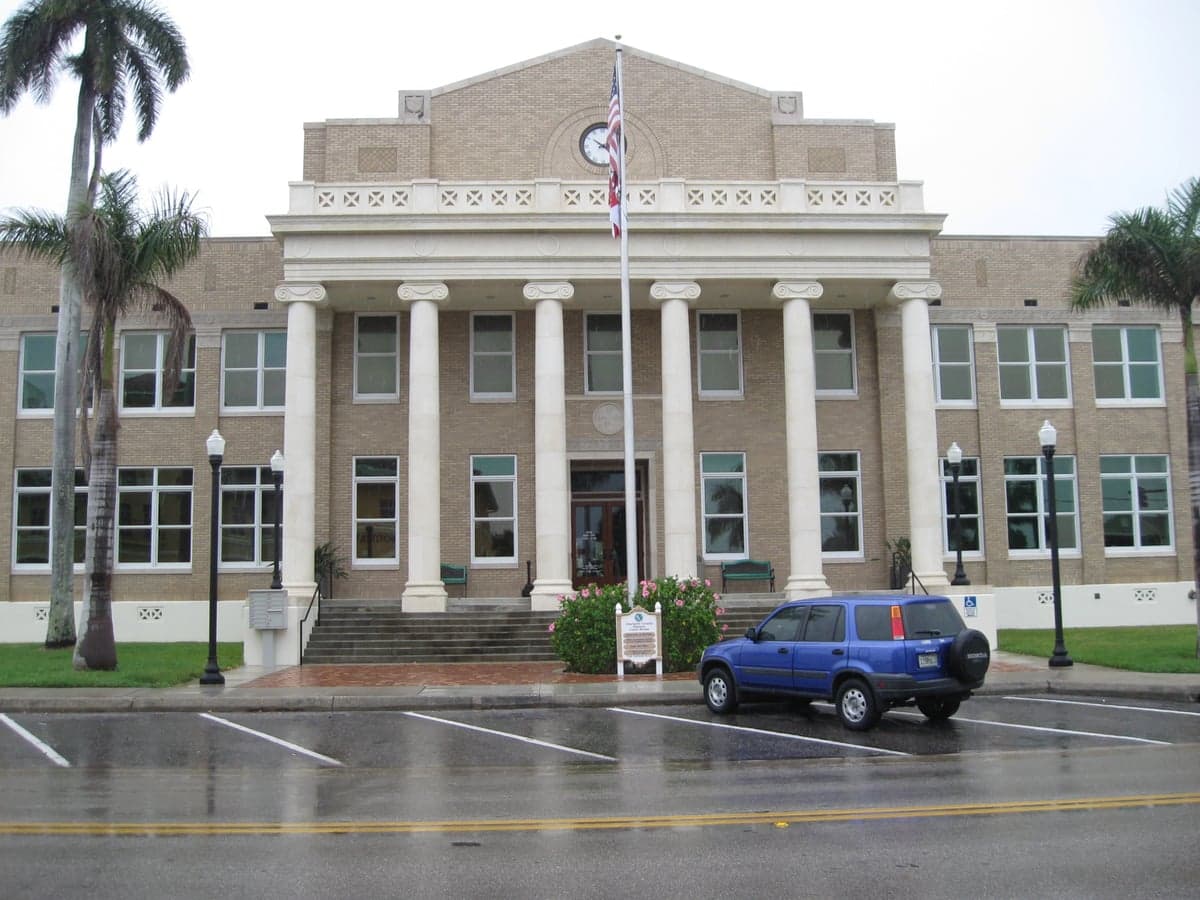
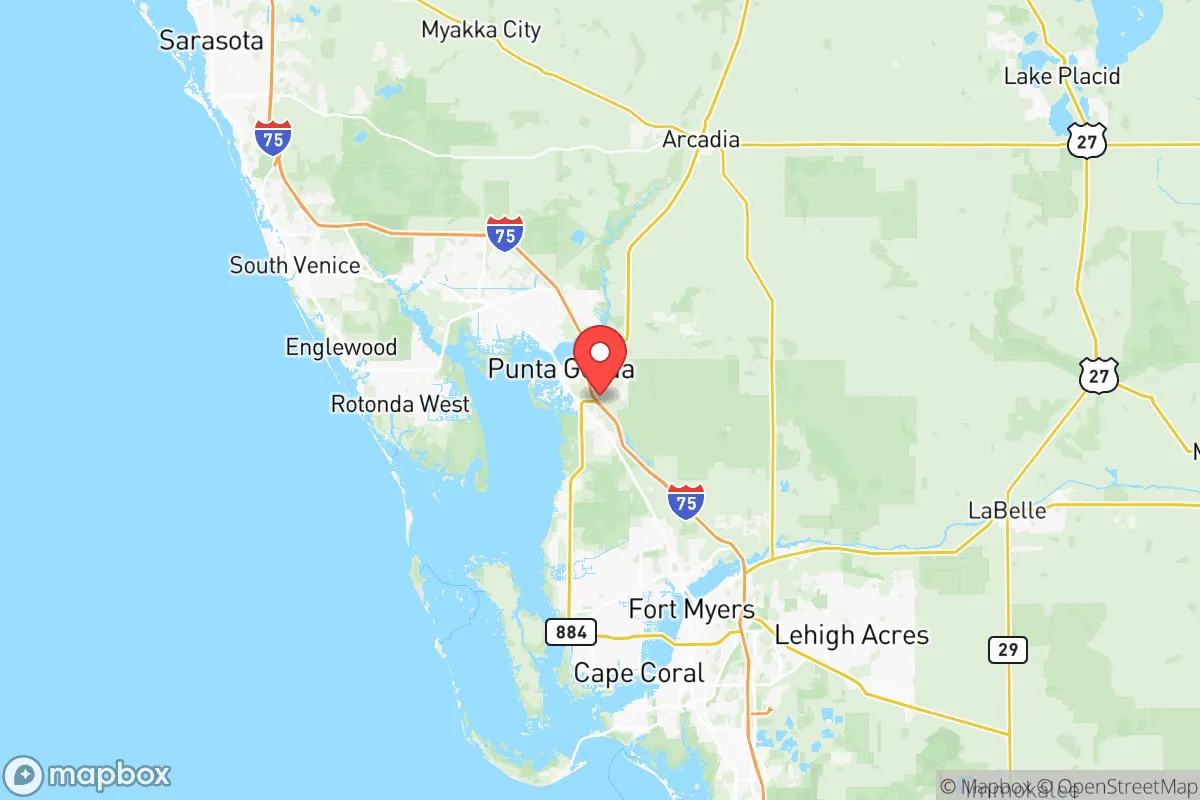
Photo: Wikipedia
Political ClimatePolitical Climate in Charlotte County
Showing district-level results — no local-only data available.
Local Political AnalysisPolitical Analysis of Charlotte County
Charlotte County, Florida, has a solidly conservative political identity, anchored by a Cook Partisan Voting Index (PVI) of R+11, which is significantly more Republican than the state of Florida as a whole (R+5). This isn't a recent shift; the area has been a reliable red stronghold for decades, driven largely by its demographic makeup of retirees, military veterans, and families seeking a quieter, more traditional lifestyle. The county's political trajectory has been steadily rightward, with the margins for Republican candidates growing in recent presidential cycles, though there are notable pockets of blue within the county that prevent it from being a monolith.
How it compares to Florida's statewide lean
The six-point gap between Charlotte County's R+11 and Florida's R+5 is substantial in practical terms. While Florida is a competitive swing state where both parties invest heavily, Charlotte County is a safe Republican zone where the primary election often determines the general election outcome. For example, in the 2024 presidential election, the county voted for Donald Trump by a margin of roughly 20 points, while the statewide margin was closer to 3 points. This means that local Republican candidates rarely face serious general-election challenges, and Democratic candidates often struggle to break 40% of the vote in countywide races. The political culture here is more akin to the Deep South than to the purple suburbs of Orlando or Tampa, with a strong emphasis on gun rights, low taxes, and limited government.
What this means for residents
For conservative residents, Charlotte County offers a deeply affirming political environment. Local government, from the county commission to the school board, is reliably conservative, and policies reflect that — property taxes are among the lowest in the state, and there is little appetite for new regulations on businesses or homeowners. For liberal residents, the reality is more isolating. While they are not actively suppressed, they are a clear minority, and progressive candidates or causes rarely gain traction. The most visible political tension in the county is not between Republicans and Democrats, but between the more moderate, establishment Republicans in the coastal towns like Englewood and Port Charlotte and the more hardline conservatives in the inland areas like Punta Gorda and Charlotte Harbor. Swing precincts are almost nonexistent; the few that exist are in the more diverse, younger neighborhoods of northern Port Charlotte, where a mix of service workers and younger families occasionally produce closer races.
Cultural and policy distinctions
One of the most telling cultural distinctions in Charlotte County is the local attitude toward growth and development. Unlike fast-growing areas in Central Florida, there is a strong, vocal resistance to large-scale development, particularly in the rural eastern part of the county near Harbour Heights and Cleveland. This is a classic conservative tension: a desire for economic growth and low taxes but also a deep skepticism of government planning and new infrastructure projects. Another notable policy distinction is the county's approach to environmental regulation. While Florida as a whole has a mixed record on water quality, Charlotte County has been more proactive in protecting the Peace River and Charlotte Harbor, largely because these waterways are central to the local economy and quality of life. This has created occasional alliances between conservative fishermen and liberal environmentalists, a rare bipartisan effort in an otherwise deeply red county. Looking ahead, the county is likely to remain R+11 or even shift further right as the population continues to age, but the growing presence of remote workers and younger families in Port Charlotte could slowly introduce more competitive dynamics over the next decade.

State Political ClimatePolitical Climate in Florida
State Political AnalysisPolitical Environment in the State
Florida is a Republican-leaning state with a Cook PVI of R+5, but calling it a "red state" oversimplifies a place that has been a political battleground for decades. The state has shifted decisively rightward over the past ten to twenty years, driven by a massive influx of conservative-leaning transplants from the Northeast and Midwest, as well as a realignment of the state's growing Hispanic electorate, particularly in South Florida. While Democrats once controlled the governor's mansion and both legislative chambers as recently as the early 2000s, Republicans now hold a supermajority in the legislature and have won every statewide election since 2012. The dominant coalition is a mix of traditional conservatives, libertarian-leaning retirees, and culturally conservative Hispanic voters, all of whom have pushed the state's politics steadily to the right.
Urban vs. rural divide
The political map of Florida is starkly divided between its dense urban corridors and its sprawling rural and suburban areas. The Democratic strongholds are concentrated in the southeast — Miami-Dade County, Broward County (Fort Lauderdale), and Palm Beach County — along with the urban core of Orlando (Orange County) and parts of Tampa (Hillsborough County). These areas deliver massive vote margins for Democrats, but they have been shrinking in recent cycles. Miami-Dade, once a Democratic fortress, flipped to Trump in 2020 and again in 2024, driven by a shift among Cuban-American and Venezuelan-American voters who respond strongly to anti-socialist messaging. Meanwhile, the rest of the state — the I-4 corridor suburbs, the Panhandle, and the interior rural counties — votes heavily Republican. Jacksonville (Duval County) has trended right in recent cycles, and fast-growing exurbs like The Villages and Naples are among the most Republican areas in the country. The divide isn't just geographic; it's cultural, with urban voters prioritizing progressive social and economic policies while suburban and rural voters focus on taxes, crime, and school choice.
Policy environment
Florida's policy environment is defined by a low-tax, low-regulation posture that has made it a magnet for both businesses and individuals. There is no state income tax, which is the single biggest draw for relocators from high-tax states like New York, California, and Illinois. Property taxes are moderate, and the state's homestead exemption provides significant relief for primary residents. The regulatory climate is business-friendly, with minimal red tape for new construction and professional licensing. On education, Florida has been a national leader in school choice, with a robust voucher program and a growing network of charter schools. Higher education is governed by a board appointed by the governor, and the state has banned DEI programs and critical race theory in public universities. Healthcare policy leans toward market-based solutions, with a heavy emphasis on telehealth deregulation and price transparency, though the state has not expanded Medicaid under the Affordable Care Act. Election laws have been tightened in recent years, with stricter voter ID requirements, limits on drop boxes, and a ban on ballot harvesting. The state also has a "stand your ground" self-defense law and a permitless carry law that took effect in 2023.
Recent policy direction
Over the past five years, Florida has passed a wave of legislation that signals a clear direction on individual liberties, with a strong emphasis on parental rights, gun rights, and limited government. The Parental Rights in Education Act (often called "Don't Say Gay") restricts classroom instruction on sexual orientation and gender identity in early grades, while the Stop WOKE Act limits how race-related concepts can be taught in schools and workplaces. On gun policy, the state enacted permitless carry in 2023, allowing most adults to carry a concealed firearm without a license or training. On medical and bodily autonomy, Florida banned abortion after six weeks in 2024, with exceptions for rape, incest, and the life of the mother. On property rights, the state has preempted local rent control ordinances and limited local governments' ability to regulate short-term rentals like Airbnb. On voting and ballot access, the state has added signature verification requirements, limited drop box availability, and created an election police force to investigate voter fraud. On privacy and surveillance, Florida has banned TikTok on government devices and restricted the collection of biometric data without consent. These laws reflect a consistent philosophy: expand individual choice in economic and self-defense matters, while restricting it on social and medical issues.
Civil unrest & political movements
Florida has seen its share of political flashpoints, though large-scale civil unrest has been less common than in states like Oregon or Minnesota. The most visible protests in recent years have been around racial justice (2020) and abortion rights (2022-2024), with demonstrations in Miami, Tampa, and Orlando. On the right, the state has become a hub for conservative activism, with groups like Moms for Liberty gaining influence in school board races and the state government actively courting conservative influencers and media figures. Immigration politics are particularly charged in South Florida, where the state has bused migrants to Democratic-led states and passed a law requiring private employers to use E-Verify. There is no sanctuary city policy in Florida; in fact, the state has banned sanctuary policies outright and requires local law enforcement to cooperate with federal immigration authorities. Election integrity remains a hot-button issue, with the state's Republican leadership pointing to its clean voter rolls and quick election results as a model, while Democrats argue that new voting restrictions disproportionately affect minority and young voters. A new resident would notice the political intensity mostly in the media and in local government meetings, rather than in daily life, which remains relatively calm and orderly.
Projection
Over the next five to ten years, Florida is likely to become even more Republican, though the margin may narrow as the state's population continues to grow and diversify. The in-migration pattern — roughly 1,000 new residents per day — is heavily skewed toward conservative-leaning retirees and remote workers from blue states, which reinforces the rightward trend. However, the growing Puerto Rican and Central American populations in Central Florida could shift the I-4 corridor back toward competitive status if Democrats can improve their messaging on economic issues. The state's political trajectory will also be shaped by climate change, as rising insurance costs and hurricane risk may slow growth in coastal areas and push development inland. For a new resident, the practical takeaway is that Florida will remain a low-tax, business-friendly state with a conservative social agenda for the foreseeable future. If you align with that vision, you'll find a state that is actively shaping policy to match it. If you don't, you'll still benefit from the low taxes and warm weather, but you may feel increasingly out of step with the state's political culture.
For someone moving to Florida, the bottom line is that the state's political climate is not neutral — it is actively conservative and getting more so. That means lower taxes, fewer regulations, and a government that prioritizes parental rights and gun rights over progressive social policies. If you're a conservative or libertarian-leaning individual or family, you'll find a state that is aligned with your values and actively working to preserve them. If you're a liberal, you'll still enjoy the economic benefits and natural beauty, but you should expect to live in a state where your political views are in the minority and where the government is unlikely to change direction anytime soon. The key is to choose your community wisely: Miami and Orlando offer more diversity and progressive enclaves, while Naples, The Villages, and the Panhandle are deeply conservative. Either way, Florida's political reality is stable, predictable, and unlikely to surprise you.
* Values derived from national, state, county, city and local statistics and may differ in a specific area. Last updated: 2026-07-31T18:28:42.000Z
Narrative content on this page is AI-generated and may contain mistakes. Verify any details that matter before acting on them.
ReloMaps may earn a commission from affiliate links at no extra cost to you.

