Photo: Wikipedia
Demographics of Charlotte County
Affluence Level in Charlotte County
A middle-class area roughly in line with national averages across income, home values, education, and employment.
People of Charlotte County
The people of Charlotte County, Florida today are an older, predominantly white, and politically conservative population, with a median age of 58.5 years that makes it one of the oldest counties in the state. The county’s 195,083 residents are spread across a mix of coastal retirement communities, inland suburban subdivisions, and rural agricultural tracts, with a distinctive identity shaped by decades of Midwestern and Northeastern migration rather than international immigration. With only 3.5% foreign-born and 82.4% white, Charlotte County remains far less diverse than the Florida average, though its Hispanic (7.8%) and Black (5.1%) populations are slowly growing as younger families move into areas like Port Charlotte and North Port.
Settlement & growth (pre-1960)
Long before European contact, the Charlotte Harbor region was home to the Calusa people, a powerful Native nation that dominated southwest Florida for centuries through a complex system of shell-mound villages and extensive trade networks. Spanish explorers, including Hernando de Soto’s expedition in 1539, made brief contact with the Calusa, but the region saw no permanent European settlement during the Spanish colonial period. By the early 1700s, the Calusa had been decimated by disease and slave raids, leaving the area largely depopulated when the United States acquired Florida in 1821.
American settlement began slowly during the 19th century, concentrated along the Peace River and Charlotte Harbor. The first permanent non-Native settlers arrived in the 1840s and 1850s, primarily cattle ranchers and farmers from Georgia and the Carolinas who established small homesteads near what is now Punta Gorda. These early Anglo-American pioneers were largely Scots-Irish and English stock, drawn by the open range and the promise of land under the Armed Occupation Act of 1842, which granted 160 acres to settlers who could defend the frontier. The community remained tiny and isolated until the arrival of the Florida Southern Railroad in 1886, which connected Punta Gorda to the national rail network and transformed it into a shipping hub for cattle, citrus, and timber.
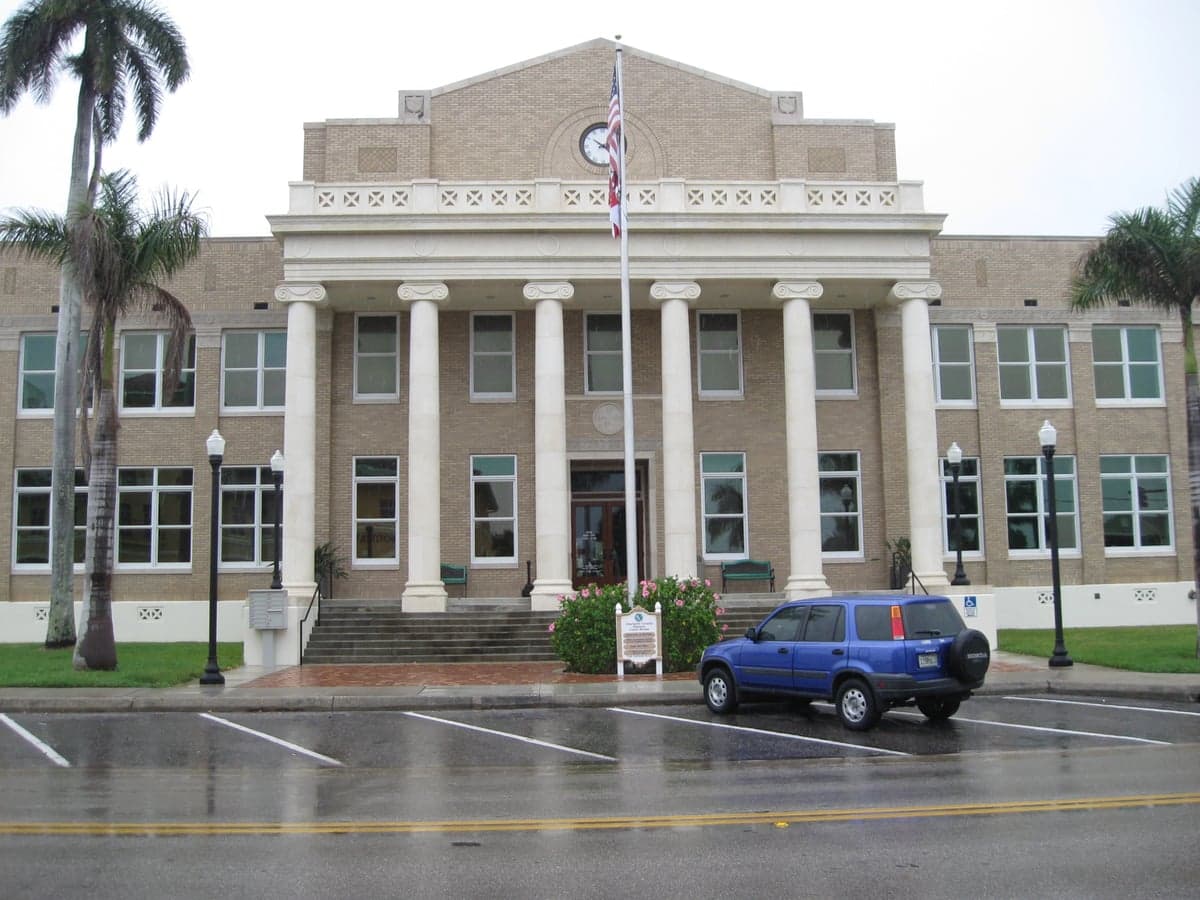
The county itself was created in 1921 from southern DeSoto County, with Punta Gorda designated the county seat. The 1920s Florida land boom brought a modest wave of speculators and retirees from the Midwest and Northeast, but the 1926 hurricane and the Great Depression halted growth for decades. Unlike much of Florida, Charlotte County saw almost no immigration from Europe or the Caribbean during this period; its population in 1940 was still under 5,000 and overwhelmingly native-born white. The real transformation began after World War II, when returning veterans and Northern retirees discovered the area’s cheap land, warm climate, and undeveloped coastline. Suburban subdivisions began spreading outward from Punta Gorda into Port Charlotte, a planned retirement community founded by the Mackle Brothers in the 1950s that marketed directly to Midwesterners seeking affordable waterfront living.
Modern era (post-1965)
The 1965 Hart-Cellar Act had minimal direct impact on Charlotte County, as the region never attracted the large-scale immigrant flows that reshaped Miami, Orlando, or Tampa. Instead, the county’s modern demographic story is one of domestic migration — specifically, the massive influx of retirees and working-age families from the Rust Belt and the Northeast. From the 1970s through the 2000s, tens of thousands of residents from New York, New Jersey, Ohio, Michigan, and Illinois moved to Port Charlotte, Punta Gorda, and the unincorporated communities of Grove City and El Jobean, drawn by lower taxes, cheaper housing, and a slower pace of life. This wave was overwhelmingly white, middle-class, and older, cementing the county’s character as a conservative-leaning retirement destination.
The Hispanic population, now 7.8% of the total, grew primarily through domestic migration from other Florida counties and Puerto Rico rather than direct immigration. Many Hispanic residents work in construction, landscaping, and agriculture, with small but visible communities in Port Charlotte and the rural areas around Harbour Heights. The Black population, at 5.1%, is concentrated in older neighborhoods of Punta Gorda and in the historically African American community of Cleveland, a small unincorporated settlement east of the city. East and Southeast Asian residents (1.2%) and Indian subcontinent residents (0.1%) are present in very small numbers, mostly professionals in healthcare and engineering who moved to the area for jobs at the county’s hospitals and the expanding retirement-services economy.
Suburbanization accelerated dramatically after Hurricane Charley devastated the region in 2004, destroying thousands of homes and prompting a rebuilding boom that reshaped the housing stock and attracted new construction workers and service-industry migrants. The post-Charley rebuild also brought stricter building codes and a wave of new subdivisions farther inland, pushing development east toward North Port (which straddles the Sarasota County line) and south into the Murdock area. The county’s population more than doubled between 1980 and 2020, but the demographic composition remained remarkably stable: white share barely budged, foreign-born share stayed low, and the median age actually rose as the retiree population aged in place.
The future
Charlotte County is slowly becoming more diverse, but the pace is glacial compared to the rest of Florida. The Hispanic share is projected to rise from 7.8% to roughly 12-14% by 2040, driven by natural increase and continued domestic migration from Puerto Rico and South Florida. The Black population is expected to grow modestly as younger Black families move to the area from more expensive coastal markets, particularly into Port Charlotte and Punta Gorda. The white population, while still dominant, is aging rapidly, and the county will need to attract younger residents — of all backgrounds — to sustain its workforce and tax base. New communities are concentrating in the eastern corridor along Interstate 75, where master-planned subdivisions in Deep Creek and Rotonda West are drawing a slightly younger, more family-oriented demographic than the coastal retirement enclaves.
The cultural identity of Charlotte County is evolving from a pure retirement haven into a more mixed-age community, but the conservative, Midwestern-influenced character remains deeply entrenched. The county voted +27 points Republican in the 2024 presidential election, and local politics continue to prioritize low taxes, limited government, and property rights. Newcomers from blue states are often drawn precisely by this political climate, reinforcing rather than diluting the county’s ideological profile.
For someone moving in now, Charlotte County offers a stable, predictable, and culturally homogeneous environment where change comes slowly. The population is becoming slightly more diverse and slightly younger, but the fundamental character — older, white, conservative, and rooted in domestic migration from the North — will remain dominant for at least another generation. The county is not becoming a melting pot; it is becoming a more sustainable version of what it already is.

* Values derived from national, state, county, city and local statistics and may differ in a specific area. Last updated: 2026-07-31T18:28:42.000Z
Narrative content on this page is AI-generated and may contain mistakes. Verify any details that matter before acting on them.
ReloMaps may earn a commission from affiliate links at no extra cost to you.

