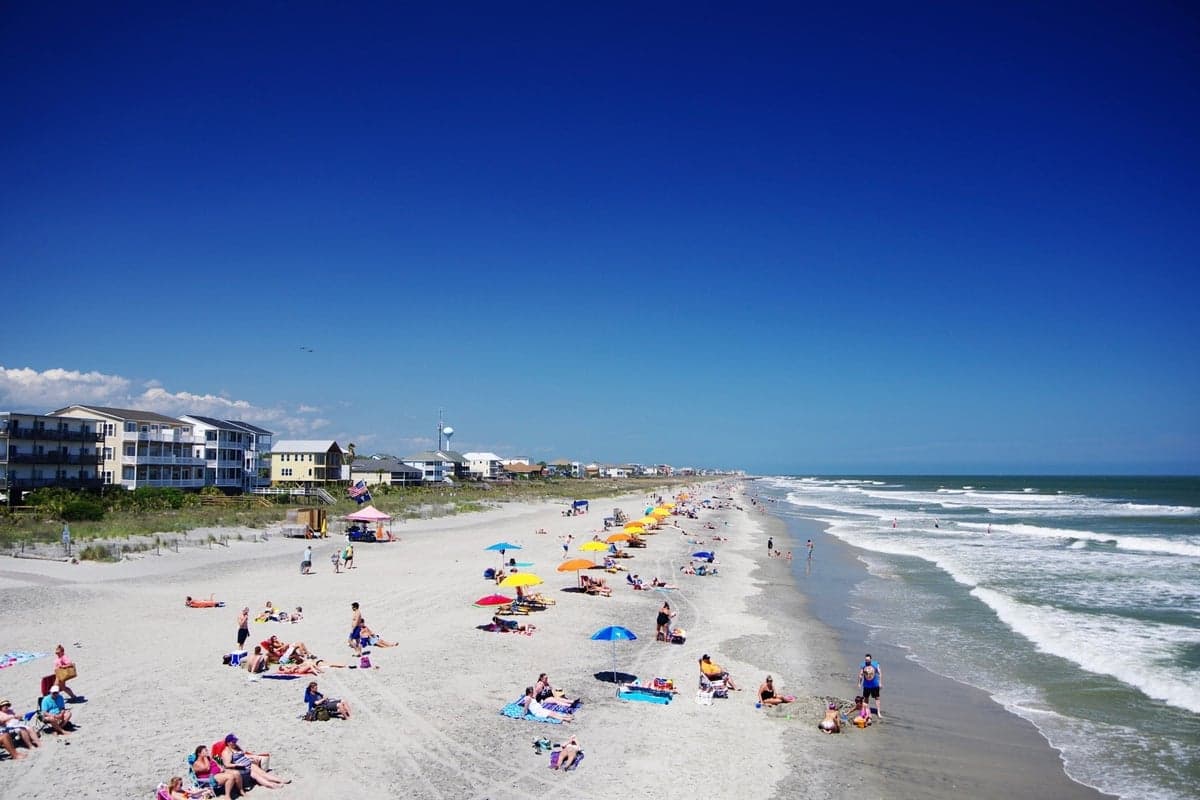
Photo: Wikipedia
Demographics of Folly Beach, SC
Affluence Level in Folly Beach, SC
An upper-middle-class area. Household wealth, education levels, and homeownership run ahead of national benchmarks.
People of Folly Beach, SC
Folly Beach, South Carolina, is a small coastal city of 958 residents that is 94.8% White, with zero foreign-born residents and no measurable Hispanic, Black, East/Southeast Asian, or Indian populations, making it one of the most ethnically homogeneous communities in the Charleston area. The population is highly educated—60.5% hold a college degree—and the city's character is defined by a mix of longtime local families, affluent second-home owners, and a transient surf-and-tourism workforce. Density is low year-round but surges dramatically during summer months, reflecting its dual identity as a quiet residential enclave and a seasonal vacation destination.
How the city was settled and grew
Folly Beach was originally inhabited by the Sewee and Etiwan tribes before European contact, but permanent settlement by European-Americans did not begin in earnest until the post-Civil War era. The island's sandy soil and exposure to hurricanes limited large-scale plantation agriculture, so early residents were a mix of freedmen and poor white families who established small fishing and farming communities along the Folly River and Center Street areas. The construction of a railroad bridge in the 1890s opened the island to tourism and seasonal residents, spurring the first real development wave. The Center Street corridor became the commercial and social hub, while East Ashley Avenue and West Ashley Avenue developed as residential areas for working-class families. The Washout area, at the eastern end of the island, was historically less developed due to persistent erosion and became a haven for squatters, fishermen, and later, surfers. By the mid-20th century, Folly Beach had a population of a few hundred, predominantly White, with a small Black community concentrated near the Folly River—an area that was more affordable and less desirable for resort development.
Modern era (post-1965)
The post-1965 era transformed Folly Beach from a sleepy fishing village into a beachside suburb of Charleston. The Hart-Cellar Act of 1965 had minimal direct impact here because the city lacked the industrial or agricultural jobs that typically attracted immigrants. Instead, the primary demographic shift was domestic: an influx of retirees, second-home buyers, and young professionals

* Values derived from national, state, county, city and local statistics and may differ in a specific area. Last updated: 2026-05-14T18:51:23.000Z
Narrative content on this page is AI-generated and may contain mistakes. Verify any details that matter before acting on them.
ReloMaps may earn a commission from affiliate links at no extra cost to you.

