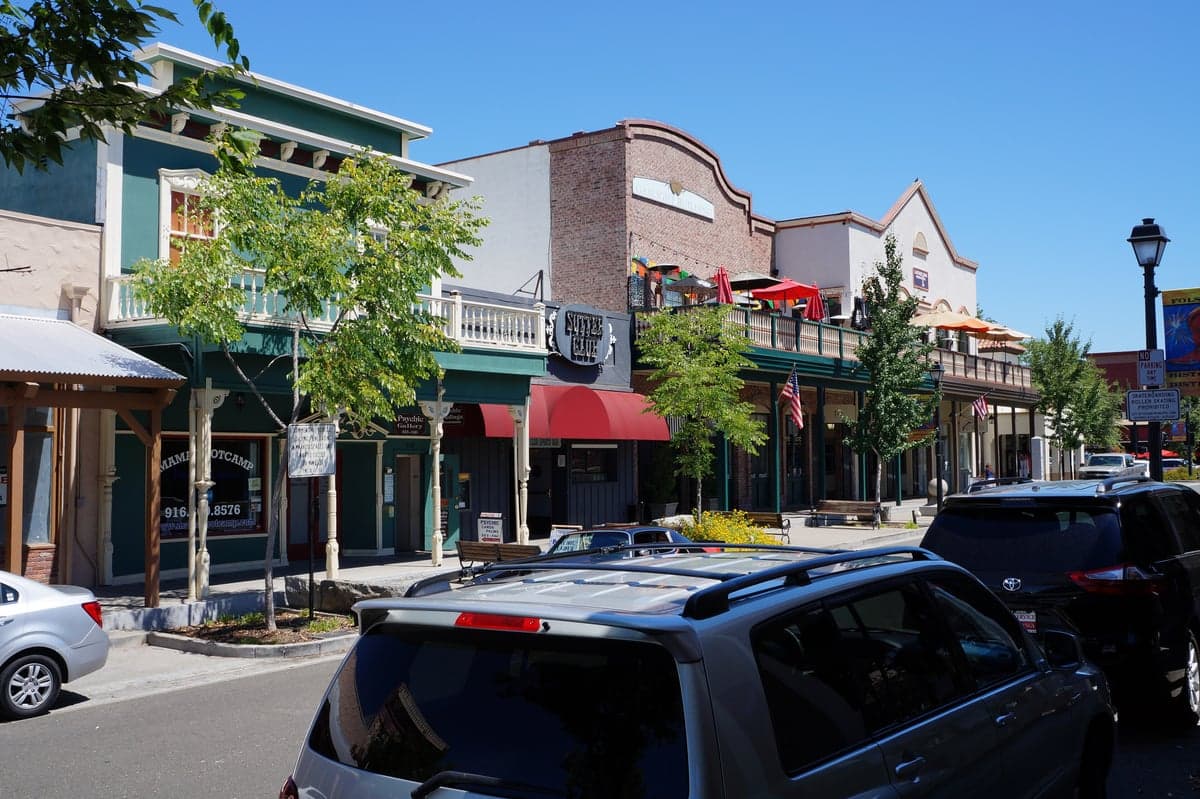
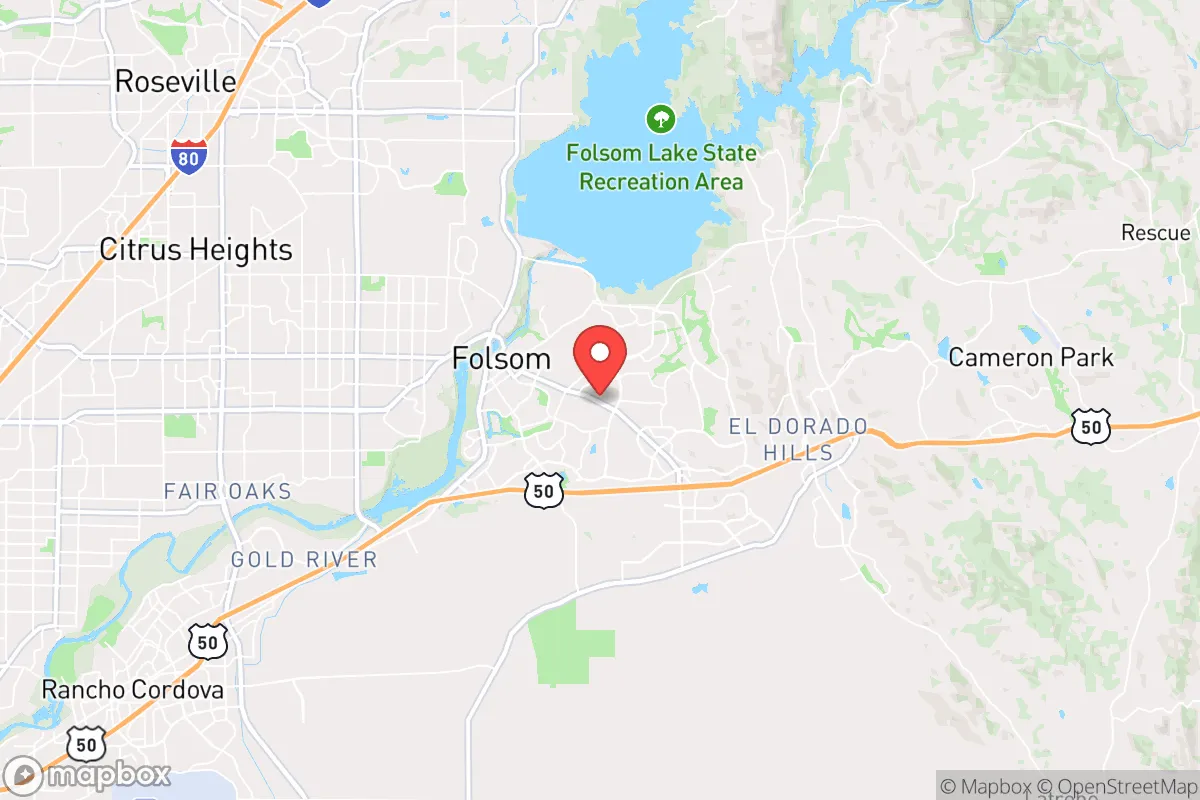
Photo: Wikipedia
Personal Sovereignty in Folsom, CA
Viable for self-reliance. Generally workable, though some barriers may limit total independence.
What does Personal Sovereignty tell us?
Personal Sovereignty measures your capacity for self-reliance and independence with minimal government friction. Higher scores mean fewer barriers between you and the way you want to live... but it assumes you have the space you need and good neighbors.
What does this tell us?
Personal Sovereignty measures your capacity for self-reliance and independence with minimal government friction. Higher scores mean fewer barriers between you and the way you want to live... but it assumes you have the space you need and good neighbors.
State Policy
Energy independence: Importer (33% of energy produced in-state)
Personal Liberty
Homesteading

Personal Liberty Analysis
Folsom, California offers a nuanced personal sovereignty environment that balances California's state-level regulatory framework with a notably more conservative local culture and a strong tradition of self-reliance. While the state imposes significant taxes and regulatory oversight, Folsom's specific zoning, community ethos, and proximity to outdoor resources create pockets of autonomy that appeal to families and individuals who prioritize independence. The city's political leanings—consistently more Republican than the surrounding Sacramento region—translate into local policies that often favor personal responsibility and limited government intervention, making it a distinctive choice for freedom-minded relocators within the Golden State.
Tax burden and regulatory posture in Folsom compared to surrounding areas
California's state-level tax burden is among the highest in the nation, with a progressive income tax topping out at 13.3% for top earners and a state sales tax rate of 7.25% (Folsom's combined rate is typically 8.75% due to local additions). Property taxes are capped at 1% of assessed value under Proposition 13, with annual increases limited to 2%, which provides long-term predictability for homeowners—a key advantage for those planning to stay. Folsom itself does not impose a local income tax or special business taxes beyond standard city fees, and the city's regulatory posture is generally business-friendly compared to neighboring Sacramento or San Francisco. The city's planning department is known for clear, predictable processes for home additions and small businesses, though state-level environmental regulations (CEQA) can still add time and cost to larger projects. For a reader weighing tax burden, the trade-off is clear: you pay more in income and sales tax than in Texas or Florida, but you gain stable property tax growth and a local government that does not add extra layers of red tape.
Self-defense and gun law specifics in Folsom and California
California's firearm laws are among the most restrictive in the nation, and Folsom residents must comply fully with state mandates. The state requires a 10-day waiting period for all firearm purchases, a Firearm Safety Certificate (FSC) test, and a background check through the California Department of Justice. Concealed carry permits (CCW) are issued at the county level, and Sacramento County—where Folsom is located—is considered "may-issue" in practice, though recent court rulings (e.g., NYSRPA v. Bruen) have pushed toward "shall-issue" standards. As of 2026, Sacramento County's sheriff has shown a moderate approach, issuing permits to qualified applicants who demonstrate good cause, but the process remains more involved than in rural counties. Assault weapons are banned by name and feature, and magazine capacity is limited to 10 rounds. Open carry of handguns is prohibited, and long guns may only be carried openly in limited circumstances. For self-defense at home, California law recognizes the Castle Doctrine but does not have a "Stand Your Ground" statute; a duty to retreat exists in public spaces if safe to do so. Folsom's low violent crime rate (roughly 1.5 incidents per 1,000 residents in 2024) means most residents never need to test these laws, but the regulatory environment is undeniably heavy-handed for those who prioritize firearm ownership as a core liberty.
Self-reliance and homesteading viability in Folsom's zoning and climate
Folsom is a suburban city with typical lot sizes ranging from 5,000 to 10,000 square feet in older neighborhoods, while newer developments often feature smaller lots around 3,500 to 5,000 square feet. Backyard chickens are permitted in most residential zones, with a limit of four hens (no roosters) and a required coop setback of 20 feet from neighboring dwellings. Vegetable gardens, composting, and rainwater collection (up to 5,000 gallons without a permit) are all allowed, but off-grid living is not feasible within city limits—homes must connect to municipal water, sewer, and electricity. The city's zoning code prohibits livestock (goats, pigs, horses) on standard residential lots, and any agricultural activity is limited to parcels zoned for agriculture, which are rare within Folsom proper. For those seeking true homesteading, the nearby unincorporated areas of El Dorado County (e.g., Cameron Park, Shingle Springs) offer 1- to 5-acre parcels with fewer restrictions, though they come with longer commutes and higher fire risk. Folsom's Mediterranean climate (hot, dry summers; mild, wet winters) supports a long growing season for vegetables and fruit trees, and the city's Folsom Lake provides reliable irrigation water for those who secure a permit. Overall, self-reliance in Folsom means suburban gardening and small-scale food production, not full homesteading—a realistic trade-off for those who want autonomy without leaving the urban grid.
Personal liberties in Folsom: parental rights, medical autonomy, speech, and property
California's state-level policies on personal liberties are generally progressive, but Folsom's local culture and school board elections often reflect more conservative values. Parental rights in education have been a flashpoint: Folsom Cordova Unified School District (FCUSD) has a policy requiring parental notification for changes in a student's mental, emotional, or physical health, including gender identity—a policy that aligns with conservative priorities and has been upheld by the board despite state-level pressure. Medical autonomy is limited by California's vaccine mandates for school attendance (including COVID-19 for K-12 as of 2026) and strict licensing for alternative practitioners, though Folsom has a robust network of naturopaths and functional medicine doctors operating within state law. Freedom of speech is protected under the First Amendment, and Folsom's city council has not enacted any local ordinances restricting public expression beyond standard time-place-manner rules. Property rights are constrained by California's coastal and environmental regulations, but Folsom's inland location means fewer restrictions than coastal cities; homeowners can generally build fences, sheds, and additions with standard permits, though the city's historic preservation overlay in the Sutter Street area adds extra review for older homes. For a conservative-leaning reader, the key takeaway is that Folsom's local governance often moderates the state's more progressive impulses, particularly in education and property use, creating a more balanced personal liberty environment than many other California cities.
Overall, Folsom offers a moderate-to-high personal sovereignty environment relative to other California cities of similar size, but it is not a low-regulation haven. The city's tax burden is high by national standards, its gun laws are restrictive, and full off-grid living is impossible within city limits. However, for a relocator who values stable property taxes, a conservative local culture, strong parental rights in schools, and a safe community with outdoor recreation, Folsom strikes a pragmatic balance. Compared to nearby Rocklin or Roseville, Folsom is slightly more expensive but offers better access to the American River and Folsom Lake for self-reliant activities like fishing and small-scale farming. For those willing to accept California's state-level constraints in exchange for a community that respects personal responsibility and limited local government, Folsom ranks as one of the more freedom-friendly options in the Sacramento region.

* Values derived from national, state, county, city and local statistics and may differ in a specific area. Last updated: 2026-08-23T00:50:34.000Z
Narrative content on this page is AI-generated and may contain mistakes. Verify any details that matter before acting on them.
ReloMaps may earn a commission from affiliate links at no extra cost to you.

