Demographics of Forest Hills, TN
Affluence Level in Forest Hills, TN
An elite concentration of wealth — high incomes, strong home values, advanced degrees, and minimal poverty signal a top-tier socioeconomic profile.
Census doesn't track above $250K
People of Forest Hills, TN
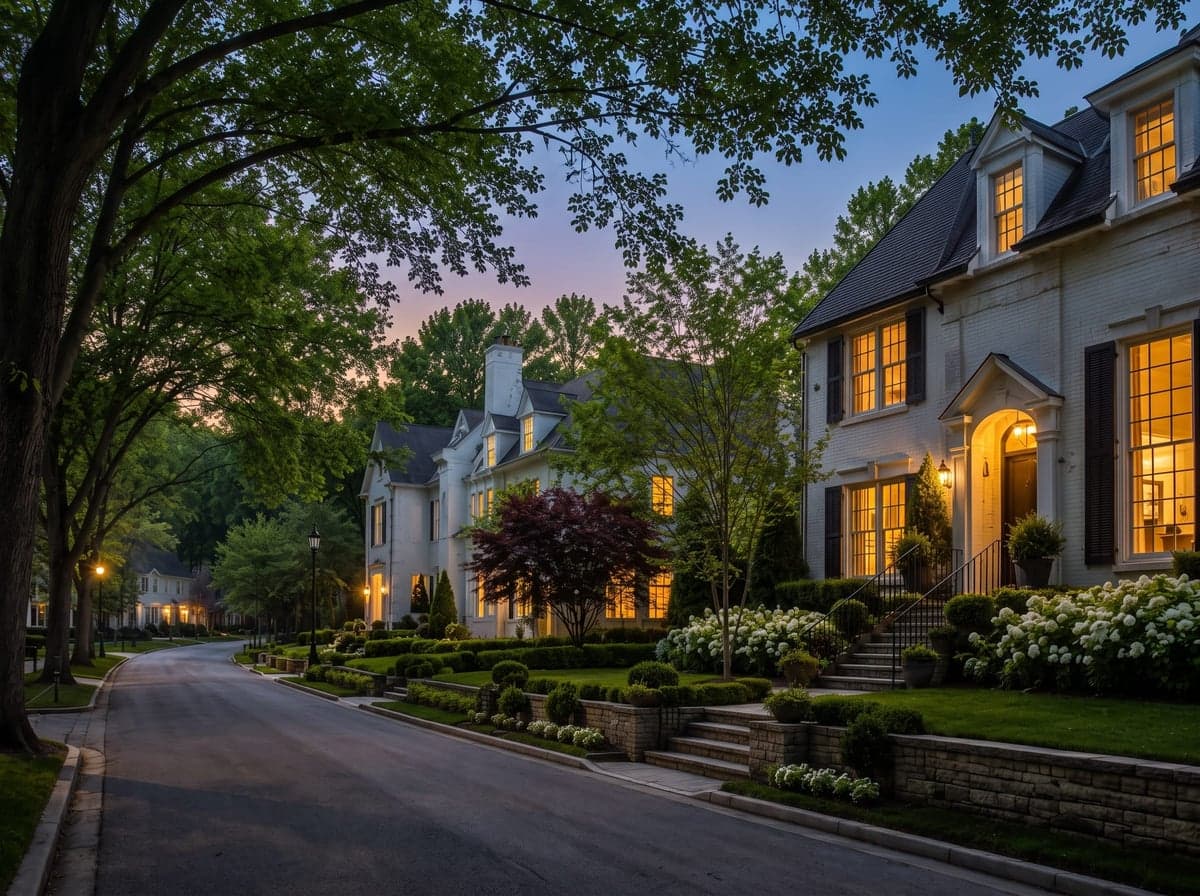
Forest Hills, Tennessee, is a small, affluent enclave of 4,802 residents that is overwhelmingly white (85.8%) and highly educated (77.6% hold a college degree). The city is characterized by its low density, large wooded lots, and a strong sense of privacy and exclusivity, with a foreign-born population of just 0.5% and minimal racial diversity. Its residents are predominantly professionals, executives, and families drawn to its reputation for safety, top-tier Williamson County schools, and proximity to Nashville without the urban bustle. The city’s identity is rooted in stability and homogeneity, with little demographic churn compared to the broader Nashville metro.
How the city was settled and grew
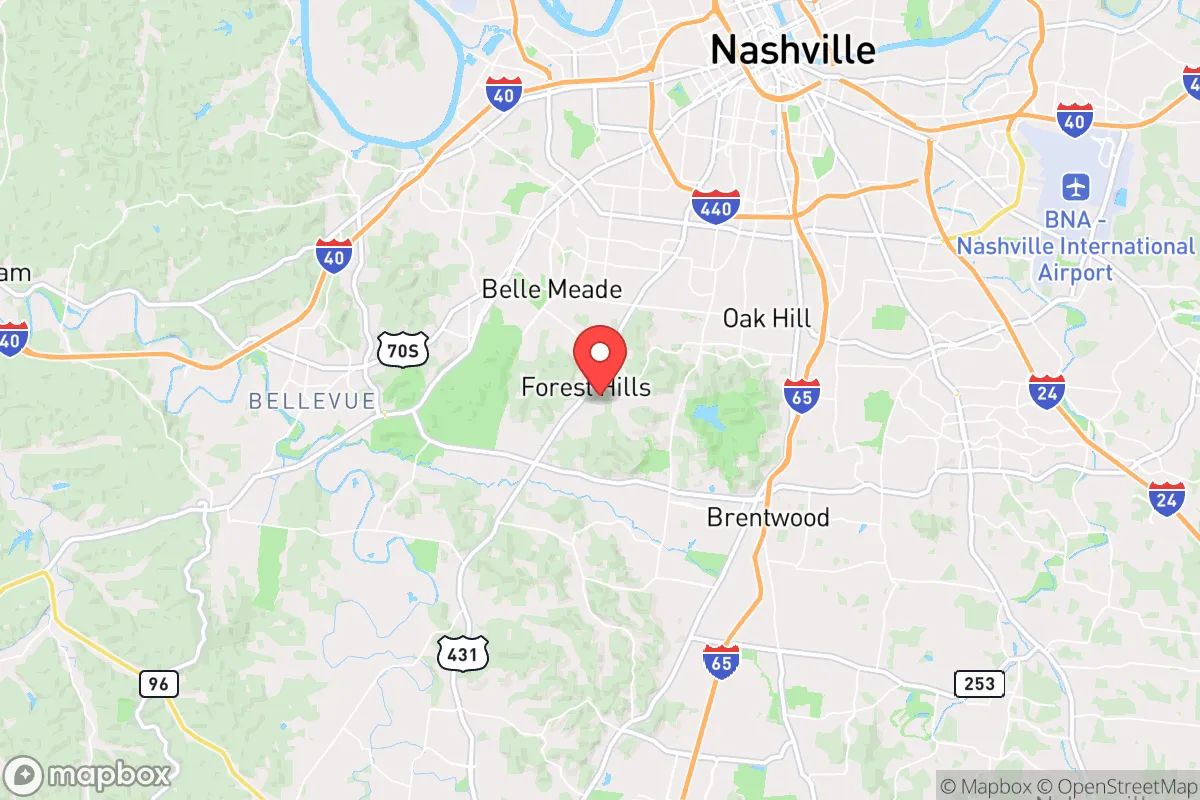
Forest Hills was not a product of early frontier settlement or agricultural land grants. Instead, it was platted and developed in the mid-20th century as a planned suburban community, incorporated in 1960. The original population consisted of affluent white families moving south from Nashville proper, seeking larger lots and a more rural feel while still commuting to the city. The earliest homes were built in the Belle Meade Highlands and Forest Hills Estates neighborhoods, where executives and physicians constructed custom homes on one- to three-acre parcels. The city’s growth was driven by the post-World War II suburban boom and the construction of Interstate 440, which made the area accessible to downtown Nashville. No significant immigrant or minority populations settled here during this period; the city was deliberately designed as an exclusive, low-density residential retreat for Nashville’s white professional class.
Modern era (post-1965)
After the 1965 Hart-Cellar Act reshaped U.S. immigration, Forest Hills saw virtually no impact. The city’s foreign-born share remains at 0.5%, and its racial composition has shifted only slightly. The Hispanic population grew from negligible levels to 10.5% by the 2020s, largely concentrated in the Hillsboro Road corridor and the South Forest Hills area, where some service-industry workers and tradespeople found rental housing in older, smaller homes. The Black population remains at 0.2%, and East/Southeast Asian residents account for 0.7%, with a small cluster in the Tyne Boulevard neighborhood. The Indian-subcontinent population is 0.4%, with a few families in the Old Hickory Boulevard section. These numbers are statistically tiny and do not represent enclaves; rather, they reflect individual households. The dominant trend has been the consolidation of wealth: homes that sold for $50,000 in the 1970s now routinely exceed $1.5 million, pricing out all but the most affluent buyers. The city’s population has remained flat at around 4,800 since 2000, as redevelopment is limited by large lot sizes and strict zoning.
The future
Forest Hills is likely to remain demographically stable and homogenized over the next 10–20 years. The city’s high property values and lack of rental housing will continue to filter for high-income, predominantly white households. The Hispanic share may plateau or decline slightly as older, smaller homes are torn down and replaced with larger custom builds that are unaffordable to the service workers who previously lived in those areas. The East/Southeast Asian and Indian populations may grow incrementally as Nashville’s tech and healthcare sectors expand, but they will remain small percentages. No new immigrant communities are expected to form, as the city lacks the rental stock, public transit, and ethnic institutions that anchor such populations. The city is not tribalizing into distinct enclaves; rather, it is becoming more uniformly wealthy and white. The only meaningful demographic shift will be generational: aging long-term residents selling to younger families who value the same attributes—privacy, schools, and proximity to Nashville.
For a conservative-leaning individual or family moving to Forest Hills today, the city offers a stable, predictable, and insular environment. It is not a place of demographic change or cultural mixing; it is a place where property values, school rankings, and low crime rates are the primary draws. The population is not growing, and the city is not diversifying. What you see now—an affluent, highly educated, overwhelmingly white community with minimal turnover—is what it will remain for the foreseeable future. If your priority is a quiet, secure, and homogeneous suburb with top-tier schools and no surprises, Forest Hills fits that description precisely.

* Values derived from national, state, county, city and local statistics and may differ in a specific area. Last updated: 2026-04-27T15:26:24.000Z
Narrative content on this page is AI-generated and may contain mistakes. Verify any details that matter before acting on them.
ReloMaps may earn a commission from affiliate links at no extra cost to you.

