Political ClimatePolitical Climate in Forest Hills, TN
District shown is the primary district for this city’s centroid. Cities may span multiple districts.
Inherited from parent state — no local data available.
Local Political AnalysisPolitical Analysis of Forest Hills, TN
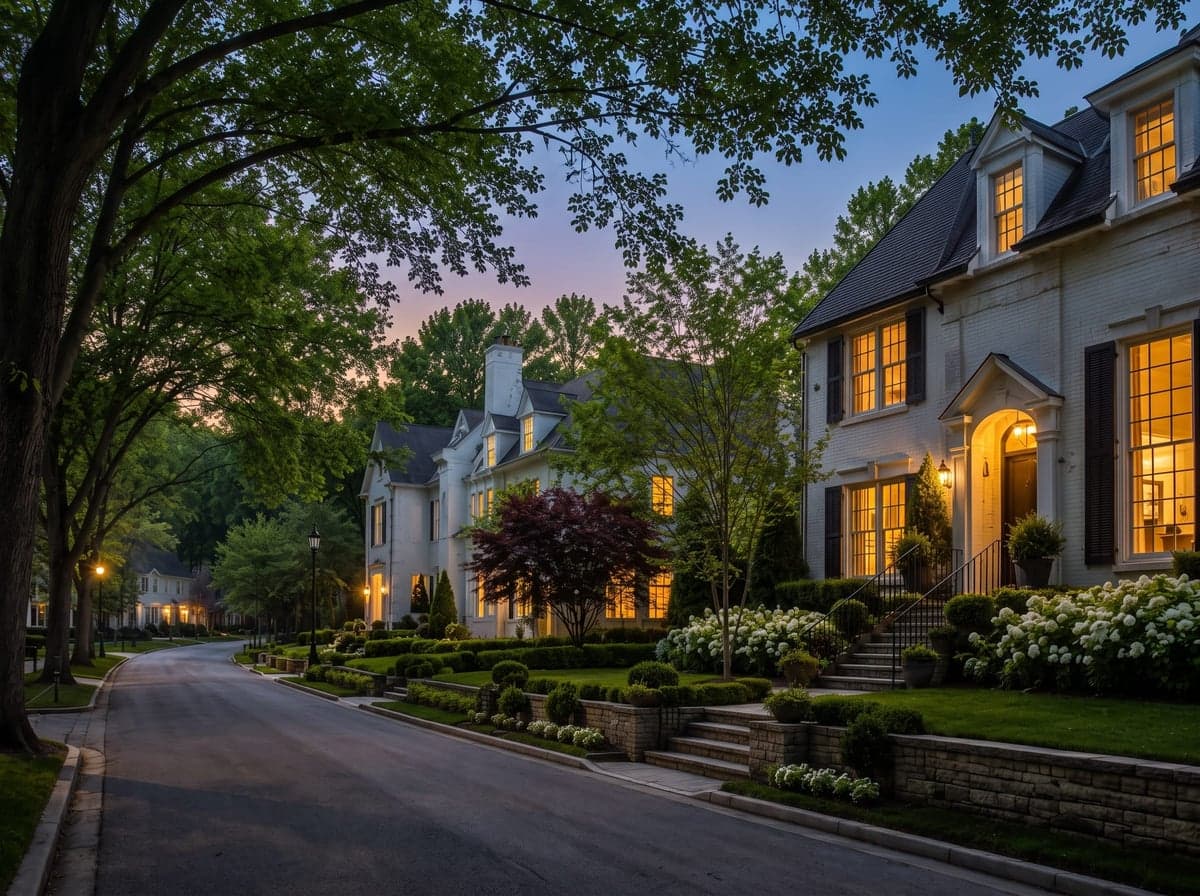
Forest Hills has long been one of the most reliably conservative enclaves in the Nashville metro, and that hasn't changed much even as the broader region has seen some political drift. The area sits comfortably at a Cook PVI of R+8, which means you can pretty much bank on Republican candidates carrying the precinct by about eight points more than the national average. If you've lived here for any length of time, you've seen that play out in local school board races, county commission seats, and even the occasional state house primary — the conservative vote tends to hold firm. That said, there's been a subtle but noticeable uptick in progressive-leaning newcomers over the last five or six years, mostly folks moving down from the Northeast or California who like the trees and the quiet but don't always love the local politics. It's not a wave yet, but it's enough that you'll hear more chatter about "equity initiatives" at community meetings than you did a decade ago.
How it compares
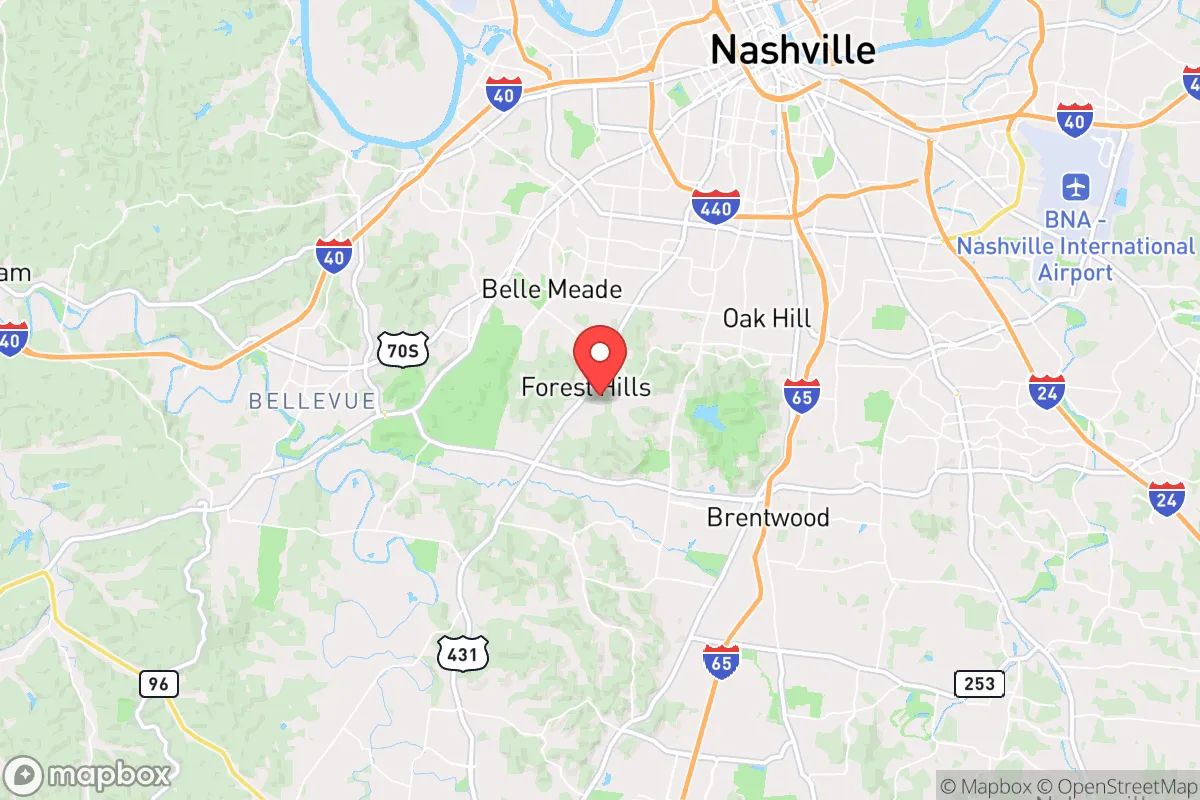
Drive ten minutes north into the city of Nashville proper, and you're in a completely different political universe — Davidson County went for Biden by a comfortable margin in 2020, and the Metro Council has been pushing progressive policies on zoning, policing, and public spending that would never fly in Forest Hills. Head west toward Bellevue or south toward Franklin, and you'll find areas that are still solidly red, but with a more moderate, suburban Republican flavor. Forest Hills sits in a sweet spot: it's conservative enough that you don't feel like an outlier at the grocery store, but close enough to the city that you get the cultural amenities without the political baggage. The contrast with neighboring Brentwood is worth noting too — Brentwood is also conservative, but it's a bit more corporate and polished, whereas Forest Hills has a slightly more libertarian, hands-off vibe. People here tend to vote Republican because they genuinely believe in limited government, not just because it's the social norm.
What this means for residents
For the most part, living in Forest Hills means you're left alone. The local government is small and relatively unobtrusive — property taxes are reasonable, zoning is straightforward, and there's no appetite for the kind of ambitious social engineering you see in Nashville proper. That hands-off approach is exactly why many residents moved here in the first place. You won't find mask mandates lingering on the books or city-funded diversity training for small businesses. The school board has resisted the kind of curriculum overhauls that have caused headaches in other districts, and the local police department focuses on actual crime rather than being turned into a social services agency. That said, there are signs that the political winds could shift if the area continues to attract transplants who don't share those values. If you're concerned about government overreach, the biggest red flag to watch is any push to bring Metro Nashville-style policies into the county. So far, those efforts have been beaten back, but it takes constant vigilance at the ballot box and at community meetings.
Culturally, Forest Hills still feels like a place where personal freedom is the default. You don't get a lot of HOA-style nannyism here — people tend to mind their own business. The biggest policy distinction you'll notice is the near-total absence of the kind of performative progressive gestures that have become common in other affluent suburbs. No "Black Lives Matter" banners on city property, no climate emergency declarations, no sanctuary city posturing. The local leadership seems to understand that their job is to keep the roads paved and the schools safe, not to signal virtue to the national media. If that changes — if you start seeing city council resolutions on national political issues or tax dollars funneled into social programs that have nothing to do with local governance — that's when you'll know the character of the place is shifting. For now, though, Forest Hills remains a quiet holdout of common-sense conservatism in a region that's slowly being pulled in other directions.

State Political ClimatePolitical Climate in Tennessee
State Political AnalysisPolitical Environment in the State
Tennessee has been a reliably red state for decades, but the political climate here isn’t just about voting Republican—it’s about a deep-seated cultural commitment to limited government, personal responsibility, and traditional values. Over the last 10-20 years, the state has shifted from a moderate Southern conservative posture to a more aggressively conservative one, driven by a wave of in-migration from blue states and a backlash against federal overreach. The dominant coalition is a mix of rural traditionalists, suburban families fleeing high-tax states, and a growing number of young conservatives who see Tennessee as a refuge for freedom. The trajectory is unmistakably rightward, but with some emerging fault lines in the fast-growing metro areas.
Urban vs. rural divide
The political map of Tennessee is a tale of two worlds. The major metros—Nashville, Memphis, and Chattanooga—are blue islands in a sea of red. Nashville’s Davidson County has trended sharply left over the past decade, driven by an influx of out-of-state transplants, tech workers, and creative professionals. It voted for Biden by a 30-point margin in 2020. Memphis’ Shelby County is even more Democratic, with a strong Black voting bloc and a progressive city council that has pushed for sanctuary city policies and higher local taxes. Chattanooga’s Hamilton County is a swing county that flipped from red to purple in recent cycles, largely due to the growth of the University of Tennessee at Chattanooga and a younger, more diverse population. Meanwhile, the rest of the state—places like Knoxville (Knox County), Johnson City, Clarksville, and the sprawling rural counties of Middle and West Tennessee—votes overwhelmingly Republican. The rural-urban divide is stark: in 2024, rural counties like Pickett and Van Buren gave Trump over 80% of the vote, while urban cores gave Biden similar margins. The suburbs around Nashville, like Williamson County (Franklin, Brentwood), are some of the most reliably conservative in the nation, with strong GOP turnout and a culture that prizes school choice and low taxes.
Policy environment
Tennessee’s policy environment is a model for conservative governance. There is no state income tax on wages, a fact that drives much of the in-migration from high-tax states like California, New York, and Illinois. The sales tax is high (around 9.5% average), but the overall tax burden remains low. The state has a right-to-work law, and union membership is minimal. Education policy is a battleground: the state has expanded school choice through the Education Savings Account (ESA) program, which allows parents to use state funds for private school tuition, tutoring, or homeschooling. The legislature passed a law in 2024 requiring schools to post curriculum materials online and notify parents of any “controversial” content, a move that has drawn fire from the left but is popular with conservative families. Healthcare is a mixed bag: Tennessee did not expand Medicaid under the Affordable Care Act, and the state has a robust private insurance market. Election laws are strict: voter ID is required, early voting is limited to 14 days, and the state purges inactive voters regularly. There is no mail-in voting without an excuse. The state also passed a law in 2023 banning ranked-choice voting, a clear signal against progressive electoral experiments.
Trajectory & freedom
Tennessee is becoming more free in many respects, but not without some concerning trends. On the positive side, the state has expanded gun rights significantly: permitless carry (constitutional carry) was signed into law in 2021, and the state has preempted local governments from enacting their own gun restrictions. In 2024, the legislature passed a law prohibiting the enforcement of any federal gun control measures that violate the Second Amendment, a direct challenge to federal overreach. Parental rights have been strengthened: the “Parental Bill of Rights” (2022) gives parents the right to review curriculum, opt their children out of sex education, and sue schools that violate these rights. Medical autonomy has been protected: the state banned all abortions after a heartbeat is detected (around six weeks) in 2020, and in 2023, the legislature passed a law prohibiting gender transition procedures for minors. Property rights are strong, with no statewide zoning mandates and a low property tax rate. However, there are red flags: the state has seen a rise in local property tax assessments in fast-growing counties like Williamson and Rutherford, driven by school funding needs. The state also has a history of cronyism in economic development deals, and some conservatives worry about the influence of big corporations like Amazon and Nissan in Nashville politics. The biggest threat to freedom is the potential for federal overreach, especially on environmental regulations and immigration enforcement, where Tennessee has been forced to fight in court.
Civil unrest & political movements
Tennessee has seen its share of political flashpoints. In 2020, Nashville was the site of large Black Lives Matter protests, including a march on the state capitol that turned violent when demonstrators clashed with police. The city also saw a series of protests against the state’s abortion ban in 2023, with activists blocking traffic and staging sit-ins. On the right, the “Tennessee Three” controversy in 2023—where two Democratic state representatives were expelled for leading a gun control protest on the House floor—galvanized conservative voters and highlighted the deep partisan divide. Immigration politics are heated: the state passed a law in 2024 requiring local law enforcement to cooperate with ICE, and several counties, including Rutherford and Sumner, have declared themselves “Second Amendment sanctuaries.” There is no sanctuary city policy in Tennessee, though Nashville’s city council has repeatedly tried to limit cooperation with federal immigration authorities, leading to a state preemption law in 2023. Election integrity remains a hot topic: the state conducted a forensic audit of the 2020 election in 2021, which found no widespread fraud but led to tighter voter roll maintenance. The “Tennessee Star” and other conservative media outlets have kept the issue alive. A new resident would notice the strong presence of “Don’t Tread on Me” flags and “Let’s Go Brandon” signs in rural areas, and the occasional protest at the capitol over mask mandates or vaccine passports.
Projection
Over the next 5-10 years, Tennessee will likely become even more conservative, but with a twist. The in-migration from blue states is accelerating, particularly to the Nashville suburbs and the I-24 corridor. These newcomers are often fiscally conservative but socially moderate, which could create tension with the state’s more traditionalist base. The state’s population is projected to grow by 10-15% by 2035, with most growth in the red-leaning suburbs and exurbs. The rural areas will continue to shrink, but their political power will remain strong due to gerrymandered state legislative districts. The biggest wild card is the federal government: if a Democratic administration in Washington tries to impose national gun control, abortion mandates, or carbon regulations, Tennessee will likely lead the charge in nullification and legal resistance. The state’s economy is booming, with low unemployment and a growing tech sector in Nashville, but the housing crisis is pushing prices up, which could eventually dampen in-migration. A new resident moving in now should expect a state that is fiercely protective of its sovereignty, with a government that is willing to push back against federal overreach, but also one that is grappling with the cultural changes brought by rapid growth.
For a conservative individual or family considering a move, Tennessee offers a rare combination of low taxes, strong gun rights, parental control in education, and a culture that values personal liberty. The state is not without its challenges—rising property taxes, traffic congestion in the Nashville area, and the constant threat of federal interference—but the overall trajectory is positive. If you’re looking for a place where your values are respected, your rights are protected, and your tax dollars stay in your pocket, Tennessee is one of the best bets in the country. Just be prepared for the humidity and the fact that everyone will ask you what church you go to.
* Values derived from national, state, county, city and local statistics and may differ in a specific area. Last updated: 2026-04-27T15:26:24.000Z
Narrative content on this page is AI-generated and may contain mistakes. Verify any details that matter before acting on them.
ReloMaps may earn a commission from affiliate links at no extra cost to you.

