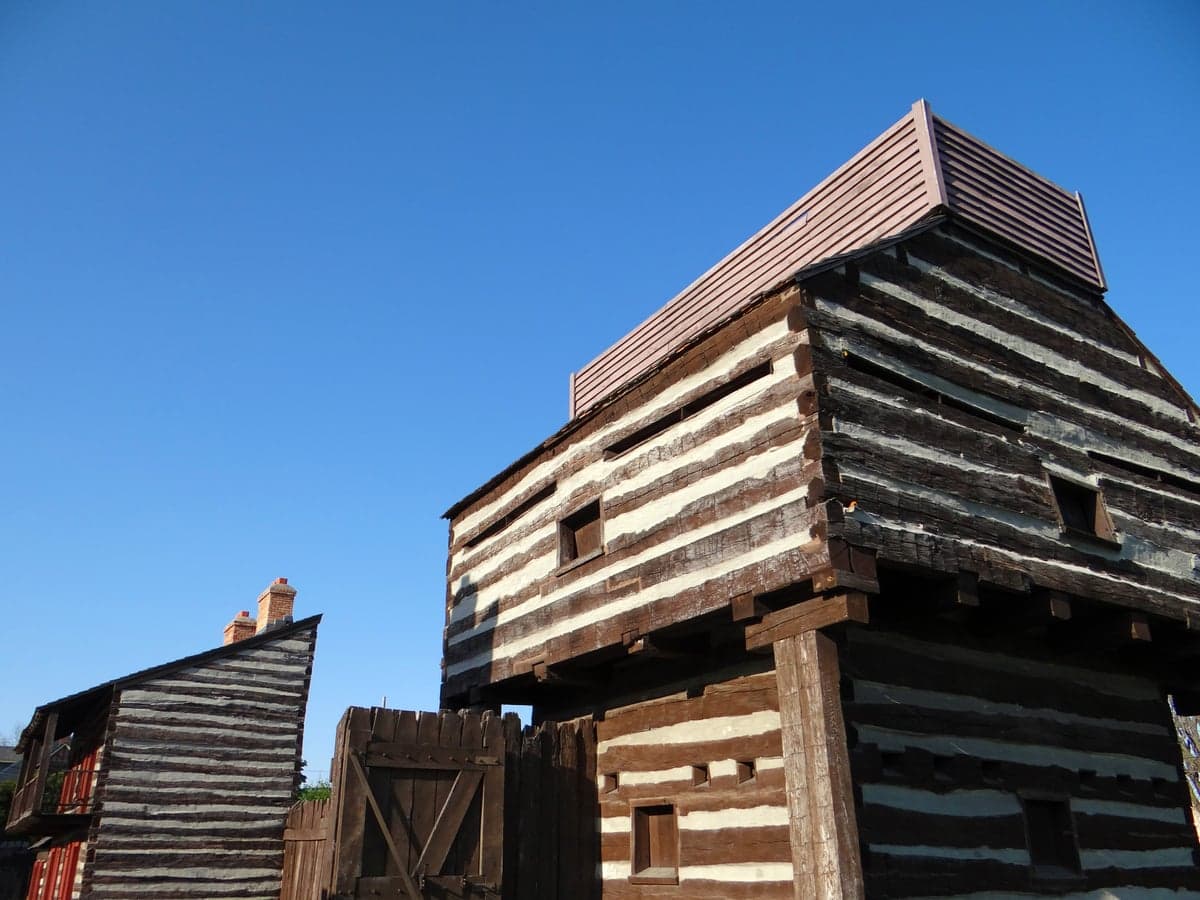
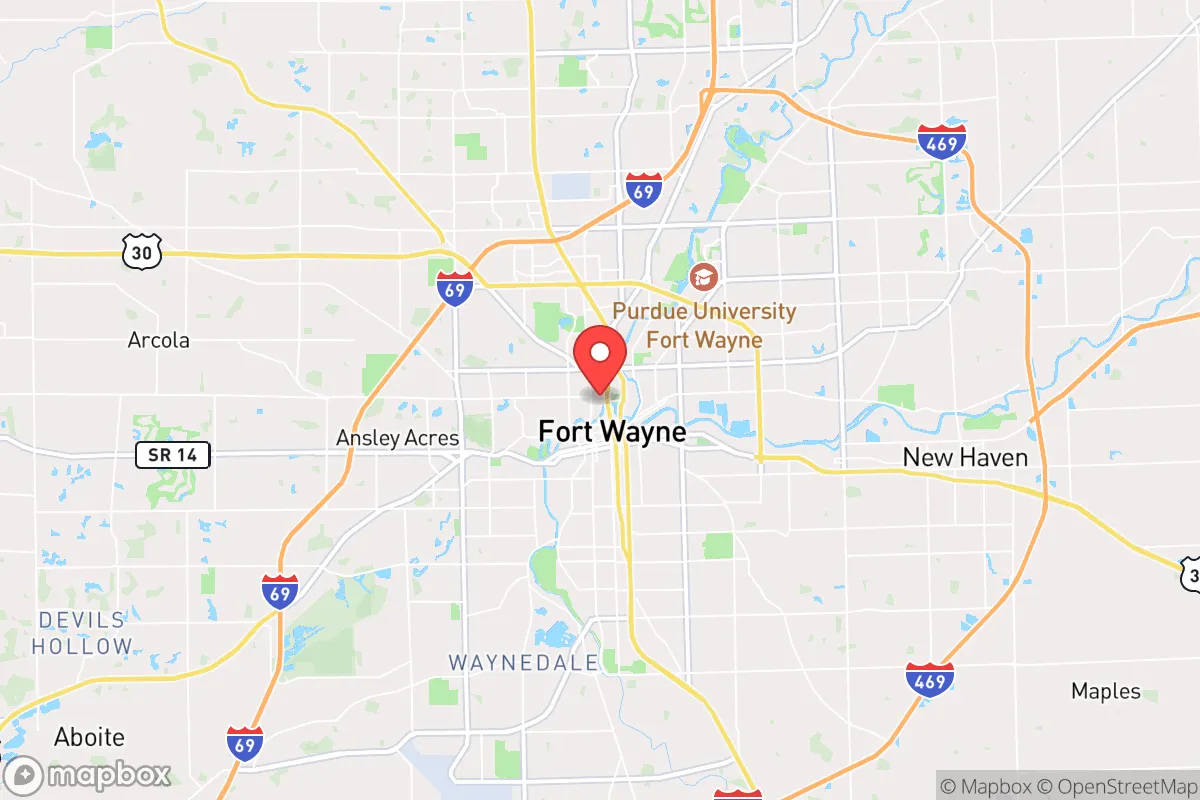
Photo: Wikipedia
Personal Sovereignty in Fort Wayne, IN
Viable for self-reliance. Generally workable, though some barriers may limit total independence.
What does Personal Sovereignty tell us?
Personal Sovereignty measures your capacity for self-reliance and independence with minimal government friction. Higher scores mean fewer barriers between you and the way you want to live... but it assumes you have the space you need and good neighbors.
What does this tell us?
Personal Sovereignty measures your capacity for self-reliance and independence with minimal government friction. Higher scores mean fewer barriers between you and the way you want to live... but it assumes you have the space you need and good neighbors.
State Policy
Energy independence: Importer (35% of energy produced in-state)
Personal Liberty
Homesteading

Personal Liberty Analysis
Fort Wayne offers a notably high degree of personal sovereignty compared to many Midwestern cities, largely because Indiana’s state-level preemption laws and constitutional carry framework create a legal buffer against local government overreach. For a prepper or survivalist-minded individual, the city’s location in northeast Indiana provides a strategic balance: access to urban infrastructure for supplies and employment, while being surrounded by rural counties where land use restrictions are minimal. The key question for a conservative relocating here is whether the state’s protective legal architecture is enough to offset the creeping influence of federal mandates and the cultural drift of a city that, while conservative-leaning, is not immune to national trends.
Tax burden and regulatory posture: How Indiana’s fiscal policies protect your autonomy
Indiana’s tax structure is one of the most favorable in the Midwest for those seeking to minimize government extraction from their income and property. The state’s flat income tax rate of 3.15% (as of 2025, with a scheduled phase-down to 2.9% by 2027) is among the lowest in the region, and Allen County’s combined property tax rate averages roughly 1.1% of assessed value—well below the national average. Fort Wayne itself operates under a strong state preemption law that prohibits local municipalities from enacting their own income taxes or imposing stricter business regulations than the state mandates. This means you won’t see the kind of city-level red tape that chokes small-scale manufacturing or home-based businesses in places like Chicago or Columbus. For a prepper running a side hustle in metal fabrication, food preservation, or firearm accessories, the regulatory burden is light: no county-level business licensing beyond the state’s simple registration, and no city-specific zoning overlays that ban home workshops. The state’s right-to-work status (enacted in 2012) further reduces the risk of forced union dues, which matters if you plan to hire help for a homestead or small operation. On the downside, Indiana’s sales tax of 7% is moderately high, but it applies uniformly—no special city add-ons. The overall message is clear: the state legislature has deliberately starved local governments of the power to nickel-and-dime residents, which directly supports a self-reliant lifestyle.
Self-defense and gun law specifics: Constitutional carry and castle doctrine in practice
Indiana is a constitutional carry state as of July 2022, meaning no permit is required to carry a handgun openly or concealed for anyone legally allowed to possess a firearm. Fort Wayne’s local law enforcement, including the Allen County Sheriff’s Department, has publicly stated they will not enforce any future federal gun restrictions that conflict with state law—a stance backed by Indiana’s 2010 Firearms Preemption statute, which prohibits cities from passing their own gun ordinances. This is critical for a prepper: you can keep a rifle in your truck, carry a sidearm while hiking the Poka-Bache Trail, or store a defensive shotgun in your bedroom without worrying about local magazine bans or “sensitive place” restrictions that plague states like New York or California. The castle doctrine in Indiana is robust: no duty to retreat in your home, vehicle, or place of business, and the law presumes you acted reasonably if an intruder unlawfully enters. Stand-your-ground protections extend to any place you have a legal right to be. For those with a survivalist mindset, the practical takeaway is that Fort Wayne’s legal environment treats self-defense as a fundamental right, not a privilege to be licensed and taxed. The only notable gap: Indiana does not have a specific “Second Amendment Sanctuary” county resolution in Allen County, though surrounding rural counties like Noble and DeKalb have passed symbolic resolutions. Still, the state preemption is so strong that it functionally acts as a sanctuary.
Self-reliance and homesteading viability: Lot sizes, zoning, and off-grid feasibility
Within Fort Wayne’s city limits, homesteading is constrained by standard suburban zoning—most residential lots are 0.15 to 0.25 acres, and the city code restricts keeping chickens to a maximum of six hens (no roosters) on lots under one acre, with no goats, pigs, or cattle allowed. However, the real opportunity lies in the unincorporated areas of Allen County, which surround the city and are a 10- to 20-minute drive from downtown. In these areas, zoning is minimal: you can keep livestock on as little as one acre, and there are no county-level restrictions on rainwater collection, composting toilets, or solar panel installation. Off-grid feasibility is high because Indiana has no state law requiring grid connection for residential properties, and the county building code only applies to structures over 200 square feet. For a prepper looking to build a bunker or a self-sufficient cabin, the key is to buy land in the county’s A-1 (Agricultural) zoning district, where there are no minimum square footage requirements for dwellings and no restrictions on alternative energy systems. The Allen County Soil and Water Conservation District offers free technical advice on rainwater catchment and permaculture design, which is a practical resource. The main limitation is that the county does enforce septic system permits (required for any dwelling with plumbing), and the health department requires a percolation test before installation—a reasonable hurdle that ensures groundwater isn’t contaminated. For those willing to live 30 minutes outside the city, land prices in adjacent counties like Whitley or Huntington drop to $3,000–$5,000 per acre, making a 10-acre homestead financially attainable.
Personal liberties: Parental rights, medical autonomy, speech, and property protections
Indiana has become a battleground for parental rights, and the current legal landscape strongly favors family autonomy. The state’s 2023 law requiring schools to notify parents of any changes in a student’s health or well-being (including mental health and gender identity discussions) is still in effect, and Fort Wayne Community Schools has complied with it despite pushback from some staff. For parents concerned about curriculum transparency, Indiana’s “Parental Bill of Rights” (IC 20-33-2) grants the right to review all instructional materials and opt children out of any lessons on human sexuality. Medical autonomy is more mixed: Indiana banned nearly all abortions in 2022 (with narrow exceptions), which aligns with a pro-life stance, but the state also mandates childhood vaccinations for school attendance (with medical and religious exemptions available). The religious exemption is broad and does not require a specific denomination, so a prepper family can opt out of vaccines based on sincerely held beliefs. On free speech, Fort Wayne has no local ordinances restricting political speech or public assembly beyond standard time-place-manner rules. The city’s parks are open for gatherings without a permit for groups under 50, and the Allen County Courthouse plaza is a common site for protest and demonstration. Property rights are strong: Indiana is a “Dillon’s Rule” state, meaning local governments only have powers explicitly granted by the state, and the state legislature has repeatedly blocked attempts to impose rent control or inclusionary zoning. For a prepper, this means you can build a privacy fence up to eight feet high without a permit in most residential zones, and there are no restrictions on storing bulk food, fuel, or ammunition on your property as long as it’s not a fire hazard. The one area of concern is the state’s use of civil asset forfeiture—Indiana requires a criminal conviction for forfeiture of property valued under $50,000, but above that threshold, the burden shifts to the owner to prove the property is innocent. This is a vulnerability for anyone who stores significant value in tools, vehicles, or precious metals.
Overall, Fort Wayne ranks as one of the stronger Midwestern cities for personal sovereignty, particularly when compared to metro areas in Illinois, Michigan, or Ohio that have enacted local gun bans, vaccine mandates, or rent control. The state’s preemption laws create a consistent legal floor that protects self-defense, property rights, and parental authority from city-level encroachment. The main trade-off is that you’ll need to live in the county or a small exurb to fully exercise homesteading freedoms, and you should be prepared for the cultural friction of a city that, while conservative, still has a progressive minority in local government. For a survivalist who values legal predictability and minimal government interference, Fort Wayne offers a solid base of operations—just keep your land search focused on the A-1 zones outside the city limits.

* Values derived from national, state, county, city and local statistics and may differ in a specific area. Last updated: 2026-04-22T07:25:32.000Z
Narrative content on this page is AI-generated and may contain mistakes. Verify any details that matter before acting on them.
ReloMaps may earn a commission from affiliate links at no extra cost to you.

