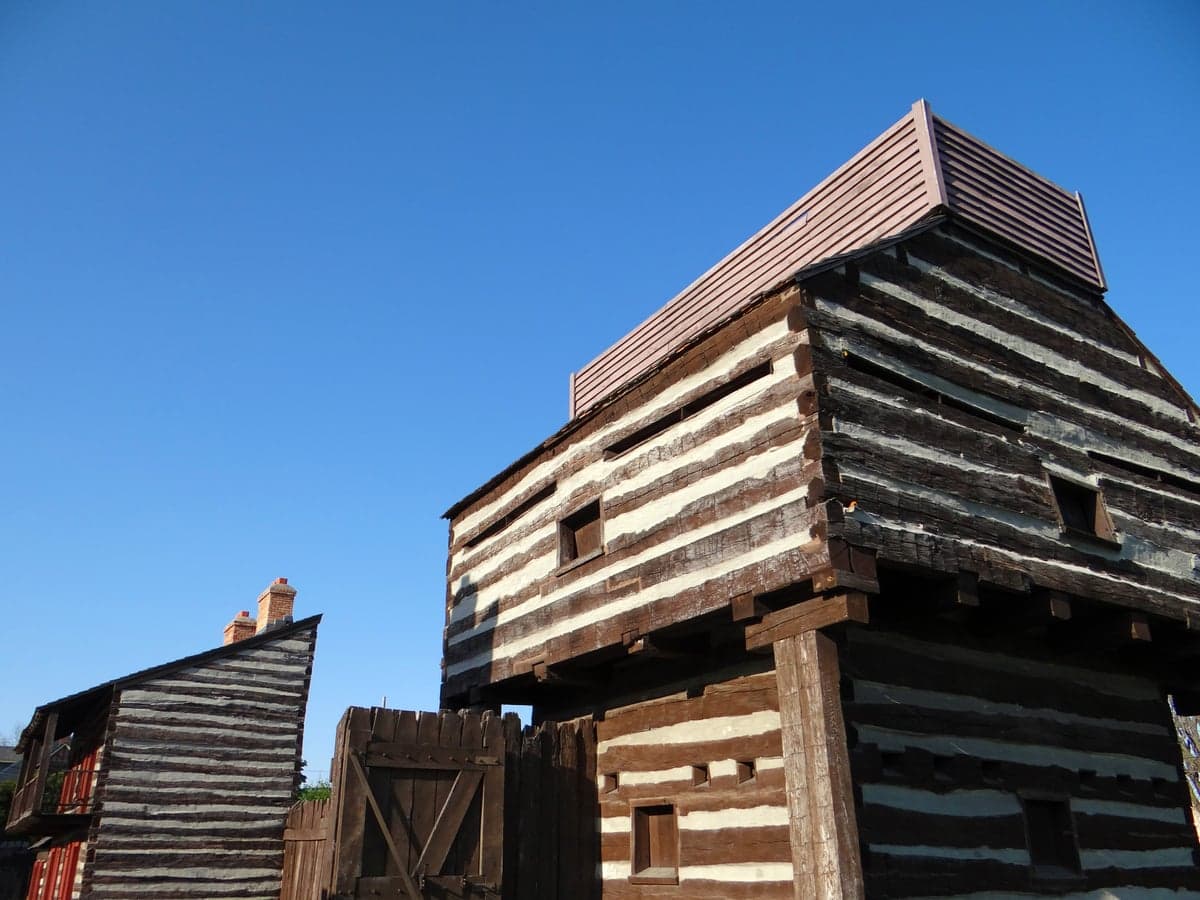
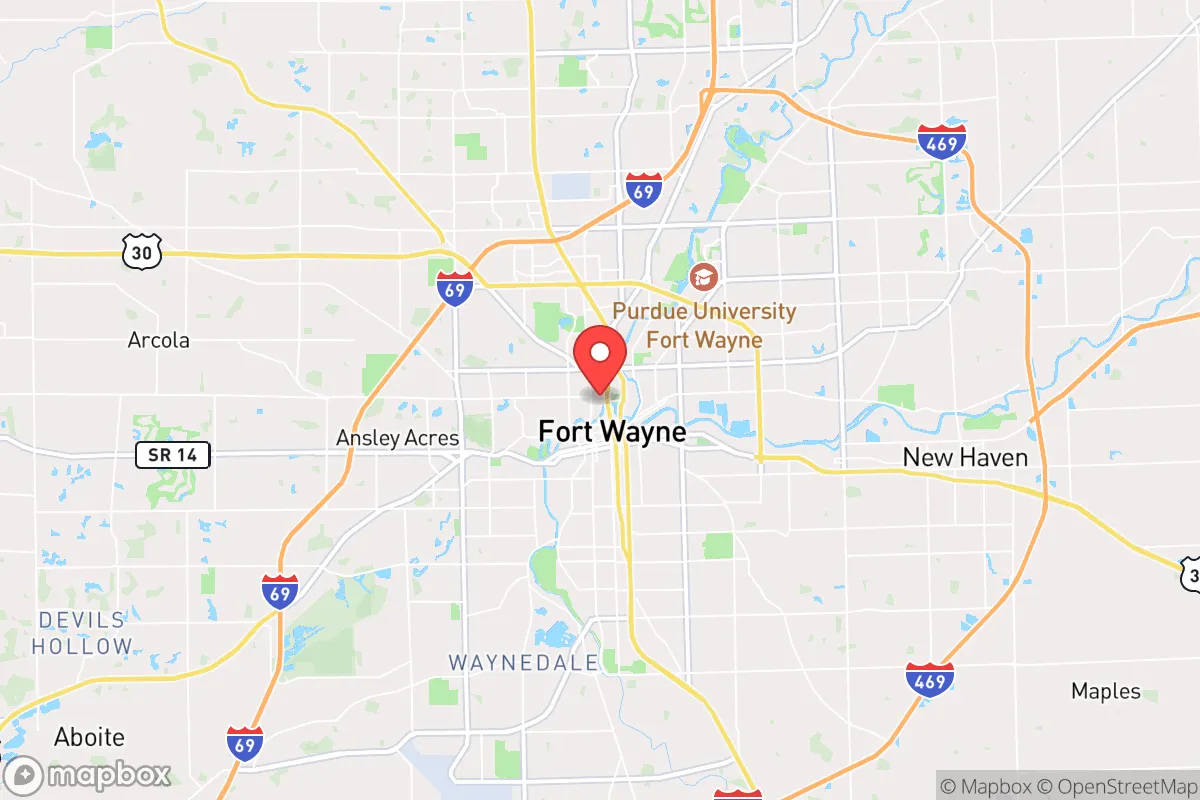
Photo: Wikipedia
Quality of Life in Fort Wayne, IN
A high quality of life with strong walkability, manageable living costs, healthy neighborhood signals, and solid amenity access.
What does Quality of Life tell us?
Quality of Life blends cost of living, nearby amenities, socioeconomic signals, and neighborhood character. City-level scores represent the whole municipality; individual neighborhoods can differ.
What does this tell us?
Quality of Life blends cost of living, nearby amenities, socioeconomic signals, and neighborhood character. City-level scores represent the whole municipality; individual neighborhoods can differ.
Cost of Living
26% below national average
The Real Cost of Living in Fort Wayne, IN for 2026
| Tier | Individual | Family (4) |
|---|---|---|
| Survival | $15k | $29k |
| Comfortable | $33k | $48k |
| Luxury | $104k+ | $161k+ |
| Elite (Top 5%) | $122k+ | $189k+ |
124%
The Area Signal
A metric tracking the socioeconomic signals of the area.
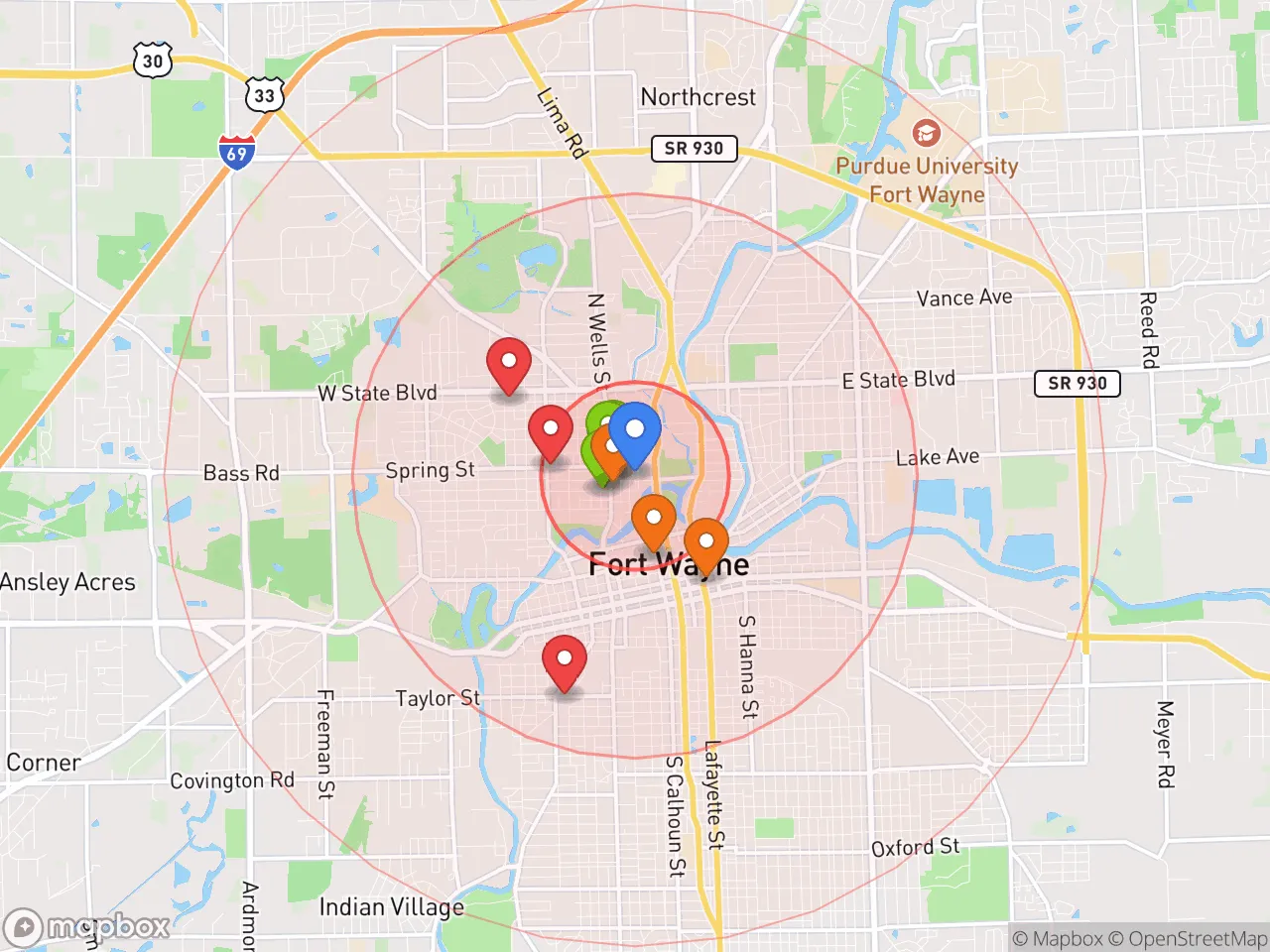
Hobbies
Explore the areaGroceries
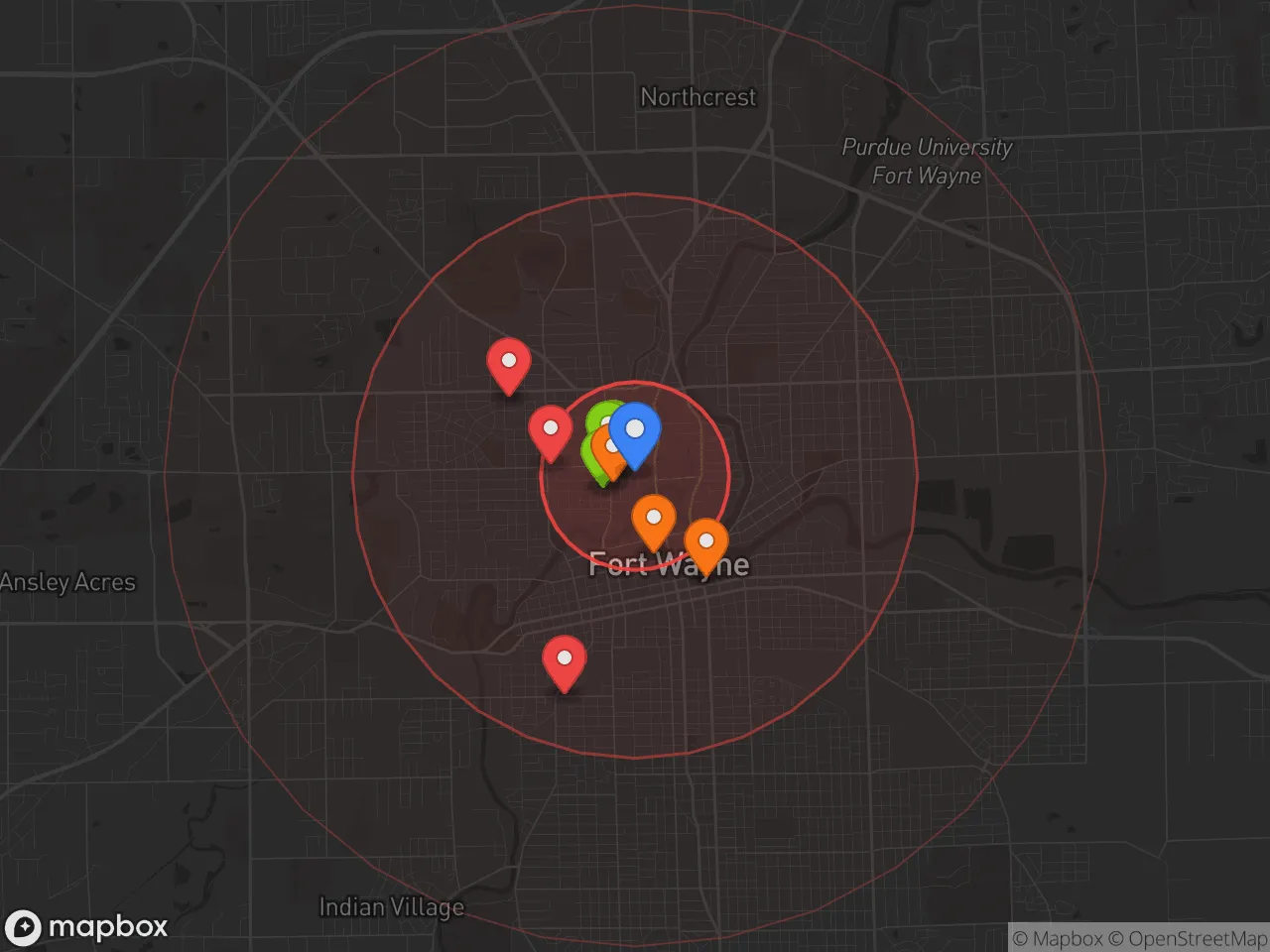
6 within 10 miles
Gas
20 within 10 miles
Hospital
8 within 20 miles
Airport
Indianapolis International Airport
Post Office
USPS — Clinton Street, Fort
Critical Amenities
Quality-of-Life Analysis
Fort Wayne offers a quality of life defined by genuine affordability and a steady, family-oriented pace, attracting a mix of young professionals, growing families, and retirees seeking financial breathing room. With a cost of living index of 74 (26% below the U.S. average), the city provides a standard of living that allows residents to own homes and save at rates increasingly difficult in larger Midwestern hubs. The population skews toward middle-income households and blue-collar professionals employed in manufacturing, healthcare, and logistics, creating a community rooted in practicality rather than pretense.
How Fort Wayne’s cost of living and housing compare to nearby cities
Fort Wayne’s housing market is the cornerstone of its affordability appeal. The median home value sits at $169,700, roughly half the national median and significantly lower than in Indianapolis ($240,000) or Chicago ($330,000). Median rent is $959, making it feasible for renters to save for a down payment within a few years. The average commute of 21.4 minutes is shorter than the national average of 26 minutes, meaning less time in traffic and more time at home or with family. Compared to nearby cities like South Bend or Muncie, Fort Wayne offers a broader job market without a proportional increase in housing costs. Property taxes in Allen County average about 1.2% of assessed value, which is moderate for Indiana and keeps monthly carrying costs low.
What daily life is like for families: schools, parks, and local amenities
Daily life in Fort Wayne revolves around a network of well-maintained parks, a growing downtown dining scene, and a school system that offers both public and private options. The Fort Wayne Community Schools district includes magnet programs like the International Baccalaureate at North Side High School, while suburban districts such as Southwest Allen County Schools consistently rank among the state’s top performers. The city’s 86 parks and 80 miles of trails—including the Rivergreenway along the St. Marys and Maumee rivers—provide year-round recreation for walkers, cyclists, and anglers. Downtown, the Landing district has seen a revival with breweries, farm-to-table restaurants, and the Embassy Theatre hosting concerts and Broadway tours. For families, the Fort Wayne Children’s Zoo is a regional draw, and the Allen County Public Library system offers extensive programming. The rhythm of life here is slower than in Indianapolis but more active than in smaller rural towns, with a strong sense of community evident in neighborhood festivals like the Three Rivers Festival each July.
Fort Wayne is best suited for those who prioritize financial stability, space, and a balanced lifestyle over urban excitement or career extremes. Young families will find affordable starter homes and good schools, while retirees can stretch retirement savings further than in coastal or even Midwestern metro areas. Professionals in manufacturing, healthcare (Parkview Health and Lutheran Health Network are major employers), and logistics (Amazon and FedEx have large distribution centers) will find ample job opportunities without the high cost of living. Those seeking a vibrant nightlife or a fast-paced career ladder may find Fort Wayne too quiet, but for anyone wanting a solid, predictable quality of life with room to grow, it is a compelling choice.

Crime in Fort Wayne, IN
Crime rates similar to the national median for U.S. locations.
Violent CrimeViolent Crime Analysis
Property CrimeProperty Crime Analysis
Crime Analysis
Fort Wayne, Indiana, presents a mixed safety profile that demands careful consideration from potential residents. The city’s violent crime rate stands at 274.8 incidents per 100,000 residents, while its property crime rate is significantly higher at 1,863.9 per 100,000. These figures place Fort Wayne in a challenging position, where property crime is a more pressing daily concern than violent offenses, though both metrics warrant scrutiny against state and national benchmarks.
Crime in context
When compared to national averages, Fort Wayne’s violent crime rate is roughly 22% lower than the U.S. rate of approximately 380 per 100,000, offering a relative bright spot. However, its property crime rate is about 10% higher than the national average of roughly 1,700 per 100,000, indicating a greater risk of theft, burglary, and vehicle break-ins. Against Indiana’s statewide violent crime rate of around 330 per 100,000, Fort Wayne performs slightly better. Yet the property crime rate exceeds the state average of roughly 1,600 per 100,000, underscoring a localized vulnerability. Readers should note that Allen County, which encompasses Fort Wayne, has a judicial system that leans progressive in its approach to criminal justice. This ideological bent, while sympathetic to offenders, can result in more lenient sentencing and reduced incarceration rates, potentially contributing to higher recidivism and more criminals on the street—a dynamic that negatively impacts public safety and victim justice.
What residents experience
For daily life in Fort Wayne, property crime is the most tangible threat. Residents commonly report vehicle break-ins, package thefts, and burglaries, particularly in areas with higher foot traffic or proximity to major corridors like Coliseum Boulevard or Lima Road. Violent crime, while less frequent, is not evenly distributed; incidents of assault and robbery tend to cluster in specific neighborhoods, often linked to drug activity or domestic disputes. The city’s progressive district attorney’s office has been known to prioritize diversion programs and reduced charges for non-violent offenders, a policy that can frustrate victims seeking accountability and may embolden repeat property criminals. This approach, while well-intentioned, directly contributes to a perception that the justice system prioritizes offender rehabilitation over public protection, leaving some residents feeling underserved.
Neighborhood-level variation is pronounced in Fort Wayne. Areas like West Central and the South Side near downtown report higher crime densities, while suburban enclaves such as Aboite Township and northern sections near Dupont Road experience significantly lower rates. For example, the 46825 and 46845 ZIP codes (northwest and north) have property crime rates roughly 30% lower than the citywide average, making them preferable for families. Conversely, the 46806 and 46803 ZIP codes (southeast and east-central) see elevated violent crime. Prospective residents should consult local police crime maps and consider visiting neighborhoods at different times to gauge safety firsthand. The city’s progressive judicial philosophy means that even in lower-crime areas, the broader systemic leniency can undermine long-term safety, as offenders released early may migrate across neighborhoods.
* Values derived from national, state, county, city and local statistics and may differ in a specific area. Last updated: 2026-04-22T07:25:32.000Z
Narrative content on this page is AI-generated and may contain mistakes. Verify any details that matter before acting on them.
ReloMaps may earn a commission from affiliate links at no extra cost to you.

