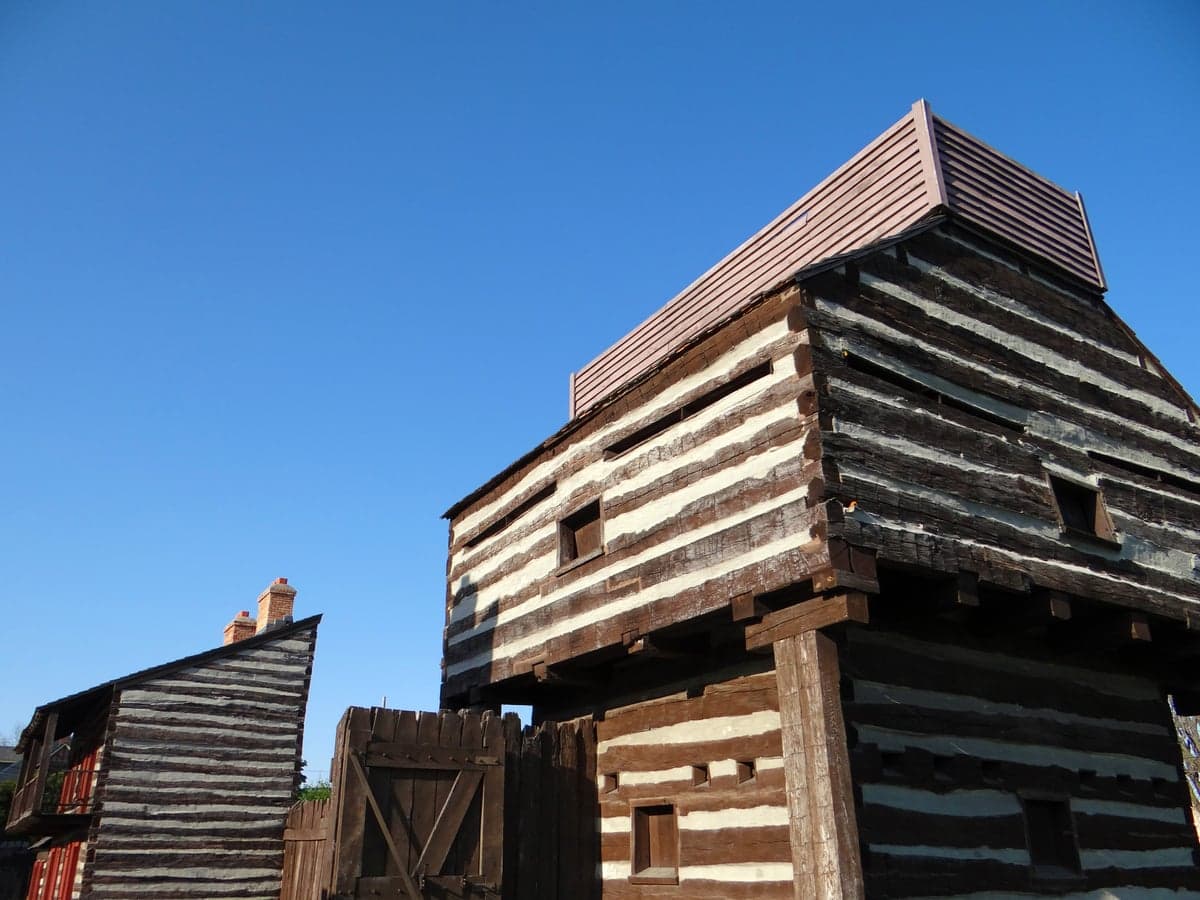
Photo: Wikipedia
Strategic Assessment of Fort Wayne, IN
Multiple tactical vulnerabilities. Population density, target proximity, or disaster risk are likely compounding. A retreat property and exit planning is required.
What does the Strategic Assessment tell us?
Our Strategic Assessment grades tactical survivability of an area. Major population centers, military targets, fallout zones, natural disasters, and border exposure all drive risk — lower exposure means a more defensible position in a crisis.
This is heavily inspired by Joel Skousen's Strategic Relocation book. Highly recommended you checkout the book ($)What does this tell us?
Our Strategic Assessment grades tactical survivability of an area. Major population centers, military targets, fallout zones, natural disasters, and border exposure all drive risk — lower exposure means a more defensible position in a crisis.
This is heavily inspired by Joel Skousen's Strategic Relocation book. Highly recommended you checkout the book ($)Strategic Pillars

Key Distances
Regional Safe Places
Below is our recommended "safe zones" in Indiana and the surrounding area based on our strategic heuristics. For most people, it's unrealistic to live in a “safe zone” full-time due to work, family or other personal reasons. They tend to be more rural. However, many of these areas are perfect for second homes and retreat properties that double as a vacation home or even a short-term rental.

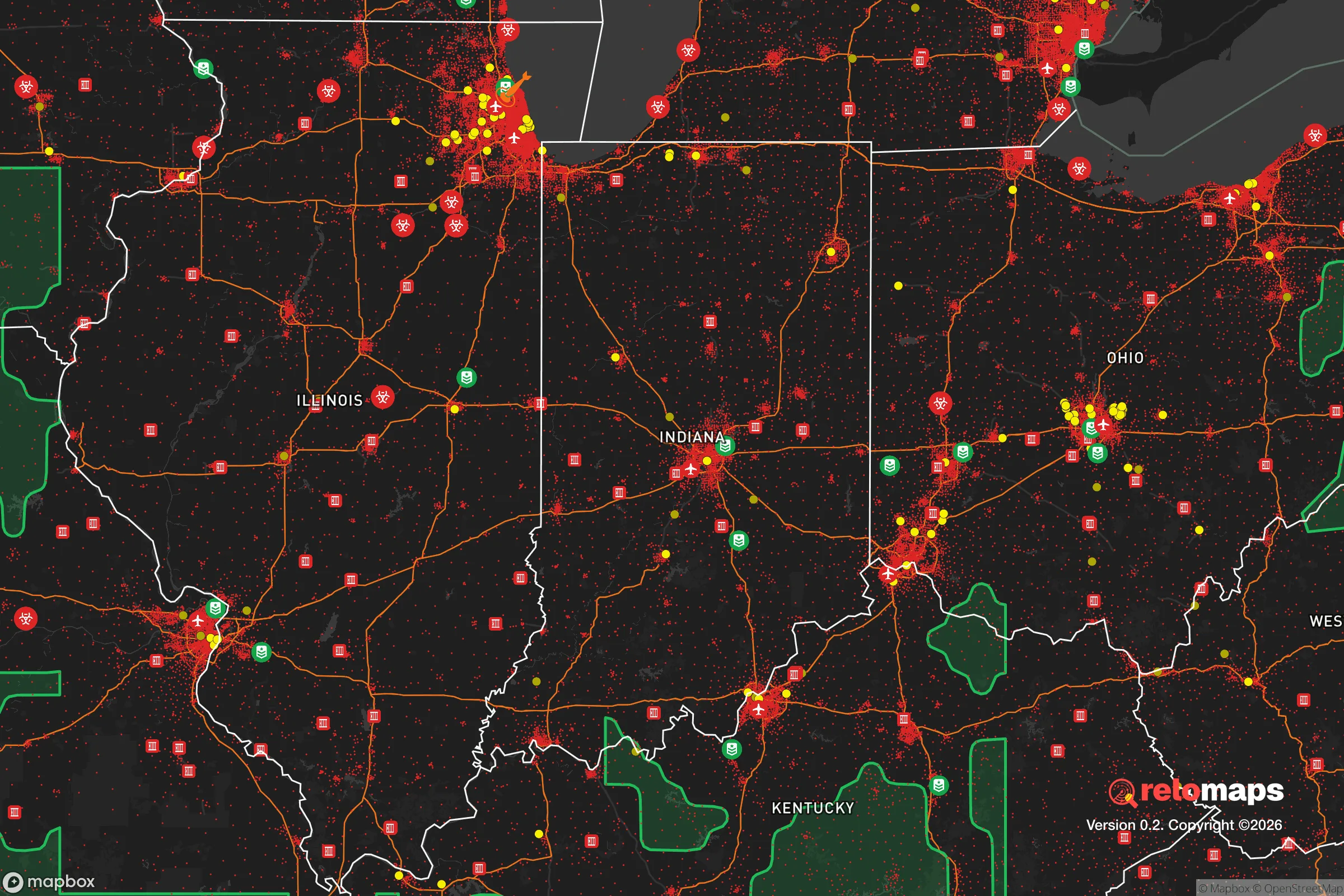


Important Note: For informational purposes only. This does not mean nothing bad ever happens in the green zones. Please use common sense. This is based on public data and modeled with AI. We tried to take a conservative approach but mistakes happen. We update this regularly as new information becomes available.
Solar Generator Recommendations
Backup power matters more here than in safer locations. We've picked three solar generators across budgets and capacity tiers — start with the budget unit if you only need a few essentials, or step up if you want to run a fridge and HVAC for days at a time.

Jackery Portable Power Station Explorer 300
Budget OptionPower on the Go: Weighing only 11 lbs, it's convenient to set up and store with book-sized foldable solar panels

BLUETTI Portable Power Station AC180
Designed for both indoor and outdoor scenarios, AC180 is highly capable as it has a robost capacity and continuous output power.

EF ECOFLOW DELTA Pro Ultra Power Station
Upgraded PickEcoFlow DELTA Pro Ultra is a whole-home energy system designed to grow with your family. Integrated with the Smart Home Panel 2, it scales to meet your evolving energy needs — keeping your home powered, intelligent, and secure through every stage of life.
We earn a commission, at no additional cost to you.
Strategic Assessment Analysis
Fort Wayne, Indiana, often flies under the radar in relocation circles, but for someone thinking in terms of decades rather than election cycles, its strategic profile is surprisingly solid. It sits in a part of the Midwest that has historically been a logistics and manufacturing backbone, and its inland position offers a layer of insulation from the coastal chaos that tends to dominate the news. For a conservative-leaning individual or family looking to put down roots in a place that isn't already overrun, overpriced, or politically brittle, Fort Wayne presents a case worth studying closely.
Geographic anchor and natural buffers in the Midwest
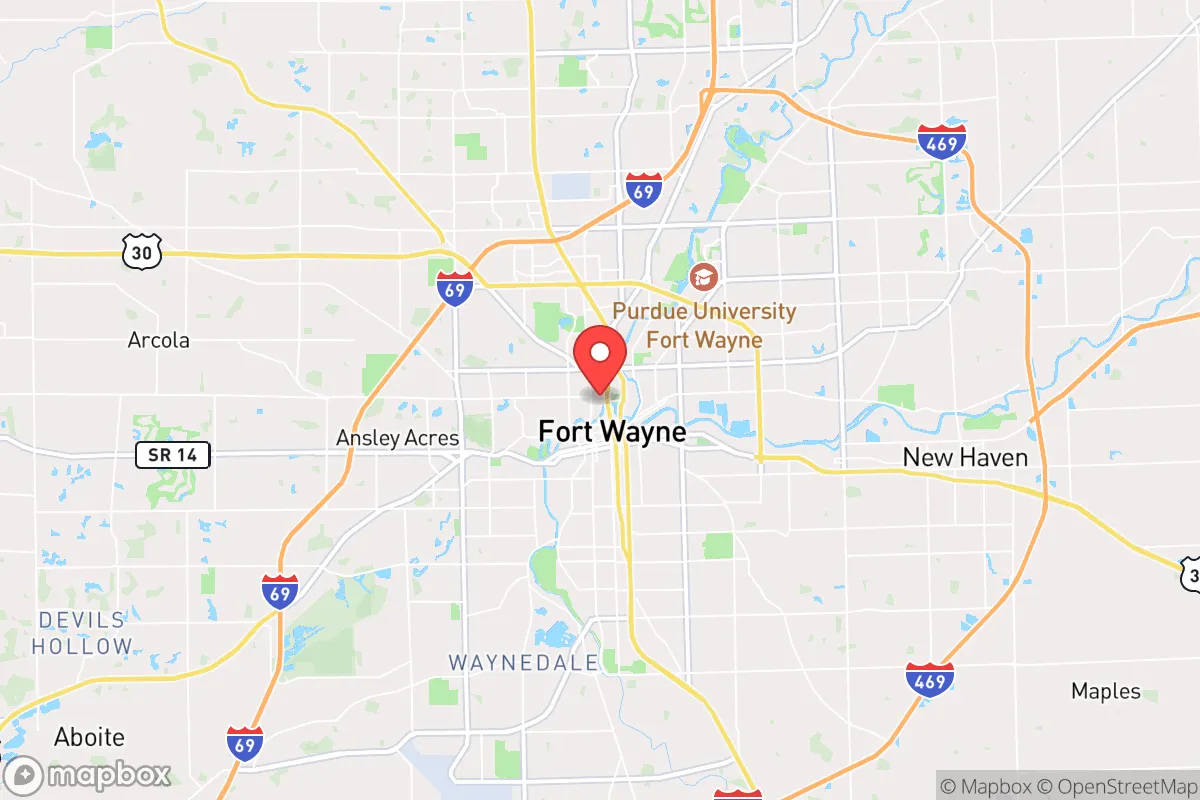
Fort Wayne’s primary strategic advantage is its location at the confluence of three rivers—the St. Joseph, St. Marys, and Maumee—which historically made it a transportation hub and today provides a reliable freshwater source. The city sits in Allen County, roughly equidistant from Chicago (about 140 miles northwest), Detroit (about 120 miles northeast), and Indianapolis (about 120 miles southwest). That distance is a double-edged sword: close enough to access major medical and supply networks if needed, but far enough that a major event in any of those cities won’t immediately spill over into your neighborhood. The surrounding terrain is flat to gently rolling, with plenty of agricultural land within a 30-minute drive. This isn’t a mountain redoubt, but it is a breadbasket location. The region’s natural advantages include a relatively low risk of hurricanes, earthquakes, wildfires, and tsunamis. The primary natural threat is severe thunderstorms and occasional tornadoes, which are manageable with a good basement or storm shelter. The area’s position in the Eastern Time Zone also means it’s not a primary target for any single coast, and the lack of major military or nuclear infrastructure within a 50-mile radius reduces its strategic targeting value in a worst-case scenario.
Risks, exposures, and proximity to fallout-relevant landmarks
No place is a fortress, and Fort Wayne has its own set of vulnerabilities that a serious relocator needs to weigh. The most obvious risk is its proximity to the Great Lakes industrial corridor and the Chicago-Indianapolis-Detroit triangle. While the city itself is not a primary target, a major event in any of those hubs—whether a terrorist attack, a grid-down scenario, or a public health crisis—would send refugees and supply chain disruptions rippling outward. Fort Wayne sits near major rail lines and Interstate 69, which connects it directly to Indianapolis and, by extension, to the rest of the country. In a crisis, those same arteries that bring goods in could also bring trouble. There are no nuclear power plants within a 50-mile radius, but there are several chemical and industrial facilities along the Maumee River corridor that could pose secondary hazards in a disaster. The city’s population of roughly 270,000 (metro area about 420,000) is large enough to have a functioning economy but small enough that a complete breakdown of civil order would be less likely than in a major metro. The political climate in Allen County leans conservative, with the city itself being more moderate, but the surrounding rural areas are deeply red. That cultural alignment matters for a conservative relocator: you’re less likely to find yourself in a jurisdiction that actively undermines self-reliance or property rights.
Practical resilience for a relocator: food, water, energy, and defensibility
For someone serious about preparedness, Fort Wayne offers a few concrete advantages that are hard to replicate in more expensive or coastal locations. The water situation is strong: the three rivers provide a surface water source, and the city’s aquifer is robust. A well-permitted property in the surrounding county is a realistic option for those who want true water independence. The soil in northeast Indiana is some of the best in the country for agriculture, and there is a strong local farming community with farmers’ markets and CSAs that make it easy to build relationships before you need them. Energy resilience is mixed. The local grid is served by Indiana Michigan Power (a subsidiary of American Electric Power), which has a mix of coal, natural gas, and some renewables. The region is not prone to long-term power outages from weather, but grid failure from a cyber or physical attack is a national risk, not a local one. Solar is viable, though not optimal—the area gets about 180 sunny days per year, which is below the national average but workable with a properly sized system and battery backup. Natural gas is widely available and relatively cheap, making dual-fuel generators a practical option. Defensibility is where Fort Wayne is weakest. The city is flat and spread out, with no natural chokepoints or high ground. A rural property 20-30 minutes outside the city limits, especially one with a creek or pond and good road access control, would be far more defensible than anything inside the 469 loop. The local gun culture is strong, with several ranges and a high rate of private ownership, which is a positive signal for those who value the ability to protect their family.
The overall strategic picture for Fort Wayne is that of a solid, unglamorous fallback position. It’s not a prepper’s paradise in the mountains, but it’s a place where a conservative family can buy a reasonable house on a decent piece of land, build a network of like-minded neighbors, and be far enough from the major flashpoints to have time to react. The local economy is diversified enough to survive a recession better than most, and the cost of living is low enough that you can actually afford to invest in supplies, training, and property improvements. The biggest strategic risk is complacency: Fort Wayne feels safe because it is safe, and that can lull people into not preparing for the things that could go wrong. But for someone who wants to be in a position to weather the next decade’s storms—whether they’re economic, political, or literal—this city deserves a serious look. It’s not a bug-out location; it’s a bug-in location. And for most people, that’s the smarter bet anyway.

* Values derived from national, state, county, city and local statistics and may differ in a specific area. Last updated: 2026-04-22T07:25:32.000Z
Narrative content on this page is AI-generated and may contain mistakes. Verify any details that matter before acting on them.
ReloMaps may earn a commission from affiliate links at no extra cost to you.

