
Photo: Wikipedia
Political ClimatePolitical Climate in Fort Wayne, IN
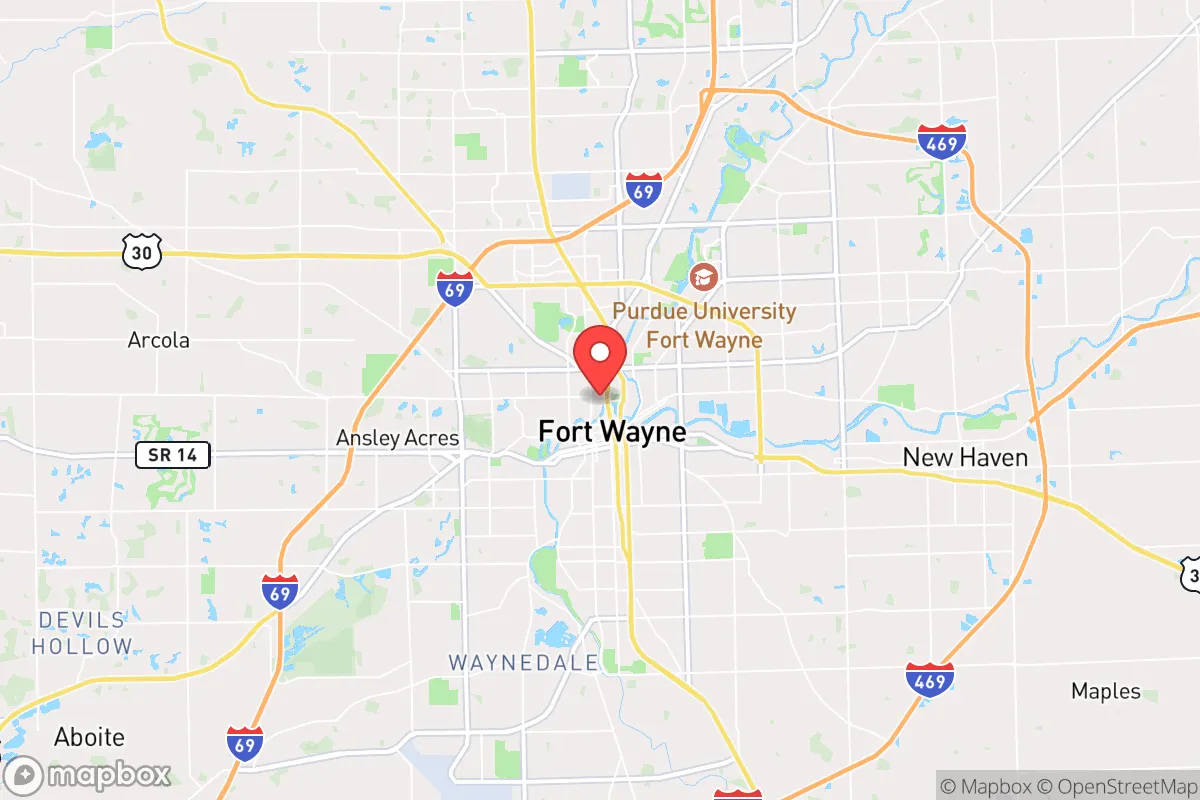
District shown is the primary district for this city’s centroid. Cities may span multiple districts.
Local Political AnalysisPolitical Analysis of Fort Wayne, IN
Fort Wayne has long been a reliably conservative stronghold in northeast Indiana, and that hasn't changed much. The city sits in Allen County, which carries a Cook Partisan Voting Index of R+16, meaning it votes about 16 points more Republican than the national average. That’s not just a number—it reflects a deep-rooted, practical conservatism that most folks around here take pretty seriously. You see it in local elections, school board races, and even how people talk about things like taxes and property rights. The political lean here isn't flashy or extreme; it's more of a "leave us alone, let us work, and don't mess with our way of life" kind of vibe. That said, there have been some noticeable shifts in the last few years, especially as the city has grown and attracted new residents from more progressive areas like Chicago or Indianapolis. The trajectory is still solidly red, but you can feel the pressure building on certain cultural and policy fronts.
How it compares
If you drive 20 minutes south to Huntington or 30 minutes west to Columbia City, you'll find even more conservative, rural communities where the R+16 looks almost moderate. Those towns are deeply traditional, with strong church ties and a real skepticism of any government overreach. On the flip side, head 45 minutes north to Angola or east to Van Wert, Ohio, and you're in similar territory—conservative, but with a more libertarian streak. The real contrast is with Indianapolis, about two hours south, which is a blue island in a red state. Fort Wayne doesn't have that kind of progressive energy, and most residents prefer it that way. The city's politics are more about practical governance than ideological crusades, which is why you don't see the same kind of culture war battles here as you do in bigger cities. But that doesn't mean there aren't concerns—especially when you see local leaders flirting with policies that sound good on paper but end up trampling on personal freedoms, like overreaching health mandates or zoning rules that tell you what you can do with your own property.
What this means for residents
For the average person living here, the political climate means you can generally expect lower taxes, fewer regulations, and a government that stays out of your business—at least for now. Property rights are still respected, and you won't find the kind of heavy-handed land use restrictions you see in places like Bloomington or South Bend. But there's a growing unease among long-time residents about creeping government overreach, especially in areas like school curriculum and local health policies. Some of the newer city council members have pushed for more progressive initiatives, like diversity, equity, and inclusion programs in city hiring, which many see as a slippery slope toward the same kind of ideological conformity that's caused problems elsewhere. The good news is that these efforts have mostly been met with pushback from the community. Voters here still value individual responsibility over collective mandates, and they're quick to remind elected officials that they work for the people, not the other way around.
One thing that sets Fort Wayne apart is its strong sense of local identity and a culture of self-reliance. You won't find the same level of political activism or protest culture here as in Fort Collins or Ann Arbor. Instead, people tend to solve problems through churches, civic groups, and neighborhood associations rather than looking to the government for answers. That's a good thing, but it also means that when progressive policies do slip through, they often do so quietly, without the same level of scrutiny they'd get in a more politically engaged city. The long-term outlook is cautiously optimistic—if the city can keep its conservative foundation while managing growth without losing its soul, it'll stay a great place for folks who value freedom and common sense. But if the trend toward bigger government and top-down decision-making continues, you might start seeing more people packing up for the truly rural counties where the government is still small and the neighbors still wave.

State Political ClimatePolitical Climate in Indiana
State Political AnalysisPolitical Environment in the State
Indiana has been a reliably Republican state for decades, but don't let that fool you into thinking it's a monolith. The GOP holds a supermajority in both chambers of the state legislature and has won every presidential election here since 2008, with Donald Trump carrying the state by 16 points in 2024. However, the state's political trajectory over the last 10-20 years shows a slow but steady shift: the reliably red rural and exurban base is shrinking relative to the growing, increasingly Democratic-leaning Indianapolis metro and the college towns of Bloomington and West Lafayette. The dominant coalition is still conservative, but it's a coalition of traditional fiscal conservatives, social conservatives, and a growing populist wing that's wary of both parties.
Urban vs. rural divide
The political map of Indiana is a textbook case of the urban-rural split. Marion County (Indianapolis) is the state's Democratic stronghold, delivering over 60% of its vote to Joe Biden in 2020 and Kamala Harris in 2024. This is driven by the city's growing professional class, minority populations, and younger voters. Lake County in the northwest corner, part of the Chicago metro, is another reliable blue anchor, though its Democratic margins have slipped slightly as the region's industrial base has eroded. On the other side, the vast majority of Indiana's 92 counties are deep red. Hamilton County, just north of Indianapolis, is the state's wealthiest and fastest-growing county, and while it's still Republican, its margins have been shrinking as transplants from blue states and younger families move in. Allen County (Fort Wayne) and Vanderburgh County (Evansville) are classic swing counties that have trended right in recent cycles, while Monroe County (Bloomington) and Tippecanoe County (West Lafayette) are liberal islands thanks to Indiana University and Purdue University. The real action is in the exurbs: places like Noblesville and Zionsville are becoming battlegrounds where the old guard of fiscal conservatism clashes with a new wave of socially moderate, growth-oriented Republicans.
Policy environment
Indiana's policy environment is broadly conservative, but with some notable exceptions. The state has a flat income tax rate of 3.05% (down from 3.23% in 2023) and a sales tax of 7%, with no inheritance or estate tax. Property taxes are capped at 1% of assessed value for owner-occupied homes, which is a major draw for families. The regulatory posture is business-friendly, with a right-to-work law (though repealed for private-sector workers in 2025) and a low corporate tax rate. On education, Indiana has a robust school choice program: the Choice Scholarship Program (vouchers) is one of the most expansive in the nation, and the state has a strong charter school law. However, the state's education funding formula has been criticized for underfunding rural districts. Healthcare policy is a mixed bag: Indiana expanded Medicaid under the Healthy Indiana Plan (HIP 2.0), a conservative alternative to traditional expansion, but the state has not expanded postpartum coverage or passed any significant gun control measures. Election laws are strict: voter ID is required, early voting is limited to 28 days before an election, and no-excuse absentee voting was eliminated in 2023. The state also passed a law in 2024 requiring all ballots to be hand-counted in counties with fewer than 10,000 voters, a move that has drawn both praise and criticism.
Trajectory & freedom
Indiana is trending more free in several key areas, but there are warning signs. The state passed a constitutional carry law in 2022, allowing permitless carry of handguns, and has a strong preemption law that prevents local governments from enacting their own gun restrictions. On parental rights, Indiana passed a law in 2023 requiring schools to notify parents of any changes to a student's mental or physical health, and it banned gender-affirming care for minors in 2023. Medical autonomy is a mixed bag: the state has a broad conscience clause for healthcare providers, but it also has a strict abortion ban (SB 1) that prohibits the procedure except in cases of rape, incest, or to save the mother's life. On property rights, Indiana has a strong eminent domain law that protects private property, but the state's tax assessment system has been criticized for being opaque. The biggest red flag for freedom advocates is the state's growing reliance on economic development incentives, which critics argue amount to corporate welfare. The 2024 law creating a new state-level "innovation district" in downtown Indianapolis, with special tax and regulatory powers, has raised concerns about cronyism and government overreach.
Civil unrest & political movements
Indiana has seen its share of political flashpoints. The 2020 protests in Indianapolis over the death of George Floyd were large and occasionally violent, leading to a curfew and National Guard deployment. The state has a small but vocal progressive activist scene centered in Bloomington and Indianapolis, focused on racial justice, LGBTQ+ rights, and climate change. On the right, the Indiana Freedom Coalition and local chapters of Moms for Liberty have been active in school board races and legislative advocacy, particularly around curriculum transparency and parental rights. Immigration politics are relatively quiet, as Indiana is not a border state and has a relatively small foreign-born population (about 5%). However, there have been localized tensions in places like Logansport and Goshen, where meatpacking plants have attracted immigrant labor. There is no serious secession or nullification movement in Indiana, though some rural counties have passed symbolic resolutions asserting local control. Election integrity remains a hot topic: the 2024 hand-counting law was a direct response to concerns about voting machines, and the state has seen a handful of high-profile election fraud cases, though none that changed the outcome of a major race. A new resident would notice the political divide most acutely in the suburbs: a "Keep Indiana Red" sign in a yard in Carmel might sit next to a "Hate Has No Home Here" sign, reflecting the cultural tension.
Projection
Over the next 5-10 years, Indiana is likely to remain a Republican-leaning state, but the margin will continue to narrow. The Indianapolis metro is growing faster than the rest of the state, and its population is becoming more diverse and more Democratic. The exurbs of Hamilton County and Hendricks County are also growing, but they are attracting a mix of conservative families and moderate professionals who may not vote straight-ticket Republican. The rural counties, meanwhile, are aging and losing population, which will reduce their electoral weight. The biggest wildcard is the state's ability to attract new residents from blue states. If Indiana continues to market itself as a low-tax, high-freedom alternative to Illinois and California, it could see an influx of conservative-leaning migrants who would bolster the GOP. But if the state's cultural wars (on abortion, education, and LGBTQ+ rights) become too intense, it could repel the moderate professionals that the Indianapolis economy needs. The most likely scenario is a slow, steady shift from "safe red" to "lean red," with the state becoming more competitive at the presidential level but still reliably Republican for state offices.
For a new resident, the bottom line is this: Indiana is a good place to live if you value low taxes, school choice, and a relatively hands-off government on most issues. You will find a conservative majority in most places, but you will also encounter a growing progressive minority, especially in the cities and college towns. The state is not immune to the cultural battles that are tearing apart the country, but it is managing them better than many of its neighbors. If you are moving here for freedom, you will find it—but keep an eye on the statehouse, because the fight over what "freedom" means is far from over.
* Values derived from national, state, county, city and local statistics and may differ in a specific area. Last updated: 2026-04-22T07:25:32.000Z
Narrative content on this page is AI-generated and may contain mistakes. Verify any details that matter before acting on them.
ReloMaps may earn a commission from affiliate links at no extra cost to you.

