 Popular
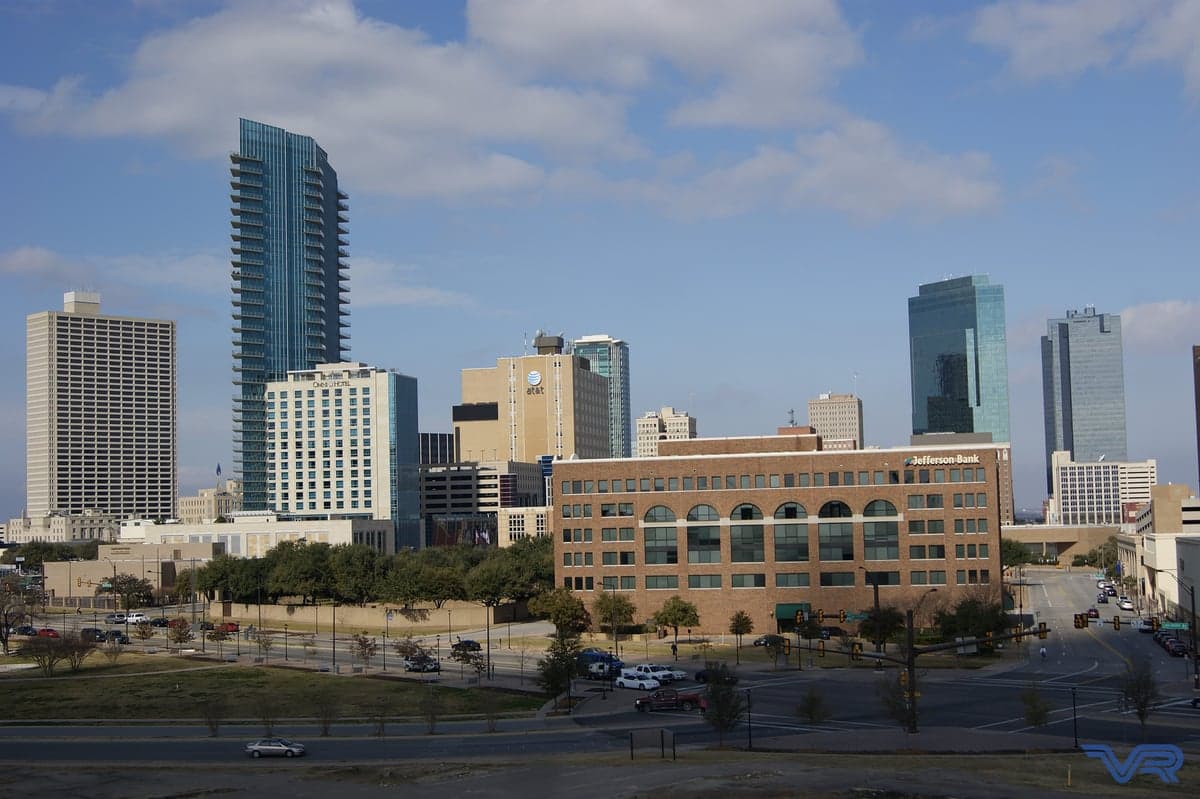
Photo: Wikipedia
Demographics of Fort Worth, TX
Affluence Level in Fort Worth, TX
A middle-class area roughly in line with national averages across income, home values, education, and employment.
People of Fort Worth, TX
The people of Fort Worth, Texas today number 941,311, making it the 13th-largest city in the United States. The city is a demographic mosaic: 37.3% White, 34.6% Hispanic, 19.2% Black, 3.2% East/Southeast Asian, and 2.0% Indian (subcontinent), with 10.5% foreign-born. Its population has grown 27% since 2010, driven by domestic migration and natural increase, and it retains a distinctly Western, working-class character that sets it apart from the more corporate, cosmopolitan identity of neighboring Dallas.
How the city was settled and grew
Fort Worth was founded in 1849 as a U.S. Army outpost on the Trinity River, part of a line of forts protecting settlers from Native American raids. The original Anglo-American settlers were primarily farmers and ranchers from the Upper South and Midwest, drawn by cheap land and the promise of the cattle trade. The arrival of the Texas & Pacific Railway in 1876 transformed the town into a major cattle-shipping hub, earning it the nickname "Cowtown." The historic Stockyards National Historic District in the North Side remains the physical heart of this era, where cattle drives ended and cowboys, drovers, and early merchants built the city's first commercial core. By the early 1900s, oil discoveries in nearby Ranger and Burkburnett brought a second wave of Anglo and Appalachian migrants, who settled in working-class neighborhoods like Fairmount and Ryan Place on the Near South Side. African Americans arrived in significant numbers during the Great Migration (1910–1970), fleeing Jim Crow in the Deep South for industrial jobs in Fort Worth's meatpacking plants and the burgeoning aircraft industry. They concentrated in the Historic Southside and Stop Six neighborhoods, which became the cultural and commercial anchors of Black Fort Worth. Mexican immigration began in earnest during the Mexican Revolution (1910–1920) and continued through the Bracero program (1942–1964), with families settling in the North Side near the Stockyards and in the Polytechnic Heights area, forming the foundation of today's Hispanic community.
Modern era (post-1965)
The Immigration and Nationality Act of 1965 reshaped Fort Worth's demographics. Hispanic growth accelerated sharply: from roughly 10% of the city in 1970 to 34.6% today. This wave came primarily from Mexico and Central America, drawn by construction, service, and manufacturing jobs in the expanding Dallas-Fort Worth metroplex. The North Side and Polytechnic Heights remain heavily Hispanic, while newer suburban areas like Fossil Creek and Far North Fort Worth have seen significant Hispanic in-movement. East/Southeast Asian communities (3.2% of the population) began arriving after 1975, with Vietnamese refugees settling in the Hulen and Southwest Fort Worth corridors, often working in the service industry or opening small businesses. Indian (subcontinent) residents (2.0%) are a more recent and highly educated cohort, concentrated in the West Fort Worth and Benbrook areas near the medical and tech employment centers. White population share has declined from 41.7% in 2010 to 37.3% in 2024, a loss of 4.4 percentage points, as many Anglo families have moved to outer-ring suburbs like Aledo, Burleson, and Haslet. Black population share has remained relatively stable at around 19%, with some movement from the Historic Southside to newer subdivisions in Far Southeast Fort Worth and Ridglea Hills.
The future
Fort Worth is not homogenizing; it is tribalizing into distinct enclaves. The Hispanic population is projected to become the largest single group within the next decade, driven by higher birth rates and continued immigration. The White population will continue to shrink as a share, though the absolute number of White residents may stabilize as some return to the urban core. East/Southeast Asian and Indian communities are growing from a small base but are likely to double their shares over the next 20 years, particularly as the city attracts more tech and healthcare employers. The Black population is plateauing, with some out-migration to suburbs. The city is becoming more diverse overall, but also more spatially segregated by ethnicity and income. The foreign-born share (10.5%) is below the national average (13.7%), suggesting that Fort Worth remains primarily a destination for domestic migrants rather than international immigrants.
For a conservative-leaning individual or family moving to Fort Worth today, the city offers a growing, affordable, and culturally traditional environment. The population is younger and more family-oriented than in many peer cities, and the dominant political culture remains center-right despite the demographic shifts. The key trend to watch is the continued Hispanicization of the North Side and the expansion of Asian and Indian communities in the western and southwestern corridors, which will gradually reshape the city's cultural and political landscape over the next generation.

* Values derived from national, state, county, city and local statistics and may differ in a specific area. Last updated: 2026-04-20T03:53:02.000Z
Narrative content on this page is AI-generated and may contain mistakes. Verify any details that matter before acting on them.
ReloMaps may earn a commission from affiliate links at no extra cost to you.

