 Popular
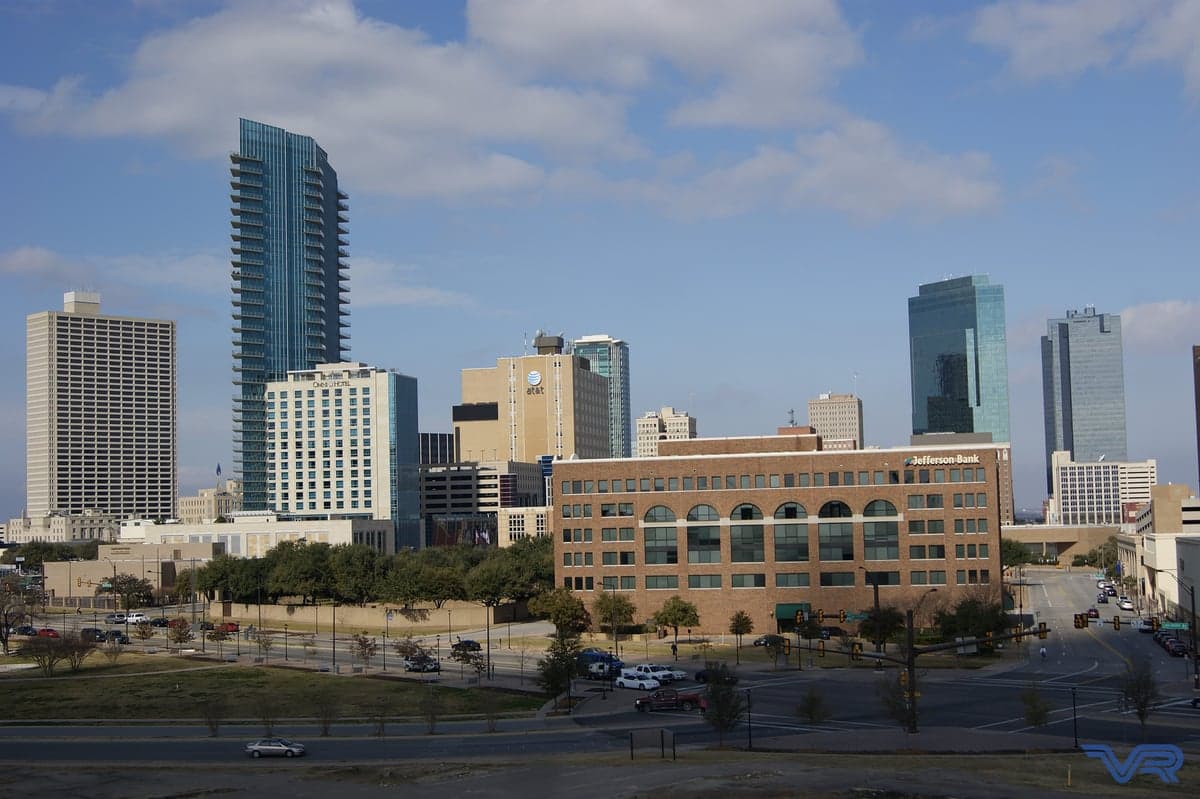
Photo: Wikipedia
Personal Sovereignty in Fort Worth, TX
Strong independent fundamentals that actively favor personal liberty and low regulation.
What does Personal Sovereignty tell us?
Personal Sovereignty measures your capacity for self-reliance and independence with minimal government friction. Higher scores mean fewer barriers between you and the way you want to live... but it assumes you have the space you need and good neighbors.
What does this tell us?
Personal Sovereignty measures your capacity for self-reliance and independence with minimal government friction. Higher scores mean fewer barriers between you and the way you want to live... but it assumes you have the space you need and good neighbors.
State Policy
Energy independence: Net exporter (220% of energy produced in-state)
Personal Liberty
Homesteading

Personal Liberty Analysis
For the individual or family prioritizing personal sovereignty—the ability to live, defend, and provide for oneself without excessive government interference—Fort Worth, Texas, offers a notably permissive environment compared to most major U.S. cities. The city sits within a state that has aggressively pushed back against federal overreach, particularly under recent administrations, and its local governance generally aligns with a hands-off philosophy. While no urban area is a libertarian utopia, Fort Worth’s combination of low taxes, strong self-defense laws, and a culture of self-reliance makes it a serious contender for those seeking to minimize state control over their daily lives.
Tax burden and regulatory posture: How much of your money and time does the government take?
Texas has no state income tax, which is the single most impactful policy for preserving personal financial sovereignty. For a single earner or a family, this means every dollar earned stays in your pocket, not the state’s. The trade-off is higher property taxes, which in Tarrant County average roughly 2.1% to 2.5% of assessed value annually. However, the state’s homestead exemption (up to $40,000 off assessed value for school taxes) and a 10% annual cap on appraisal increases provide meaningful predictability. Sales tax in Fort Worth is 8.25%, but groceries and prescription drugs are exempt. On the regulatory side, Texas is a right-to-work state with minimal business licensing hurdles, and Fort Worth’s city council has historically resisted adopting the kind of zoning and permitting overreach seen in Austin or Dallas. For a prepper or survivalist, this means fewer bureaucratic barriers to running a side business, storing supplies, or modifying your property for self-sufficiency.
Self-defense and gun law specifics: Can you legally protect your home and family without permission slips?
Texas is a constitutional carry state, meaning no permit is required to carry a handgun openly or concealed for anyone legally allowed to possess a firearm. This is a foundational element of personal sovereignty. Fort Worth’s local government has not enacted any additional restrictions beyond state law, so there are no city-specific magazine bans, waiting periods, or registration schemes. The state’s Castle Doctrine and Stand Your Ground laws are among the strongest in the nation: you have no duty to retreat from any place you are lawfully present, and you are legally presumed to have a reasonable fear of death or great bodily harm if someone unlawfully enters your home or vehicle. For parents, this extends to protecting children in your home or car. The legal environment is clear: the state backs your right to use deadly force to stop a threat, and local prosecutors in Tarrant County are generally pro-2A. One practical note: while you can carry in most public places, private businesses can post 30.06 (concealed) or 30.07 (open carry) signs to prohibit firearms, so be aware of signage when entering stores or restaurants.
Self-reliance and homesteading viability: Lot sizes, zoning, and off-grid feasibility
Fort Worth is a sprawling city, and the key to homesteading viability is location. Inside the urban core, lot sizes are small (5,000-7,000 sq ft) and HOAs often restrict chickens, gardens, and outbuildings. However, the city’s extra-territorial jurisdiction (ETJ) and unincorporated areas of Tarrant County offer much more freedom. In areas like Benbrook, Azle, or far north Fort Worth near Haslet, you can find lots of 1 to 5 acres with no HOA. Zoning in these areas typically allows for livestock (chickens, goats, even a cow on larger parcels), detached workshops, and rainwater collection. The city’s building codes are based on the International Residential Code, but enforcement is lax in unincorporated areas. Off-grid feasibility is moderate: Texas has no state law prohibiting solar panels or rainwater harvesting (in fact, the state encourages rainwater collection with tax exemptions). However, connecting to the grid is still the norm, and going fully off-grid (no electric, no septic connection) may require navigating county health department rules for septic systems and well water. For a serious prepper, the best bet is to buy land in the county’s ETJ, where you can build a pole barn, store supplies, and raise food with minimal interference.
Personal liberties: Parental rights, medical autonomy, speech, and property
Texas has been a national leader in protecting parental rights. The state’s Parental Bill of Rights (passed in 2023) explicitly affirms that parents have the fundamental right to direct their child’s education, healthcare, and moral upbringing. This means no government-mandated medical procedures or curriculum without parental consent. Fort Worth’s school districts—particularly the suburban ones like Keller ISD, Northwest ISD, and Aledo ISD—have been responsive to parent concerns about curriculum transparency and have largely avoided the ideological battles seen in Austin or Dallas. On medical autonomy, Texas has banned vaccine passports and prohibits employers from mandating COVID-19 vaccines in most cases. The state also has a Right to Try law for terminally ill patients and a strong conscience clause for medical practitioners. Free speech is robust: Fort Worth has no local hate speech ordinances or permit requirements for public gatherings beyond standard parade permits. Property rights are protected by the state’s Private Real Property Rights Preservation Act, which requires governments to justify any regulatory taking. For a survivalist, this means you can generally store supplies, build fences, and use your land as you see fit, as long as you don’t create a public nuisance.
Overall, Fort Worth’s personal sovereignty environment is among the strongest of any major U.S. city. It lacks the extreme libertarian lean of rural Idaho or Montana, but it offers a realistic balance of urban employment and legal freedom. The biggest threats to sovereignty here are not state or local laws, but the creeping influence of HOA covenants and the potential for federal overreach in areas like firearm regulation or environmental mandates. For a single individual or a family looking to live with minimal government interference while still having access to a major economy, Fort Worth is a solid, defensible choice. The key is to buy land outside HOA jurisdiction, stay informed on state legislation, and exercise your rights before they are tested.

* Values derived from national, state, county, city and local statistics and may differ in a specific area. Last updated: 2026-04-20T03:53:02.000Z
Narrative content on this page is AI-generated and may contain mistakes. Verify any details that matter before acting on them.
ReloMaps may earn a commission from affiliate links at no extra cost to you.

