 Popular
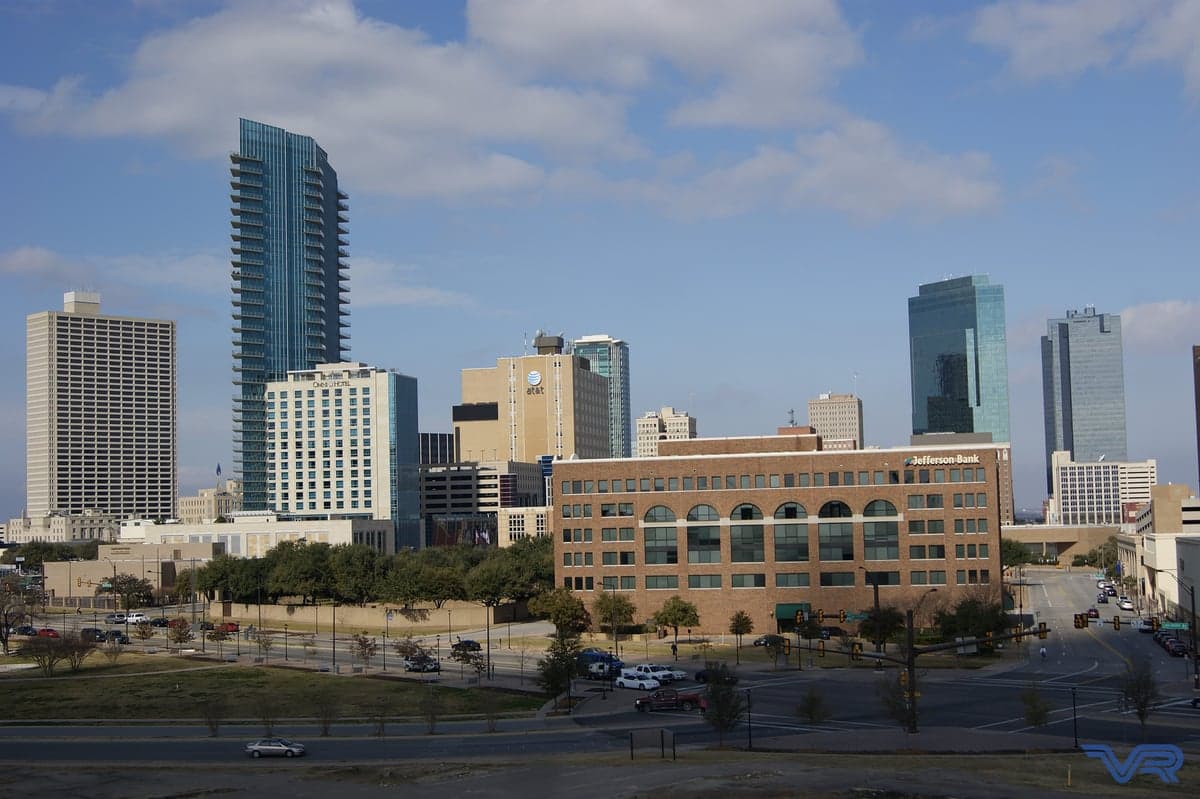
Photo: Wikipedia
Strategic Assessment of Fort Worth, TX
Multiple tactical vulnerabilities. Population density, target proximity, or disaster risk are likely compounding. A retreat property and exit planning is required.
What does the Strategic Assessment tell us?
Our Strategic Assessment grades tactical survivability of an area. Major population centers, military targets, fallout zones, natural disasters, and border exposure all drive risk — lower exposure means a more defensible position in a crisis.
This is heavily inspired by Joel Skousen's Strategic Relocation book. Highly recommended you checkout the book ($)What does this tell us?
Our Strategic Assessment grades tactical survivability of an area. Major population centers, military targets, fallout zones, natural disasters, and border exposure all drive risk — lower exposure means a more defensible position in a crisis.
This is heavily inspired by Joel Skousen's Strategic Relocation book. Highly recommended you checkout the book ($)Strategic Pillars

Key Distances
Regional Safe Places
Below is our recommended "safe zones" in Texas and the surrounding area based on our strategic heuristics. For most people, it's unrealistic to live in a “safe zone” full-time due to work, family or other personal reasons. They tend to be more rural. However, many of these areas are perfect for second homes and retreat properties that double as a vacation home or even a short-term rental.

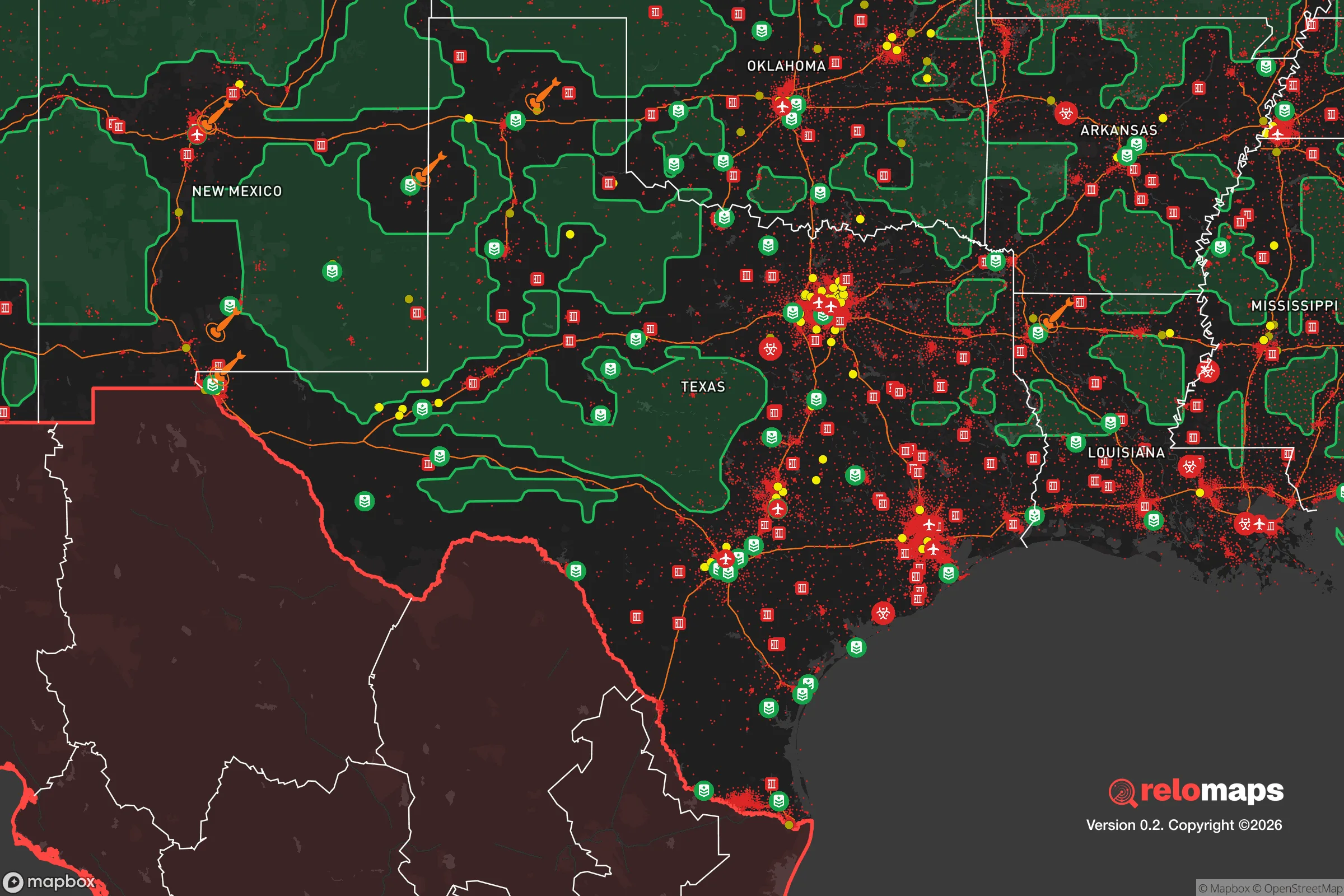


Important Note: For informational purposes only. This does not mean nothing bad ever happens in the green zones. Please use common sense. This is based on public data and modeled with AI. We tried to take a conservative approach but mistakes happen. We update this regularly as new information becomes available.
Solar Generator Recommendations
Backup power matters more here than in safer locations. We've picked three solar generators across budgets and capacity tiers — start with the budget unit if you only need a few essentials, or step up if you want to run a fridge and HVAC for days at a time.

Jackery Portable Power Station Explorer 300
Budget OptionPower on the Go: Weighing only 11 lbs, it's convenient to set up and store with book-sized foldable solar panels

BLUETTI Portable Power Station AC180
Designed for both indoor and outdoor scenarios, AC180 is highly capable as it has a robost capacity and continuous output power.

EF ECOFLOW DELTA Pro Ultra Power Station
Upgraded PickEcoFlow DELTA Pro Ultra is a whole-home energy system designed to grow with your family. Integrated with the Smart Home Panel 2, it scales to meet your evolving energy needs — keeping your home powered, intelligent, and secure through every stage of life.
We earn a commission, at no additional cost to you.
Strategic Assessment Analysis
Fort Worth, Texas, offers a compelling mix of strategic depth and practical resilience for those looking to weather potential civic unrest, economic shocks, or natural disasters. Unlike its neighbor Dallas, Fort Worth retains a distinct, down-to-earth character, with a geography and infrastructure that lend themselves to a more defensible and self-sufficient lifestyle. Its position on the western edge of the Dallas-Fort Worth metroplex provides a buffer from the densest population centers while still granting access to critical resources and transportation corridors, making it a serious consideration for anyone prioritizing long-term security and preparedness.
Geographic position and natural advantages for long-term security
Fort Worth sits at a strategic crossroads where the rolling plains of North Texas meet the eastern edge of the West Texas rangelands. This location offers several natural advantages. The area is largely free from major seismic activity, hurricanes (though inland storms are a factor), and the wildfire risks common to the western states. The Trinity River runs through the city, providing a reliable, if not pristine, water source, and the underlying Trinity Aquifer offers groundwater potential for those with the means to drill. The terrain is generally flat to gently rolling, which simplifies construction and movement, but also offers limited natural cover—a trade-off that favors open sightlines and defensible perimeters over rugged concealment. The climate is hot and dry in summer, with occasional severe thunderstorms and tornado threats, but the overall lack of extreme cold or persistent wet weather means fewer challenges for off-grid living and food storage. For a relocator, the key takeaway is that Fort Worth sits in a relatively stable, resource-rich zone, far from coastal flood zones, major fault lines, and the most volatile weather patterns.
Risks, exposures, and proximity to fallout-relevant landmarks
No location is without vulnerabilities, and Fort Worth has its share. The most immediate concern is its proximity to the Dallas-Fort Worth metroplex, a massive population center that includes DFW International Airport, a major hub for both commercial and military traffic. In a scenario of national unrest or a mass casualty event, this airport and the associated logistics infrastructure could become a focal point for chaos, refugee flows, or even a target. The city itself hosts Lockheed Martin's Aeronautics facility, a key defense contractor, and the Naval Air Station Joint Reserve Base Fort Worth. These are high-value assets that could attract attention in a conflict or major disruption. Additionally, the Barnett Shale natural gas fields lie directly beneath the metroplex, with numerous drilling sites and processing facilities scattered throughout the area. While this provides energy security, it also introduces the risk of industrial accidents or sabotage. The Trinity River, while a water source, is also prone to flooding in heavy rain events, and the city's aging drainage infrastructure can be overwhelmed. For the prepper, these risks are manageable but require awareness: avoid living too close to the airport, the naval base, or major gas infrastructure, and choose higher ground away from floodplains.
Practical resilience for a relocator: food, water, energy, and defensibility
Fort Worth's practical resilience is where it truly shines for the survival-minded relocator. The city is surrounded by a robust agricultural region, with numerous farms, ranches, and local food producers within a short drive. Farmers' markets are common, and the Texas Department of Agriculture supports a strong local food network. For those looking to supplement their own food supply, the growing season is long (roughly March to November), and the soil, while often clay-heavy, can be amended for productive gardening. Water is generally reliable from municipal sources, but the Trinity River and the aquifer offer backup options. The city's energy grid is part of the ERCOT system, which has shown vulnerability to extreme weather events (like the 2021 winter storm), but natural gas is abundant, and solar potential is high due to the region's sunny climate. Many homes are already equipped with gas lines, and installing solar panels with battery backup is a practical investment. Defensibility is a mixed bag: the city's layout is sprawling, with many suburban neighborhoods offering natural chokepoints and limited access points. However, the open terrain means that a determined group could approach from multiple directions. The best strategy is to choose a home on the western or northern edges of the city, where population density drops and rural properties offer more space for perimeter security, water storage, and off-grid infrastructure. The local gun culture is strong, with a high rate of legal firearm ownership and a supportive environment for training and self-defense, which is a significant plus for those concerned with personal and family security.
The overall strategic picture for Fort Worth is one of cautious optimism for the prepared relocator. It offers a rare combination of economic opportunity, resource availability, and a cultural mindset that values self-reliance and community. The risks are real—proximity to a major metroplex, industrial targets, and grid vulnerabilities—but they are not insurmountable. With careful property selection, investment in backup systems, and a commitment to building local networks, Fort Worth can serve as a solid base for weathering the storms ahead. It is not a remote bunker, but it is a place where a determined individual or family can build a resilient life without sacrificing all the conveniences of modern society. For those who understand that preparation is a mindset, not just a location, Fort Worth is a strong contender.

* Values derived from national, state, county, city and local statistics and may differ in a specific area. Last updated: 2026-04-20T03:53:02.000Z
Narrative content on this page is AI-generated and may contain mistakes. Verify any details that matter before acting on them.
ReloMaps may earn a commission from affiliate links at no extra cost to you.

