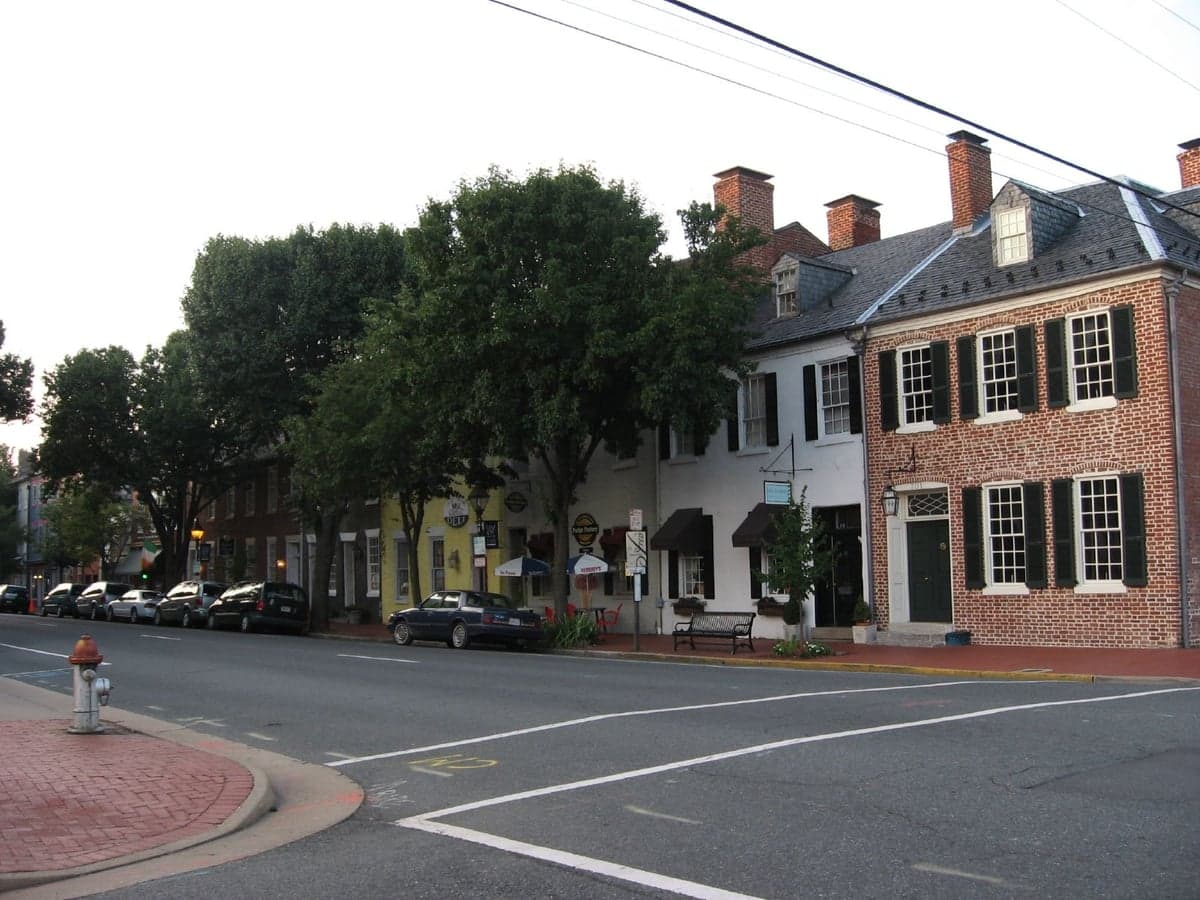
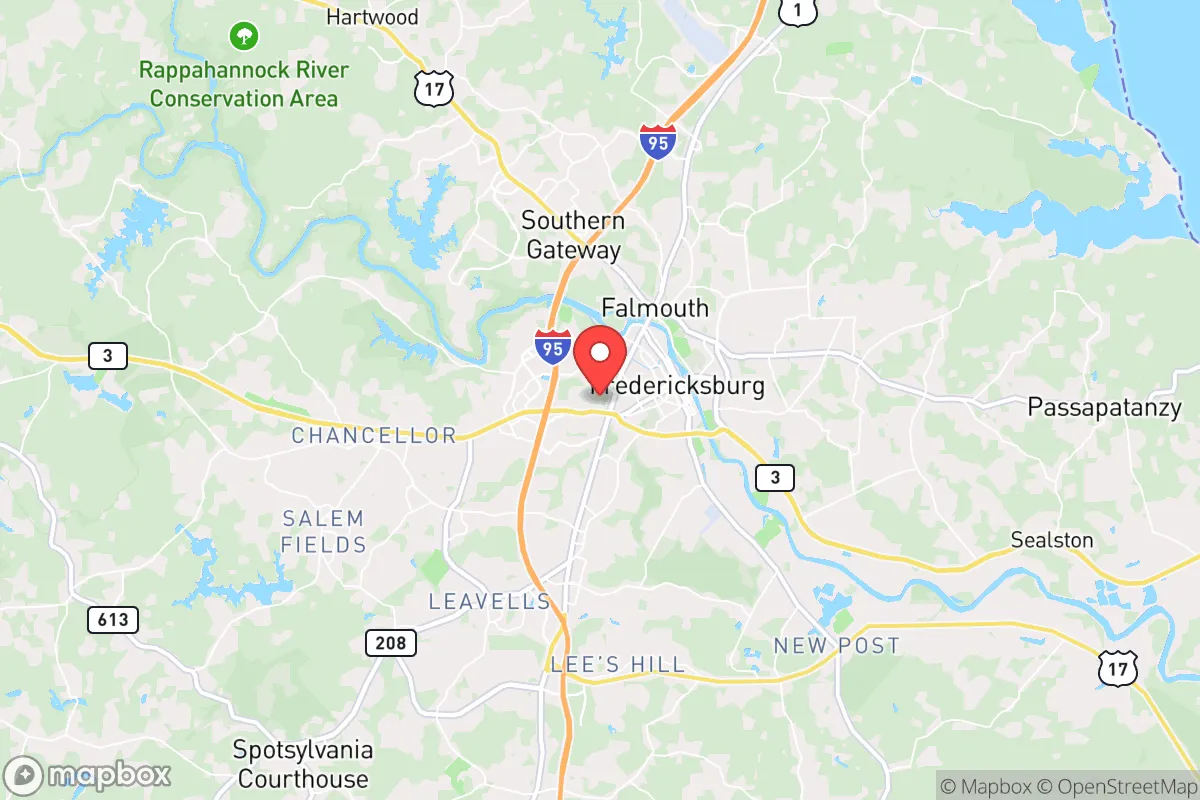
Photo: Wikipedia
Quality of Life in Fredericksburg, VA
Above-average quality of iife. The area offers a reasonable cost of living, decent mobility, and a mix of neighborhood amenities.
What does Quality of Life tell us?
Quality of Life blends cost of living, nearby amenities, socioeconomic signals, and neighborhood character. City-level scores represent the whole municipality; individual neighborhoods can differ.
What does this tell us?
Quality of Life blends cost of living, nearby amenities, socioeconomic signals, and neighborhood character. City-level scores represent the whole municipality; individual neighborhoods can differ.
Cost of Living
44% above national average
The Real Cost of Living in Fredericksburg, VA for 2026
| Tier | Individual | Family (4) |
|---|---|---|
| Survival | $24k | $46k |
| Comfortable | $90k | $132k |
| Luxury | $154k+ | $239k+ |
| Elite (Top 5%) | $188k+ | $291k+ |
65%
The Area Signal
A metric tracking the socioeconomic signals of the area.
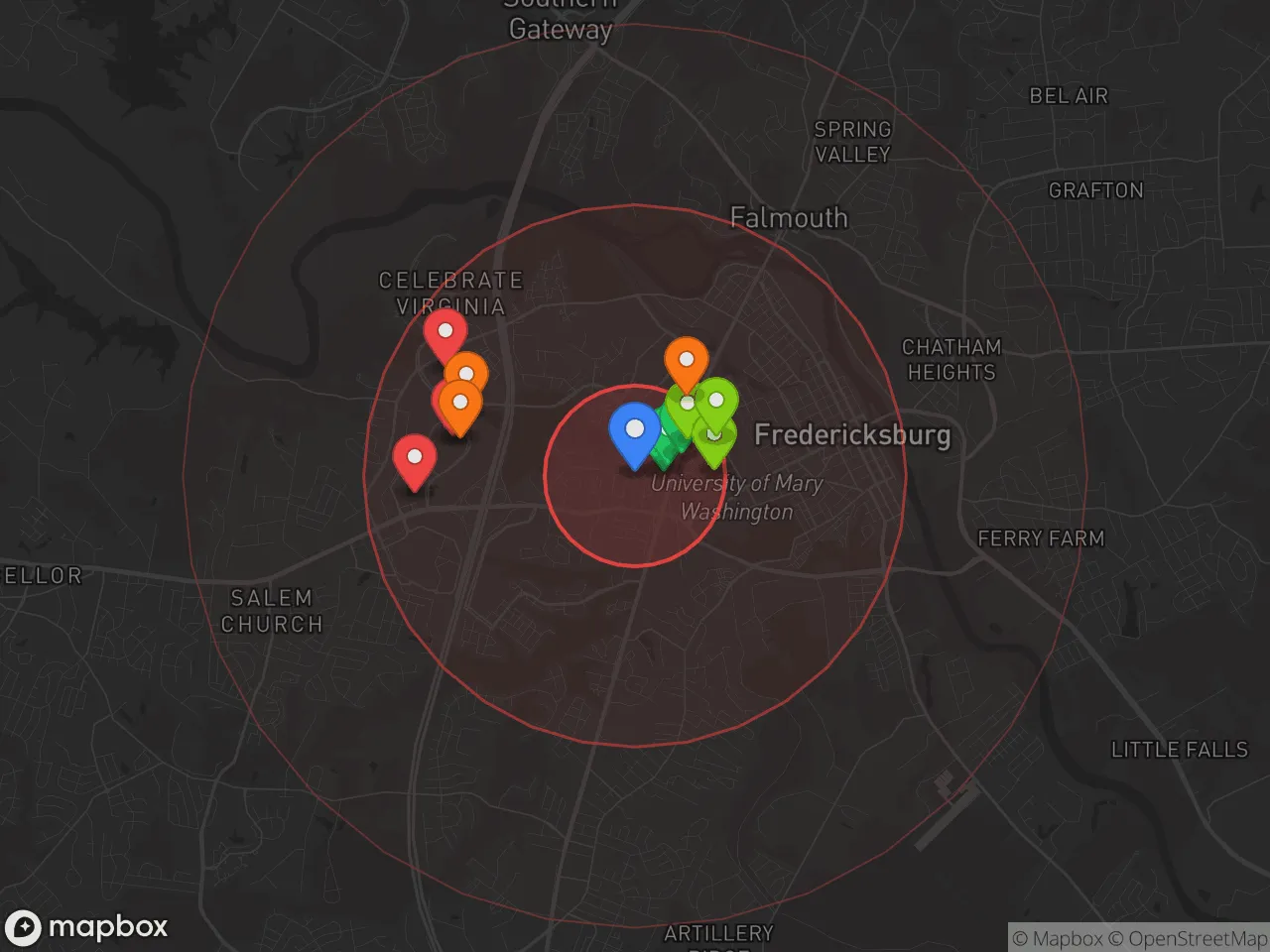
Hobbies
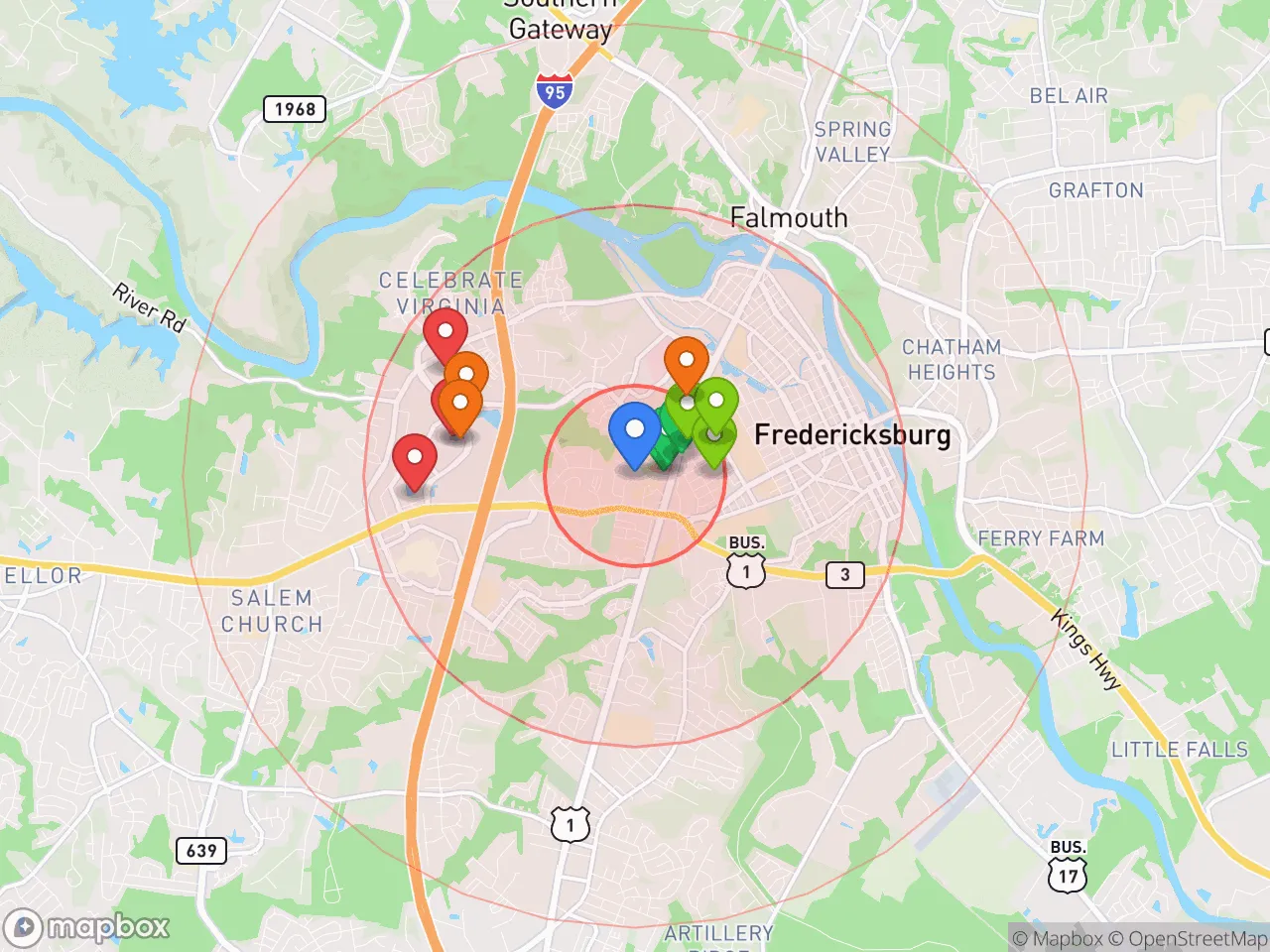
Explore the areaGroceries
7 within 10 miles
Gas
20 within 10 miles
Hospital
4 within 20 miles
Airport
IAD — Washington Dulles International
Post Office
USPS — Fredericksburg, VA
Critical Amenities
Quality-of-Life Analysis
Fredericksburg, Virginia, presents a quality of life defined by affluence and historical charm, attracting a mix of well-educated professionals, military families tied to nearby Marine Corps Base Quantico, and commuters seeking a small-city base within striking distance of Washington, D.C. The city’s cost of living index of 144 (100 = U.S. average) signals a premium lifestyle, with a median household income that typically outpaces the national figure, supporting a population that values proximity to the nation’s capital without sacrificing a walkable, historic downtown core.
How housing costs and affordability compare to D.C. and Richmond
Housing in Fredericksburg is the primary driver of its elevated cost of living, though it remains a relative bargain compared to the D.C. metro core. The median home value of $461,500 is roughly 40% lower than the median in Arlington or Alexandria, yet it is nearly double the Virginia state median of around $350,000. For renters, the median monthly rent of $1,521 is manageable for dual-income households but stretches budgets for single earners, especially when paired with the average commute of 32.7 minutes—a figure that can balloon to over an hour for those driving north to D.C. daily. Property taxes in Fredericksburg (city rate of $0.87 per $100 assessed value) are moderate, but the overall affordability gap with Richmond (COL index ~95) is stark: a comparable home in the capital costs roughly $100,000 less, making Fredericksburg a compromise between urban wages and suburban space.
What daily life is like for families and commuters
Daily life in Fredericksburg revolves around its compact, pedestrian-friendly downtown, anchored by the Rappahannock River and a historic district filled with independent shops, breweries, and restaurants. The city’s public schools, part of Fredericksburg City Public Schools, serve roughly 8,000 students and have shown steady improvement in state accreditation scores, though families often compare them to the higher-rated Spotsylvania County schools just outside city limits. Amenities include the University of Mary Washington, which brings cultural events and a college-town energy, and the nearby Fredericksburg Nationals minor league baseball stadium. For commuters, the Virginia Railway Express (VRE) station is a lifeline, offering a 90-minute train ride to D.C.’s Union Station that avoids I-95’s notorious congestion. The city’s rhythm is slower than Northern Virginia’s but busier than rural Virginia, with weekend farmers’ markets and riverfront trails balancing the weekday grind of long commutes.
Who thrives here? Fredericksburg is best suited for professionals and families who prioritize a historic, walkable environment and can absorb the premium housing costs, particularly those with secure remote or hybrid work arrangements that reduce the daily commute burden. Military personnel and federal contractors stationed at Quantico or Dahlgren find the city a logical midpoint, while retirees drawn to the area’s Civil War history and mild climate also fit well. Those seeking true affordability or a faster-paced urban lifestyle may find the trade-offs less satisfying, but for residents who value a strong sense of place and easy access to both the Blue Ridge Mountains and the Chesapeake Bay, Fredericksburg delivers a distinctive quality of life.

Crime in Fredericksburg, VA
Generally safer than 62% of comparable U.S. locations.
Violent CrimeViolent Crime Analysis
Property CrimeProperty Crime Analysis
Crime Analysis
Fredericksburg, Virginia, reports a violent crime rate of 402 incidents per 100,000 residents and a property crime rate of 2,484.1 per 100,000, placing it above both the national and state averages for communities of its size. While the city benefits from its historic downtown and proximity to Washington, D.C., these crime figures signal a safety environment that demands careful consideration, particularly for families and professionals evaluating relocation. The data suggests that property offenses—including theft, burglary, and motor vehicle theft—are the most prevalent concerns, while violent crime, though less common, occurs at a rate roughly 15% higher than the national median for similar urban areas.
Crime in context
Fredericksburg's crime statistics reflect a pattern common to small cities situated near large metropolitan hubs. The violent crime rate of 402 per 100K is significantly higher than Virginia's statewide average of roughly 220 per 100K, and the property crime rate of 2,484.1 per 100K exceeds the state average by approximately 30%. These numbers place Fredericksburg in a higher-risk tier compared to suburban communities in Stafford or Spotsylvania counties, which report notably lower rates. A contributing factor is the city's status as a regional transit and commercial hub, which attracts transient populations and creates opportunities for property crime. Additionally, the local justice system operates under progressive policies common to many Virginia cities, with district attorneys and judges who prioritize alternatives to incarceration. While intended to reduce recidivism, this approach has been linked to higher rates of repeat offenses and a perception among residents that consequences for property and low-level violent crimes are insufficient to deter criminal activity.
What residents experience
Daily life in Fredericksburg involves navigating a city where crime is concentrated in specific corridors and times. The downtown area, particularly along Princess Anne Street and near the train station, sees elevated rates of theft and occasional assaults, especially during late-night hours. Residential neighborhoods west of I-95 and near the University of Mary Washington generally report lower incident rates, though vehicle break-ins remain a common complaint citywide. Residents frequently cite concerns about shoplifting and retail theft at the Central Park shopping district, which accounts for a disproportionate share of property crime reports. The presence of a progressive prosecutorial philosophy means that many offenders arrested for these crimes face reduced charges or diversion programs, a reality that frustrates business owners and long-term residents who feel the system prioritizes offender rehabilitation over public safety. For those considering a move, the practical takeaway is that property crime is a near-certainty to encounter in some form, while violent crime is more sporadic but still a legitimate concern in high-traffic areas.
Neighborhood-level variation is significant. The area around the Fredericksburg Regional Transit hub and the downtown commercial core consistently reports the highest crime densities. In contrast, neighborhoods like Idlewild, Fall Hill, and the College Heights district near Mary Washington have substantially lower rates, often comparable to safer suburban enclaves. Property crime rates in the safest neighborhoods can be 40-50% lower than the citywide average, while violent crime in those areas is rare. Prospective residents should prioritize homes in these quieter, less transit-accessible zones and invest in security measures—motion lighting, cameras, and steering wheel locks—as a baseline precaution. The city's overall safety profile is one of manageable risk for those who choose their block carefully, but the combination of above-average crime rates and a justice system perceived as lenient creates an environment where vigilance is a daily necessity.
* Values derived from national, state, county, city and local statistics and may differ in a specific area. Last updated: 2026-05-01T04:39:42.000Z
Narrative content on this page is AI-generated and may contain mistakes. Verify any details that matter before acting on them.
ReloMaps may earn a commission from affiliate links at no extra cost to you.

