Photo: Wikipedia
Political ClimatePolitical Climate in Fredericksburg, VA
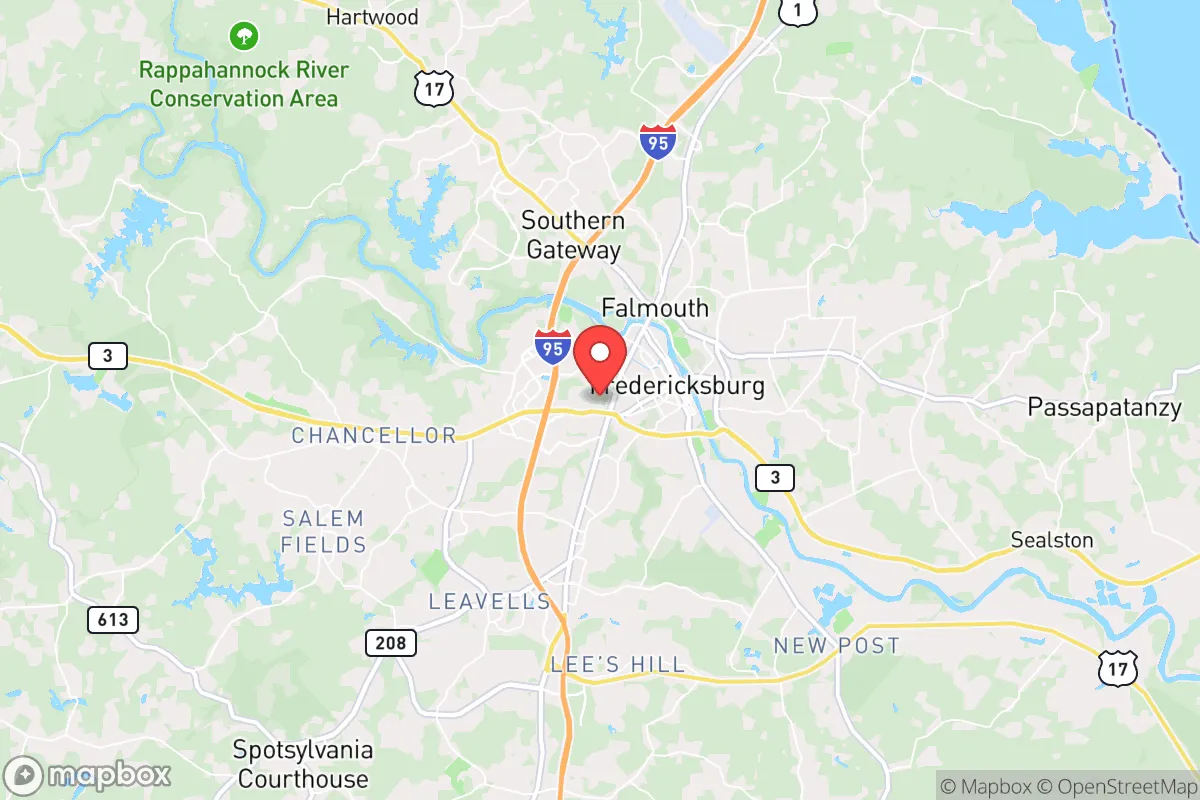
District shown is the primary district for this city’s centroid. Cities may span multiple districts.
Inherited from parent state — no local data available.
Local Political AnalysisPolitical Analysis of Fredericksburg, VA
Fredericksburg, Virginia, sits in a peculiar political spot these days. The city itself carries a Cook PVI of D+2, meaning it leans slightly Democratic compared to the nation as a whole, but that number doesn't tell the full story. Walk into any diner on Caroline Street or grab a beer at a brewery off Plank Road, and you'll hear a mix of old-school Southern conservatism, military families from nearby Quantico, and a growing wave of transplants from Northern Virginia who've brought their progressive politics with them. The real shift started around 2016, and it's been a slow, steady march leftward ever since—one that has a lot of longtime residents worried about what's coming next.
How it compares
To really understand Fredericksburg's politics, you have to look at the ring around it. Drive 15 minutes west to Spotsylvania County, and you're in solidly red territory—folks there vote like they mean it, and they're not shy about pushing back on Richmond's mandates. Head south to Stafford County, and it's a bit more purple, but still leans conservative on most issues. The contrast is sharpest when you compare Fredericksburg to places like Charlottesville or Arlington. Those areas have fully embraced progressive policies on housing, policing, and taxes. Fredericksburg is still fighting that battle, but the ground is shifting. The city council has gotten younger and more progressive in recent cycles, and you can feel it in everything from zoning debates to how they handle public safety funding.
What this means for residents
For someone who values personal freedom and limited government, the trend here is concerning. The city has started pushing for more density and transit-oriented development, which sounds fine on paper but often means more regulations on property owners and less say for neighborhoods. There's been talk of expanding the city's rental inspection program, which sounds like a small thing until you realize it gives the government more power over what you can do with your own home. The school board has also gotten more activist, with curriculum changes that prioritize social justice over core academics. If you're a parent who wants your kid to learn math and history without the political spin, you're starting to look at private options or moving out to the county. The tax burden is creeping up too—the city's real estate tax rate is higher than Spotsylvania's, and it's only going one direction.
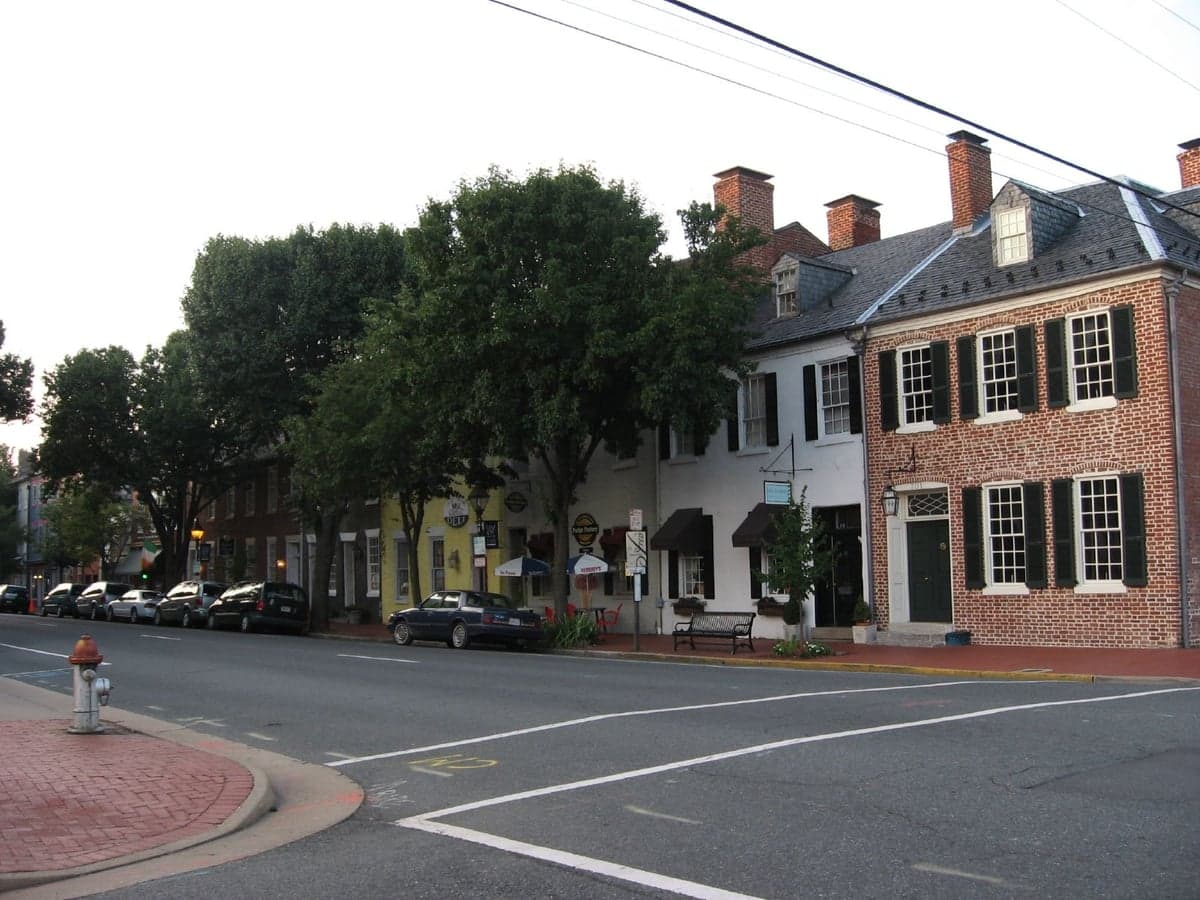
On the cultural side, Fredericksburg still has its charms. The historic downtown is beautiful, and there are plenty of gun-friendly folks and churchgoers who keep the old values alive. But the annual events are getting more political, and you'll see more pride flags and social justice banners than you did a decade ago. The city's response to COVID was a wake-up call for many—mandates that felt heavy-handed, businesses that struggled under restrictions while big box stores thrived. That kind of overreach leaves a bad taste, and it's why a lot of us are watching the next election cycle like hawks. If you're thinking of moving here, just know that the political climate is in flux. The old Fredericksburg is still here, but it's fighting for air.

State Political ClimatePolitical Climate in Virginia
State Political AnalysisPolitical Environment in the State
Virginia has long been a political battleground, but over the past 15 years it has shifted from a reliably purple state to one that leans increasingly Democratic at the statewide level, driven almost entirely by explosive growth in the Washington, D.C. suburbs. The state’s overall partisan lean is now roughly D+5 to D+7 in presidential elections, with Democrats controlling both chambers of the General Assembly and the governor’s mansion as of 2026. However, this blue veneer masks a deeply divided commonwealth: the rural southwest and southside remain solidly Republican, while the urban crescent from Northern Virginia down through Richmond to Hampton Roads powers the Democratic majority. For a conservative considering relocation, the key question is whether the state’s trajectory toward progressive governance is accelerating or hitting a wall.
Urban vs. rural divide
The political map of Virginia is a tale of two commonwealths. The Democratic stronghold is the densely populated Northern Virginia suburbs—places like Arlington, Alexandria, and Fairfax County—which alone account for roughly one-third of the state’s vote. These areas are dominated by federal employees, tech workers, and recent transplants from blue states, and they vote 65-70% Democratic. Richmond and Norfolk are also reliably blue, with the capital city’s gentrification and university influence pushing it leftward. In contrast, the rural Southwest Virginia counties—like Lee, Wise, and Buchanan—vote 75-80% Republican, driven by coal country values, gun culture, and economic anxiety. The Richmond suburbs like Chesterfield and Hanover are competitive but trending red, while Virginia Beach remains a purple toss-up. The 2021 gubernatorial race saw Republican Glenn Youngkin win by flipping Loudoun County—a wealthy D.C. exurb that had gone blue for years—by focusing on parental rights in schools. That flip was a warning shot: the urban-rural divide is real, but the suburbs are the true battleground.
Policy environment
Virginia’s policy environment has shifted dramatically leftward since 2019, when Democrats took full control of the legislature. The state now has a progressive income tax structure (top rate 5.75%), a relatively high sales tax (5.3% state, plus local add-ons), and property taxes that vary wildly—Loudoun County levies about $1.15 per $100 of assessed value, while Roanoke County is around $0.85. The regulatory posture is increasingly burdensome: the Virginia Clean Economy Act mandates a 100% carbon-free grid by 2050, driving up energy costs. Education policy is a flashpoint: in 2020, the state adopted the Virginia Mathematics Pathways Initiative (VMPI), which sought to delay algebra until 9th grade—a move that sparked massive parental backlash and was eventually shelved. The 2021 election was largely a referendum on that overreach. Healthcare expanded under Medicaid in 2019, and the state now has some of the strongest abortion protections in the South, codified into law in 2020. Election laws are moderate: no-excuse absentee voting, same-day registration, and drop boxes are all legal, but voter ID is still required—a compromise that has held. For conservatives, the biggest red flag is the state’s willingness to preempt local control on issues like zoning and education, often overriding rural counties.
Trajectory & freedom
Virginia’s trajectory on personal freedom is a mixed bag, but the trend line is concerning for conservatives. On the positive side, the 2021 election of Glenn Youngkin brought a brief pause to progressive overreach: he signed a parental rights bill requiring schools to notify parents of sexually explicit content, and he pushed through a tax rebate and a modest cut to the grocery tax. However, the 2023 legislative elections saw Democrats retake the House and Senate, and they immediately moved to undo many of those gains. In 2024, the legislature passed a red flag law (SB 601) allowing courts to temporarily seize firearms from individuals deemed a threat, and a ban on assault weapons (HB 2) that is currently tied up in court challenges. On medical autonomy, the state expanded Medicaid abortion coverage and eliminated the 24-hour waiting period. Property rights took a hit with the Virginia Housing Opportunity Act, which allows upzoning in single-family neighborhoods near transit—a move that erodes local control. The biggest freedom loss is on Second Amendment rights: Virginia went from a “shall issue” concealed carry state to one with a “may issue” framework in some localities, and the 2020 ban on firearms in state buildings remains. For a conservative, the state is becoming less free on guns, taxes, and education, but the parental rights movement shows that resistance is real.
Civil unrest & political movements
Virginia has been a flashpoint for political violence and activism. The 2017 Unite the Right rally in Charlottesville remains the most infamous event, leading to the death of a counter-protester and a national reckoning over Confederate monuments. That event galvanized both the left (which pushed for monument removals) and the right (which saw it as a false flag). Since then, Loudoun County became ground zero for the parental rights movement in 2021, after a series of sexual assault cases in schools were mishandled, sparking massive school board protests that went viral. The Virginia Citizens Defense League (VCDL) remains a powerful force, organizing annual Lobby Day rallies at the state capitol that drew tens of thousands of gun rights activists in 2020. Immigration politics are relatively quiet compared to border states, but Fairfax County is a self-declared “sanctuary” jurisdiction, refusing to cooperate with ICE detainers. Election integrity controversies flared in 2020, with then-Governor Ralph Northam’s executive orders expanding mail-in voting, but no major fraud was proven. The most visible flashpoint today is the ongoing battle over school curriculum, with conservative groups like Moms for Liberty active in Chesterfield and Virginia Beach. A new resident will notice the political tension is palpable in the suburbs, less so in rural areas.
Projection
Over the next 5-10 years, Virginia will likely continue its slow drift leftward, but not without fierce resistance. The key demographic driver is the continued influx of educated, liberal-leaning professionals into Northern Virginia, which is growing at 1-2% annually while rural areas shrink. By 2030, the D.C. suburbs could account for 40% of the state’s vote, making it nearly impossible for a Republican to win statewide without a massive suburban swing. However, the 2021 Youngkin victory showed that a candidate who focuses on kitchen-table issues—taxes, schools, crime—can still flip the suburbs. The wild card is the Hampton Roads region, which is growing slower but remains purple; if it trends blue, the state is lost for conservatives. The policy trajectory is clear: expect more gun control, higher taxes, and progressive education mandates. But the parental rights movement is not going away, and the 2024 election results in Loudoun County saw school board races flip back to conservatives. The bottom line: Virginia is not California yet, but it’s on a similar path. A conservative moving here should target the Richmond suburbs or Southwest Virginia for a more aligned environment, but be prepared for a state government that is increasingly hostile to traditional values.
For a new resident, the practical takeaway is this: Virginia offers a high quality of life with strong job markets, good schools in the suburbs, and beautiful natural landscapes, but the political climate is a constant tug-of-war. If you value low taxes, gun rights, and local control, you will find yourself fighting an uphill battle against a state government that is increasingly progressive. The best strategy is to choose your county carefully—Hanover, Roanoke County, or Augusta County are safer bets than Fairfax or Arlington. And get involved in local politics, because in Virginia, the real fight is at the school board and county supervisor level.
* Values derived from national, state, county, city and local statistics and may differ in a specific area. Last updated: 2026-05-01T04:39:42.000Z
Narrative content on this page is AI-generated and may contain mistakes. Verify any details that matter before acting on them.
ReloMaps may earn a commission from affiliate links at no extra cost to you.

