Photo: Wikipedia
Strategic Assessment of Gaffney, SC
Meaningful friction. Expect exposure to either population pressure, blast zones, or natural disaster risk. Consider buying a retreat property.
What does the Strategic Assessment tell us?
Our Strategic Assessment grades tactical survivability of an area. Major population centers, military targets, fallout zones, natural disasters, and border exposure all drive risk — lower exposure means a more defensible position in a crisis.
This is heavily inspired by Joel Skousen's Strategic Relocation book. Highly recommended you checkout the book ($)What does this tell us?
Our Strategic Assessment grades tactical survivability of an area. Major population centers, military targets, fallout zones, natural disasters, and border exposure all drive risk — lower exposure means a more defensible position in a crisis.
This is heavily inspired by Joel Skousen's Strategic Relocation book. Highly recommended you checkout the book ($)Strategic Pillars

Key Distances
Regional Safe Places
Below is our recommended "safe zones" in South Carolina and the surrounding area based on our strategic heuristics. For most people, it's unrealistic to live in a “safe zone” full-time due to work, family or other personal reasons. They tend to be more rural. However, many of these areas are perfect for second homes and retreat properties that double as a vacation home or even a short-term rental.
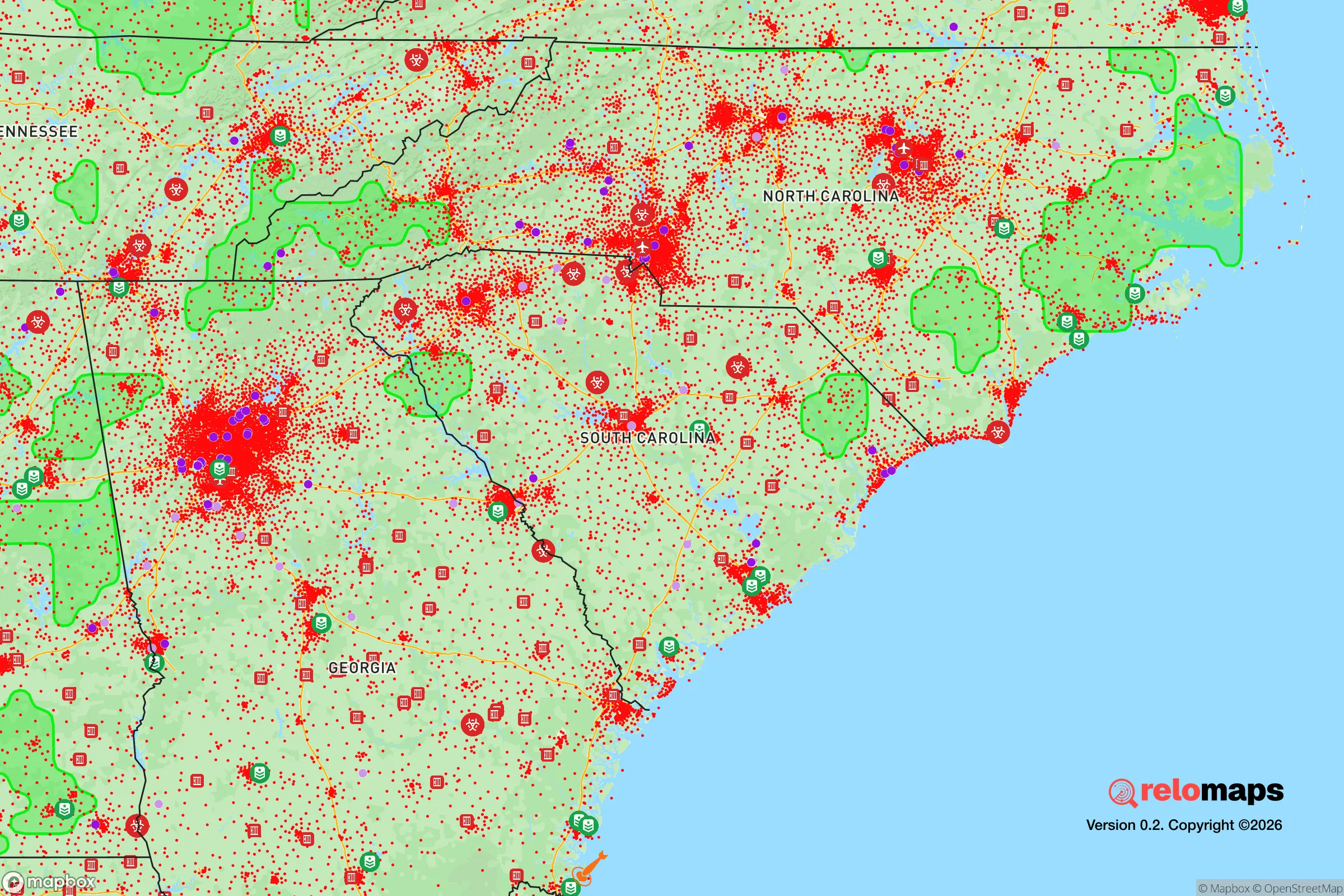
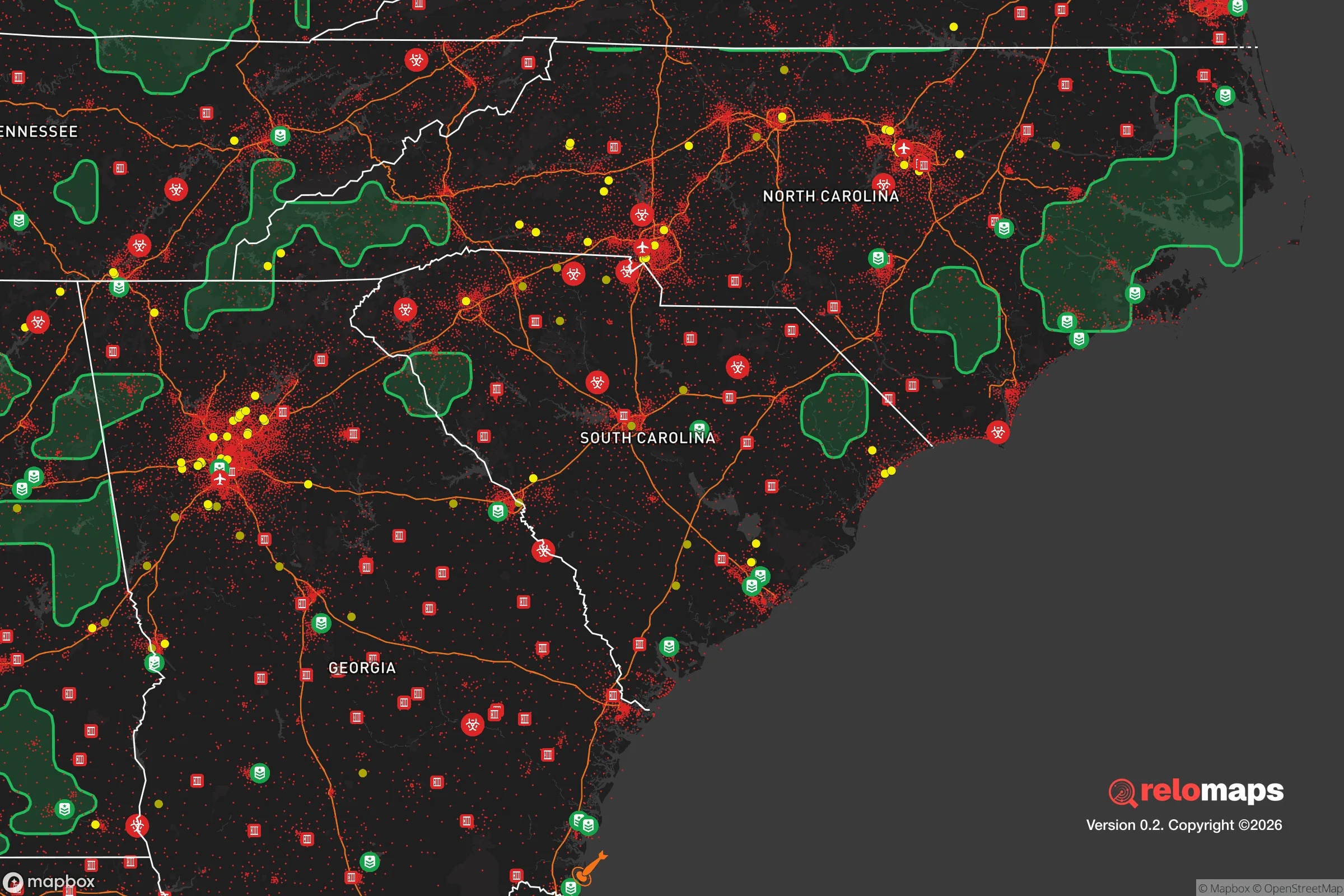


Important Note: For informational purposes only. This does not mean nothing bad ever happens in the green zones. Please use common sense. This is based on public data and modeled with AI. We tried to take a conservative approach but mistakes happen. We update this regularly as new information becomes available.
Solar Generator Recommendations
Backup power matters more here than in safer locations. We've picked three solar generators across budgets and capacity tiers — start with the budget unit if you only need a few essentials, or step up if you want to run a fridge and HVAC for days at a time.

Jackery Portable Power Station Explorer 300
Budget OptionPower on the Go: Weighing only 11 lbs, it's convenient to set up and store with book-sized foldable solar panels

BLUETTI Portable Power Station AC180
Designed for both indoor and outdoor scenarios, AC180 is highly capable as it has a robost capacity and continuous output power.

EF ECOFLOW DELTA Pro Ultra Power Station
Upgraded PickEcoFlow DELTA Pro Ultra is a whole-home energy system designed to grow with your family. Integrated with the Smart Home Panel 2, it scales to meet your evolving energy needs — keeping your home powered, intelligent, and secure through every stage of life.
We earn a commission, at no additional cost to you.
Strategic Assessment Analysis
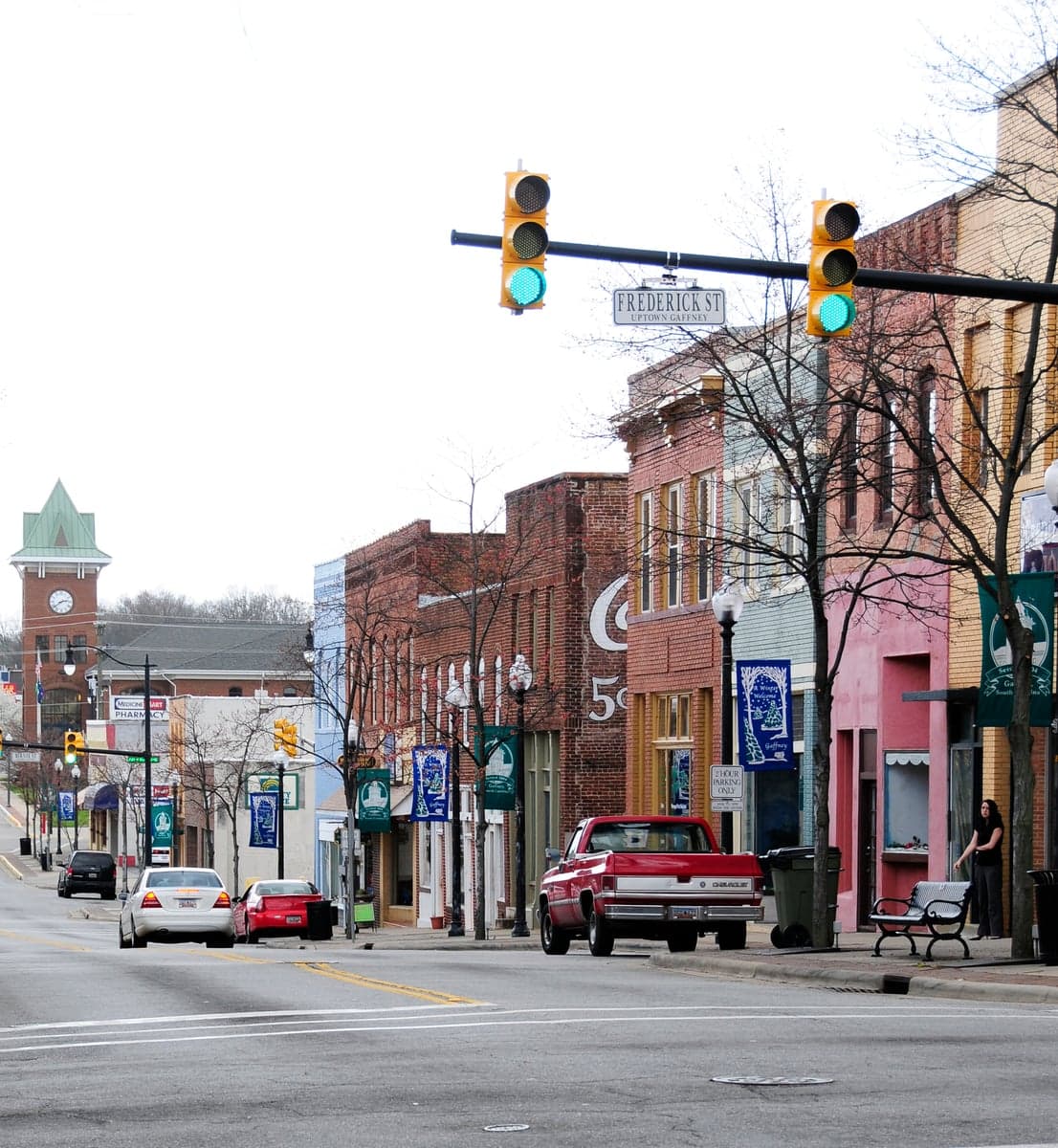
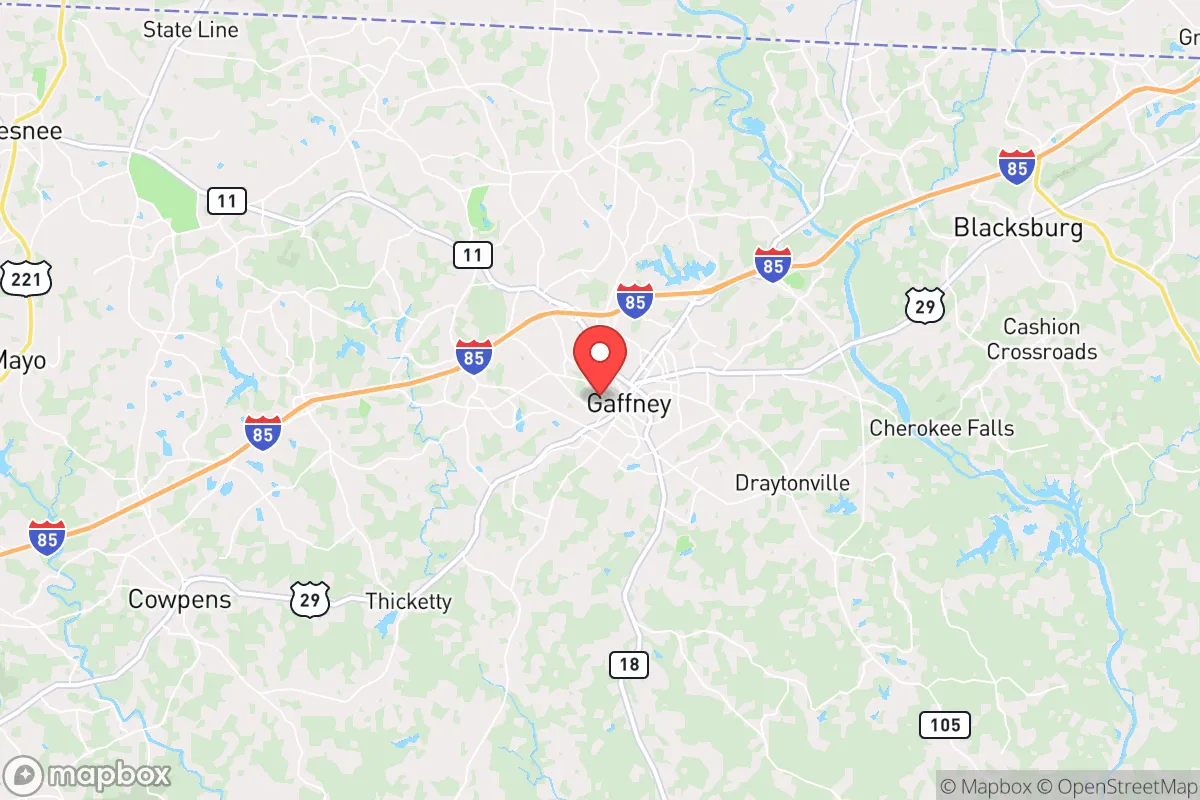
Gaffney, South Carolina, occupies a strategic sweet spot for those prioritizing resilience and relocation security in an uncertain future. Situated in Cherokee County along the I-85 corridor, the town sits roughly halfway between Charlotte, North Carolina, and Greenville, South Carolina—close enough to access major medical and supply hubs, yet far enough to avoid the direct blast radius and immediate civil chaos of a major metropolitan target. Its location offers a blend of rural buffer and logistical connectivity that preppers and survivalists should take seriously, especially when considering the broader Southeast’s vulnerability to coastal storms, grid failures, and population-density-driven unrest.
Geographic position and natural advantages for long-term security
Gaffney’s geography is defined by the rolling Piedmont foothills, which provide natural drainage, defensible terrain, and a climate that supports year-round agriculture. The area sits at an elevation of roughly 780 feet, well above coastal flood zones and far from the hurricane storm-surge risks that plague Charleston or Myrtle Beach. The proximity to the Broad River and numerous smaller creeks offers reliable freshwater sources, while the surrounding hardwood forests supply timber for construction, fuel, and concealment. The I-85 corridor gives quick egress north toward the Appalachian Mountains or south toward the Georgia line—critical for evacuation or supply runs during a grid-down scenario. Cherokee County’s low population density (roughly 55,000 residents across 397 square miles) means fewer people competing for resources in a crisis, and the local topography—with its ridges, valleys, and wooded parcels—offers multiple defensible retreat options for those who buy land with an eye toward security.
Risks, exposures, and proximity to fallout-relevant landmarks
No location is without vulnerabilities, and Gaffney has several that demand attention. The most obvious is its position along I-85, a major freight and evacuation artery that could become a chokepoint or target during civil unrest or a mass casualty event. The interstate runs directly through the town, and a single bridge failure or roadblock could sever access to both Charlotte and Greenville. Additionally, Gaffney lies within 60 miles of the Catawba Nuclear Station (about 45 miles northeast) and the Oconee Nuclear Station (about 55 miles northwest). While both are operational and regulated, a catastrophic failure—whether from sabotage, earthquake, or EMP—would put Gaffney in the outer plume zone, requiring evacuation or shelter-in-place protocols. The town itself hosts a major rail line (CSX) that carries hazardous materials, including chemicals and fuels, through the heart of Cherokee County. For the prepper, these risks are manageable but not ignorable: stockpiling potassium iodide, maintaining a go-bag with radiation detection gear, and having a secondary retreat route east toward the less-populated Sandhills region are prudent steps. On the plus side, Gaffney is far from any major military bases (Fort Jackson is 90 miles southeast, Shaw AFB is 100 miles south), reducing the likelihood of being caught in a kinetic or terrorist strike aimed at strategic assets.
Practical resilience for a relocator: food, water, energy, and defensibility
For the individual or family looking to establish a resilient homestead, Gaffney offers a workable baseline. The local water table is accessible via shallow wells (typically 50–150 feet), and the area’s average annual rainfall of 48 inches supports rain catchment systems and off-grid gardening. The growing season runs roughly 210 days, from late March to early November, allowing for two crop cycles of staples like corn, beans, squash, and potatoes. Cherokee County has a strong agricultural heritage—peaches, soybeans, and livestock are common—so local knowledge and seed stock are available through the Clemson Extension office. Energy resilience is more mixed: Duke Energy provides grid power, but outages from thunderstorms and ice storms are frequent (2–4 per year on average). Solar potential is decent, with roughly 4.5 peak sun hours per day, though tree cover on many lots requires clearing for optimal panel placement. Propane and wood heating are common in rural homes, and the local hardware stores (Lowe’s, Tractor Supply) stock generators and fuel supplies. Defensibility depends on property selection: the rolling hills and wooded lots offer natural cover and fields of fire, but the open farmland near the interstate leaves some parcels exposed. The town’s law enforcement presence is modest—Cherokee County Sheriff’s Office has about 40 deputies for the entire county—so in a prolonged crisis, residents will largely rely on themselves and their neighbors. The local gun culture is strong, with multiple ranges and gun shops in the area, and South Carolina’s constitutional carry law (effective 2024) removes barriers to self-defense. For the relocator, the key is to buy land with a well, septic, and southern exposure for solar, ideally on a dead-end road or cul-de-sac with a single access point.
The overall strategic picture for Gaffney is one of calculated trade-offs. It is not a remote mountain redoubt—you will hear I-85 traffic and see the glow of Gaffney’s iconic peach-shaped water tower from miles away. But it is a place where a prepared individual can establish a sustainable foothold with access to regional resources, while staying clear of the highest-risk urban and military targets. The combination of arable land, reliable water, moderate climate, and a politically conservative community (Cherokee County voted 77% Republican in the 2024 presidential election) creates a social environment where prepper values—self-reliance, community defense, and distrust of centralized authority—are the norm, not the fringe. For those willing to invest in off-grid infrastructure and build relationships with like-minded neighbors, Gaffney offers a viable base of operations for weathering the storms ahead, whether they come from nature, the grid, or the breakdown of civil order. The smart move is to scout the area in person, talk to locals at the Cherokee County Farm Bureau or a Sunday service at one of the many Baptist churches, and secure a property with defensible terrain before the next wave of urban refugees discovers this corridor.

* Values derived from national, state, county, city and local statistics and may differ in a specific area. Last updated: 2026-04-29T20:59:22.000Z
Narrative content on this page is AI-generated and may contain mistakes. Verify any details that matter before acting on them.
ReloMaps may earn a commission from affiliate links at no extra cost to you.

