Photo: Wikipedia
Demographics of Gaithersburg, MD
Affluence Level in Gaithersburg, MD
A middle-class area roughly in line with national averages across income, home values, education, and employment.
People of Gaithersburg, MD
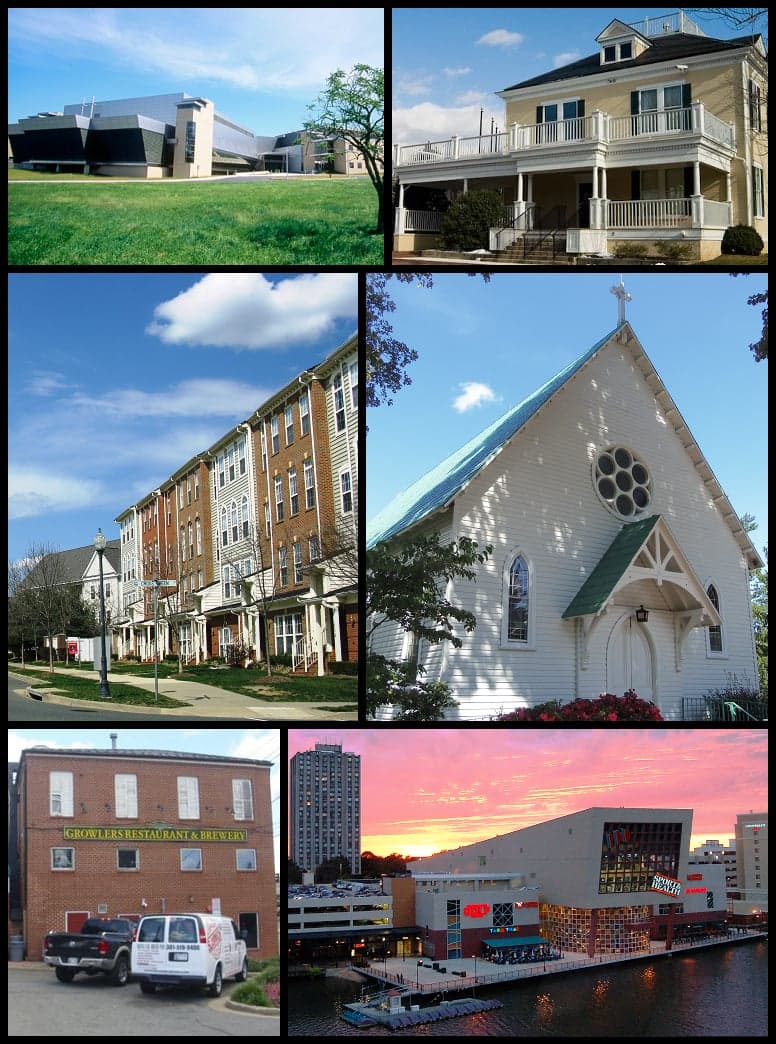
Gaithersburg is a majority-minority city of 69,225 residents where no single racial or ethnic group holds a numerical majority, creating a densely layered social landscape shaped by successive immigration waves and suburban expansion. With a foreign-born population of 23.9 percent and a college attainment rate of 52.4 percent, the city blends high-skilled professional households with working-class immigrant communities in a way that distinguishes it from both older inner suburbs and exurban bedroom communities. The population is roughly one-third white (31.2 percent), one-third Hispanic (29.5 percent), 15 percent Black, 11.8 percent East and Southeast Asian, and 7.7 percent Indian subcontinent, making it one of the most ethnically balanced jurisdictions in Montgomery County.
How the city was settled and grew
Gaithersburg began as a modest 19th-century railroad stop on the Baltimore and Ohio line, incorporated in 1878 around a farming and milling economy that drew German and English Protestant families into what is now Olde Towne. The arrival of the Metropolitan Branch of the B&O Railroad in 1873 turned the village into a summer retreat for Washington, D.C., elites, who built Victorian homes along Summit Avenue and Brookes Avenue — a corridor still lined with historic houses that anchor the Historic District. Through the early 1900s, the population remained small and overwhelmingly white, with a small Black community concentrated in the West Side neighborhood near the railroad tracks, where domestic workers and laborers lived in segregated housing. The post-World War II boom brought the first major growth spurt: federal workers fleeing the District, enabled by the 1950s construction of Interstate 270, filled new subdivisions such as Washingtonian Woods and Quince Orchard. By 1960, Gaithersburg had tripled in size to roughly 8,000 residents, still predominantly white and middle-class, with a small but growing number of Black families moving into the Fallsgrove area as Montgomery County began desegregating its housing stock.
Modern era (post-1965)
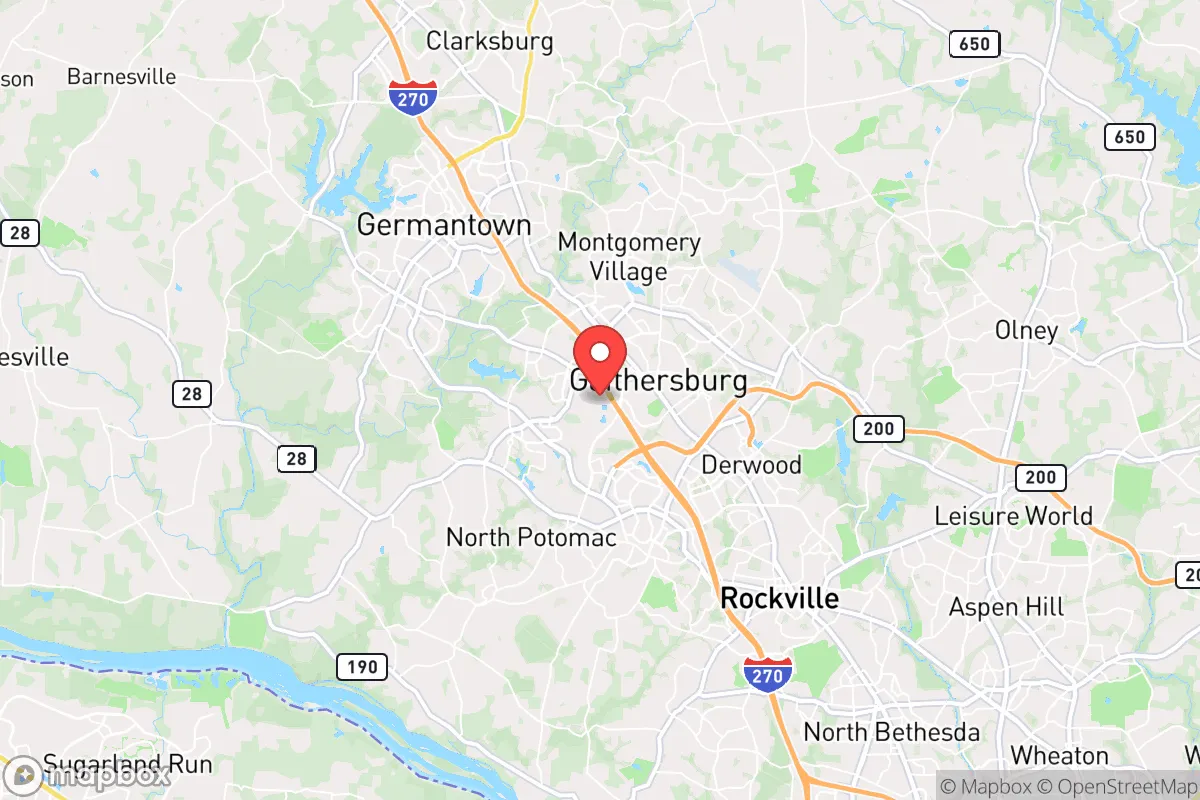
The 1965 Hart-Celler Act reshaped Gaithersburg’s population more dramatically than any other single policy. The first wave of post-1965 immigrants were East and Southeast Asian professionals — Chinese, Taiwanese, and Korean engineers and scientists recruited by the National Institutes of Health in nearby Bethesda and by the growing biotech corridor along I-270. These families settled in Kentlands and Lakelands, the New Urbanist planned communities built in the 1990s that offered top-rated schools and walkable town centers. Simultaneously, a separate stream of Indian subcontinent immigrants — primarily from India, Pakistan, and Bangladesh — arrived for tech and IT roles at firms such as Lockheed Martin, IBM, and later Google and Amazon’s local data centers. They concentrated in North Potomac and the Darnestown corridor, where large single-family homes and strong school districts (Quince Orchard High School, Northwest High School) created a self-reinforcing ethnic enclave. The Hispanic population grew later, accelerating after 2000, driven by Central American (Salvadoran, Guatemalan, Honduran) and Mexican immigrants working in construction, landscaping, and hospitality. They settled in the Olde Towne rental stock and in the Washington Grove area, where lower housing costs and existing Spanish-language networks eased the transition. By 2020, the white share had fallen from 70 percent in 1990 to 31.2 percent, while the Hispanic share rose from 5 percent to 29.5 percent, and the combined Asian-plus-Indian share reached 19.5 percent.
The future
Gaithersburg’s population is not homogenizing; it is consolidating into distinct ethnic and economic enclaves that overlap with specific neighborhoods and school attendance zones. The Indian subcontinent community in the North Potomac cluster is plateauing in growth rate as second-generation families age out and some move to newer exurban developments in Frederick County, while the East and Southeast Asian population in Kentlands and Lakelands is aging in place, with younger Asian professionals increasingly choosing newer suburbs like Clarksburg or Urbana. The Hispanic population, by contrast, is still growing — the 29.5 percent share is likely to reach 35 percent by 2035, driven by both continued immigration and higher birth rates, and this growth is concentrating in the Olde Towne and Washington Grove rental corridors. The Black population (15 percent) is relatively stable, with many families having lived in the area for two or three generations and showing less geographic concentration than other groups. The white population is declining slowly but remains the largest single group in the Fallsgrove and Quince Orchard subdivisions, where older homeowners are aging and not being replaced at the same rate by younger white families.
For someone moving in now, Gaithersburg offers a genuinely multiethnic environment where no single group dominates, but where the experience of daily life varies sharply by neighborhood — from the Indian grocery stores and Hindu temples of North Potomac to the Salvadoran bakeries and Spanish-language storefronts of Olde Towne. The city is becoming more Hispanic and more professionally diverse, with the biotech and tech sectors continuing to draw high-skilled immigrants while the service economy attracts lower-income arrivals. The schools are strong overall but show widening achievement gaps between the affluent Asian-and-Indian enclaves and the Hispanic-majority elementary schools, a trend that will shape local politics and housing debates for the next decade. Gaithersburg is not a melting pot in the classic sense; it is a city of parallel communities that coexist with minimal friction but also minimal integration, and that pattern is likely to persist.

* Values derived from national, state, county, city and local statistics and may differ in a specific area. Last updated: 2026-04-22T02:59:45.000Z
Narrative content on this page is AI-generated and may contain mistakes. Verify any details that matter before acting on them.
ReloMaps may earn a commission from affiliate links at no extra cost to you.

