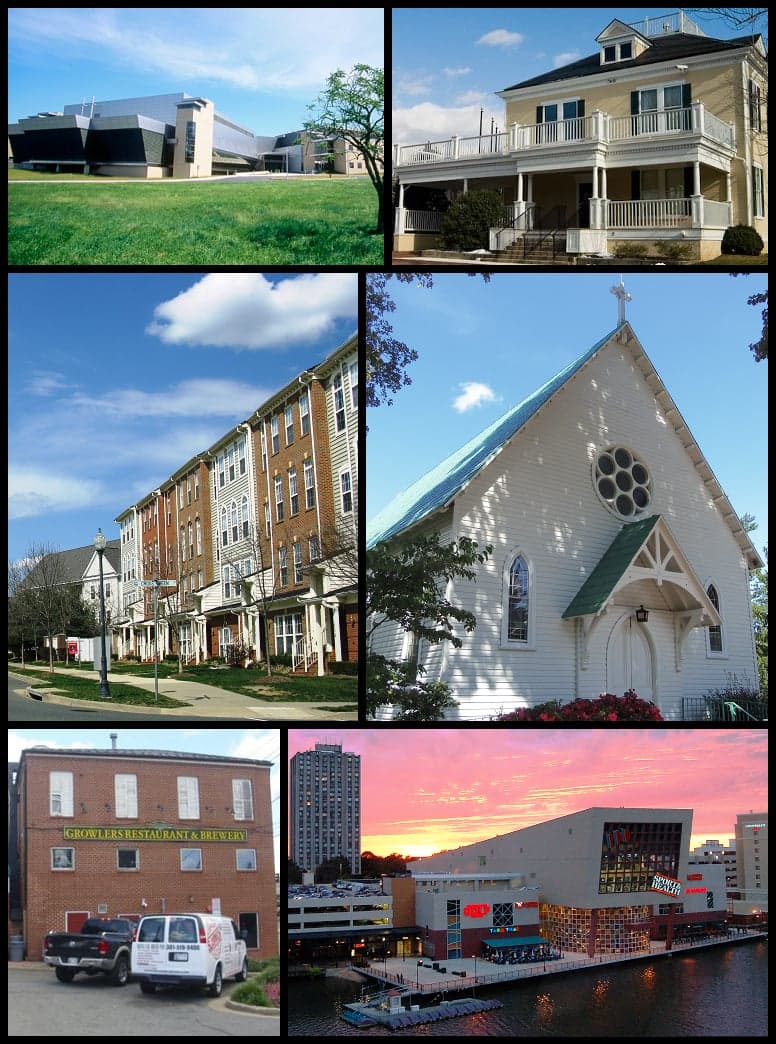
Photo: Wikipedia
Political ClimatePolitical Climate in Gaithersburg, MD
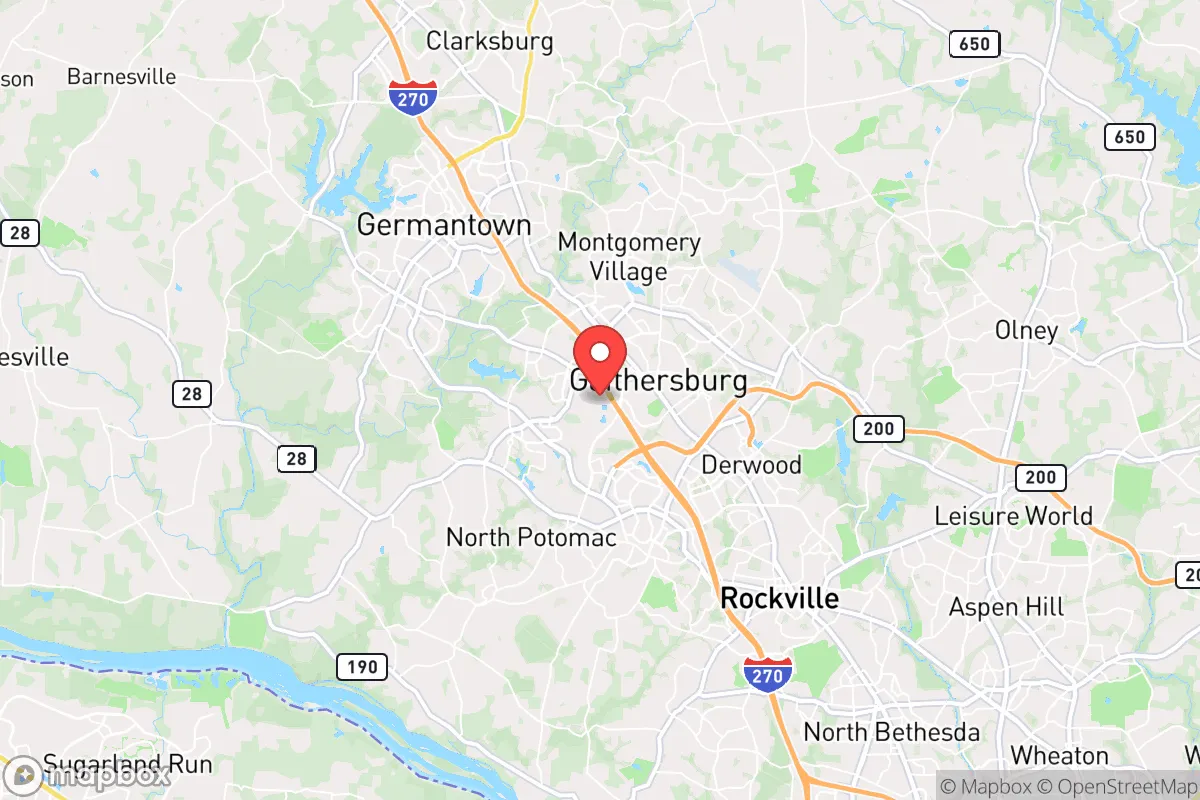
District shown is the primary district for this city’s centroid. Cities may span multiple districts.
Local Political AnalysisPolitical Analysis of Gaithersburg, MD
Gaithersburg, Maryland, sits in a county that has been trending blue for years, and the city itself reflects that shift. With a Cook PVI of D+3, the area leans Democratic, but it wasn't always this way. I remember when this town felt more balanced—you'd see as many "Don't Tread on Me" flags as "Hope" posters. Now, the local politics have moved steadily left, and it's something you notice in everything from zoning meetings to school board decisions. If you're coming from a more conservative area, you'll feel the difference pretty quickly.
How it compares
Gaithersburg is a moderate-to-liberal island compared to the surrounding countryside. Drive 15 minutes north to Damascus or Mount Airy, and you'll find a much more conservative vibe—more pickup trucks, fewer electric cars, and a general skepticism of government expansion. Even nearby Germantown, which shares Montgomery County's blue tilt, feels less aggressively progressive than Gaithersburg's city council. The contrast is stark: while rural towns are fighting to keep property taxes low and school curricula traditional, Gaithersburg's leaders have embraced higher density housing mandates and expanded social programs. It's a tale of two worlds, and the gap is widening every election cycle.
What this means for residents
For a conservative-leaning resident, the biggest concern is government overreach into daily life. The county has pushed through stricter rental regulations, noise ordinances, and even limits on how you can use your own property for short-term rentals. The school system has also shifted—critical race theory concepts and gender ideology discussions are now embedded in curriculum, and parents who object are often dismissed as "out of touch." Property taxes have climbed steadily to fund these expansions, and you'll see more fees and permits for things that used to be simple. If you value personal freedom and local control, you'll find yourself constantly pushing back against a bureaucracy that assumes it knows better than you do.
That said, it's not all bad. The area is diverse and well-educated, and there are still pockets of common sense. The local Republican club is active, and many residents quietly vote against the grain. But the trajectory is concerning: each election brings more progressive candidates, and the old guard of fiscal conservatives is fading. In the long term, I expect Gaithersburg to become even more like its neighbor Bethesda—wealthy, liberal, and heavily regulated. If you're thinking of moving here, just know that your voice will be one of many, and the political winds are blowing in one direction.
Culturally, Gaithersburg has embraced a "live and let live" attitude that can be refreshing, but it comes with a price. The city has designated itself a "sanctuary" jurisdiction, limiting cooperation with federal immigration enforcement, and it has pushed for universal mail-in voting and expanded early voting—moves that critics say erode election integrity. There's also a strong push for environmental regulations that can feel like a burden on small businesses. If you're a conservative who values limited government, you'll find yourself on the defensive more often than not. It's still a great place to live if you keep your head down, but the days of feeling like your values are respected are fading fast.

State Political ClimatePolitical Climate in Maryland
State Political AnalysisPolitical Environment in the State
Maryland has long been a solidly blue state, but its political climate is far more complex than a simple label suggests. The Democratic stronghold is driven overwhelmingly by the Washington, D.C. suburbs and Baltimore City, while the rest of the state—particularly the Eastern Shore, Western Maryland, and much of Southern Maryland—votes reliably Republican. Over the past 20 years, the state has shifted leftward on cultural and economic issues, driven by rapid suburbanization and an influx of federal workers, but a growing conservative backlash is visible in rural counties and exurban pockets.
Urban vs. rural divide
The political map of Maryland is a tale of two worlds. The D.C. suburbs—Montgomery County, Prince George’s County, and increasingly Howard County—are among the most liberal jurisdictions in the country, routinely delivering 70-80% of their votes to Democratic candidates. Baltimore City is similarly deep blue, while Baltimore County has trended left as its inner suburbs densify. Meanwhile, the rural spine of the state—Garrett County (the most Republican county in Maryland), Allegany County, Carroll County, and Harford County—vote 60-70% Republican. The Eastern Shore counties like Wicomico, Talbot, and Queen Anne’s are also reliably red, though they are seeing slow demographic change. The key swing areas are the exurbs of Frederick County and Anne Arundel County, where growth from D.C. commuters is slowly shifting the balance leftward. In 2020, Frederick County voted for Biden by just 2 points after going for Trump in 2016—a sign of how fast these areas are changing.
Policy environment
Maryland’s policy environment is increasingly progressive, with a tax burden that ranks among the highest in the nation. The state has a progressive income tax with rates up to 5.75%, plus a local piggyback tax that can push the combined rate over 8% in places like Montgomery County. Property taxes are also high, especially in the D.C. suburbs. The regulatory posture is business-friendly in name but not in practice—Maryland ranks poorly for business climate due to complex permitting, high energy costs, and strict environmental rules. Education policy is a mixed bag: the state spends heavily per pupil (top 5 nationally), but outcomes vary wildly, with wealthy suburban schools outperforming rural and urban ones. The Blueprint for Maryland’s Future law, passed in 2021, pours billions into education but has been criticized for expanding bureaucracy without addressing school choice. Healthcare is heavily regulated, with a state-based exchange and Medicaid expansion under the ACA. Election laws are among the most permissive in the country: no-excuse mail-in voting, same-day registration, and automatic voter registration are all in place. For a conservative, the policy environment feels like a slow but steady expansion of government control over daily life.
Trajectory & freedom
Maryland is becoming less free by nearly any measure of personal liberty. The most glaring example is gun rights: in 2023, the legislature passed a sweeping ban on carrying firearms in many public places, including parks, hospitals, and businesses unless they post a sign allowing it. This came after the Bruen decision, and the law is currently being challenged in court. On parental rights, the state passed the Trans Health Equity Act in 2023, which allows minors to access gender transition care without parental consent in some circumstances—a major flashpoint for conservative families. Medical autonomy took a hit with strict COVID-19 mandates that lasted longer than in most states, and the state still has a mask mandate in healthcare settings. Property rights are under pressure from the Maryland Department of the Environment, which has aggressively expanded wetland and forest conservation rules that limit development. Taxation is a constant drag: the state has no flat tax, no right-to-work law, and a death tax that kicks in at $5 million. The trend is clear: each legislative session brings new restrictions on what you can do with your body, your property, and your money.
Civil unrest & political movements
Maryland has seen its share of civil unrest, most notably the 2015 Baltimore riots following the death of Freddie Gray, which left a lasting scar on the city’s reputation and accelerated suburban flight. Since then, organized activist movements have been active on both sides. On the left, groups like CASA de Maryland push for sanctuary policies and driver’s licenses for undocumented immigrants—both of which are now law. The state is a sanctuary state, meaning local law enforcement does not cooperate with ICE detainers. On the right, the Maryland Shall Issue gun rights group is highly active, and the Maryland Republican Party has seen a grassroots resurgence in rural counties, with local school board races becoming battlegrounds over critical race theory and LGBTQ curriculum. Election integrity remains a hot topic: the 2020 election saw widespread use of mail-in ballots, and the state’s automatic voter registration system has been criticized for inaccuracies. A visible flashpoint for new residents is the constant presence of political signs—both for and against—in exurban areas, and the occasional protest at the State House in Annapolis over issues like abortion or gun control.
Projection
Over the next 5-10 years, Maryland will likely continue its leftward drift, but at a slower pace. The D.C. suburbs are growing faster than the rest of the state, and the influx of federal workers and tech professionals will keep the Democratic base strong. However, the rural and exurban counties are also growing, and they are becoming more politically organized. The key battleground will be the Frederick and Anne Arundel exurbs, where the balance of power could shift if housing costs push more conservatives out of the D.C. area. The state’s high taxes and regulatory burden are already driving some businesses and families to neighboring Pennsylvania, Delaware, and Virginia—a trend that could accelerate if the legislature continues to expand social programs and gun restrictions. For a conservative moving in now, expect to live in a state where your vote is largely irrelevant in statewide elections, but where local control in rural counties can still protect some freedoms. The next decade will likely see more fights over school choice, gun rights, and tax reform, but don’t expect a political realignment anytime soon.
Bottom line for a new resident: If you’re a conservative considering Maryland, you’re moving into a state where you’ll be in the minority politically, but where you can still find like-minded communities in places like Carroll County, Garrett County, or the Eastern Shore. Be prepared for high taxes, a powerful state government that doesn’t share your values, and a legal environment that restricts gun rights and parental authority. Your best bet is to pick a county that aligns with your priorities—and to get involved in local politics, because that’s where you can still make a difference. The state is not going to flip red, but it’s also not going to become California overnight. It’s a place where you can live well if you choose your zip code wisely and keep your expectations realistic.
* Values derived from national, state, county, city and local statistics and may differ in a specific area. Last updated: 2026-04-22T02:59:45.000Z
Narrative content on this page is AI-generated and may contain mistakes. Verify any details that matter before acting on them.
ReloMaps may earn a commission from affiliate links at no extra cost to you.

