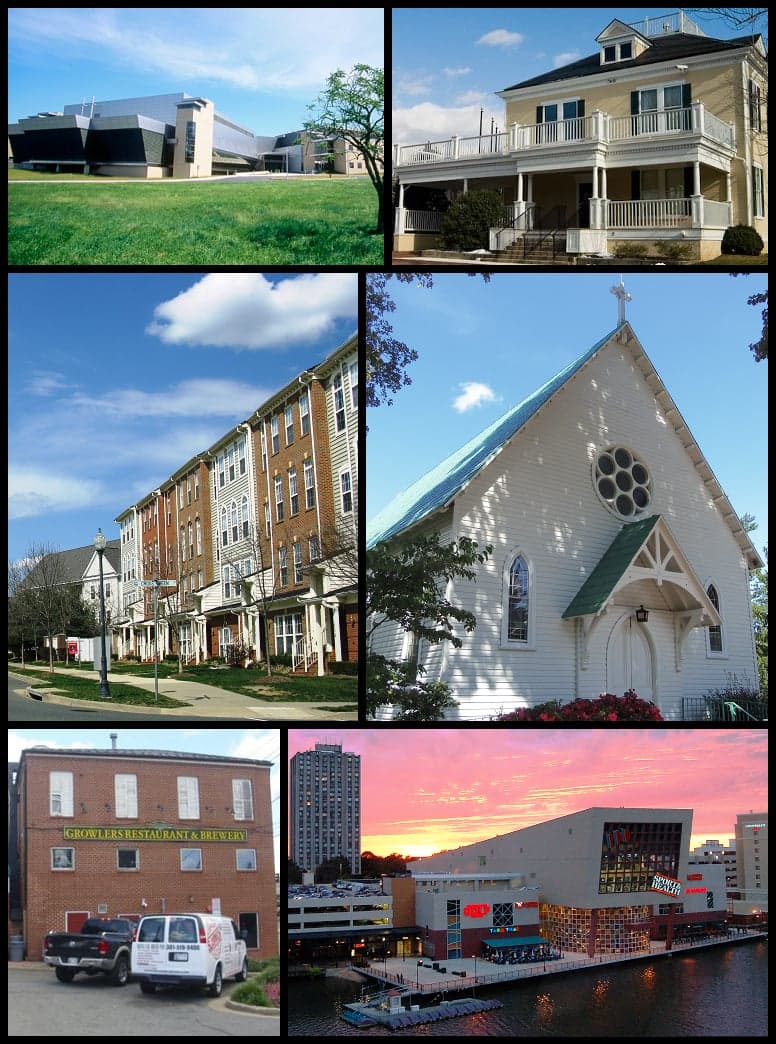
Photo: Wikipedia
Personal Sovereignty in Gaithersburg, MD
Viable for self-reliance. Generally workable, though some barriers may limit total independence.
What does Personal Sovereignty tell us?
Personal Sovereignty measures your capacity for self-reliance and independence with minimal government friction. Higher scores mean fewer barriers between you and the way you want to live... but it assumes you have the space you need and good neighbors.
What does this tell us?
Personal Sovereignty measures your capacity for self-reliance and independence with minimal government friction. Higher scores mean fewer barriers between you and the way you want to live... but it assumes you have the space you need and good neighbors.
State Policy
Energy independence: Importer (8% of energy produced in-state)
Personal Liberty
Homesteading

Personal Liberty Analysis
Gaithersburg, Maryland, presents a complex landscape for personal sovereignty, where the promise of individual autonomy is heavily mediated by state and local government structures. While the city itself offers a degree of suburban self-reliance, it operates under the broader, more restrictive umbrella of Montgomery County and the State of Maryland, both of which have a well-documented history of regulatory expansion and high taxation. For the survivalist or prepper, this means that while you can carve out a niche of personal preparedness, you will be doing so within a framework that actively discourages certain forms of self-sufficiency and imposes significant financial and legal burdens on your independence. The core tension here is between the convenience of a major metro area's infrastructure and the constant, costly oversight of a deeply progressive state government.
Tax burden and regulatory posture in Montgomery County
The most immediate challenge to personal sovereignty in Gaithersburg is the sheer weight of the tax burden. Maryland consistently ranks among the highest-taxed states in the nation, and Montgomery County is its most expensive jurisdiction. Property taxes are substantial, with effective rates often exceeding 1.1% of assessed home value, and the county adds its own layers of income tax on top of the state's progressive rates. This creates a scenario where a significant portion of your earned income and property value is effectively controlled by the state, directly reducing the capital you can allocate toward your own preparedness goals—whether that's land, supplies, or training. The regulatory posture is equally aggressive. Montgomery County has a reputation for stringent land-use laws, environmental regulations, and building codes that can make even simple home improvements a bureaucratic ordeal. For someone seeking to minimize government entanglement, this environment is a constant drain on time and resources, as every project from a fence to a solar panel array may require permits, inspections, and fees.
Self-defense and gun law specifics in Maryland
For those prioritizing the right to self-defense, Gaithersburg is a challenging location. Maryland is a "may-issue" state for concealed carry permits, though recent court rulings have pushed it toward a more "shall-issue" framework, the process remains expensive, time-consuming, and subject to significant administrative hurdles. You will need to complete a state-approved firearms training course, submit fingerprints, and undergo a thorough background check, with the state still retaining considerable discretion to deny applications. Furthermore, Maryland maintains a ban on "assault weapons" and standard-capacity magazines (over 10 rounds), severely limiting the types of firearms and equipment available for home defense and preparedness. The county itself has no additional gun control laws beyond the state's, but local law enforcement is known for strict enforcement. For the prepper, this means your defensive capabilities are legally constrained, and any attempt to stockpile or train with restricted items could lead to serious legal consequences. The environment is fundamentally hostile to the idea of an armed citizenry as a check on government overreach.
Self-reliance and homesteading viability in a suburban setting
True homesteading within Gaithersburg's city limits is largely impractical. The typical residential lot is a quarter-acre or less, and zoning regulations are restrictive. Keeping livestock—chickens, goats, or bees—is heavily regulated, often requiring permits, specific coop setbacks, and limits on the number of animals. Off-grid living is effectively illegal; the county requires connection to municipal water and sewer systems, and solar panel installations must be grid-tied and approved by the local utility. Rainwater harvesting for potable use is also restricted. For the serious prepper seeking land for a retreat or a more self-sufficient lifestyle, Gaithersburg is a dead end. You would need to look far outside the city, into the more rural parts of Frederick or Carroll counties, to find the acreage and permissive zoning necessary for a true homestead. Within Gaithersburg, the best you can achieve is a highly regulated suburban garden and a small, permitted chicken coop—a far cry from the self-reliance many in the preparedness community seek.
Personal liberties: parental rights, medical autonomy, and property
On the spectrum of personal liberties, Gaithersburg and Maryland lean heavily toward state authority. Parental rights are increasingly contested, with the state having passed laws that can override parental decisions regarding medical care and education, particularly in areas like gender-affirming care and school curriculum. Medical autonomy is similarly constrained; Maryland has a robust vaccine mandate framework for schoolchildren and healthcare workers, and during public health emergencies, the state has demonstrated a willingness to impose broad mandates and restrictions. Property rights are also curtailed by the state's strong eminent domain powers and extensive environmental regulations that can limit how you use your land. Free speech is constitutionally protected, but local ordinances on noise, signage, and public assembly can be used to restrict certain forms of expression. For a conservative-leaning individual, the cumulative effect is a sense that the state, not the individual, holds the final say on most matters of personal and family life.
In the final analysis, Gaithersburg offers a low score for personal sovereignty relative to other areas in the Mid-Atlantic. While it provides the economic opportunities and infrastructure of a major metro area, the price is a high level of government control over your finances, your defensive capabilities, your property, and your family decisions. For the survivalist or prepper, this is not a location for building a self-reliant life; it is a place to work and earn, with the understanding that your true autonomy must be sought elsewhere—perhaps in the more permissive counties to the north and west, or in states with a stronger tradition of individual liberty. If your priority is minimizing government overreach and maximizing your personal sovereignty, Gaithersburg is a place to pass through, not to put down roots.

* Values derived from national, state, county, city and local statistics and may differ in a specific area. Last updated: 2026-04-22T02:59:45.000Z
Narrative content on this page is AI-generated and may contain mistakes. Verify any details that matter before acting on them.
ReloMaps may earn a commission from affiliate links at no extra cost to you.

