Strategic Assessment of Gardiner, ME
Multiple tactical vulnerabilities. Population density, target proximity, or disaster risk are likely compounding. A retreat property and exit planning is required.
What does the Strategic Assessment tell us?
Our Strategic Assessment grades tactical survivability of an area. Major population centers, military targets, fallout zones, natural disasters, and border exposure all drive risk — lower exposure means a more defensible position in a crisis.
This is heavily inspired by Joel Skousen's Strategic Relocation book. Highly recommended you checkout the book ($)What does this tell us?
Our Strategic Assessment grades tactical survivability of an area. Major population centers, military targets, fallout zones, natural disasters, and border exposure all drive risk — lower exposure means a more defensible position in a crisis.
This is heavily inspired by Joel Skousen's Strategic Relocation book. Highly recommended you checkout the book ($)Strategic Pillars

Key Distances
Regional Safe Places
Below is our recommended "safe zones" in Maine and the surrounding area based on our strategic heuristics. For most people, it's unrealistic to live in a “safe zone” full-time due to work, family or other personal reasons. They tend to be more rural. However, many of these areas are perfect for second homes and retreat properties that double as a vacation home or even a short-term rental.
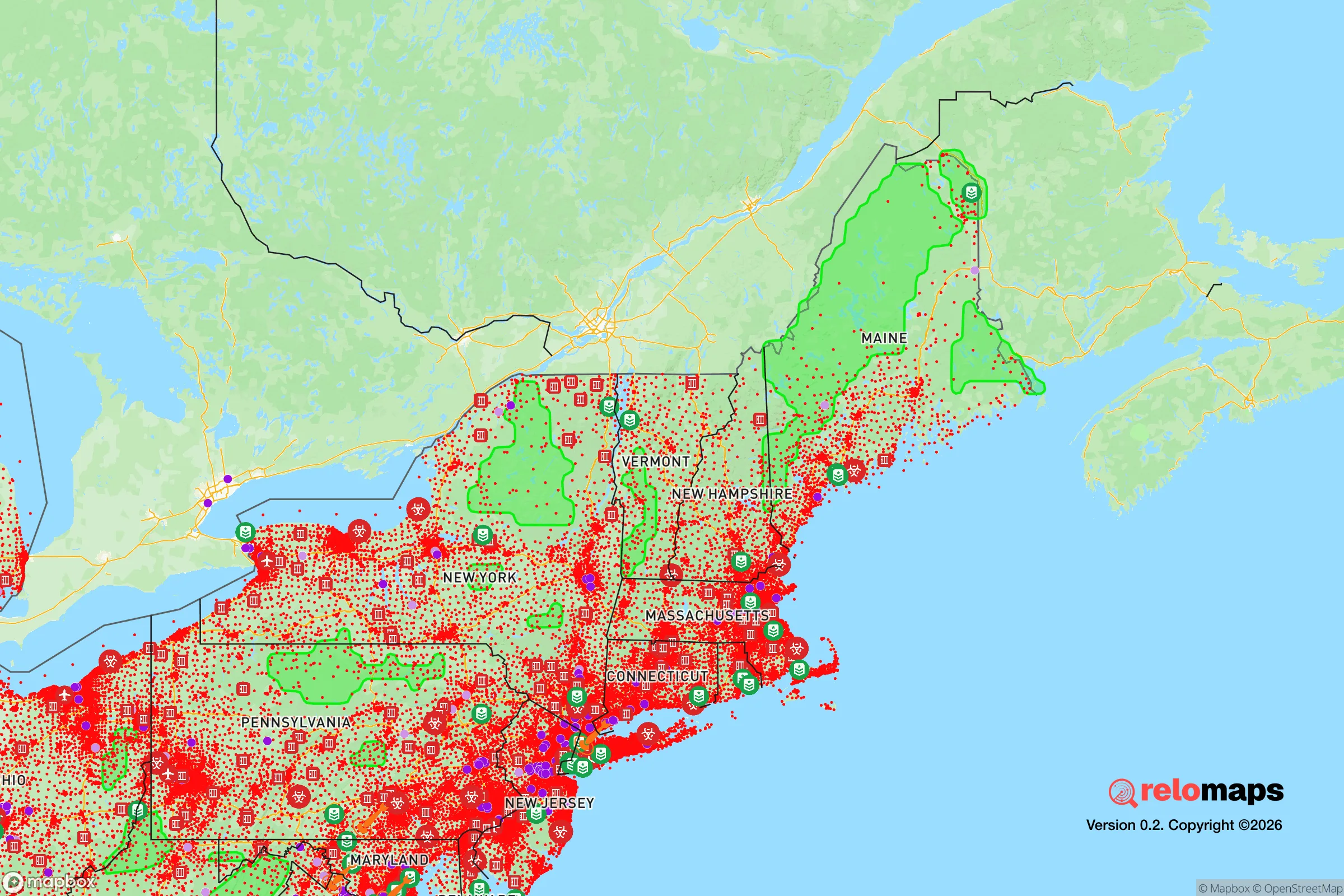
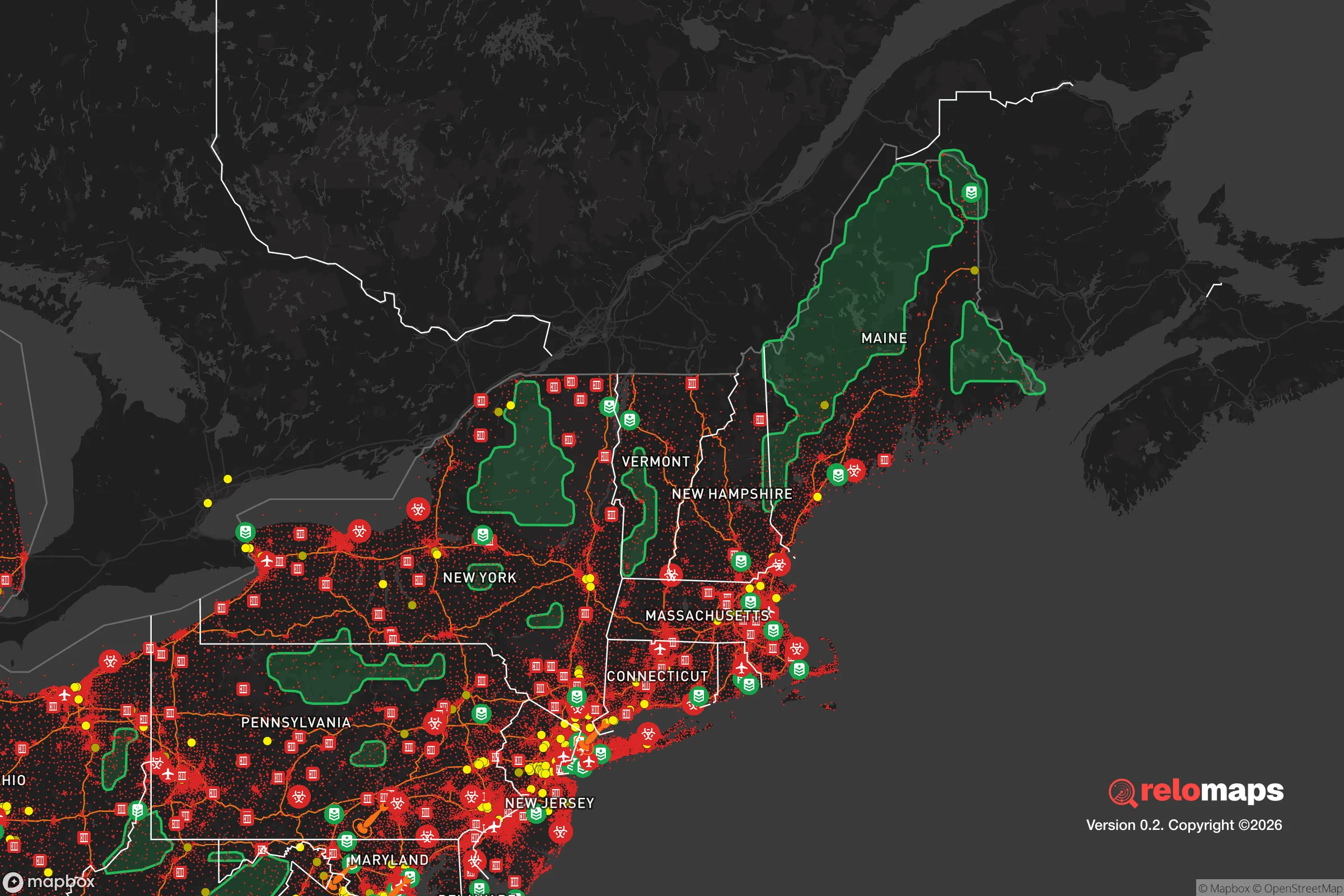


Important Note: For informational purposes only. This does not mean nothing bad ever happens in the green zones. Please use common sense. This is based on public data and modeled with AI. We tried to take a conservative approach but mistakes happen. We update this regularly as new information becomes available.
Solar Generator Recommendations
Backup power matters more here than in safer locations. We've picked three solar generators across budgets and capacity tiers — start with the budget unit if you only need a few essentials, or step up if you want to run a fridge and HVAC for days at a time.

Jackery Portable Power Station Explorer 300
Budget OptionPower on the Go: Weighing only 11 lbs, it's convenient to set up and store with book-sized foldable solar panels

BLUETTI Portable Power Station AC180
Designed for both indoor and outdoor scenarios, AC180 is highly capable as it has a robost capacity and continuous output power.

EF ECOFLOW DELTA Pro Ultra Power Station
Upgraded PickEcoFlow DELTA Pro Ultra is a whole-home energy system designed to grow with your family. Integrated with the Smart Home Panel 2, it scales to meet your evolving energy needs — keeping your home powered, intelligent, and secure through every stage of life.
We earn a commission, at no additional cost to you.
Strategic Assessment Analysis
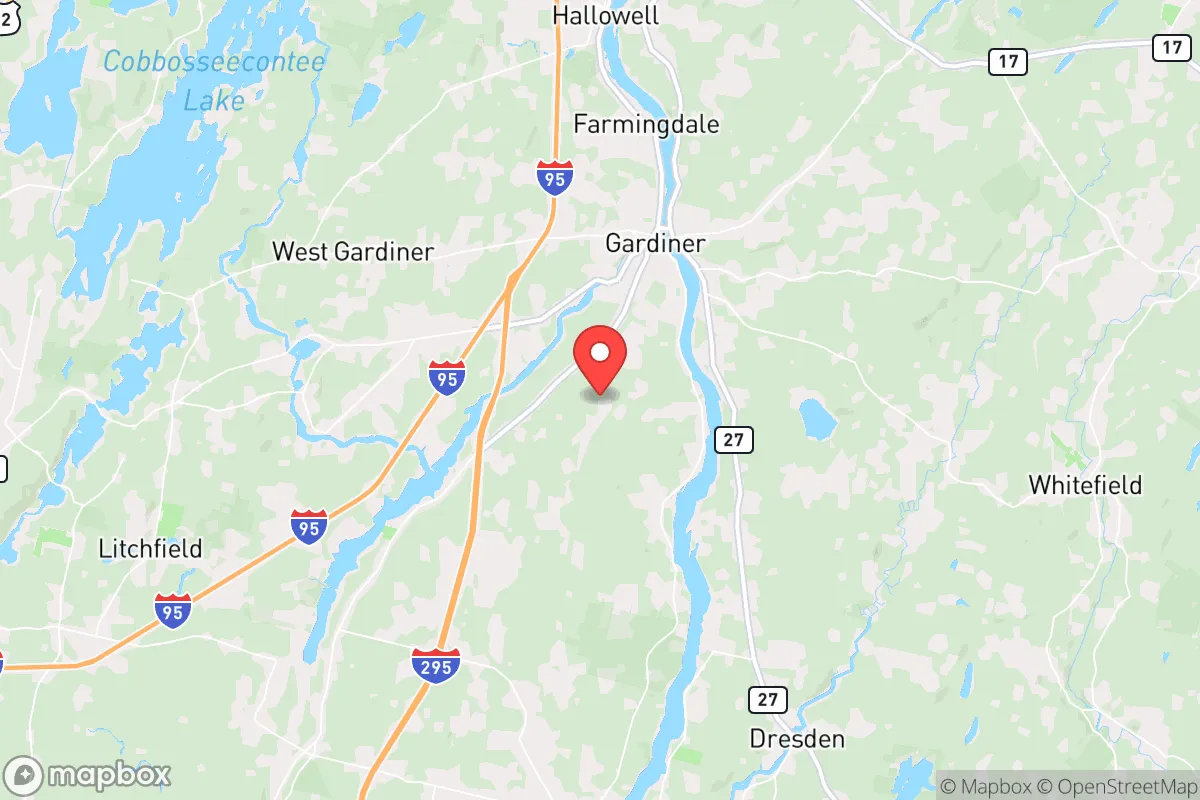
Gardiner, Maine, sits as a quiet but strategically interesting node in the state's mid-coast region, offering a blend of proximity to essential services and a buffer from the most acute risks of major metropolitan collapse. Its position along the Kennebec River, roughly 30 miles from the state capital Augusta and about 50 miles from the coastal city of Portland, places it within a zone that balances access to regional logistics with a meaningful distance from the dense population centers that become liabilities during civil unrest or large-scale disasters. For a relocator operating from a prepper or survivalist mindset, Gardiner presents a credible option for establishing a resilient foothold in New England, provided its specific vulnerabilities are understood and mitigated.
Geographic position and natural advantages for long-term security
Gardiner's location is its primary strategic asset. The Kennebec River provides a reliable water source for consumption, irrigation, and potential off-grid power generation via micro-hydro, a significant advantage in a grid-down scenario. The surrounding terrain is a mix of rolling hills, mixed hardwood and softwood forests, and agricultural land, offering ample cover, fuel, and building materials. The city itself is small—roughly 6,000 residents—meaning a tight-knit community where mutual aid and local knowledge are more accessible than in anonymous suburbs. The region's climate, while harsh in winter, is a natural deterrent to mass migration from coastal or southern areas during a crisis; the cold itself is a defensive barrier. Furthermore, Gardiner's position along Interstate 295 and U.S. Route 201 provides a corridor for movement north into less populated areas of Maine or south toward Augusta, but the city itself is not a major chokepoint that would attract looting or military attention. The natural advantages here are real: abundant freshwater, forest cover, and a low population density that reduces competition for resources.
Risks, exposures, and proximity to fallout-relevant landmarks
No location is without risk, and Gardiner has several that demand attention. The most immediate concern is its proximity to the Maine Yankee nuclear decommissioning site in Wiscasset, roughly 20 miles south along the river. While the reactor is defueled and spent fuel is stored in dry casks, a catastrophic event—whether from sabotage, earthquake, or a direct strike—could release radioactive material. The prevailing winds in this region are from the west and northwest, meaning a release from Wiscasset would likely push contamination toward the coast, but a shift could put Gardiner in a downwind plume. Additionally, the city lies within 50 miles of the Portsmouth Naval Shipyard in Kittery, a strategic military target. A conventional or nuclear strike on that facility would produce a significant fallout zone, and Gardiner is within the outer band of that risk. The Kennebec River itself is a double-edged sword: it provides water but also a potential vector for contamination from upstream industrial sites or a chemical spill. Flooding is a recurring hazard, particularly in the spring thaw, and the city's downtown sits in a floodplain. For a prepper, these risks mean that a Gardiner retreat must include a robust water filtration system, a fallout shelter plan, and a secondary bug-out location farther north, such as in the Moosehead Lake region.
Practical resilience for a relocator: food, water, energy, and defensibility
For a single individual or family looking to establish a resilient homestead, Gardiner offers a workable base. The local food system is strong: the Kennebec Valley is agricultural, with farms producing dairy, vegetables, and livestock within a 20-mile radius. The Gardiner Farmers' Market operates seasonally, and building relationships with local growers now is a practical step toward securing a food supply during disruptions. Water is abundant from the river and local wells, but a prepper should install a hand pump or solar-powered well system and store at least a two-week supply. Energy resilience is more challenging. The grid in central Maine is vulnerable to ice storms and cyberattacks; a backup generator with a propane or wood-gasifier setup is essential. Solar panels are viable, but winter cloud cover reduces output, so a hybrid system with battery storage is recommended. Defensibility is moderate. Gardiner's layout—a compact downtown with residential neighborhoods on surrounding hills—means that a retreat on the outskirts, with a clear line of sight to approach roads, is preferable. The city's police force is small, and during a prolonged crisis, law enforcement would be stretched thin. A relocator should plan for self-defense, community watch, and a network of trusted neighbors. The local gun culture is strong, and Maine's relatively permissive firearms laws (no permit required for open or concealed carry as of 2025) are a practical advantage for those inclined to prepare.
The overall strategic picture for a conservative-minded relocator
Gardiner, Maine, is not a fortress, but it is a viable option for someone seeking a balance between accessibility and security. Its strengths—abundant water, low population density, agricultural hinterland, and a climate that discourages casual migration—are real. Its weaknesses—proximity to a nuclear waste site, a military target, and a flood-prone river—are manageable with proper planning. For a conservative-leaning individual or family concerned about civil unrest, economic collapse, or mass casualty events, Gardiner offers a place where you can live a relatively normal life while maintaining a posture of readiness. The key is to treat it as a base of operations, not a final redoubt. Build local knowledge, stockpile supplies, and have a plan to move north if the risks materialize. The state of the country may be uncertain, but the Kennebec Valley remains a place where a prepared person can endure.

* Values derived from national, state, county, city and local statistics and may differ in a specific area. Last updated: 2026-05-04T15:55:55.000Z
Narrative content on this page is AI-generated and may contain mistakes. Verify any details that matter before acting on them.
ReloMaps may earn a commission from affiliate links at no extra cost to you.

